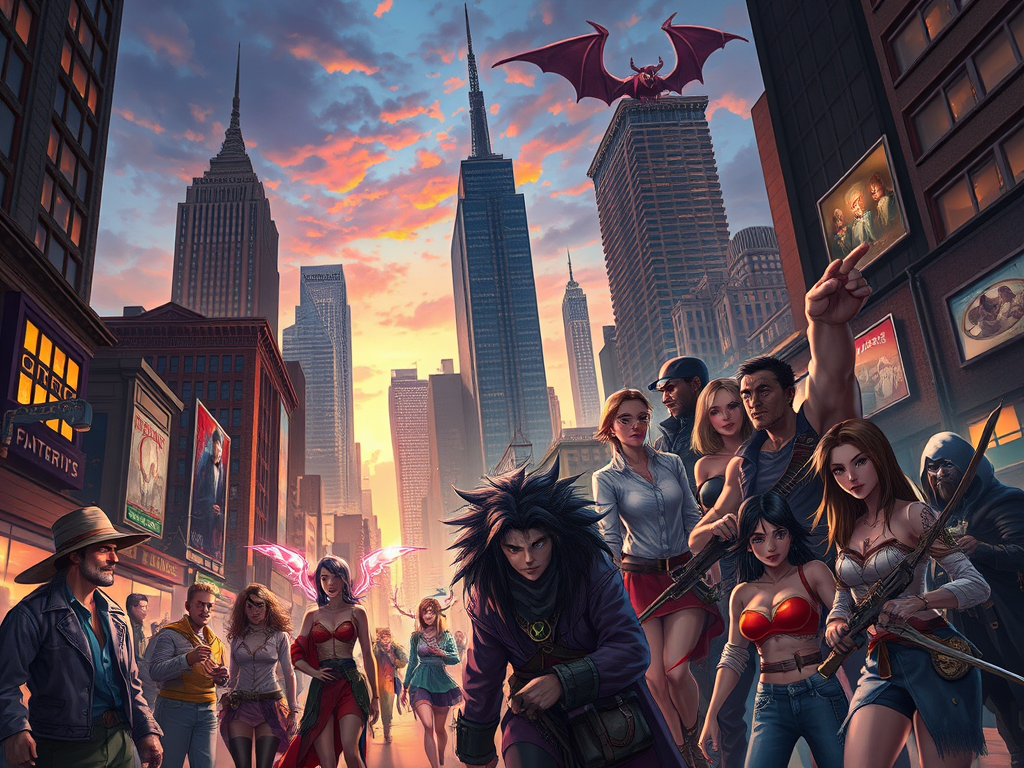
Urban fantasy is a genre that has captivated readers for decades, blending the magic and mystery of fantastical realms with the grit and realism of modern-day settings. With its unique mix of supernatural elements and everyday life, urban fantasy has evolved over the years, shifting in themes, character archetypes, and world-building. From the early works of beloved authors like Jim Butcher and Laurell K. Hamilton to the newer voices emerging today, the genre has undergone a significant transformation.
In this article, we’ll explore the evolution of urban fantasy, from its classic roots to contemporary works that continue to shape the genre.
The Classic Foundations of Urban Fantasy
Urban fantasy as a genre began to take shape in the 1980s and 1990s, with early works like Laurell K. Hamilton’s Anita Blake: Vampire Hunter and Jim Butcher’s The Dresden Files. These early pioneers established many of the tropes and conventions that would later become synonymous with the genre.
At its core, classic urban fantasy is defined by the juxtaposition of the ordinary and the extraordinary. The protagonist is often a lone wolf, a tough, morally gray character with a special set of skills who faces dark and supernatural forces lurking beneath the surface of everyday life. This version of urban fantasy was steeped in noir influences, where the main character’s inner struggle mirrored the chaos and danger in the world around them.
Jim Butcher’s The Dresden Files, which began in 2000, is one of the definitive examples of early urban fantasy. The series follows Harry Dresden, a private investigator and wizard in modern-day Chicago. Butcher’s blend of hard-boiled detective tropes with magical elements created a blueprint for many urban fantasy works that followed. His world is gritty, often dangerous, and filled with powerful supernatural beings, from fae to vampires. The detective noir influence is evident in Dresden’s constant struggle between good and evil, with every book pushing him deeper into morally ambiguous situations.
Meanwhile, Laurell K. Hamilton’s Anita Blake series, which began in 1993, took the genre in a more erotic and dark direction. Anita Blake, a necromancer and vampire executioner, finds herself caught in a web of supernatural politics, power struggles, and dangerous romantic entanglements. Hamilton’s work often explored themes of power, sexuality, and identity, pushing the boundaries of what urban fantasy could tackle in terms of personal relationships and societal issues. As the series progressed, the focus shifted more toward the complexities of Anita’s supernatural world and her growing powers, with heavy emphasis on eroticism and romantic relationships.
The Shift in Themes and Character Archetypes
As the genre grew in popularity, urban fantasy began to evolve in response to changing reader expectations and cultural shifts. The early emphasis on gritty, morally complex protagonists began to make room for more diverse voices and a broader range of themes.
One significant shift was the increasing focus on female protagonists. While classic urban fantasy had often centered around male characters like Harry Dresden, more recent works have seen a shift toward strong, empowered women at the forefront of the story. Authors began to explore themes of empowerment, self-discovery, and the intersection of personal and supernatural challenges in deeper, more nuanced ways. This shift not only made the genre more inclusive but also allowed for a broader exploration of issues like gender, identity, and family.
In these contemporary works, the protagonist often faces both external supernatural threats and internal personal struggles. Their journeys are no longer just about surviving dangerous magical forces but also about grappling with personal growth, moral dilemmas, and relationships. These themes provide a more holistic and relatable narrative, where magic is just one element of a much larger and more complex human experience.
This focus on personal growth and inner conflict has become a hallmark of contemporary urban fantasy, with protagonists often battling not only external supernatural forces but also their own personal demons. This allows for more diverse and relatable characters, which has resonated with modern readers.
World-Building: From Classic Tropes to Contemporary Complexity
In the earlier days of urban fantasy, world-building often focused on introducing the magical or supernatural elements and the tension between them and the human world. The worlds were often gritty and dark, with a heavy emphasis on danger and mystery. In many cases, the rules governing magic were somewhat vague, allowing for flexibility in storytelling.
However, contemporary urban fantasy has become more complex in its approach to world-building. Authors now often create elaborate systems of magic, politics, and supernatural races, with intricate rules and histories that mirror our own world’s political, cultural, and societal dynamics. The supernatural is no longer just a hidden world; it’s intricately woven into the fabric of society, often influencing everything from politics to economics.
This expansion of world-building has led to stories where the supernatural is no longer just a secret lurking behind the curtain, but an active part of everyday life. Different supernatural races and cultures, often with their own set of rules, ethics, and political systems, interact within the world’s broader society. As a result, urban fantasy worlds now feel as fleshed out and intricate as our own, with supernatural powers having real-world consequences.
The Rise of New Voices and Diverse Narratives
One of the most exciting developments in contemporary urban fantasy is the influx of new voices and diverse perspectives. While earlier works were often centered around Western tropes and characters, modern urban fantasy is increasingly global in scope, with stories drawing on mythology and folklore from a wide range of cultures. Authors from different backgrounds are infusing the genre with fresh perspectives, creating rich, diverse worlds that reflect a broader range of human experiences.
Urban fantasy now explores a wider array of characters, from diverse cultural backgrounds to varying sexual orientations, challenging the genre’s traditional boundaries. These stories go beyond the typical white male or female protagonists and bring new perspectives on power, identity, and the supernatural. By incorporating diverse characters, authors have enriched the genre, allowing it to better reflect the world we live in today.
This expansion of the genre’s boundaries has opened up new possibilities for storytelling, allowing authors to explore themes of identity, belonging, and societal change in ways that resonate with modern readers. Urban fantasy has become a vehicle for cultural exchange, blending the traditional elements of magic and mystery with deeper explorations of societal issues, relationships, and personal struggles.
Conclusion: The Ongoing Evolution of Urban Fantasy
From its gritty, noir-inspired roots to the vibrant, diverse world-building of today, urban fantasy has undergone a profound transformation. While early works like The Dresden Files and Anita Blake established the genre’s foundation, contemporary voices have helped to push the genre in exciting new directions, embracing complex characters, intricate world-building, and diverse narratives.
As urban fantasy continues to evolve, one thing is certain: it will remain a genre that blends the magic of the fantastical with the reality of everyday life, creating worlds that are as engaging as they are magical. Whether you’re drawn to classic tales of supernatural sleuths or the bold, new voices redefining the genre, urban fantasy offers something for every reader. The genre is far from static—it’s alive and ever-changing, just as the world it mirrors.
 Nina Soden