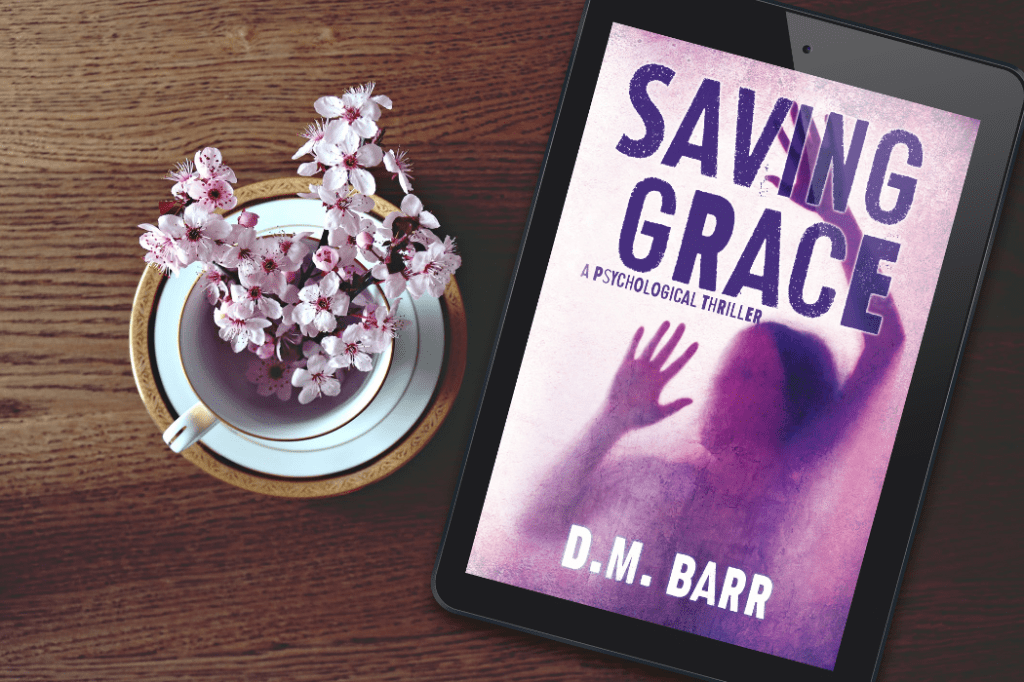
Saving Grace by D.M. Barr

By day, a mild-mannered salesperson, wife, mother, rescuer of senior shelter dogs, competitive trivia player and author groupie, happily living just north of New York City. By night, an author of sex, suspense and satire.

My background includes stints in travel marketing, travel journalism, meeting planning, public relations and real estate. I was, for a long and happy time, an award-winning magazine writer and editor. Then kids happened. And I needed to actually make money. Now they’re off doing whatever it is they do (of which I have no idea since they won’t friend me on Facebook) and I can spend my spare time weaving tales of debauchery and whatever else tickles my fancy.

The main thing to remember about my work is that I am NOT one of my characters. For example, as a real estate broker, I’ve never played Bondage Bingo in one of my empty listings or offed anyone at my local diet clinic.

But that’s not to say I haven’t wanted to…

Website * Facebook * Twitter * Instagram * Bookbub * Amazon * Goodreads

(As an Amazon Associate, I earn from qualifying purchases. That means, when you purchase a book using an Amazon link on this site, I earn an affiliate commission. All commission earnings go back into funding my books; editing, cover design, etc.)

Would you like a chance to win a $25 Amazon gift card? Follow the tour HERE for special content and a giveaway!

Saving Grace by D.M. Barr ~ Genre: Psychological Thriller

Grace Pierrepoint Rendell, the only child of an ailing billionaire, has been treated for paranoia since childhood. When she secretly quits her meds, she begins to suspect that once her father passes, her husband will murder her for her inheritance. Realizing that no one will believe the ravings of a supposed psychotic, she devises a creative way to save herself – she will write herself out of danger, authoring a novel with the heroine in exactly the same circumstances, thus subtly exposing her husband’s scheme to the world. She hires acclaimed author Lynn Andrews to help edit her literary insurance policy, but when Lynn is murdered, Grace is discovered standing over the bloody remains. The clock is ticking: can she write and publish her manuscript before she is strapped into a straitjacket, accused of homicide, or lowered six feet under?

With a cast of secondary characters whose challenges mirror Grace’s own, Saving Grace is, at it’s core, an allegory for the struggle of the marginalized to be heard and live life on their own terms.

Goodreads * Amazon

What inspired you to write this book? Saving Grace is about a woman who wonders if her husband plans to murder her for her inheritance once her rich father in Florida dies. My father lives in Florida and my husband has asked more than once about my expected inheritance. I started thinking, what if…

What can we expect from you in the future? My next book, just finished, is a contemporary romantic comedy about pursuing second chances.

Do you have any “side stories” about the characters? I based my favorite character, Zev, on the Hasidic men I met at my last job. They always made me laugh and so Zev provides the much-needed comic relief in the book.

Can you tell us a little bit about the characters in Saving Grace? The protagonist is Grace Rendell, a 45-year-old New Jersey wife and mother who is the only child of an ailing billionaire and has been treated for paranoia since she was six. Her husband is an advertising exec named Eliot who grew up poor and appears to be cheating on her. She has two sons and a father named Barrington who lives with his “chippie of the month” Caprice. Grace’s therapist is Emma Leighmann and the woman who helps her write her book is Andrea Lin, whose pen name is Lynn Andrews. Tom Druthers is the poisons expert who helps her and becomes a love interest.  Andrea’s brother “Hack” and his friends also play a big part in the novel.

What did you enjoy most about writing this book? Actually, I rewrote this book around ten times, so I guess what I liked most is when I was finally finished.

Tell us about your main characters- what makes them tick?  Once Grace goes off her meds, she comes to believe that once her father dies, her husband will kill her for her inheritance. So she decides to write a novel, with the main character in the same predicament, so she can subtly expose his plot to the world without destroying her life and her family’s life if in fact, her views are a result of her resurgent paranoia and are completely wrong 

How did you come up with the title of your first novel? As a Realtor, I specialized in Expired Listings. It seemed like a great title for a book where a serial killer was offing all the real estate agents in a small town.

Who designed your book covers? Each was designed by a different artist. Kim Killion worked with a photo and concept I selected for Expired Listings, and I had a second, less graphic cover designed by Syneca Featherstone. There are two covers for Slashing Mona Lisa, one designed by Carl Graves and a second by the artist at Beachwalk Press, and for my current novel, the cover was designed by David King, the inhouse designer for Black Rose Press, again using a photo and concept I chose.

If you had to do it all over again, would you change anything in your latest book? My first editor for Saving Grace was Elf Ahearn. If I could do it all over again, I would have listened to her suggestions from the start. In the end, I used them anyway, but it took a long time for me to accept her criticisms were right on.

Did you learn anything during the writing of your recent book? Prowritingaid.com is an invaluable tool.

If your book were made into a film, who would you like to play the lead? Sandra Bullock would make a perfect Grace.

Anything specific you want to tell your readers? When you read the metaphors, if they seem odd or strained, remember that Grace experienced everything she knew of life from books. Also keep in mind that Saving Grace is an allegory for the struggle of the marginalized to be heard and live life on their own terms. To me, it’s about women who are forgotten by society after they’ve had their children and “served their purpose.”

How did you come up with name of this book? Not only is Saving Grace an expression, it is also a perfect description of the plot.

What is your favorite part of this book and why? I always love the funny scenes, so I love the scene that satirizes critique groups. I also love every scene with Zev, especially the one where he’s in Hack’s home and some bullies throw a note attached to a rock through the window and he holds it up to Hack and says, “I believe this is for you.”

Are your characters based off real people or did they all come entirely from your imagination? A combination. There are parts of me in all my heroines: I was a Realtor like Dana Black, I was a reporter with weight issues like Camarin Torres, and like Grace Rendell, I’m a housewife and mother of a certain age who sometimes feels like no one sees me anymore.

Do your characters seem to hijack the story, or do you feel like you have the reigns of the story?  My characters always do things that surprise me. In Expired Listings, I didn’t originally intend for Aidan Cummings to become a love interest but once Dana saw him, there is was. In Saving Grace, Zev is a character who came from nowhere.

Convince us why you feel your book is a must read. It’s a unique concept, the idea of a woman who couldn’t write a book to save her life, until she had to. Not that many books out there who weaponize literature.

Have you written any other books that are not published? No, happy to say everything I’ve written has been published, except my newest book which I hope to sell in the next few months.

Originally Hack’s story was much more elaborate and ran concurrently with Grace’s. There were elements I hope to include in a sequel.

Is there a writer which brain you would love to pick for advice? Who would that be and why?

I had the opportunity to interview Brad Parks and ask him how he was able to make Carter Ross so likeable. You can see the interview at www.author-groupie.com, where I interview authors with a new adult fiction book just out, or one that’s in pre-order.

I’m glad to be one of many hosts sharing information about Saving Grace by D.M. Barr.

Virtual Poetry Reading – Episode 21

Virtual Poetry Reading – Episode 21
A #TheRedheadedAuthor Production

INCLUDED IN THIS EPISODE:

The Last Leaf by Lilly Brown (Read by Nora Nixon)
Talisman by Chuck Puckett (Read by Chuck Puckett)
Stained Enlightenment by Chuck Puckett (Read by Chuck Puckett)
The Song of Hiawatha by Henry Wadsworth Longfellow (Read by John Miller)

FOLLOW ME VIRTUALLY:

YouTube: www.youtube.com/c/ninasoden
Amazon: https://www.amazon.com/Nina-Soden/e/B00ITHSXC8/ref=dp_byline_cont_ebooks_1
Website: www.ninasoden.com
Twitter: @Nina_Soden
Instagram: Nina_Soden
Facebook: www.facebook.com/bloodangelseries


Check out the previous Episodes below:

Episode 1 – https://youtu.be/sXKHUqvC9Vc
Episode 2 – https://youtu.be/0EBR7Pi1XqM
Episode 3 – https://youtu.be/XKM01RGiXls
Episode 4 – https://youtu.be/Y2yW2Tg3HaQ
Episode 5 – https://youtu.be/XJjIUMaK_PE
Episode 6 – https://youtu.be/bPXw5OgUUAc
Episode 7 – https://youtu.be/zBP5T1zxr4g
Episode 8 – https://youtu.be/4VkGkPkhd6I
Episode 9 – https://youtu.be/RZKCrqsOLhM
Episode 10 – https://youtu.be/H4YTXC7_fcc
Episode 11 – https://youtu.be/zE5a5Q3TsyM
Episode 12 – https://youtu.be/47T9kJxfXTw
Episode 13 – https://youtu.be/DyiFf1fraiY
Episode 14 – https://youtu.be/P3M8emsCSe4
Episode 15 – https://youtu.be/y7HP9yk6Q9c
Episode 16 – https://youtu.be/s1VPW55xXw4
Episode 17 – https://youtu.be/RpkTyTwUZBM
Episode 18 – https://youtu.be/G9aNVqAsHaU
Episode 19 – https://youtu.be/P5ujCW-YjDE
Episode 20 – https://youtu.be/BWW1KODqYUk


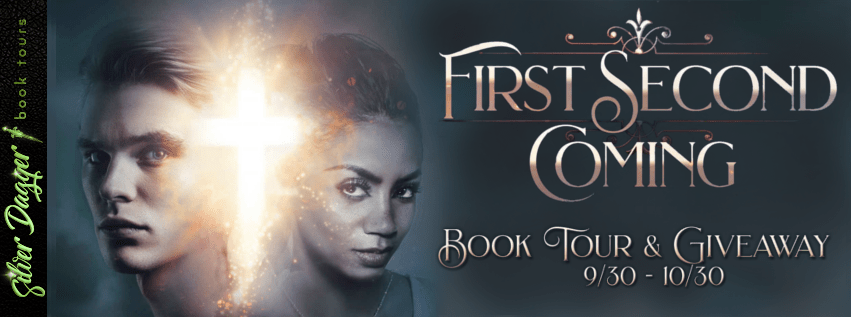
First Second Coming by Jeff Pollak (giveaway)

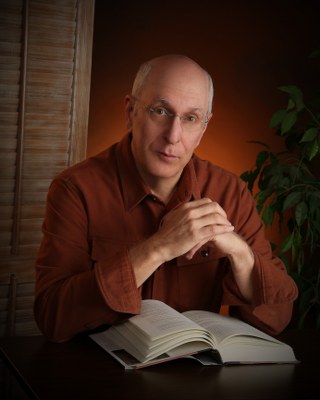
Jeff Pollak, the author of First Second Coming and sequels to come, was raised in the Riverdale section of the Bronx by a single mom and two grandparents who lived eight floors up. After graduating from college in Buffalo, Jeff headed west to Los Angeles for law school and spent his entire legal career in and around civil litigation. Now retired, writing fiction is Jeff’s new passion.

Website * Facebook * Twitter * Bookbub * Amazon * Goodreads

(As an Amazon Associate, I earn from qualifying purchases. That means, when you purchase a book using an Amazon link on this site, I earn an affiliate commission. All commission earnings go back into funding my books; editing, cover design, etc.)

Would you like a chance to win a $25 Starbucks Gift Card, choice of Paperback or ebook of First Second Coming – 1 winner each! Follow the tour HERE for special content and a giveaway!

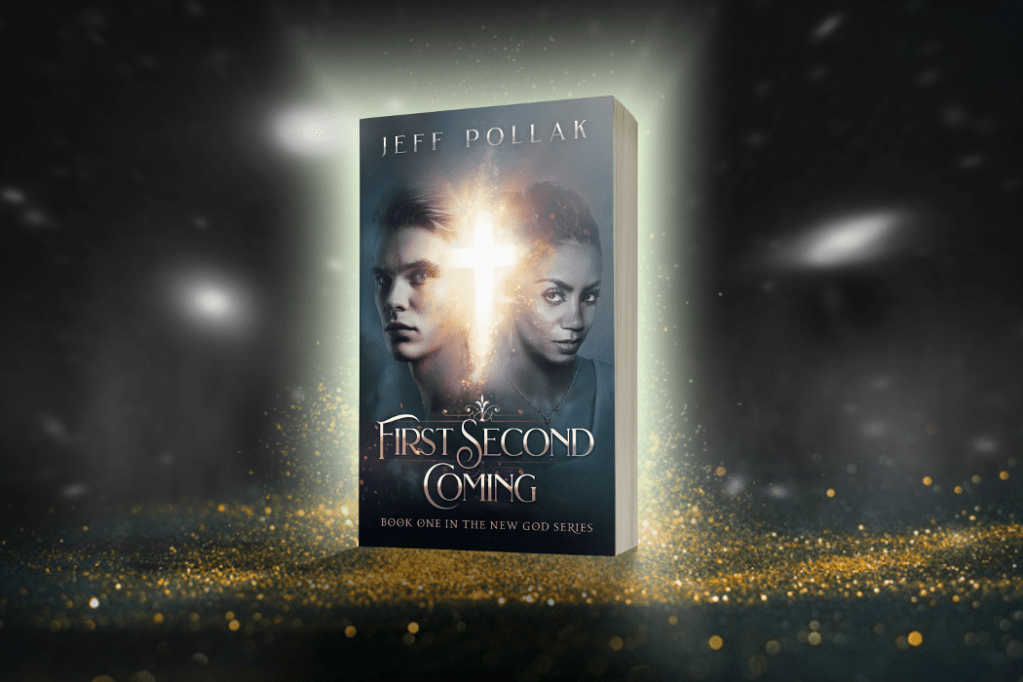
First Second Coming (The New God Series Book 1) by Jeff Pollak ~ Genre: Supernatural Romantic Suspense

In 2027 the deity known as NTG – short for New Testament God – retires after more than two thousand years of minding the store for his employer, Milky Way Galaxy, Inc. The new god, a planetary turnaround specialist, must decide whether Earth’s dominant species should or should not be included in his plan to bring the planet back into full compliance with Milky Way Galaxy, Inc.’s planetary operation standards.

Earth’s new God introduces himself to humanity by unexpectedly appearing on the Ram Forrester Hour talk show. Ram, an atheist, and co-host Brendali Santamaria, a devout Catholic, are stunned. God’s interview, beamed worldwide, shocks and infuriates viewers. They learn that a sixty-day conference will take place in Los Angeles to determine whether humans are capable of helping him implement his planetary turnaround plan. To earn a coveted spot in this God’s good graces all mankind must do is eliminate religious violence forever, without his heavenly help, within sixty days. Failure means extinction.

God designates Ram and Bren as the conference’s only authorized media reporters. This assignment, fraught with peril, ignites their romance. Not only must the harried couple attend the conference meetings by day and do their show at night, they must also outwit a fanatical religious group bent on killing them. When rising conflicts within the conference intensify, it’s up to Ram and Bren to do whatever it takes to protect their budding romance and mankind’s very survival.

REVIEWS:

“Jeff Pollak’s debut novel, First Second Coming, combines suspense, romance, and theology in an imaginative, unique adventure!”

            —Mark Moses, Actor (best known as Paul Young on Desperate Housewives and Herman “Duck” Phillips on Mad Men.)

“Wow! What an outstanding debut novel! Jeff mixes a wide genre to create this intriguing novel. Plenty of romance, action and some theology to keep things lively! Not a mix I’ve seen before but in the ratio he writes=perfect! A fab read. Looking forward to the next book!”

         — Becca Thompson, The Book Club

“An absolutely fascinating concept mixed with the perfect blend of action, romance and theology. Will humans choose to set aside their petty arguments and live peacefully, working to solve the world’s problems side by side, or will the planetary turnaround specialist assigned to Earth as the New God have to take the ultimate action to ensure the planet’s survival, even if that means human extinction? This book will grab you and keep you reading to the very last page. Can’t wait to see what comes next!”

       – Kristine Pfeffer Fox, Author

Add to Goodreads * Amazon * B&N * Kobo

Is There a Message in Your Novel That You Want Readers to Grasp?

Although First Second Coming is primarily intended as entertainment, the book’s message is about intolerance. Hopefully readers will pick that up. There are two sets of intolerant religious groups in this story. One demonstrates intolerance of other views in an aggressive manner. The other group exercises passive resistance. Examples of tolerance abound within the novel, but these two intolerant groups put mankind’s future at risk.    

Is there anything you find particularly challenging in your writing?

Because I came to writing fiction from a long career as a trial attorney, I often find my writing style lapse into the stiffer, more formal style that’s normal for writing such boring things as legal briefs, client reports and trial documents. When editing I’m on alert to this tendency, and fix the verbiage whenever I find it unless the character – such as God in First Second Coming – actually has a formal manner of speech. 

How many books have you written and which is your favorite?

 First Second Coming is my debut novel, so by default it’s my favorite.   

If you had the chance to cast your main character from Hollywood today, who would you pick and why?

That’s a very interesting question! On a whim a few years ago, I searched the internet to try to find actors bearing a resemblance to the two main characters in First Second Coming. I was unsuccessful in finding anyone close to my visualization of Ram Forrester. However, a British actress of half Norwegian, half Nigerian descent turned out to look so much like how I pictured Brendali Santamaria, who is Latina, that it was eerie. The actress, Hannah John-Kamen, has been in British TV shows, notable American ones such as Game of Thrones (as Omela), and films including Star Wars: The Force Awakens, Ready Player One and Tomb Raider. She has enough experience to at least audition for the lead role as Brendali. She’s the right age, and although she isn’t Latina she looks it. If she’s not interested or fails her audition, I would want a Latina actress in the role. 

When did you begin writing?

 I never pictured myself as a fiction writer until roughly 2014. That’s when I began to consider what I’d do with my time once I retired. The idea of trying my hand at fiction made sense. An avid reader, I always enjoyed the writing aspect of litigation, which is very writing-intensive. Of course, I had to learn the ropes of fiction, develop a suitable writing style and practice. First Second Coming took eight drafts, the first few rather amateurish, but that’s a phase we all have to go though. Fortunately, I improved.

How long did it take to complete your first book?

 It’s hard for me to answer this question. I wrote part-time from 2015 to 2019. Trials are all consuming, and I had several of them in this time period – four in 2018 alone. Each trial prevented me from writing any fiction for several weeks at a time. Occasional family obligations also took precedent over writing from time to time. So I can’t even estimate what the answer might be in terms of days or hours, but five years did pass while I worked at it.

Did you have an author who inspired you to become a writer?

No, but I am inspired to improve enough to become as good a writer as any of my favorites – David Mitchell (The Bone Clocks); Iain Pears (Arcadia); Haruki Murakami (1Q84); or Daniel Silva (The English Girl).

What is your favorite part of the writing process?

Editing. I liken the writing process to sculpture. Michelangelo began the Pietà with a huge chunk of Carrara marble. He chiseled away at it until what was left became arguably the most impressive piece of sculpture that’s ever been carved. Writers start with a concept, nothing more. The first draft, equivalent to Michelangelo’s block of marble, is what we chip away at it until we’re left with our humble version of the Pietà, however distant that may be from a sculpted masterpiece. I enjoy hammering my story until it becomes as true, and as fully rendered, as I envisioned it in my imagined plotline.

Describe your latest book in 4 words.

 Suspense, romance, fantasy – blended.

For those interested in exploring the subject or theme of your book, where should they start?

Although First Second Coming is primarily entertainment, the book’s message is about intolerance. Hopefully readers will pick that up. There are two sets of intolerant religious groups in this story. One demonstrates intolerance of other views in an aggressive manner. The other group exercises passive resistance. Examples of tolerance abound in this novel, but these two intolerant groups put mankind’s future at risk.     

The internet has plenty of information about all types of intolerance, but whether the information posted on any given website is accurate can often be questioned. Posts from universities or organizations dedicated specifically to one type of intolerance or another are more credible. (For example, religious organizations often deal with intolerance to their faithful.) Museums of intolerance, which exist in Los Angeles, New York City, El Paso, Albuquerque and other locations, are worth a visit. Simply seeking out people for respectful conversations, to learn from them and compare beliefs or opinions, is invaluable.  

How did you become involved with the subject or theme of your book?

9/11 was the inspiration for this book. My law firm hosted annual conferences at the World Trade Center each spring for our clients in the New York/New Jersey area. We were there in May, 2001, four months before the attack. I had clients in the building, had become acquainted to staff members in the WTC’s conference facility at the top of the building, and I grew up in New York City. As I watched the tragedy unfold, all these connections I had with the building brought to mind a random thought – that we need a new god trained as a planetary turnaround specialist.

Admittedly that’s an odd thought. I didn’t dwell on. But somehow the idea stuck with me, coming back to me once I decided to write fiction. A rudimentary plot, characters, the concept and theme spilled out. So I went with it, developing the story over until it became what’s now this book. 

What were your goals and intentions in this book, and how well do you feel you achieved them?  

This book is the first in a series in which Earth’s new God tackles our many global problems, one or two at a time. So the global issue subject tackled in First Second Coming, the religious violence behind 9/11, became a test of humanity, not a one-off concept. I’m satisfied with the book as a foundation for the future ones that will address other topics of global concern that need attention.

Anything you would like to say to your readers and fans?

Sure – I’d be very, very pleased to have some! Seriously, I began to write this novel simply as a way to enjoy my retirement. People in my critique groups, or who had access to all or parts of the story, urged me to publish. I had to be talked into it and eventually gave in. Now that First Second Coming has been released, I hope it does connect with readers, and that they become fans who will read the sequels and spin-offs, too.

What did you enjoy most about writing this book?

I enjoy editing the most, believe it or not. I liken the writing process to sculpture. Michelangelo began the Pietà with a huge chunk of Carrara marble. He chiseled away at it until what was left became arguably the most impressive piece of sculpture that’s ever been carved. Writers start with a concept, nothing more. The first draft, equivalent to Michelangelo’s block of marble, is what we chip away at it until we’re left with our humble version of the Pietà, however distant that may be from a sculpted masterpiece. I enjoy hammering my story until it becomes as true, and as fully rendered, as I envisioned it in my imagined plotline.

Can you tell us a little bit about your next books or what you have planned for the future?

I’m working on two novels concurrently. One is the sequel to First Second Coming, which has a working title of Earth’s Peril. A spin-off, called The Recycling Center, is the second book. I intend to focus my writing on the New God Series for the foreseeable future, with the occasional spin-off if or when they pop up.

How long have you been writing?

I started writing fiction in 2015. Before that I’d written non-fiction for decades in the form of legal briefs, motions, trial documents, articles for legal publications, etc. Fiction requires a different writing style, and it took me a year or so to develop mine. I enjoy filling up a blank white screen with letters which form words that turn into sentences, paragraphs, chapters and, eventually, a book worth reading. 

Can you tell us a little bit about the characters in First Second Coming?

Happy to oblige! I’ll do the three main characters for you.

Ram Forrester is a 38-year old atheist in 2027, the year First Second Coming takes place. He was the evening news anchor at KJCR-TV in L.A. until he was shot by mistake on Valentine’s Day. The shooter was aiming at his ex-wife and missed her. Ram’s doctors called his survival a medical miracle. While he was recovering in the ICU, Ram’s girlfriend of three years, Kate Chung, broke up with him. When Ram returned to the station as the host of the Ram Forrester Hour he’s a more mature man, ready to finally settle down with his “angel” – if only he can find her.

Brendali Santamaria is four years younger than Ram. She’s an extroverted bilingual Latina, a native of Southern California and a devout Catholic. Brendali’s spent ten years as a television news reporter in Veracruz, Mexico, hunting down and exposing narcotraficante corruption. However, when the drug lords put out an order to kill her and murder her boyfriend as well as her best friend, she has to flee. Bren feels guilty for living when she should have been the one to die. She’s also angry at being unable to execute her version of the Golden Rule – that revenge is best served cold. She meets Ram, becomes the co-host of his show and, before long, they’re truly (and literally) a match made in heaven.

Earth’s new, unnamed God takes over management of the planet from NTG – whom we know as the New Testament God and by other names. He’s a planetary turnaround specialist, sent here by Milky Way Galaxy, Inc., his and NTG’s employer. This god is a cross between a more sophisticated version of the Old Testament God and current day corporate turnaround artists, but with a more humanitarian streak he would strive to deny.

If you could spend the day with one of the characters from First Second Coming who would it be? Please tell us why you chose this particular character, where you would go and what you would do.

Brendali’s been talking to me and narrating what’s taken place in the book since the early drafts of the story. We’ve become good friends although she wakes me up at night to pass on the latest twist in the story. Now that I’m working on the sequel she’s doing that again, but I don’t mind. I enjoy our interactions, so she’s my pick.

We’d start with lunch at Porto’s Bakery in Glendale, a Cuban restaurant well known to Angelinos. Their meals, pastries and cakes are superb. We’d lose the calories by hiking the beautiful San Gabriel Mountains trails that wind through Pasadena’s Eaton Canyon. 

To finish the day, Bren and I would attend a Gaby Moreno concert. A Guatemalan born singer/guitarist who lives in L.A, Gaby belts out her songs in English, Spanish, French and Portuguese. Bren and I consider her a favorite, so we’ll enjoy the concert regardless of whether Gaby’s playlist consists of Blues, Jazz, Soul or R&B selections. We’d invite Ram, too, though he’s more a rock ‘n roll guy.   

What is the hardest part of writing your books?

Because I came to writing fiction from a long career as a trial attorney, my writing style sometimes lapses into a stiff, formal style that’s normal for writing such boring things as legal briefs, client reports and trial documents. When editing I stay alert to this tendency, and fix the verbiage where I find it unless the character – such as God in First Second Coming – has a formal manner of speech. 

What songs are most played on your Ipod?

I don’t actually own an Ipod, but some of the most played songs in my iTunes library are Copperhead Road by Steve Earle; Unintended by Muse; Come Unto Me by the Mavericks; Dreamer by the Lil’ Band O’ Gold; Lend a Hand by Jakob Dylan; King of El Paso by Boz Scaggs; Furr by Blitzen Trapper; Chocolate Jesus, a cover of Tom Waite’s song done by Joe Bonamassa and Beth Hart; Quizas, Quizas, Quizas by Gabi Moreno and Killybegs by The Chieftains. I listen to a fairly broad range of musical genres.

Do you have critique partners or beta readers?

During the time I was writing First Second Coming, I was part of two critique groups. One was a three-person group, including me. None of us were published. The other group consisted of eight, several of whom were already published. As part of First Second Coming’s pre-publication process I sent my manuscript to four beta readers and one sensitivity reader, the latter to make sure Brendali, my Latina main character, was realistic and not in any way stereotyped or inaccurate.   

What book are you reading now?

I’m reading the newly released novel by David Mitchell, one of my favorite authors. It’s called Utopia Avenue. I’m about 25% through it at this point and it’s very enjoyable, though so far only occasionally up to his usual “relentlessly brilliant” writing style. The quoted phrase belongs to Ursula K. Le Guin, herself a brilliant writer.

How did you start your writing career?

There comes a time in life when you look ahead to mull over what you’ll do in your free time during retirement. That time came for me in 2014. Because litigation is a very writing intensive profession, and I enjoyed the writing aspect of it, I concluded that doing something related to the written word would fit me well. And since I’m an avid reader, the idea of trying my hand at writing fiction made sense, too. I embarked on a self-imposed crash course to learn the craft by attending writers’ conferences, scouring the internet for online websites, and becoming friendly with writers and a few instructors I met at the conferences. I also bought books such as Stephen King’s On Writing and pored through them.  

Tell us about your next release

 I’m working on two novels concurrently. One is the sequel to First Second Coming, which has a working title of Earth’s Peril. A spin-off called The Recycling Center is the second book. Earth’s Peril is probably the next release, but I’m in the early stages of both books so that could change.
I’m glad to be one of many tour hosts sharing information about First Second Coming by Jeff Pollak.

Carissa Andrews ~ Author Interview

We have a very special guest today, Carissa Andrews is an internationally bestselling author and she is here today to talk about her newest series, The Windhaven Witches.

Check out our interview on YouTube:

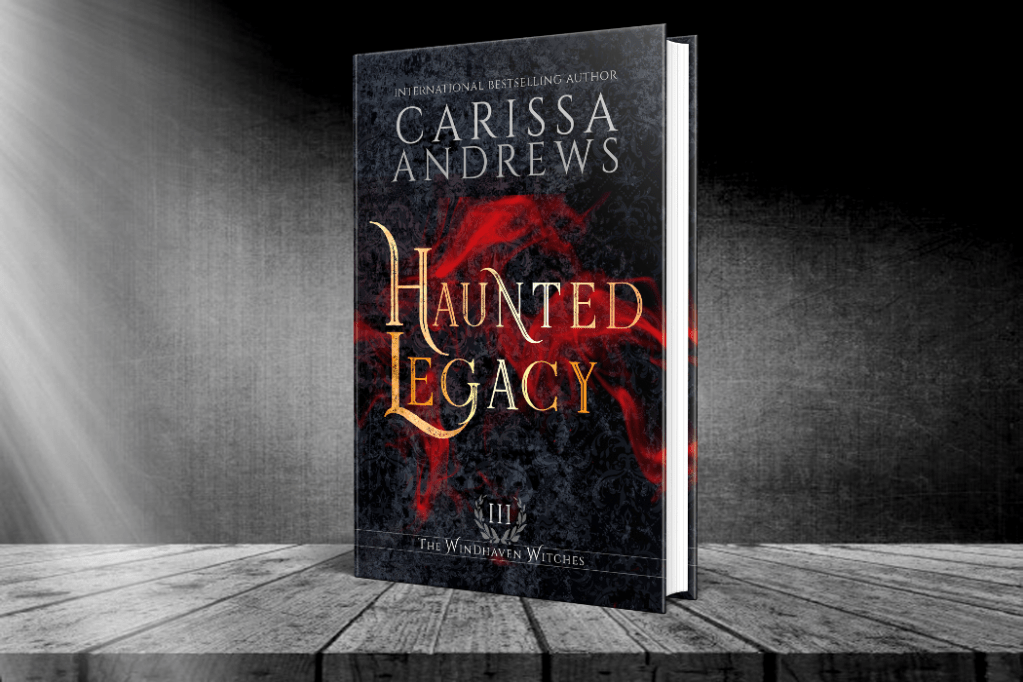
Check out a few of Carissa’s books below!

(Click on the image to order your copy)

(As an Amazon Associate, I earn from qualifying purchases. That means, when you purchase a book using an Amazon link on this site, I earn an affiliate commission. All commission earnings go back into funding my books; editing, cover design, etc.)

Follow her on Social Media here:


Carissa Andrews is an internationally bestselling author from central Minnesota who writes a combination of science fiction and urban fantasy. Her plans for this year include launching the YA/NA paranormal/supernatural thriller series: The Windhaven Witches in the fall of 2020. She keeps sane by chilling with her husband and five kids, playing with art in its various forms, and seeking out life’s mysteries. You can learn more about Carissa and her books by visiting her website:

www.carrissaandrews.com.


Alex Pearl ~ Author Interview

Today I had the pleasure of interviewing Alex Pearl, author of The Chair Man and Sleeping with the Blackbirds!

Alex’s first novel ‘Sleeping with the Blackbirds’, a darkly humorous urban fantasy, written for children and young adults, was initially published by PenPress in 2011. It has since become a Kindle bestseller in the US. In 2014, his fictionalised account of the first British serviceman to be executed for cowardice during the First World War was published by Mardibooks in its anthology, ‘The Clock Struck War’. A selection of his blog posts is also available in paperback under the title ‘Random Ramblings of a Short-sighted Blogger.’ In 2019, his psychological thriller, ‘The Chair Man’ that is set in London in 2005 following the terrorist attack on its public transport system, was published as an ebook by Fizgig Press. The paperback followed in 2020.

Alex lives in NW London with his wife and two children who are far smarter than their old man.

He is quite possibly the only human being on this planet to have been inadvertently locked in a record shop on Christmas Eve.

Let’s start by finding out a little bit about you…

  1. What is your name and do you write under a pen name?  My name is Alex Pearl, and I was very tempted to write under the pen name Bertram Bolzwinick, which was the name of my grandfather who died before I was born. He was from Russia or Poland; I’m not sure which. Sadly, when he arrived on these shores he changed his name by deed poll to Bertram Davis, which doesn’t have the same cachet. However, having toyed with the idea, I finally decide to stick with my own name simply because everyone I’m linked to online knows me as Alex Pearl.
  2. Where do you call home? I live in NW London and I have always lived in London. The area I live in is known as Hampstead Garden Suburb, which was set up in 1906 as part of the garden suburb movement. And we are very close to a large heathland known as Hampstead Heath.
  3. Obviously, we know you are an author, but some writers have other jobs as well. Do you have another occupation? Do you believe you’re any good at it? Do you like what you do? I have retired from work now. I used to be an advertising copywriter, so writing has been something I did professionally for around 35 years. 
  4. What is your family like? It’s getting quieter as both our children have now flown the nest. My wife, unfortunately, became a tetraplegic seven years ago when she was very suddenly diagnosed with a spinal tumor, which was impossible to remove. So she now relies on a power chair, but it doesn’t stop her from working and driving a car. She does a lot of work for organizations that assist those with physical and mental disabilities.
  5. If it doesn’t bother you, can you let us know what your childhood home looked like? I was born in Wanstead, east London, which used to be Winston Churchill’s constituency. and I was brought up in an area called Ilford. Ilford is a large sprawling suburban conurbation on the eastern outskirts of Greater London. Its most attractive feature is a well-tended park, Valentines Park
  6. Do you have any hobbies, other than writing? What do you enjoy doing? I used to paint large abstract compositions on glass, but I haven’t done that for years. Other than writing, I spend time reading, gardening, cooking and all the household chores. Naturally, my wife can’t do too much in terms of physical work from her wheelchair.
  7. What is your greatest dream? Ooh. I suppose that would be winning some ludicrous literary prize. The Pulitzer perhaps or the Booker. I think I’d settle for the Booker. That would be pretty cool. And I could make a nonchalant acceptance speech to the effect that I had come to the conclusion that the judges had clearly lost their minds or their glasses, or both as they had clearly made some kind of mistake as there were so many more deserving winners in the room.
  8. What kind of person do you wish you could be? What is stopping you? I wish I could play the piano very well. I just think it would be a wonderful gift to have. My son learnt as a child and got up to Grade 8 very quickly while he was at primary school. He’s very good at math, which clearly helps. There is definitely a correlation between music and math. I am terrible at math and I know instinctively that I would never make the grade as a pianist. so I have never tried.
  9. Not to pry too much, but do you remember your first love? Yes. Her name was Helen Lewis. She was the first girl that ever made me go weak at the knees. We were both five years of age at the time. And I don’t think I ever had the courage to say a single word to her.
  10. What is the most terrible thing that ever happened to you? Getting locked in a record shop on Christmas Eve. Thankfully, I didn’t forego turkey and Christmas pudding as my father was able to contact the police. This was long before mobile phones had been invented. And within a couple of hours, I was freed from my temporary prison. It was, however, a fairly frightening experience. and one I wouldn’t recommend. 
  11. What or who inspired you to start writing? And how long have you been writing? There have been several people. Going back to my school days, I had a very unusual and inspiring English teacher by the name of Clive Lawton. He was very charismatic and had an affinity with kids to the extent that he really was on our wavelength. He’d do the most extraordinary things and turn everything on its head. On one occasion he announced that instead of him marking our essays he was going to ask us to mark his, and then handed out old essays he’d written in the past. He’d often tell us that the syllabus was boring and that we were going to ignore it and have a serious discussion about something fairly contentious like advertising and the blatant use of sexual imagery. The point of his lessons was to make us think and to convey to us the power of words. And by teaching in this wholly unconventional and radical manner, he not only gained the attention of every single child in that classroom. He also instilled a love of words and ideas. And as a result, every child in my class passed their O level exams, and nobody received anything less than a B grade.                                                                                                                                                                Later on, when I started working as an advertising copywriter, my Creative Director, a man by the name of Ken Mullen was also influential. Ken was and still is a brilliant writer. He had two degrees in English Literature from Oxford University and is the only English advertising copywriter to have had his work quoted in the Oxford Book of Modern quotations. These included two headlines he had penned for The Times newspaper when he was working for Leo Burnett – ‘Our sages know their onions.’  And ‘No pomp. Just circumstance.’ He encouraged his entire creative department to immerse themselves in literature, cinema and the arts in general. But perhaps, more importantly, he wore his learning lightly and was incredibly funny and approachable. He was, in short, the best boss you could ever hope for.
  12. What was your dream growing up? Did you achieve that dream? If so, in what ways was it not what you expected? If you never achieved the dream, why not? I’m not sure that I ever really had a dream when I was growing up. Not one that I can readily remember at any rate. I never really knew what I wanted to do when I left school. I was never particularly studious and I wasn’t heading for university. But I wasn’t bad at art, so at the very last minute I applied to go to art college, and it was here that I became interested in creative advertising and teamed up with a good friend at college. And together we pestered a lot of people in the business with a portfolio of our ideas, and eventually, someone relented and gave us a job. So in answer to your original question, I guess I achieved my goal, which was a kind of dream I suppose.
  13. Who is your role model? I think my father was a pretty good role model. He was an incredibly good father and grandfather. And was very community-minded. There was nothing he wouldn’t do to help someone else; even a complete stranger. He was an incredibly generous, warm-hearted man and I miss him.
  14. What is your greatest fear? Death. Woody Allen was once asked if he liked the idea of becoming immortal through his writing and he replied that he’d prefer to become immortal through not dying. I’m with him on that one.
  15. Do you prefer e-books, paperbacks, hard-covers or audio-books? Call me old fashioned, but I’m afraid books, either hardbacks or paperbacks win hands down. There’s nothing quite like having a book in your hands.
  16. Have you ever read a book more than once? And if so what was it? Yes. It was the first book I ever read as a child. ‘Stig of the Dump’ by Clive King. I reread it recently out of interest – just to see if I still thought it was a terrific children’s book. And happily, I can report that it is every bit as good as I thought it was as a young child. It’s charmingly written, rather clever, and very touching.
  17. What is your opinion of novellas? I see no massive difference really between a short story, novella, and full-length novel. They all have to be compelling. Obviously, with the shorter form, the writing has to be more economical and concise. But that in itself is an art form, and many believe that mastering the short story is more skillful than the full-blown novel. I’m not sure that I necessarily agree with that. I think it’s difficult to generalize. In Japan, of course, there is a very great tradition for writing short stories and there are authors who write nothing more. But at the end of the day, a good story that is well written is a good story, whether it’s in long or short form.
  18. Have you ever read a book just based on its cover? Ooh, that’s a good question. As someone who studied graphic design, I’m sure there should be a book cover that I was drawn to, but interestingly, there isn’t one I can think of. In fact, so many really good books seem to have such anodyne and forgettable covers, which is a shame. 
  19. What is your favorite film based on a book? There are two films that immediately spring to mind that succeed in capturing the essence of a book. And that’s something that’s really hard to do with the medium of film, because you simply don’t have the same enormous scope of a book and you can’t appeal to the imagination; and, of course, you have to leave a huge amount out. The first film that for me comes close is ‘To kill a Mockingbird’ the film adaptation of the book by Harper Lee that stars Gregory Peck in the lead part of Atticus Finch. It’s faithful to the book and does a near-perfect job of recreating its characters. And the other film is ‘Schindler’s List’, the Spielberg film adaptation of Thomas Keneally’s book that was originally titled ‘Schindler’s Ark’, which is arguably a better title. Again, the film is a pretty faithful adaptation of the book, but is also filmed in a highly realistic way by using hand-held cameras and adopting a reportage style of shooting that is very matter of fact and a million miles away from Hollywood. Both films did well at the Oscars, winning among other things ‘Best Adapted Screenplay.’  
  20. What is your favorite book genre at the moment? I don’t really have one. But I tend to read literary, historical, and thrillers.
  21. What books have made it onto your wish list recently? And why? ‘Beneath a Scarlet Sky’ by Mark Sullivan is a book I’ve just bought because it has received a torrent of rave reviews and it sounds like a great read. My cousin also recommended it and he has impeccable taste, so it must be pretty special. It’s also based on a true story set in Italy during the war. 
  22. What book are you reading at the moment? And in what format? I’ve just finished reading ‘The Last Lemming’ by my old friend Chris Chalmers who, like me, also used to be an advertising copywriter. That’s how we met. Chris is a very talented writer. This is his fifth book; they’ve all been magnificent. ‘The Last Lemming’ is an engaging yarn that combines mystery, humour and a dash of romance to great effect. In Mr. Chalmers’ inimitable style, we are introduced to the lives of two disparate central characters: in the form of TV naturalist, Prof Leo Saunders and Claire Webster, a young Personal Trainer with aspirations to become an investigative journalist. There are two distinct threads to the narrative: one set in the mid-1980s and the other in the present-day narrated by our amateur female journalist. The plot involves Saunders admitting on Youtube just before dying that his one claim to fame – the discovery of the Potley Hill lemming – was in fact a hoax and that a certain advertising luminary had ‘blood on his hands.’ While the stunt is eventually written off as nothing more than unreliable ramblings of a sick man, Webster decides to investigate and use her findings for her dissertation on her journalism course. This entertaining and deftly plotted tale involves a cast of colourful characters including some of the furry variety. It’s a skilfully woven yarn with some lovely descriptive passages that establish time and place. And in the best tradition, there are, of course, dead bodies
  23. If you could invite any four (4) celebrities (alive or dead) to your dinner party, who would you invite and why? Ooh blimey. Well, I once had the pleasure of sitting next to the novelist, Beryl Bainbridge at an advertising awards dinner and I found her both delightful and fascinating, and I love her books, so I wouldn’t mind inviting her. I reckon Stephen Fry would be good value. And I’ve always admired and really liked Archbishop Desmund Tutu. And to add the cherry to the icing I’d invite Mr. Barak Obama, one of America’s most articulate Presidents. I think that would be one hell of a dinner party. In fact, I don’t suppose I’d ger around to eating very much in such esteemed company. 

Let’s shift somewhat and talk about your latest story.

  1. What is the name of your most recent book and if you had to sum it up in 20 or fewer words, what would you say? The title of my latest book is ‘The Chair Man‘, which is a thriller. Here’s a 20-word summation: Having survived a terrorist attack, Michael is now a wheelchair user seeking retribution online – but will become a sitting target.
  2. Is the above book part of a series? That is a distinct possibility. Several people have said that they would love to read a sequel. And though the book has a natural conclusion, there is certainly another story that can be woven from the book’s remnants; and it’s something I’m working on. But I say this a lot to people, the plotting of a book is something I find particularly challenging and difficult. And I can’t start writing a book without having the synopsis mapped out. It can and will evolve as I write it, but without this road map, I will just get hopelessly lost. 
  3. How did you come up with the cover? Who designed the cover of your book(s)? That’s a very good question and I’m pleased you asked me that because I’m fortunate to have a very good friend named John Mac who is a brilliant advertising photographer and director. And he kindly photographed and designed the covers to both my books. In fact, for ‘Sleeping with the Blackbirds’ he shot a stunningly beautiful trailer, too. You can watch it here. We were both particularly pleased with the cover for ‘The Chair Man’. Back in 1998, John had been commissioned by the film director Guy Ritchie to produce the film poster for his film ‘Lock, Stock and Two Smoking Barrels’. And for my cover, John has used a similar approach by creating a very strong silhouette against a stark white background with quite distressed typography. It is very distinctive and feels absolutely right for the book. 
  4. Did you listen to any particular songs while writing your book(s)? No. I generally can’t work that effectively with music on. I need silence. Music is just too distracting. It was the same when I worked at an advertising agency. We needed our own quiet space to think. That said, there are several music references in ‘The Chair Man’ The title pages to part one and part two are the titles of songs by Bruce Springsteen and Elvis Costello from 2005. And one of the characters in the book loves the classical piano playing of Glenn Gould – particularly bach’s Golberg Variations.   
  5. How did you come up with the title for your book(s)? ‘Sleeping with the Blackbirds’ as a title came to me fairly early on, and I just liked it from the outset. It has a certain ring to it that sounds lyrical. ‘The Chair Man’ is the moniker that the terrorists use to describe the book’s protagonist Michael Hollinghurst, so I thought it would make a good title – particularly against a graphic book cover.
  6. Do you have a book trailer? If so, where can we watch it? I have a book trailer for my first book ‘Sleeping with the Blackbirds’, which was shot by my good friend John Mac and edited, dubbed, graded and animated by Hogarth Worldwide. You can watch it on Youtube here.
  7. In your latest novel, who is the lead character, and can you tell us a little about him/her? Michael Hollinghurst is the lead character. He’s a very successful corporate lawyer. His marriage to his wife is beginning to fall apart and eventually does when Michael becomes the victim of a terrorist attack that leaves him in a wheelchair. His two kids who are in their mid to late 20s choose to live with him, and you get a sense that he is a good father who cares deeply for his two children. And they likewise are very close to him. Following a lengthy stay in rehab following his ordeal, Michael suffers from feelings of guilt having survived the blast when everyone else in his carriage didn’t. He finds it difficult to come to terms with his predicament and his anger is channeled into a plan for retribution.
  8. What are your character’s greatest strengths? His greatest strengths are his warmth and compassion, not to mention his intelligence and his generosity. 
  9. And what are his/her greatest weaknesses? His greatest weakness is his complete and utter inability to forgive and forget. When he makes a decision he is like a dog with a bone. He simply won’t let go of it.
  10. What are some of his/her favorite foods? He likes fish and is partial to wine, particularly Spanish Rioja.
  11. What’s a positive quality that your character is unaware that he or she has? Despite his anger and bitterness towards the perpetrators of the terrorist attack, he is fairly stoical and pretty brave about his own position. Part of him feels pangs of guilt for surviving, and these feelings drive him to feel a moral obligation to act on behalf of those who were killed. So he is brave, stoical and determined. Positive traits that he almost certainly doesn’t recognize in himself.
  12. Will readers like or dislike this character, and why? Readers have mixed feelings about Michael. Some like him and admire his close relationship with his kids. They also seem to sympathize with his obsessive need for retribution. Other readers aren’t so sympathetic. They see him as a rich white arrogant man who is prepared to put his family’s lives at risk just to seek revenge. They see him as a reckless individual who hasn’t tried to even think through the ramifications of his actions. And some also think that the devious way in which he gets his neighbor’s autistic son to help him hack into an East London mosque is really manipulative and morally wrong.
  13. What first gave you the idea for your latest book? The germ of the idea sprang from my wife’s predicament. She became ill seven years ago with a spinal tumor and ended up in a wheelchair. She is, however a very strong and resilient individual and doesn’t let her predicament stop her doing what she wants, within reason. So naturally, I know a fair bit about spinal injuries and wheelchairs, and I thought it would be a good idea to develop a character that had survived a terror attack and ends up in a wheelchair. But like my wife, I didn’t want my protagonist to roll over and lead a quiet life. I wanted him to go a bit crazy and actively go after other terrorists by using his wits and, of course, the internet.

Let’s talk now about your writing process.

  1. What is your writing style like? Are you a pantster or a plotter? As far as style is concerned, I think I’m a bit of a chameleon. As an advertising copywriter, I’m used to adopting different tones of voice to address different audiences. I think it’s the same when it comes to writing books. My first book for children, young adults and parents was deliberately written in an old-fashioned, whimsical style redolent of authors like Clive King and Roald Dhal. When it came to writing ‘The Chair Man’ though, I adopted a crisp modern unfussy style of writing that felt right for the subject matter. When it comes to my approach to writing, I’m most certainly a plotter. I need a road map to see where I’m going. The story can evolve as I write it, but I have to have very clear directions and know where the thing is heading. So before writing the first chapter, I have to have a fairly detailed synopsis typed out; and the ending is absolutely crucial. And I’m very pleased that the endings to both of my books are I think unexpected and satisfying full stops.
  2. Have you come across any specific challenges in writing or publishing? What would you do differently the next time? Proofreading assistance is something I will certainly invest in next time around. No matter how many times you go through your manuscript, there will always be errors you miss. And it isn’t just indie authors that have this problem. I see typos in mainstream publications by the big publishing houses that a whole team of editors and proofreaders have missed.
  3. Are you a self-published/Indie author or did you publish through a traditional publishing company? I’m an indie author. I publish through Amazon (print on demand and ebooks) and Smashwords for all the other e-platforms.
  4. If you’re a self-published/Indie author what made you go that route instead of the traditional publishing route? I tried approaching literary agents through the traditional channels but haven’t yet received anything other than polite rejection letters several months after my submissions. So the next best thing is to self-publish. 
  5. What’s the best advice that you have been given when it comes to writing? “Read, read, read everything – trash, classics, good and bad, and see how they do it. Just like a carpenter who works as an apprentice and studies the master. Read! You’ll absorb it. Then write. If it is good, you’ll find out. If it’s not, throw it out the window.” William Faulkner
  6. What advice would you give someone who wants to start writing?  Formulate a story in your head; write it down as a synopsis; once you are happy with it, start writing your book; enjoy the journey.
  7. Where can your readers follow you? WEBSITE http://alex-pearl.net  BLOG http://rhubarbrabbit.blogspot.com FACEBOOK https://www.facebook.com/The-Chair-Man-103009131263558/?modal=admin_todo_tour TWITTER https://twitter.com/AlexBPearl    GOODREADS     https://www.goodreads.com/author/show/2842442.Alex_Pearl             AMAZON https://www.amazon.co.uk/Alex-Pearl/e/B00AR0T3QA/ref=dp_byline_cont_pop_ebooks_1

Michael Hollinghurst is a successful corporate lawyer living a comfortable, suburban life in leafy North West London. But on 7 July 2005, his life is transformed when he steps on a London underground train targeted by Islamist suicide bombers. While most passengers in his carriage are killed, Michael survives the explosion but is confined to a wheelchair as a result. Coming to terms with his predicament and controlling his own feelings of guilt as a survivor conspire to push him in a direction that is out of character and a tad reckless. In a quest to seek retribution, he resorts to embracing the internet and posing as a radical Islamist in order to snare potential perpetrators. Much to his surprise, his shambolic scheme yields results and is brought to the attention of both GCHQ and a terrorist cell. But before long, dark forces begin to gather and close in on him. There is seemingly no way out for Michael Hollinghurst. He has become, quite literally, a sitting target. 


Eleven-year-old schoolboy, Roy Nuttersley has been dealt a pretty raw deal. While hideous parents show him little in the way of love and affection, school bullies make his life a misery. So Roy takes comfort in looking after the birds in his suburban garden, and in return the birds hatch a series of ambitious schemes to protect their new friend.

As with the best-laid plans, however, these get blown completely off course – and as a result the lives of both Roy and his arch tormentor, Harry Hodges are turned upside down. While Harry has a close encounter with God, Roy embarks on a voyage of discovery that draws in and impacts on everyone around him, including the local police, his headmaster and the national media. Where will it all end, and will life ever be quite the same for Roy Nuttersley? 


(As an Amazon Associate, I earn from qualifying purchases. That means, when you purchase a book using an Amazon link on this site, I earn an affiliate commission. All commission earnings go back into funding my books; editing, cover design, etc.)


Kristen Collins ~ Author Interview

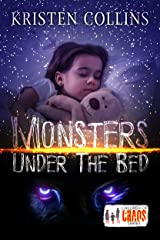
We have a very special guest today, Kristen Collins is the author of Monsters Under the Bed!

Check out a COUPLE of KRISTEN’s books below!

(Click on the image to order your copy)

(As an Amazon Associate, I earn from qualifying purchases. That means, when you purchase a book using a link on this site, I earn an affiliate commission. All commission earnings go back into funding my books; editing, cover design, etc.)

For a complete list of Kristen’s books, follow the AMAZON link below!

Check out our interview on YouTube:

Follow him on Social Media here:


Author Kristen Collins is a Native Texan. She is a part-time working mother/housewife, as well as a Lupus Warrior. 

Thanks to the encouragement of her friends and family, she found a passion in writing paranormal romance books. 

She likes to explore new types of characters such as Sandmen and Boogeymen.

Angels are also a part of her obsession; she will sit on the computer doing extensive research on both Sandmen and Angels trying to get her facts straight when writing.

She also creates Art Journals that can be cross generational from thirteen to sixty years younger. Her goal with the art journals is to reach people who need a little extra feel good in their lives.

When the Queen of the Sandmen, Ana, decrees that she will give teddy bears magic through the power of their golden Sandman dust and life is sustained through the belief of a child, the only purpose is to protect the children from nightmares, or rather the monsters under the bed. The Boogeymen who were defeated long ago are gone but their creatures did not die off with their masters.

The balance of good and evil has to be maintained.A supernatural orphan, Sharon, and her faithful pitbull dog, Lieutenant Twinkleton, catch the attention of Queen Ana when she goes to fulfill her part of the decree. Unsure of the little orphan child’s abilities, she gives special orders to the little girl’s only toy: a teddy bear named Sir Snugglestiltskin.Unknown to Queen Ana, there’s more to Sharon than what her eyes can see and these creatures are hungry to get their hands on the little girl.


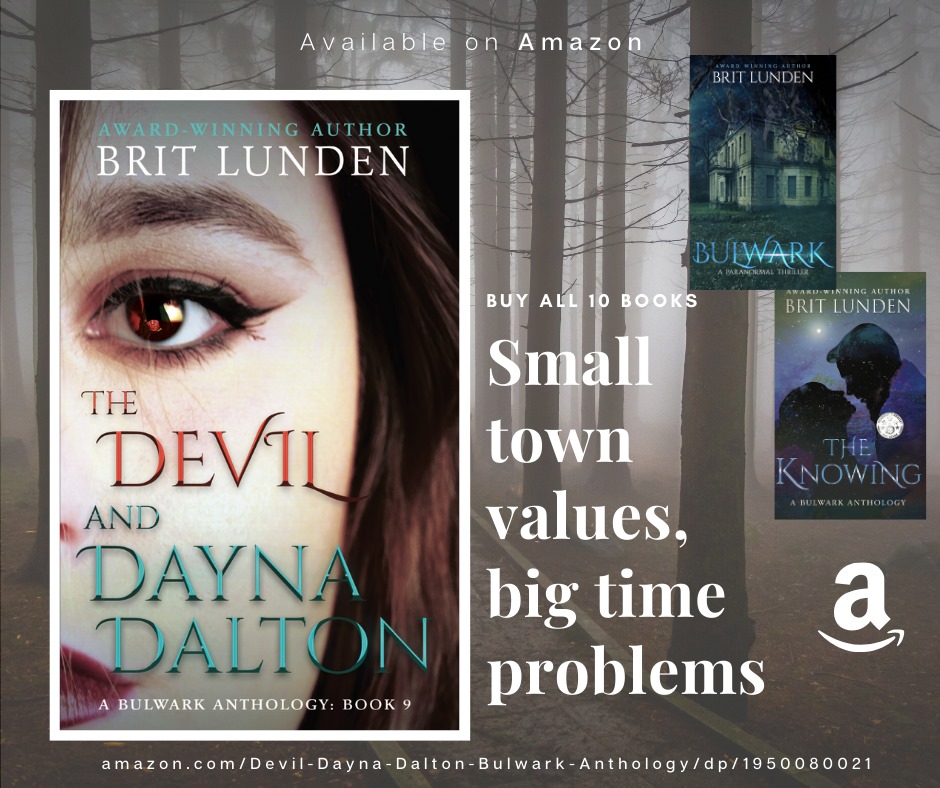
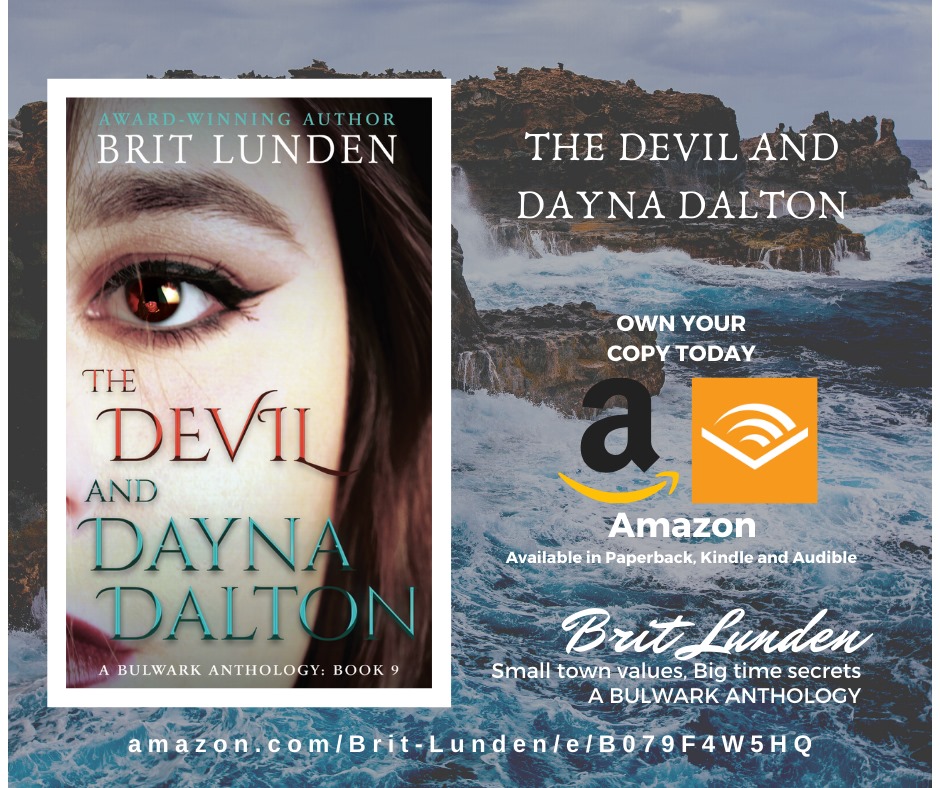
The Devil and Dayna Dalton by Brit Lunden (giveaway)

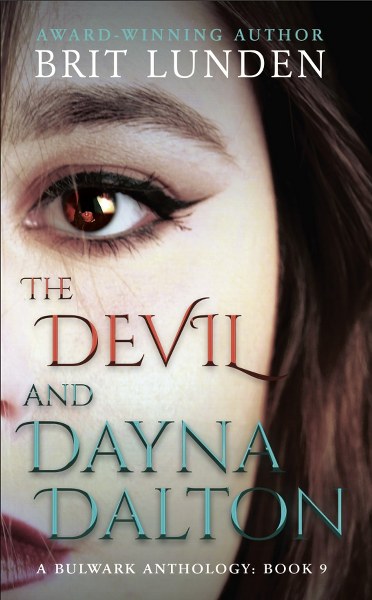
The Devil and Dayna Dalton (Bulwark Anthology Book 9) by Brit Lunden ~ Genre: Paranormal Romance

Reporter Dayna Dalton’s reputation has been ruined since birth. The daughter of wild child, Becky Dalton, is expected to follow her mother’s footsteps; never given a chance to prove she’s different. Dayna’s been in love with Clay Finnes since she was a teenager. Her unrequited love for Sheriff Finnes leaves her empty. He’s happily married and unavailable. Instead, Dayna finds herself stuck in the revolving door of bad relationships. But this is Bulwark, Georgia, a town where strange things are always happening. Dayna is doomed to this loveless life until she can find someone who will appreciate the depth of her character. Can she overcome her fears and look beyond her own perceptions to accept a greater love? *Contains Sexual Content*

Goodreads * Amazon


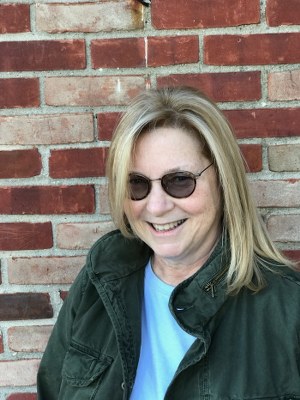
Brit Lunden is a prolific author who’s written over 50 books in assorted genres under different pen names. Bulwark was her first effort in adult fiction and was chosen by several of her fellow authors as the basis for a new series, A Bulwark Anthology.  Using her characters, they are creating new denizens in spin-off stories to this bizarre town. Brit Lunden lives on Long Island in a house full of helpful ghosts.

Website * Facebook * Twitter * Instagram * Bookbub * Amazon * Goodreads

Would you like a chance to win a $10 Amazon giftcard, Print Copy of The Devil and Dayna Dalton – 1 winner each! Follow the tour HERE for special content and a giveaway!

I’m excited to be one of many tour hosts sharing information about The Devil and Dayna Dalton by Brit Lunden.

Stacy Kingsley ~ Author Interview

We have a very special guest today, Stacy Kingsley author of the zombie series DO ZOMBIES WIN.

Check out the Do Zombies Win? series below!

(Click on the image to order your copy)

Check out our interview on YouTube:

Follow her on Social Media here:


Roy L. Pickering Jr. ~ Author Interview

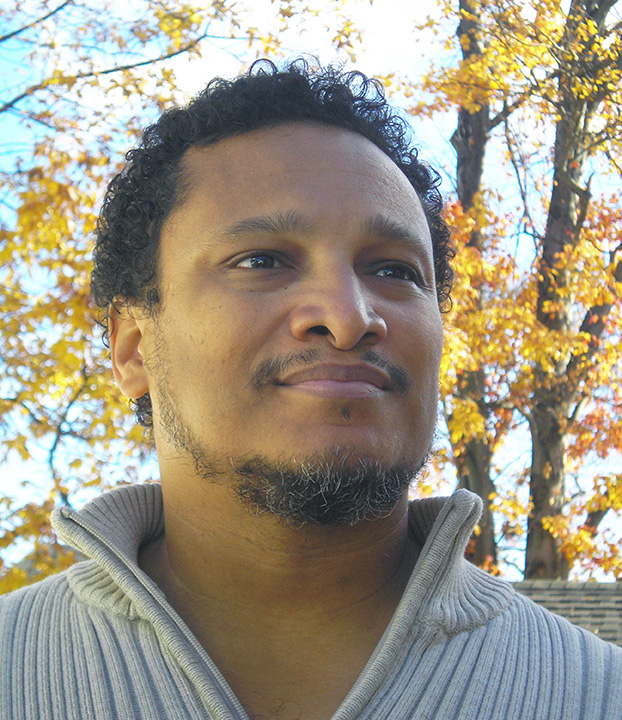
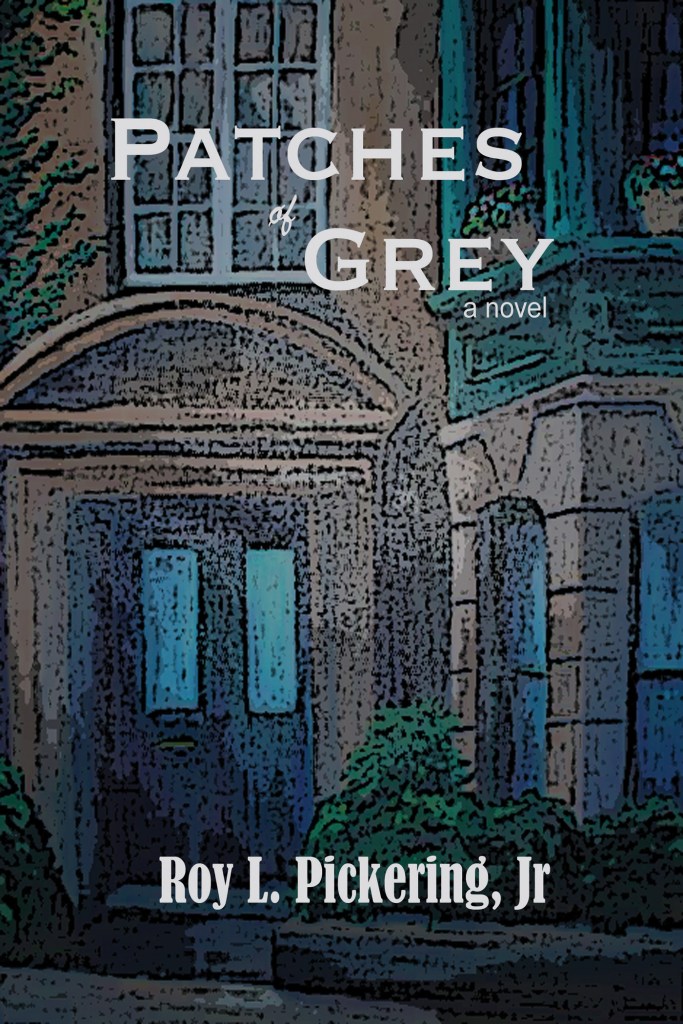
Today, I have the pleasure of interviewing Roy L. Pickering Jr., author of Patches of Grey, Ava Applesawse, Feeding the Squirrels, and Matters of Convenience.

OLYMPUS DIGITAL CAMERA

Lets start by talking a little about yourself!

1.  What is your name and do you write under a pen name? My name is Roy L. Pickering Jr. Everything I have gotten published to date has been written under my own name. As I have  witnessed the rise in popularity of fan fiction, I’ve considered giving the genre a shot. I’ve kicked around some ideas for putting real life people into fictional settings, but nothing has struck me as a slam dunk winner yet. If/when I ever come up with something delightfully absurd that I would not necessarily want to associate with the rest of my writing resume, that would be the occasion for me to deploy a pen name. What it would be is not yet decided on. Once I come up with a story, I’ll then decide on a name to associate with it.

2. Where do you call home? At present I live in New Jersey. Home for me so far has been the US and British Virgin Islands, New York and New Jersey.The settings of my fiction tends to be where I have lived. Write what you know, as they say. Write about where you know as well.

3. Do you have any hobbies, other than writing? What do you enjoy doing? I’m pretty obsessed with tennis. Weight training is another hobby. They don’t particularly go hand in hand as the latter bulksyou up more than is ideal for the former. But hobbies choose you more than you choose them, I think. Tennis and writing have a fair amount in common. Both require tenacity to improve from shaky beginner to competent. I can’t get enough of either one, and as much as I have improved since I first picked up a pen and a racquet, I realize there is so much further for me to go. I needonly to stick with it. 

4. What or who inspired you to start writing? And how long have you been writing? I have been writing since my early teens and inspiration of course came from great books. The earliest novels I read after graduating from chapter books written for children were Journey to the Center of the Earth and 20,000 Leagues Under the Sea by Jules Verne. By the time I was done with them I had decided that coming up with stories of my own for the entertainment of others was what I wanted to do with my life some day.

5. Do you prefer e-books, paperbacks, hard-covers or audio-books? I am Team Print all the way. I don’t have a strong preference one way or the other when it comes to hardcover versus paperback. A shelf full of hardcover books is aesthetically pleasing to look at, but I also appreciate the lighter weight portability of a softcover book, not to mention the lower price point. As for e-books, I appreciate what readers value about them but my personal preference is for ink printed on paper. In some regards print and electronic books are competing with each other, but I have never believed that e-books would cause print to go extinct. Once the initial excitement over deciding whether to go with the Kindle or the Nook or some other platform dwindled down, I expected e-book sales to stabilize and for print to have a resurgence and for a balance to be established in which there is a place for both of them. I have made the books I wrote available in both electronic and print formats to reach the broadest possible audience. But I have not yet fully ventured into the world of audio books. I am not of the opinion that listening to a book is equal to reading a book. As a reader I opt for reading over listening and for paper over screen. As an author, an indie one with a budget at that, I have been contemplating creating audio versions of my books and possibly doing the narrating. We shall see if I get this ambitious project off the ground. To date I have only gone so far as to record myself reading a couple short stories plus excerpts from my longer works. I recorded myself reading a full chapter from Matters of Convenience, though it’s not an especially lengthy opening chapter. It is long enough to make me realize that recording an entire novel would be a massive undertaking. 

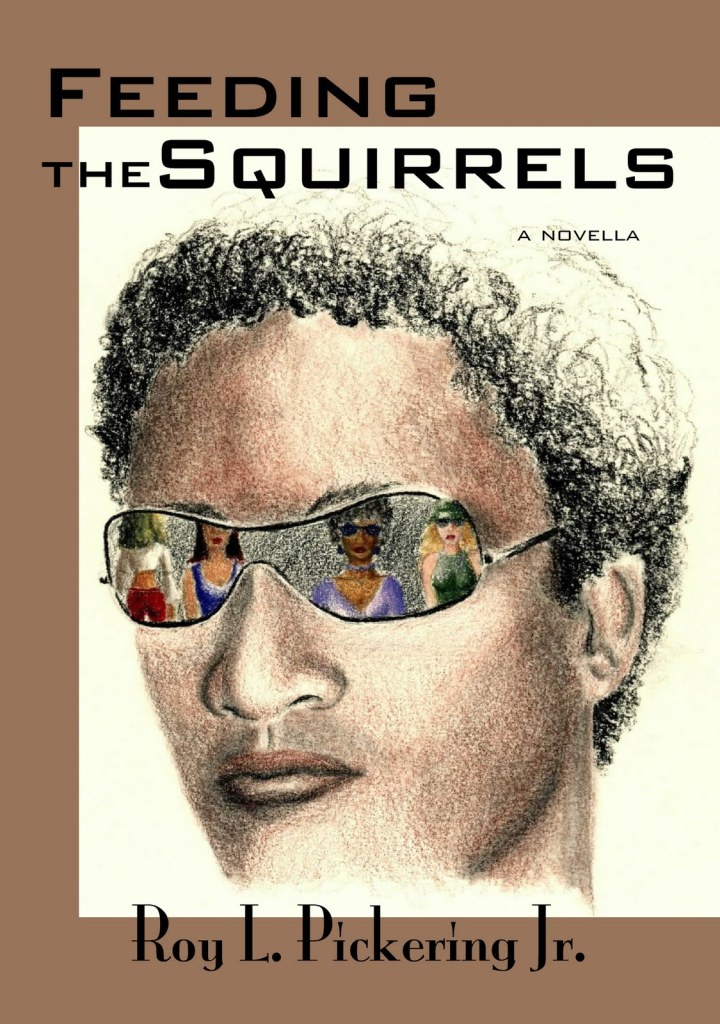
6. What is your opinion of novellas? I enjoy all lengths of fiction as both a reader and a writer. Without initially setting out to do so, I am the author of a single novella. When I sit down to write a novel (two of them completed so far and one in progress), I know what it is going to be. Same for short stories of which I have written about 50, give or take. When I began writing Feeding the Squirrels, it was the one time that I did not know what it was destined to become. Starting out as a writing exercise, it is about a man’s single minded pursuit of pleasure with various women. The encounters are not related to each other, so it was written at the outset basically as a series of short stories featuring the same protagonist. Eventually I figured out a way to tie the vignettes together, at which point the individual stories became chapters in what ended up being a novella. 

7. What book are you reading at the moment? And in what format? At present I am reading and enjoying a paperback copy of The Magician’s Assistant by Ann Patchett. I document the books I’ve read or plan to get to at the website Goodreads. Along with giving a star rating because I have no choice, I make sure to write are view. Recently I decided to make the move to YouTube where you can find my BookTube channel Roy’s Book Reviews. If anybody cares to know how I felt about a book, they have the options of either reading or listening to my thoughts. 

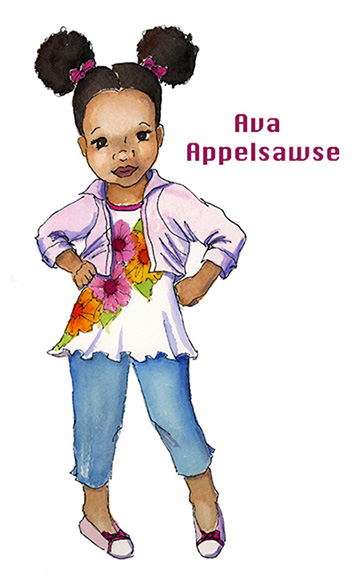
8. What genres do you read as well as write in? I read across a wide range of genres. There are a few that I may never check out due to lack of interest, but they are exceptions to my belief that excellent writing and wonderful stories exist in various literary categories. Much of my own writing falls under the umbrella of literary fiction. Upmarket commercial fiction is another label that may appropriately apply. My debut novel Patches of Grey focuses largely on teenage characters. The language may be too harsh for it to be described as Young Adult, so the category of New Adult is probably a better fit. My second novel Matters of Convenience targets a more mature audience, as does the novel I have underway with the working title of Brothers. In a departure from my novels and novella and short stories, I decided to give children’s chapter book writing a shot. It is a family affair, writing by me, illustrations by my super talented wife, and inspired by our daughter. Our goal is to publish The Absolutely Amazing Adventures of Ava Appelsawse in the Fall or early Winter of 2020. Writing for an audience 7 – 10 years of age has been a dramatic change of pace from the rest of my prose. I’m looking forward to wading into uncharted waters and introducing my stories to a new generation of readers.

Lets talk about your latest work…

1. What is the name of your most recent book and if you had to sum it up in 20 or fewer words, what would you say? My most recently published book is my second novel, Matters of Convenience. It’s a love triangle turned into a love rectangle. There you go, well under 20 words. Here is my slightly longer synopsis. When one man seems to be the perfect fit for your heart, and another is the one who picks up its broken pieces and supports pursuit of your dreams, which is the right choice and what are the more acceptable regrets?

2. Is the above book part of a series? Matters of Convenience is a standalone novel, same as Patches of Grey. Prior to taking on the challenge of writing a children’s book, creating a book series is not something I ever had in mind. I conceive of a tale and tell it to completion, and then I move on to a new literary universe. That has changed with The Absolutely Amazing Adventures of Ava Appelsawse which is planned to be a series. I have written the first two installments and will get started on the third book as my wife embarks on illustrating the second. 

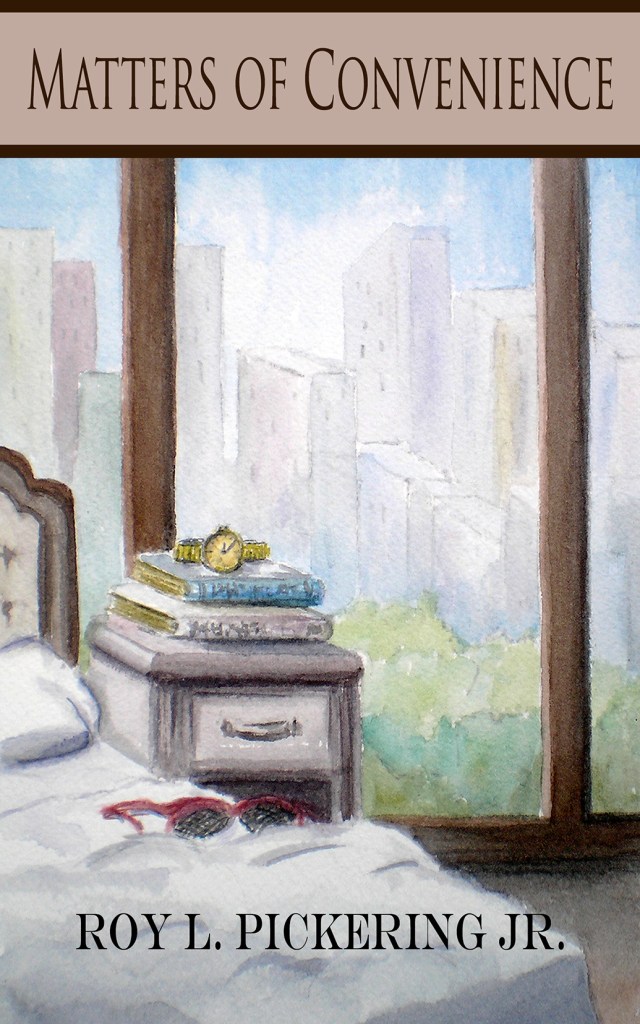
3. How did you come up with the cover? Who designed the cover of your book(s)? As mentioned in previous responses, I happen to be married to a visual artist. Erin is a wonderful painter/illustrator. The cover of my first novel Patches of Grey uses one of her paintings for the cover art. The cover for my novella Feeding the Squirrels uses one of her illustrations that I posed for. When it came time to decide on a cover for Matters of Convenience, I had an image in mind that my wife had not already painted. She brought my vision to life with a new painting created for my book’s cover. Not too many authors out there, whether indie or those published by the Big 5, have the luxury that I do when it comes time to decide on cover art. With The Absolutely Amazing Adventures of Ava Appelsawse we have taken things to the next level as the book is illustrated throughout.

4. Do you have a book trailer?

5. In your latest novel, who is the lead character and can you tell us a little about him/her? I’ll take “latest novel” to mean the one I am currently working on. The lead character is a white, male police officer who kills a young black man in the line of duty. The necessity of the shooting is questionable and it is filmed by a cell phone camera. Video of the shooting goes viral and turns the officer’s life upside down in a climate where accountability is increasingly demanded by the public. Where the story goes from there is something for the world to find out at a later date. 

6. Will readers like or dislike this character, and why? That’s the big question. It’s sort of the reason why I’m writing it. My third book is written from the vantage point of a man who ended the life of another with the pull of a trigger. But if you have killed someone does that automatically define you as a killer? As a writer I am far less interested in absolutes than I am in nuance. My first novel is literally called Patches of Grey because it is usually simplistic to view matters strictly in black and white terms. Sometimes those we call good people do bad things. Sometimes those we call bad people exhibit decency. Sometimes things get so mixed up in the heat of a moment that it is difficult to tell good and bad, right and wrong, justified and unforgivable apart from each other. I believe readers will relate to my book’s protagonist because he is not written as a monster, but as a flawed human being who succumbs to the pressure of a tense situation. Was his motivation garden variety racism, or self preservation, or anger, or fear, or hatred, or an amalgamation of emotions? If unable to like him, can you both dislike him and feel empathy for his plight? We shall see.

7. What first gave you the idea for your latest book? You need look no farther than recent headlines that fall under the banner of the Black Lives Matter movement. I wanted to write about policing and the thin line between operating by the book and misconduct. I wanted to write about the gun control debate. And about the correlation between mental imbalance and violence. And about the accelerative effect that social media can have on the impact and resolution of events which garner a great deal of attention, even if it is fleeting attention as we quickly move from one tragedy to the next. With these topics in mind I came up with a story that has allowed me to explore their conflicting sides. 

Lets talk a little about your writing process!

1. What is your writing style like? Are you a pantster or a plotter? Up until the novel I’m working on now, I have been a plotter. In addition to coming up with the overall story arc I would create chapter outlines. This is a useful tool as it informs me on what to write as I get started on each chapter. But this time around I am trying out a different approach. Rather than chapters it is broken up into sections of varying lengths. The order in which the scenesare being written is not necessarily the order that they will appear in the final draft. They can be moved around later as I see fit since the story is not being told to the reader or written by me in chronological order. I decide what a scene will be about and write it. I may have no idea what will happen in the following scene until I get around to writing it. I know how it is all going to end, but the journey to get there is definitely being taken by the seat of my pants. This way of writing, being such a departure from how I have written in the past, has been both challenging and liberating.

2. Are you a self-published/Indie author or did you publish through a traditional publishing company? I am a self-published/Indie author when it comes to my novels. And the plan for The Absolutely Amazing Adventures of Ava Appelsawse is also to publish it myself. I have not decided yet which avenue I will choose to pursue once my third novel is ready. That bridge will be crossed when I get to it. Self publishing gives me control over the timetable that I would not otherwise enjoy, but of course there are various advantages to having a major publishing house behind you that I would not mind experiencing in the future. 

3. What’s the best advice that you have been given when it comes to writing? The summer after I graduated college I worked for a freelance copywriter. My goal was to be a novelist at some point, but at that time writing an entire novel was a daunting notion. He asked me how many pages I believe a novel to be. I answered ‘about 300 on average’. He asked how many pages I thought I was capable of writing per day. I said rather ambitiously ‘about ten pages per day’. So that’s a book per month, he declared. Now just go ahead and do it. I had never thought about it like that before. Even back then, a more naïve version of myself realized that writing a book per month was an unrealistic goal. But TECHNICALLY it was a possibility. The key was to be willing and able to put in the work on a daily basis. And to have enough story ideas on tap to be able to move immediately from one project from the next. As for the laborious, time intensive work of getting my books published and drawing the public’s attention to them, we didn’t get into that. There are A LOT of things an author has little to no control over once a book has been published. How many copies will it sell? What will reviewers have to say about it? But when it comes to crafting our stories, we have 100% control. Nothing to it but to sit down and write. Or as Hemingway ironically put it – There is nothing to writing. All you do is sit down at a typewriter and bleed. I start books off writing longhand and then type it up on my laptop, but the same general principle applies. Look up from the pages every month or so and see how much has been accomplished. So much. Never enough. Get back to writing.

4. What advice would you give someone who wants to start writing? I wrote a post on this topic at my blog – http://lineaday.blogspot.com/2010/04/advice-for-aspiring-authors.htmlShorter version of what I wrote there is – read a lot, write a lot, rinse and repeat. I don’t see how anyone can be a writer if they arenot also an avid, lifelong reader. One fuels the other. Not that we copy from what we’ve read. We’re simply inspired by the great writing done by others to rise up and see if we are up to the challenge of doing the same in our own unique way. Each time is like the very first. I have no idea how I managed to get it done before and I have no idea how I’ll manage to do it again. I just know that I will try, and past history has shown that when I put my pen to paper, sooner or later it starts moving.

5. Where can your readers follow you? I recently set up this link tree https://linktr.ee/WrittenByRoy which has links to the various places online where you can find me and what I have written. Among them are…
Roy’s Book Reviews: https://www.youtube.com/channel/UChxTtsj-XYu3cWqkT0iCXNg?sub_confirmation=1A Line A Day: http://lineaday.blogspot.com/Twitter: https://twitter.com/AuthorofPatchesFacebook: https://www.facebook.com/PatchesOfGrey/Goodreads: https://www.goodreads.com/mplwdscribeInstagram: https://www.instagram.com/roylpickering_author/Pinterest: https://www.pinterest.com/authorofpatches/boards/Wattpad: https://www.wattpad.com/user/authorofpatchesMy website: http://roypickering.weebly.com/Amazon author page: https://www.amazon.com/Roy-L.-Pickering-Jr/e/B002D13K0Q%3Fref=dbs_a_mng_rwt_scns_share?ref_=d6k_applink_bb_dls

OLYMPUS DIGITAL CAMERA

Ashley Chappell ~ Author Interview

We have a very special guest today, Ashley Chappell writes satire and young adult epic fantasy novels featuring expansive world-building and universes filled with magic, mayhem, and monsters!

Check out a few of Ashley’s books below!

(Click on the image to order your copy)

Check out our interview on YouTube:

Follow her on Social Media here:

Follow her home building journey by clicking HERE!