We have a very special guest today, Amanda Orneck was raised in Southern California on a healthy diet of fantasy and science fiction. She grew up knowing from the time she was small that she wanted to be a writer. She wrote her first story at the age of five and began her first novel at eleven. While attaining a Bachelor’s in Creative Writing from USC, Amanda received the Middleton Fellowship for excellence in Poetry. Today she has one published SciFi novel and has recently begun following her renewed passion for Regency Historical Romance.
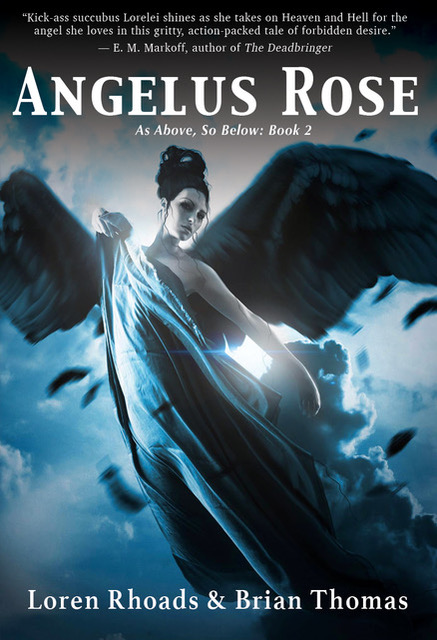
I’d like to welcome Loren Rhoads, author of Lost Angels and Angelus Rose, to my blog today!!!
Lets start with a little about you!
What is your name and do you write under a pen name?
My name is Loren Rhoads. I changed it legally last year, after using it for a pen name since the Eighties. It was a huge step to claim my name for real. It made me so happy!
Where do you call home?
San Francisco.
Do you have any hobbies, other than writing? What do you enjoy doing?
I started visiting cemeteries by accident. I love to travel, so what started as a hobby has turned into a successful side hustle. I’ve written a travel memoir called Wish You Were Here: Adventures in Cemetery Travel and a travel guide to cemeteries around the world called 199 Cemeteries to See Before You Die. Angelus Rose, my new novel, has three cemeteries in it. It’s the first time one of my novels has so many cemeteries in it.
If you could invite any four (4) celebrities (alive or dead) to your dinner party, who would you invite and why?
I’d invite David Bowie, because his music has been so central to my life. I even have a Bowie tattoo. Barack Obama, because I’d like to talk to him about current events. Angelina Jolie, because she inspired the succubus in my books. And Ursula Le Guin, because I’d love to talk to her about writing.
Let’s shift somewhat and talk about your latest story.
What is the name of your most recent book? If you had to sum it up in 20 or fewer words, what would you say?
Its title is Angelus Rose. The tagline is: If Romeo had wings and Juliet a barbed tail, could they find happiness in the City of Angels?
Is the above book part of a series?
It’s the second and final book of the As Above, So Below series. There are also a couple of short stories set in that world. One of them is free at Bookfunnel, if you’d like to get a taste of the succubus Lorelei at work: https://dl.bookfunnel.com/v8o5w54mzk
Who designed the cover of your books?
Carmen Masloski did the covers of both books in the series. She was incredibly easy to work with. I just love what she came up with.
Did you listen to any particular songs while writing your books?
I listened to the first two Garbage albums a lot, along with a lot of soundtrack music on Spotify.
How did you come up with the title of your books?
Lost Angels is the name of the bar where the succubus Lorelei first meets the angel Azaziel, so the name of the first book was easy. My co-writer Brian and I struggled a little with the title of the second book. I wanted to call it Dies Irae (I was listening to Mozart’s Requiem a lot at the time), but Angelus Rose is easier to pronounce.
Do you have a book trailer?
In your latest novel, who is the lead character and can you tell us a little about her?
Lorelei is a succubus who works for Asmodeus, the demon prince of Los Angeles. She loves her life, posing as a club kid and leading people to damnation. One night, Azaziel appears in the bar where she’s working. Lorelei can’t get him out of her mind. She pursues him — and he possesses her with a mortal girl’s soul. After that, she needs to find an exorcist.
In the new book, Lorelei and Aza are trying to figure out how they can be together. Unfortunately, war is brewing in Los Angeles and everyone wants them to take sides.
What first gave you the idea for your latest book?
Originally, As Above, So Below was all one book. It was hugely long and I was afraid it would never sell, so I cut it in half at a natural climax about the mid-point. The first book was published by a small indie press in 2014. When I got the rights back, I revised it a bit, retitled it Lost Angels, and republished it with a new cover image. Then I started revising the second half so it could stand alone as a sequel. Angelus Rose, part two of the story, came out in February.
Let’s talk now about your writing process.
What is your writing style like? Are you a pantster or a plotter?
Definitely a pantser. I write to discover the story.
What made you go the indie route instead of the traditional publishing route?
I like the freedom of choosing my own cover artist, having the final say on the editing, and knowing that I’m doing the best possible promotion for the book.
What’s the best advice that you have been given when it comes to writing?
Just write and don’t think too much. Ray Bradbury told me that.
What advice would you give someone who wants to start writing?
Set a timer and just start writing. You’ll find out what you think as you go along.
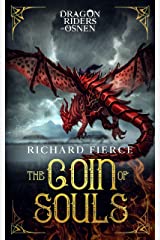
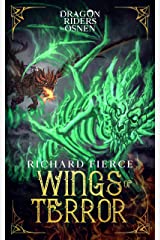
We have a very special guest today, Richard Fierce is a Fantasy and Space Opera author. He has published almost twenty books five of which were released this year!!!
Virtual Poetry Reading – Episode 19 A #TheRedheadedAuthor Production
INCLUDED IN THIS EPISODE:
Teeth by Amanda Porter (Read by Michelle Huguley)
In A Forest Or In A Dream by Chuck Puckett (Read by Chuck Puckett)
Soldier, Rest! from the Lady of the Lake by Sir Walter Scott (Read by John Miller)
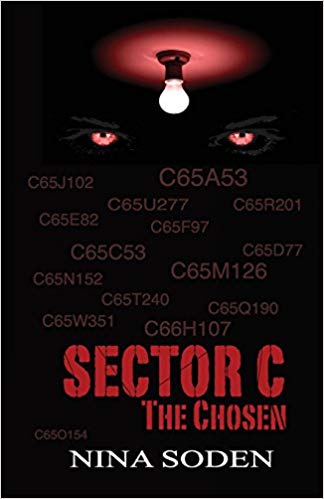
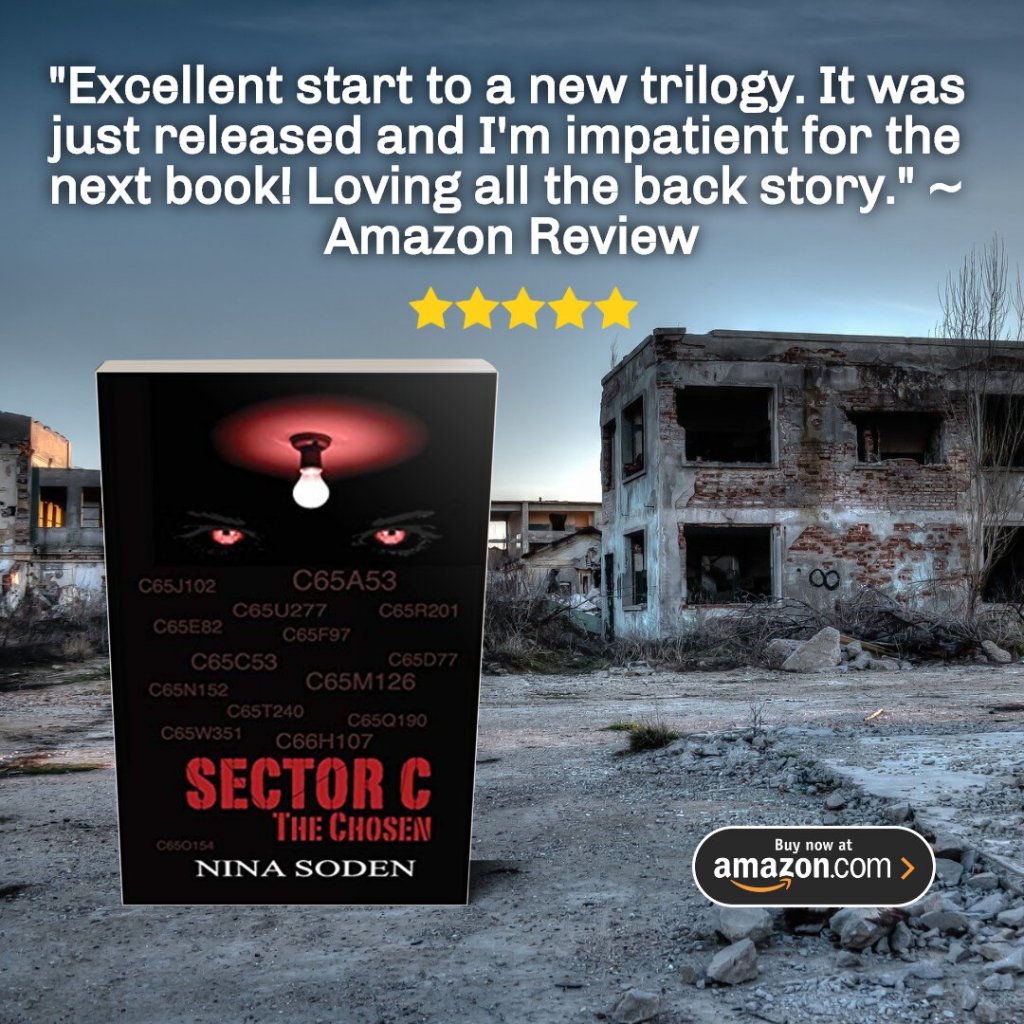
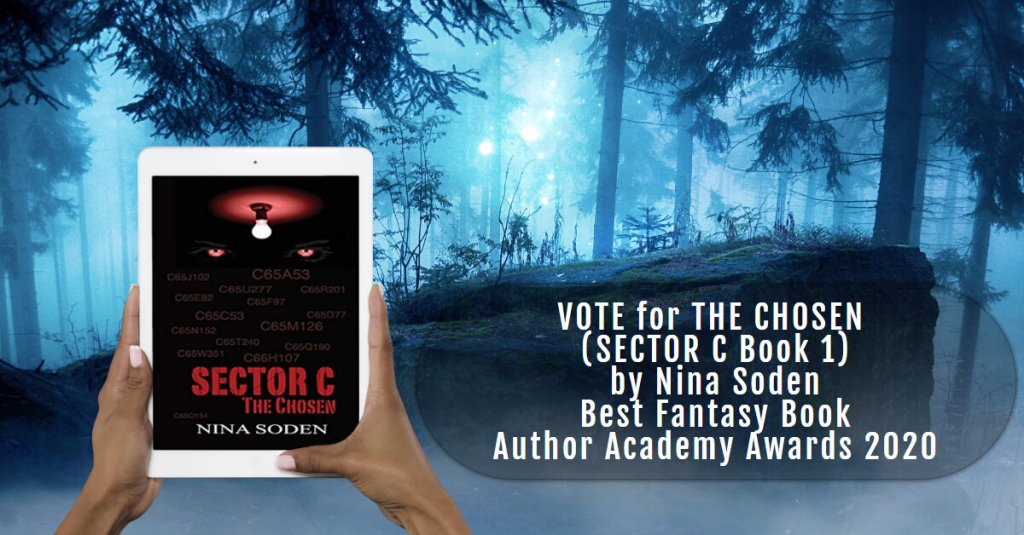
I was just notified that my book The Chosen is a Fantasy Book Finalist in the 2020 Author Elite Awards!!! Please take a minute to follow the link below and vote for my title (The Chosen by Nina Soden).
Set in a futuristic dystopian where society is governed by a council of vampires and lycanthropes, selection students are sheltered and raised in a deceptively utopian world. Strict rules are imposed to control population growth, education, and even personal interactions with other members of the Sector, all in the name of safety. When ‘A’ comes of age, she like all youth throughout Sector C and her selection classmates aren’t sent out into the world to find jobs, make money and lead happy carefree lives. They are forced to endure the rigorous physical and mental testing of Selection Week before choosing their destiny or being forced into a fate far worse. Those that make it out alive are announced as sector residence, given a position within the society, and allotted all the privileges of their chosen “culture.” However, when your only choices are vampirism, lycanthropy, breeder, blood donor, or banishment to the Wastelands, what choice do you really have? Suspenseful, intense, passionate, and awash in paranormal delights, Sector C captures the enchantment and mysteries of the supernatural world and the power of friendship.
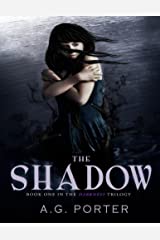
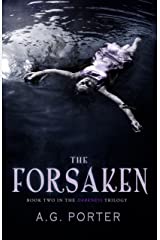
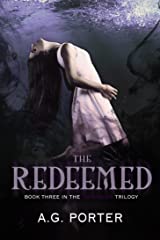
We have a very special guest today, A.G. Porter, the author of The Darkness Trilogy, a YA Paranormal Thriller.
This series includes The Shadow, The Forsaken, and The Redeemed.
(Click on the image to order your copy)
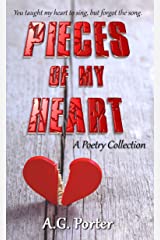
She also has two poetry collections (Pieces of My Heart and Pieces of My Soul).
She is very busy right now working on a spin-off of her The Darkness Trilogy characters, as well as a new YA Paranormal series, The Sacrifice of Ava Black, and her next poetry book.
Virtual Poetry Reading – Episode 18 A #TheRedheadedAuthor Production
INCLUDED IN THIS EPISODE:
Trouble by Amanda Porter (Read by Art Walthall)
Gemini Thought Process by Chuck Puckett (Read by Chuck Puckett)
Cleopatra's Barge from Antony and Cleopatra by William Shakespeare (Read by John Miller)
Cleopatra's Death from Antony and Cleopatra by William Shakespeare (Read by John Miller)
Virtual Poetry Reading – Episode 16 A #TheRedheadedAuthor Production
INCLUDED IN THIS EPISODE:
Seasons by Lilly Brown (Read by Rebecca England)
Pardon the Mess by Chuck Puckett (Read by Chuck Puckett)
Commonplaces by Rudyard Kipling (Read by David Schulte)
You are Old, Father William by Lewis Carroll (Read by John Miller)
Virtual Poetry Reading – Episode 14 A #TheRedheadedAuthor Production
INCLUDED IN THIS EPISODE:
Resisting Revenge by Chuck Puckett (Read by Chuck Puckett)
The Rain by Amanda Porter (Read by Lilly Brown)
The 13th Skull by Karen Mullins (Read by Brewer Mitchell)
Kubla Khan by Samuel Taylor Coleridge (Read by John Miller)
I originally published this article as a guest author at http://timothy-oullette.blogspot.com/ and http://www.timouellette.com on August 8, 2014, but I felt that the information was important so I also shared in on my website. Since I continue to get questions about editing as an indie-author, I thought it might benefit my readers to repost it today. I hope you enjoy my take on Typos and Errors in Indie-Published Manuscripts. You can let me know what you think by leaving a comment below.
Are typos in a book a big deal?
Of course they are – to some extent! Typos happen. Typos happen in books that are self-published and traditionally published. Typos happen to new authors and seasoned authors. Typos happen in eBooks and print books. It doesn’t matter how many people you have edit, proof read, re-read, etc. there is always a chance a typo (or two – or three – or four – OR MORE) is going to slip through THE CRACKS. Does that mean the world is over, the author should never write again, or that the author should lose all credibility? NO!
Let me say that again – NO!
It goes without saying, although I will say it, that every author should take the time and effort to make their manuscript the best that it can be. Not only do readers deserve the best product an author can provide, authors deserve to produce their best work – manuscripts they can be proud of for years to come!
You might be asking yourself, ‘how do I, as a self-published author without the backing of a traditional publishing house, afford to make sure that my manuscript is ready for publication?’
Good Question! Editors, proof-readers, and copy-writing services all cost money! Plus, and here is the catcher, even professional editors, proof-readers, and copy-writing service professionalS make mistakes! Even when you pay good money for these services you can’t be 100% sure your manuscript is flawless. That doesn’t mean you should just accept the fact that typos happen and therefore you don’t need to worry about them. There are a lot of things you can do to ensure that you publish your best work, and I will give you some examples, but you have to remember that you are never going to please everyone. There will always be someone that finds something wrong with your book.
What can you do to ensure minimal typos and errors in your final manuscript?
Below is a list of tools (free and/or low cost) that all self-published authors should be using:
SPELLCHECK – I LOVE spellcheck. No matter what I am working on, I have spellcheck set to mark spelling and grammatical errors while I am typing. No, it doesn’t always catch misused words – but it is a great start to catching those words frequently misspelled. You can also add words to your computer’s dictionary. This is a great way to allow your computer to know that names (or other words) you use frequently are not incorrectly typed.
READING ALOUD – Yes, just like you did when you were a kid. One of the reasons teachers have their students read out loud is because we often retain more information when we hear text read out loud. For me, as an author, I like to either read my books aloud to myself or have someone else read them to me as I follow along. The down side to this is that it can be a rather lengthy process, but the upside is that it allows me to catch words that have been misused and dialog that doesn’t sound natural.
FIND / REPLACE – If you don’t use this Microsoft Word tool yet – you need to! Microsoft can find just about anything from double commas or periods, extra spaces, repeat words, etc. Once you find them you can fix them. Although, what I really like about this feature is that you can easily replace mistakes with corrections. (Example: FIND: .. REPLACE WITH: .) Don’t get me wrong, you don’t want to just trust your computer to make all of your corrections for you. When I do a search for an error I look at each of the results and decide if I want the correction to be made.
TEST READERS – Or as I like to call them guinea pigs! My mom, my sister, and a number of my friends have all been my willing and loyal test subjects in this area. They have read, edited, and re-read all of my books throughout the writing process looking for errors that I might have missed. It isn’t easy seeing your manuscript covered in red edits, but trust me this process makes your final manuscript much better than it would be with only you reading and reviewing it.
PRO WRITING AID – This is an online writing editor and personal writing coach. It checks grammar and spelling; helps to improve overall readability; finds overused words; improves dull paragraph structure; locates repeat words and phrases; checks for consistency of spelling; hyphenation and capitalization; warns you about clichés and redundancies; and so much more. I learned about this tool through a friend that does line editing as a freelancer. She told me that it was an inexpensive way to help improve writing as you go and that it was extremely user friendly – SHE WAS RIGHT! I highly suggest trying it out. What is the worst that could happen?
ARC – Advance Reader Copies! Okay, once your manuscript is complete, as complete as you feel you can make it, you need to offer advance reader copies. This is a great way to get feedback. You can request feedback in the form of reader notes and/or book reviews. I have even gone so far as providing a list of questions at the end of the advance reader copies I have sent out, this helped me to target key areas of my story and/or editing that needed to be fixed.
EDITOR – OK, this one costs money. All of the tools above are free or can be done at a very low cost, however hiring an editor is not cheap. If you decide to go this route – which I highly recommend – you don’t want to skimp! You get what you pay for!!! But, you still have to remember – Editors are only HUMAN, they make mistakes too! Again, there is no way to guarantee – 100% – that your manuscript isn’t going to have typos or errors.
My novels may still have errors – heck, even award winning authors sometimes have errors in their novels – but I can honestly say that I have taken all possible steps to ensure that the books I publish are the best they can possibly be. So, if there are still a few errors, as I am sure there are, then I’m OK with that. I’m happy with my finished products and that truly is all an author can ask for.
Written by: Nina Soden
Author, the Blood Angel Series & The SECTOR C Series










 Nina Soden