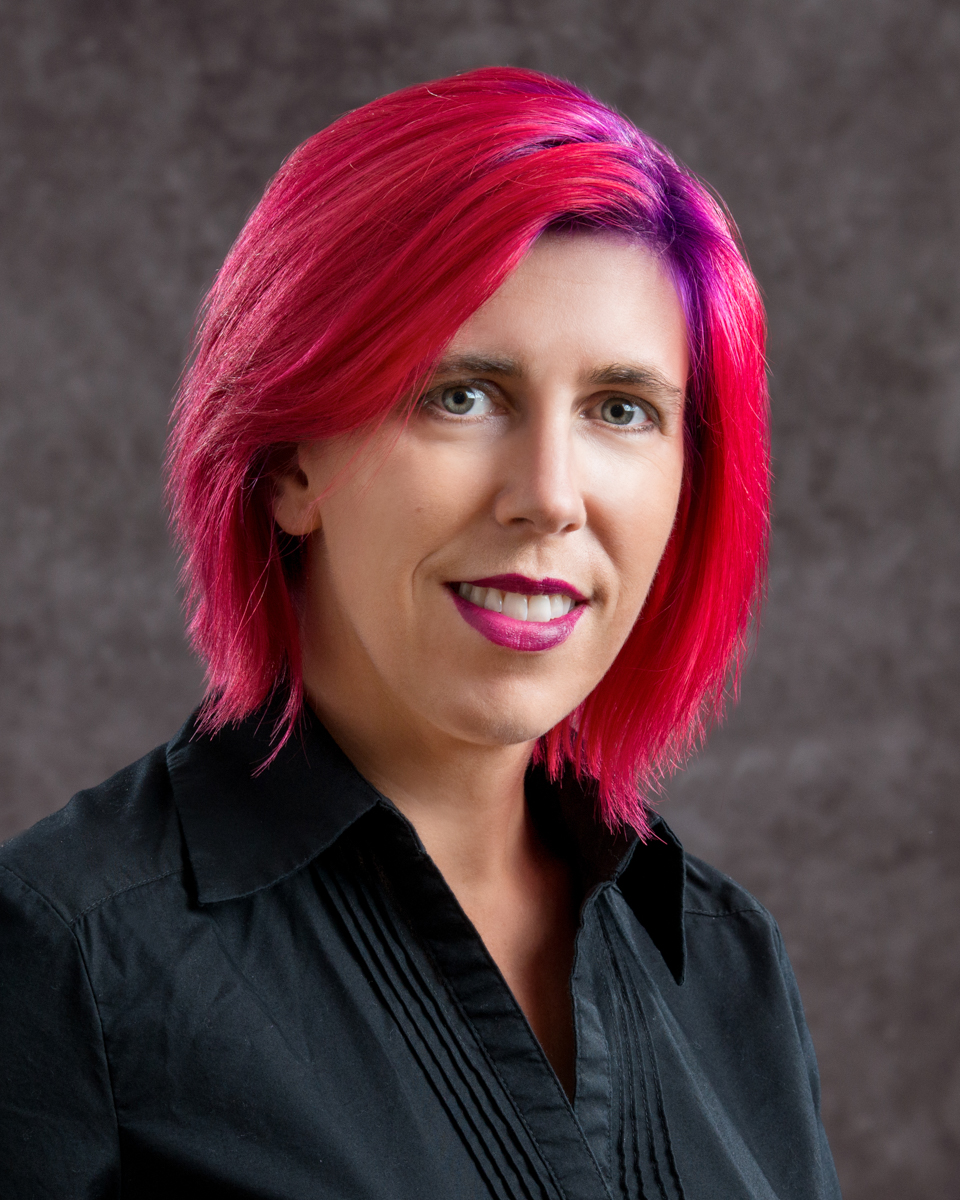
Alex Pearl ~ Author Interview

Today I had the pleasure of interviewing Alex Pearl, author of The Chair Man and Sleeping with the Blackbirds!

Alex’s first novel ‘Sleeping with the Blackbirds’, a darkly humorous urban fantasy, written for children and young adults, was initially published by PenPress in 2011. It has since become a Kindle bestseller in the US. In 2014, his fictionalised account of the first British serviceman to be executed for cowardice during the First World War was published by Mardibooks in its anthology, ‘The Clock Struck War’. A selection of his blog posts is also available in paperback under the title ‘Random Ramblings of a Short-sighted Blogger.’ In 2019, his psychological thriller, ‘The Chair Man’ that is set in London in 2005 following the terrorist attack on its public transport system, was published as an ebook by Fizgig Press. The paperback followed in 2020.

Alex lives in NW London with his wife and two children who are far smarter than their old man.

He is quite possibly the only human being on this planet to have been inadvertently locked in a record shop on Christmas Eve.

Let’s start by finding out a little bit about you…

  1. What is your name and do you write under a pen name?  My name is Alex Pearl, and I was very tempted to write under the pen name Bertram Bolzwinick, which was the name of my grandfather who died before I was born. He was from Russia or Poland; I’m not sure which. Sadly, when he arrived on these shores he changed his name by deed poll to Bertram Davis, which doesn’t have the same cachet. However, having toyed with the idea, I finally decide to stick with my own name simply because everyone I’m linked to online knows me as Alex Pearl.
  2. Where do you call home? I live in NW London and I have always lived in London. The area I live in is known as Hampstead Garden Suburb, which was set up in 1906 as part of the garden suburb movement. And we are very close to a large heathland known as Hampstead Heath.
  3. Obviously, we know you are an author, but some writers have other jobs as well. Do you have another occupation? Do you believe you’re any good at it? Do you like what you do? I have retired from work now. I used to be an advertising copywriter, so writing has been something I did professionally for around 35 years. 
  4. What is your family like? It’s getting quieter as both our children have now flown the nest. My wife, unfortunately, became a tetraplegic seven years ago when she was very suddenly diagnosed with a spinal tumor, which was impossible to remove. So she now relies on a power chair, but it doesn’t stop her from working and driving a car. She does a lot of work for organizations that assist those with physical and mental disabilities.
  5. If it doesn’t bother you, can you let us know what your childhood home looked like? I was born in Wanstead, east London, which used to be Winston Churchill’s constituency. and I was brought up in an area called Ilford. Ilford is a large sprawling suburban conurbation on the eastern outskirts of Greater London. Its most attractive feature is a well-tended park, Valentines Park
  6. Do you have any hobbies, other than writing? What do you enjoy doing? I used to paint large abstract compositions on glass, but I haven’t done that for years. Other than writing, I spend time reading, gardening, cooking and all the household chores. Naturally, my wife can’t do too much in terms of physical work from her wheelchair.
  7. What is your greatest dream? Ooh. I suppose that would be winning some ludicrous literary prize. The Pulitzer perhaps or the Booker. I think I’d settle for the Booker. That would be pretty cool. And I could make a nonchalant acceptance speech to the effect that I had come to the conclusion that the judges had clearly lost their minds or their glasses, or both as they had clearly made some kind of mistake as there were so many more deserving winners in the room.
  8. What kind of person do you wish you could be? What is stopping you? I wish I could play the piano very well. I just think it would be a wonderful gift to have. My son learnt as a child and got up to Grade 8 very quickly while he was at primary school. He’s very good at math, which clearly helps. There is definitely a correlation between music and math. I am terrible at math and I know instinctively that I would never make the grade as a pianist. so I have never tried.
  9. Not to pry too much, but do you remember your first love? Yes. Her name was Helen Lewis. She was the first girl that ever made me go weak at the knees. We were both five years of age at the time. And I don’t think I ever had the courage to say a single word to her.
  10. What is the most terrible thing that ever happened to you? Getting locked in a record shop on Christmas Eve. Thankfully, I didn’t forego turkey and Christmas pudding as my father was able to contact the police. This was long before mobile phones had been invented. And within a couple of hours, I was freed from my temporary prison. It was, however, a fairly frightening experience. and one I wouldn’t recommend. 
  11. What or who inspired you to start writing? And how long have you been writing? There have been several people. Going back to my school days, I had a very unusual and inspiring English teacher by the name of Clive Lawton. He was very charismatic and had an affinity with kids to the extent that he really was on our wavelength. He’d do the most extraordinary things and turn everything on its head. On one occasion he announced that instead of him marking our essays he was going to ask us to mark his, and then handed out old essays he’d written in the past. He’d often tell us that the syllabus was boring and that we were going to ignore it and have a serious discussion about something fairly contentious like advertising and the blatant use of sexual imagery. The point of his lessons was to make us think and to convey to us the power of words. And by teaching in this wholly unconventional and radical manner, he not only gained the attention of every single child in that classroom. He also instilled a love of words and ideas. And as a result, every child in my class passed their O level exams, and nobody received anything less than a B grade.                                                                                                                                                                Later on, when I started working as an advertising copywriter, my Creative Director, a man by the name of Ken Mullen was also influential. Ken was and still is a brilliant writer. He had two degrees in English Literature from Oxford University and is the only English advertising copywriter to have had his work quoted in the Oxford Book of Modern quotations. These included two headlines he had penned for The Times newspaper when he was working for Leo Burnett – ‘Our sages know their onions.’  And ‘No pomp. Just circumstance.’ He encouraged his entire creative department to immerse themselves in literature, cinema and the arts in general. But perhaps, more importantly, he wore his learning lightly and was incredibly funny and approachable. He was, in short, the best boss you could ever hope for.
  12. What was your dream growing up? Did you achieve that dream? If so, in what ways was it not what you expected? If you never achieved the dream, why not? I’m not sure that I ever really had a dream when I was growing up. Not one that I can readily remember at any rate. I never really knew what I wanted to do when I left school. I was never particularly studious and I wasn’t heading for university. But I wasn’t bad at art, so at the very last minute I applied to go to art college, and it was here that I became interested in creative advertising and teamed up with a good friend at college. And together we pestered a lot of people in the business with a portfolio of our ideas, and eventually, someone relented and gave us a job. So in answer to your original question, I guess I achieved my goal, which was a kind of dream I suppose.
  13. Who is your role model? I think my father was a pretty good role model. He was an incredibly good father and grandfather. And was very community-minded. There was nothing he wouldn’t do to help someone else; even a complete stranger. He was an incredibly generous, warm-hearted man and I miss him.
  14. What is your greatest fear? Death. Woody Allen was once asked if he liked the idea of becoming immortal through his writing and he replied that he’d prefer to become immortal through not dying. I’m with him on that one.
  15. Do you prefer e-books, paperbacks, hard-covers or audio-books? Call me old fashioned, but I’m afraid books, either hardbacks or paperbacks win hands down. There’s nothing quite like having a book in your hands.
  16. Have you ever read a book more than once? And if so what was it? Yes. It was the first book I ever read as a child. ‘Stig of the Dump’ by Clive King. I reread it recently out of interest – just to see if I still thought it was a terrific children’s book. And happily, I can report that it is every bit as good as I thought it was as a young child. It’s charmingly written, rather clever, and very touching.
  17. What is your opinion of novellas? I see no massive difference really between a short story, novella, and full-length novel. They all have to be compelling. Obviously, with the shorter form, the writing has to be more economical and concise. But that in itself is an art form, and many believe that mastering the short story is more skillful than the full-blown novel. I’m not sure that I necessarily agree with that. I think it’s difficult to generalize. In Japan, of course, there is a very great tradition for writing short stories and there are authors who write nothing more. But at the end of the day, a good story that is well written is a good story, whether it’s in long or short form.
  18. Have you ever read a book just based on its cover? Ooh, that’s a good question. As someone who studied graphic design, I’m sure there should be a book cover that I was drawn to, but interestingly, there isn’t one I can think of. In fact, so many really good books seem to have such anodyne and forgettable covers, which is a shame. 
  19. What is your favorite film based on a book? There are two films that immediately spring to mind that succeed in capturing the essence of a book. And that’s something that’s really hard to do with the medium of film, because you simply don’t have the same enormous scope of a book and you can’t appeal to the imagination; and, of course, you have to leave a huge amount out. The first film that for me comes close is ‘To kill a Mockingbird’ the film adaptation of the book by Harper Lee that stars Gregory Peck in the lead part of Atticus Finch. It’s faithful to the book and does a near-perfect job of recreating its characters. And the other film is ‘Schindler’s List’, the Spielberg film adaptation of Thomas Keneally’s book that was originally titled ‘Schindler’s Ark’, which is arguably a better title. Again, the film is a pretty faithful adaptation of the book, but is also filmed in a highly realistic way by using hand-held cameras and adopting a reportage style of shooting that is very matter of fact and a million miles away from Hollywood. Both films did well at the Oscars, winning among other things ‘Best Adapted Screenplay.’  
  20. What is your favorite book genre at the moment? I don’t really have one. But I tend to read literary, historical, and thrillers.
  21. What books have made it onto your wish list recently? And why? ‘Beneath a Scarlet Sky’ by Mark Sullivan is a book I’ve just bought because it has received a torrent of rave reviews and it sounds like a great read. My cousin also recommended it and he has impeccable taste, so it must be pretty special. It’s also based on a true story set in Italy during the war. 
  22. What book are you reading at the moment? And in what format? I’ve just finished reading ‘The Last Lemming’ by my old friend Chris Chalmers who, like me, also used to be an advertising copywriter. That’s how we met. Chris is a very talented writer. This is his fifth book; they’ve all been magnificent. ‘The Last Lemming’ is an engaging yarn that combines mystery, humour and a dash of romance to great effect. In Mr. Chalmers’ inimitable style, we are introduced to the lives of two disparate central characters: in the form of TV naturalist, Prof Leo Saunders and Claire Webster, a young Personal Trainer with aspirations to become an investigative journalist. There are two distinct threads to the narrative: one set in the mid-1980s and the other in the present-day narrated by our amateur female journalist. The plot involves Saunders admitting on Youtube just before dying that his one claim to fame – the discovery of the Potley Hill lemming – was in fact a hoax and that a certain advertising luminary had ‘blood on his hands.’ While the stunt is eventually written off as nothing more than unreliable ramblings of a sick man, Webster decides to investigate and use her findings for her dissertation on her journalism course. This entertaining and deftly plotted tale involves a cast of colourful characters including some of the furry variety. It’s a skilfully woven yarn with some lovely descriptive passages that establish time and place. And in the best tradition, there are, of course, dead bodies
  23. If you could invite any four (4) celebrities (alive or dead) to your dinner party, who would you invite and why? Ooh blimey. Well, I once had the pleasure of sitting next to the novelist, Beryl Bainbridge at an advertising awards dinner and I found her both delightful and fascinating, and I love her books, so I wouldn’t mind inviting her. I reckon Stephen Fry would be good value. And I’ve always admired and really liked Archbishop Desmund Tutu. And to add the cherry to the icing I’d invite Mr. Barak Obama, one of America’s most articulate Presidents. I think that would be one hell of a dinner party. In fact, I don’t suppose I’d ger around to eating very much in such esteemed company. 

Let’s shift somewhat and talk about your latest story.

  1. What is the name of your most recent book and if you had to sum it up in 20 or fewer words, what would you say? The title of my latest book is ‘The Chair Man‘, which is a thriller. Here’s a 20-word summation: Having survived a terrorist attack, Michael is now a wheelchair user seeking retribution online – but will become a sitting target.
  2. Is the above book part of a series? That is a distinct possibility. Several people have said that they would love to read a sequel. And though the book has a natural conclusion, there is certainly another story that can be woven from the book’s remnants; and it’s something I’m working on. But I say this a lot to people, the plotting of a book is something I find particularly challenging and difficult. And I can’t start writing a book without having the synopsis mapped out. It can and will evolve as I write it, but without this road map, I will just get hopelessly lost. 
  3. How did you come up with the cover? Who designed the cover of your book(s)? That’s a very good question and I’m pleased you asked me that because I’m fortunate to have a very good friend named John Mac who is a brilliant advertising photographer and director. And he kindly photographed and designed the covers to both my books. In fact, for ‘Sleeping with the Blackbirds’ he shot a stunningly beautiful trailer, too. You can watch it here. We were both particularly pleased with the cover for ‘The Chair Man’. Back in 1998, John had been commissioned by the film director Guy Ritchie to produce the film poster for his film ‘Lock, Stock and Two Smoking Barrels’. And for my cover, John has used a similar approach by creating a very strong silhouette against a stark white background with quite distressed typography. It is very distinctive and feels absolutely right for the book. 
  4. Did you listen to any particular songs while writing your book(s)? No. I generally can’t work that effectively with music on. I need silence. Music is just too distracting. It was the same when I worked at an advertising agency. We needed our own quiet space to think. That said, there are several music references in ‘The Chair Man’ The title pages to part one and part two are the titles of songs by Bruce Springsteen and Elvis Costello from 2005. And one of the characters in the book loves the classical piano playing of Glenn Gould – particularly bach’s Golberg Variations.   
  5. How did you come up with the title for your book(s)? ‘Sleeping with the Blackbirds’ as a title came to me fairly early on, and I just liked it from the outset. It has a certain ring to it that sounds lyrical. ‘The Chair Man’ is the moniker that the terrorists use to describe the book’s protagonist Michael Hollinghurst, so I thought it would make a good title – particularly against a graphic book cover.
  6. Do you have a book trailer? If so, where can we watch it? I have a book trailer for my first book ‘Sleeping with the Blackbirds’, which was shot by my good friend John Mac and edited, dubbed, graded and animated by Hogarth Worldwide. You can watch it on Youtube here.
  7. In your latest novel, who is the lead character, and can you tell us a little about him/her? Michael Hollinghurst is the lead character. He’s a very successful corporate lawyer. His marriage to his wife is beginning to fall apart and eventually does when Michael becomes the victim of a terrorist attack that leaves him in a wheelchair. His two kids who are in their mid to late 20s choose to live with him, and you get a sense that he is a good father who cares deeply for his two children. And they likewise are very close to him. Following a lengthy stay in rehab following his ordeal, Michael suffers from feelings of guilt having survived the blast when everyone else in his carriage didn’t. He finds it difficult to come to terms with his predicament and his anger is channeled into a plan for retribution.
  8. What are your character’s greatest strengths? His greatest strengths are his warmth and compassion, not to mention his intelligence and his generosity. 
  9. And what are his/her greatest weaknesses? His greatest weakness is his complete and utter inability to forgive and forget. When he makes a decision he is like a dog with a bone. He simply won’t let go of it.
  10. What are some of his/her favorite foods? He likes fish and is partial to wine, particularly Spanish Rioja.
  11. What’s a positive quality that your character is unaware that he or she has? Despite his anger and bitterness towards the perpetrators of the terrorist attack, he is fairly stoical and pretty brave about his own position. Part of him feels pangs of guilt for surviving, and these feelings drive him to feel a moral obligation to act on behalf of those who were killed. So he is brave, stoical and determined. Positive traits that he almost certainly doesn’t recognize in himself.
  12. Will readers like or dislike this character, and why? Readers have mixed feelings about Michael. Some like him and admire his close relationship with his kids. They also seem to sympathize with his obsessive need for retribution. Other readers aren’t so sympathetic. They see him as a rich white arrogant man who is prepared to put his family’s lives at risk just to seek revenge. They see him as a reckless individual who hasn’t tried to even think through the ramifications of his actions. And some also think that the devious way in which he gets his neighbor’s autistic son to help him hack into an East London mosque is really manipulative and morally wrong.
  13. What first gave you the idea for your latest book? The germ of the idea sprang from my wife’s predicament. She became ill seven years ago with a spinal tumor and ended up in a wheelchair. She is, however a very strong and resilient individual and doesn’t let her predicament stop her doing what she wants, within reason. So naturally, I know a fair bit about spinal injuries and wheelchairs, and I thought it would be a good idea to develop a character that had survived a terror attack and ends up in a wheelchair. But like my wife, I didn’t want my protagonist to roll over and lead a quiet life. I wanted him to go a bit crazy and actively go after other terrorists by using his wits and, of course, the internet.

Let’s talk now about your writing process.

  1. What is your writing style like? Are you a pantster or a plotter? As far as style is concerned, I think I’m a bit of a chameleon. As an advertising copywriter, I’m used to adopting different tones of voice to address different audiences. I think it’s the same when it comes to writing books. My first book for children, young adults and parents was deliberately written in an old-fashioned, whimsical style redolent of authors like Clive King and Roald Dhal. When it came to writing ‘The Chair Man’ though, I adopted a crisp modern unfussy style of writing that felt right for the subject matter. When it comes to my approach to writing, I’m most certainly a plotter. I need a road map to see where I’m going. The story can evolve as I write it, but I have to have very clear directions and know where the thing is heading. So before writing the first chapter, I have to have a fairly detailed synopsis typed out; and the ending is absolutely crucial. And I’m very pleased that the endings to both of my books are I think unexpected and satisfying full stops.
  2. Have you come across any specific challenges in writing or publishing? What would you do differently the next time? Proofreading assistance is something I will certainly invest in next time around. No matter how many times you go through your manuscript, there will always be errors you miss. And it isn’t just indie authors that have this problem. I see typos in mainstream publications by the big publishing houses that a whole team of editors and proofreaders have missed.
  3. Are you a self-published/Indie author or did you publish through a traditional publishing company? I’m an indie author. I publish through Amazon (print on demand and ebooks) and Smashwords for all the other e-platforms.
  4. If you’re a self-published/Indie author what made you go that route instead of the traditional publishing route? I tried approaching literary agents through the traditional channels but haven’t yet received anything other than polite rejection letters several months after my submissions. So the next best thing is to self-publish. 
  5. What’s the best advice that you have been given when it comes to writing? “Read, read, read everything – trash, classics, good and bad, and see how they do it. Just like a carpenter who works as an apprentice and studies the master. Read! You’ll absorb it. Then write. If it is good, you’ll find out. If it’s not, throw it out the window.” William Faulkner
  6. What advice would you give someone who wants to start writing?  Formulate a story in your head; write it down as a synopsis; once you are happy with it, start writing your book; enjoy the journey.
  7. Where can your readers follow you? WEBSITE http://alex-pearl.net  BLOG http://rhubarbrabbit.blogspot.com FACEBOOK https://www.facebook.com/The-Chair-Man-103009131263558/?modal=admin_todo_tour TWITTER https://twitter.com/AlexBPearl    GOODREADS     https://www.goodreads.com/author/show/2842442.Alex_Pearl             AMAZON https://www.amazon.co.uk/Alex-Pearl/e/B00AR0T3QA/ref=dp_byline_cont_pop_ebooks_1

Michael Hollinghurst is a successful corporate lawyer living a comfortable, suburban life in leafy North West London. But on 7 July 2005, his life is transformed when he steps on a London underground train targeted by Islamist suicide bombers. While most passengers in his carriage are killed, Michael survives the explosion but is confined to a wheelchair as a result. Coming to terms with his predicament and controlling his own feelings of guilt as a survivor conspire to push him in a direction that is out of character and a tad reckless. In a quest to seek retribution, he resorts to embracing the internet and posing as a radical Islamist in order to snare potential perpetrators. Much to his surprise, his shambolic scheme yields results and is brought to the attention of both GCHQ and a terrorist cell. But before long, dark forces begin to gather and close in on him. There is seemingly no way out for Michael Hollinghurst. He has become, quite literally, a sitting target. 


Eleven-year-old schoolboy, Roy Nuttersley has been dealt a pretty raw deal. While hideous parents show him little in the way of love and affection, school bullies make his life a misery. So Roy takes comfort in looking after the birds in his suburban garden, and in return the birds hatch a series of ambitious schemes to protect their new friend.

As with the best-laid plans, however, these get blown completely off course – and as a result the lives of both Roy and his arch tormentor, Harry Hodges are turned upside down. While Harry has a close encounter with God, Roy embarks on a voyage of discovery that draws in and impacts on everyone around him, including the local police, his headmaster and the national media. Where will it all end, and will life ever be quite the same for Roy Nuttersley? 


(As an Amazon Associate, I earn from qualifying purchases. That means, when you purchase a book using an Amazon link on this site, I earn an affiliate commission. All commission earnings go back into funding my books; editing, cover design, etc.)


Kristen Collins ~ Author Interview

We have a very special guest today, Kristen Collins is the author of Monsters Under the Bed!

Check out a COUPLE of KRISTEN’s books below!

(Click on the image to order your copy)

(As an Amazon Associate, I earn from qualifying purchases. That means, when you purchase a book using a link on this site, I earn an affiliate commission. All commission earnings go back into funding my books; editing, cover design, etc.)

For a complete list of Kristen’s books, follow the AMAZON link below!

Check out our interview on YouTube:

Follow him on Social Media here:


Author Kristen Collins is a Native Texan. She is a part-time working mother/housewife, as well as a Lupus Warrior. 

Thanks to the encouragement of her friends and family, she found a passion in writing paranormal romance books. 

She likes to explore new types of characters such as Sandmen and Boogeymen.

Angels are also a part of her obsession; she will sit on the computer doing extensive research on both Sandmen and Angels trying to get her facts straight when writing.

She also creates Art Journals that can be cross generational from thirteen to sixty years younger. Her goal with the art journals is to reach people who need a little extra feel good in their lives.

When the Queen of the Sandmen, Ana, decrees that she will give teddy bears magic through the power of their golden Sandman dust and life is sustained through the belief of a child, the only purpose is to protect the children from nightmares, or rather the monsters under the bed. The Boogeymen who were defeated long ago are gone but their creatures did not die off with their masters.

The balance of good and evil has to be maintained.A supernatural orphan, Sharon, and her faithful pitbull dog, Lieutenant Twinkleton, catch the attention of Queen Ana when she goes to fulfill her part of the decree. Unsure of the little orphan child’s abilities, she gives special orders to the little girl’s only toy: a teddy bear named Sir Snugglestiltskin.Unknown to Queen Ana, there’s more to Sharon than what her eyes can see and these creatures are hungry to get their hands on the little girl.


Stacy Kingsley ~ Author Interview

We have a very special guest today, Stacy Kingsley author of the zombie series DO ZOMBIES WIN.

Check out the Do Zombies Win? series below!

(Click on the image to order your copy)

Check out our interview on YouTube:

Follow her on Social Media here:


Ashley Chappell ~ Author Interview

We have a very special guest today, Ashley Chappell writes satire and young adult epic fantasy novels featuring expansive world-building and universes filled with magic, mayhem, and monsters!

Check out a few of Ashley’s books below!

(Click on the image to order your copy)

Check out our interview on YouTube:

Follow her on Social Media here:

Follow her home building journey by clicking HERE!


Amanda Orneck ~ Author Interview

We have a very special guest today, Amanda Orneck was raised in Southern California on a healthy diet of fantasy and science fiction. She grew up knowing from the time she was small that she wanted to be a writer. She wrote her first story at the age of five and began her first novel at eleven. While attaining a Bachelor’s in Creative Writing from USC, Amanda received the Middleton Fellowship for excellence in Poetry. Today she has one published SciFi novel and has recently begun following her renewed passion for Regency Historical Romance.  

Check out Amanda’s books below!

(Click on the image to order your copy)

Check out our interview on YouTube:

Follow her on Social Media here:


Richard Fierce ~ Author Interview

We have a very special guest today, Richard Fierce is a Fantasy and Space Opera author. He has published almost twenty books five of which were released this year!!!

Check out a few of Richard’s books below!

(Click on the image to order your copy)

Check out our interview on YouTube:

Follow him on Social Media here:


#Theredheadedauthor Presents the August 2020 New York Times TOP 10 Best Sellers – YOUNG ADULT

As an avid reader of fiction (and an author who one day hopes to make the list) I LOVE-LOVE-LOVE checking out the New York Times Best Seller list. So, here it is… The independently ranked top 10 Young Adult selections for August 2020!

If you’ve read any of the TOP 10 selections and recommend them, please comment below and let me know. If you see something you like and plan to pick up a copy, you can do so by clicking on the cover image, the title or the [BUY IT HERE] button.

As an Amazon Associate I earn from qualifying purchases.


#1 Stamped

by Jason Reynolds and Ibram X. Kendi

An exploration of racism and anti-racism in America


#2 The Hate U Give

by Angie Thomas

A 16-year-old girl sees a police officer kill her friend.


#3 One of Use is Lying

by Karen M. McManus

For five students, a detour into detention ends in murder.


#4 The Shadow of Kyoshi

by F.C. Yee

Kyoski must stop a mysterious threat that emerges from the Spirit World.


#5 The Rise of Kyoski

by F.C. Yee

Kyoshi flees with her friend Rangi after she discovers her airbending powers.


#6 Hawk

by James Patterson

Ten years after Maximum Ride, a new hero emerges in a post-apocalyptic New York City.


#7 Clap When you Land

by Elizabeth Acevedo

Unbeknownst to each other, two sisters meet when their father dies in a plane crash.


#8 Chain of Gold

by Cassandra Clare

Cordelia battles demons in a quarantined London that are nothing like she’s encountered before.


#9 The Betrothed

by Kiera Cass

Lady Hollis Brite and King Jameson are set to be married, but will a commoner steal Hollis’s heart?


#10 With The Fire On High

by Elizabeth Acevedo

Emoni juggles school, work and motherhood while pursuing her dream to become a chef.


When you purchase a book using a link on this site, I earn an affiliate commission. All commission earnings go back into funding my books; editing, cover design, etc.


#Theredheadedauthor Presents the August 2020 New York Times TOP 10 Best Sellers – FICTION

As an avid reader of fiction (and an author who one day hopes to make the list) I LOVE-LOVE-LOVE checking out the New York Times Best Seller list. So, here it is… The independently ranked top 10 Fiction selections for August 2020!

If you’ve read any of the TOP 10 selections and recommend them, please comment below and let me know. If you see something you like and plan to pick up a copy, you can do so by clicking on the cover image, the title or the [BUY IT HERE] button.

As an Amazon Associate I earn from qualifying purchases.


#1 Deadlock

by Catherine Coulter

The 24th book in the F.B.I. Thriller series. A young wife, a psychopath and three red boxes puzzle agents Savich and Sherlock.


#2 1st Case

by James Patterson

After getting kicked out of M.I.T., Angela Hoot interns with the F.B.I. and tracks the murderous siblings known as the Poet and the Engineer.


#3 Where The Crawdads Sing

by Delia Owens

In a quiet town on the North Carolina coast in 1969, a young woman who survived alone in the marsh becomes a murder suspect.


#4 The Vanishing Half

by Brit Bennett

The lives of twin sisters who run away from a Southern Black community at age 16 diverge as one returns and the other takes on a different racial identity but their fates intertwine.


#5 The Order

by Daniel Silva

The 20th book in the Gabriel Allon series. The art restorer and spy cuts his family’s vacation short to investigate whether Pope Paul VII was murdered.


#6 Near Dark

by Brad Thor

The 19th book in the Scot Harvath series. With a bounty on his head, Harvath makes an alliance with a Norwegian intelligence operative.


#7 The Guest List

by Lucy Foley

A wedding between a TV star and a magazine publisher on an island off the coast of Ireland turns deadly.


#8 28 Summers

by Elin Hilderbrand

A relationship that started in 1993 between Mallory Blessing and Jake McCloud comes to light while she is on her deathbed and his wife runs for president.


#9 Then She Was Gone

by Lisa Jewell

Ten years after her daughter disappears, a woman tries to get her life in order but remains haunted by unanswered questions.


#10 American Dirt

by Jeanine Cummins

A bookseller flees Mexico for the United States with her son while pursued by the head of a drug cartel.


When you purchase a book using a link on this site, I earn an affiliate commission. All commission earnings go back into funding my books; editing, cover design, etc.


Typos and Errors in Indie-Published Manuscripts

I originally published this article as a guest author at http://timothy-oullette.blogspot.com/ and http://www.timouellette.com on August 8, 2014, but I felt that the information was important so I also shared in on my website. Since I continue to get questions about editing as an indie-author, I thought it might benefit my readers to repost it today. I hope you enjoy my take on Typos and Errors in Indie-Published Manuscripts. You can let me know what you think by leaving a comment below.


TBS_typosgraphic1


Are typos in a book a big deal?


Of course they are – to some extent! Typos happen. Typos happen in books that are self-published and traditionally published. Typos happen to new authors and seasoned authors. Typos happen in eBooks and print books. It doesn’t matter how many people you have edit, proof read, re-read, etc. there is always a chance a typo (or two – or three – or four – OR MORE) is going to slip through THE CRACKS. Does that mean the world is over, the author should never write again, or that the author should lose all credibility? NO!

Let me say that again – NO!

It goes without saying, although I will say it, that every author should take the time and effort to make their manuscript the best that it can be. Not only do readers deserve the best product an author can provide, authors deserve to produce their best work – manuscripts they can be proud of for years to come!

You might be asking yourself, ‘how do I, as a self-published author without the backing of a traditional publishing house, afford to make sure that my manuscript is ready for publication?’

Good Question! Editors, proof-readers, and copy-writing services all cost money! Plus, and here is the catcher, even professional editors, proof-readers, and copy-writing service professionalS make mistakes! Even when you pay good money for these services you can’t be 100% sure your manuscript is flawless. That doesn’t mean you should just accept the fact that typos happen and therefore you don’t need to worry about them. There are a lot of things you can do to ensure that you publish your best work, and I will give you some examples, but you have to remember that you are never going to please everyone. There will always be someone that finds something wrong with your book.


What can you do to ensure minimal typos and errors in your final manuscript?

Below is a list of tools (free and/or low cost) that all self-published authors should be using:


  • SPELLCHECK I LOVE spellcheck. No matter what I am working on, I have spellcheck set to mark spelling and grammatical errors while I am typing. No, it doesn’t always catch misused words – but it is a great start to catching those words frequently misspelled. You can also add words to your computer’s dictionary. This is a great way to allow your computer to know that names (or other words) you use frequently are not incorrectly typed.

  • READING ALOUD – Yes, just like you did when you were a kid. One of the reasons teachers have their students read out loud is because we often retain more information when we hear text read out loud. For me, as an author, I like to either read my books aloud to myself or have someone else read them to me as I follow along. The down side to this is that it can be a rather lengthy process, but the upside is that it allows me to catch words that have been misused and dialog that doesn’t sound natural.

  • FIND / REPLACE If you don’t use this Microsoft Word tool yet – you need to! Microsoft can find just about anything from double commas or periods, extra spaces, repeat words, etc. Once you find them you can fix them. Although, what I really like about this feature is that you can easily replace mistakes with corrections. (Example: FIND: .. REPLACE WITH: .) Don’t get me wrong, you don’t want to just trust your computer to make all of your corrections for you. When I do a search for an error I look at each of the results and decide if I want the correction to be made.

  • TEST READERS Or as I like to call them guinea pigs!  My mom, my sister, and a number of my friends have all been my willing and loyal test subjects in this area. They have read, edited, and re-read all of my books throughout the writing process looking for errors that I might have missed. It isn’t easy seeing your manuscript covered in red edits, but trust me this process makes your final manuscript much better than it would be with only you reading and reviewing it.

  • PRO WRITING AID This is an online writing editor and personal writing coach. It checks grammar and spelling; helps to improve overall readability; finds overused words; improves dull paragraph structure; locates repeat words and phrases; checks for consistency of spelling; hyphenation and capitalization; warns you about clichés and redundancies; and so much more. I learned about this tool through a friend that does line editing as a freelancer. She told me that it was an inexpensive way to help improve writing as you go and that it was extremely user friendly – SHE WAS RIGHT! I highly suggest trying it out. What is the worst that could happen?

  • ARC Advance Reader Copies! Okay, once your manuscript is complete, as complete as you feel you can make it, you need to offer advance reader copies. This is a great way to get feedback. You can request feedback in the form of reader notes and/or book reviews. I have even gone so far as providing a list of questions at the end of the advance reader copies I have sent out, this helped me to target key areas of my story and/or editing that needed to be fixed.

  • EDITOR OK, this one costs money. All of the tools above are free or can be done at a very low cost, however hiring an editor is not cheap. If you decide to go this route – which I highly recommend – you don’t want to skimp! You get what you pay for!!! But, you still have to remember – Editors are only HUMAN, they make mistakes too! Again, there is no way to guarantee – 100% – that your manuscript isn’t going to have typos or errors.

My novels may still have errors – heck, even award winning authors sometimes have errors in their novels – but I can honestly say that I have taken all possible steps to ensure that the books I publish are the best they can possibly be. So, if there are still a few errors, as I am sure there are, then I’m OK with that. I’m happy with my finished products and that truly is all an author can ask for.

 
Written by: Nina Soden
Author, the Blood Angel Series & The SECTOR C Series


#Theredheadedauthor Presents the July 2020 New York Times TOP 10 Best Sellers – YOUNG ADULT

As an avid reader of fiction (and an author who one day hopes to make the list) I LOVE-LOVE-LOVE checking out the New York Times Best Seller list. So, here it is… The independently ranked top 10 Young Adult selections for July 2020!

If you’ve read any of the TOP 10 selections and recommend them, please comment below and let me know. If you see something you like and plan to pick up a copy, you can do so by clicking on the cover image, the title or the [BUY IT HERE] button.

As an Amazon Associate I earn from qualifying purchases.


#1 Stamped

by Jason Reynolds and Ibram X. Kendi

An exploration of racism and anti-racism in America.


#2 The Hate U Give

by Angie Thomas

A 16-year-old girl sees a police officer kill her friend.


#3 I’m Not Dying With You Tonight

by Kimberly Jones and Gilly Segal

Two girls, one black and one white, form a bond during a racially charged riot.


#4 One of Us is Lying

by Karen M. McManus

For five students, a detour into detention ends in murder.


#5 Children of Blood and Bone

by Tomi Adeyemi

Zelie fights to restore magic to the land of Orisha.


#6 Clap When You Land

by Elizabeth Acevedo

Unbeknownst to each other, two sisters meet when their father dies in a plane crash.


#7 Chain of Gold

by Cassandra Clare

Cordelia battles demons in a quarantined London that are nothing like she’s encountered before.


#8 The Betrothed

by Kiera Cass

Lady Hollis Brite and King Jameson are set to be married, but will a commoner steal Hollis’s heart?


#9 Children of Virtue and Vengeance

by Tomi Adeyemi

Zelie must stop the threat of civil war in Orisha.


#10 One of Us is Next

by Karen M. McManus

In this sequel to “One of Us is Lying,” a deadly game of truth or dare via text now plagues the students of Bayview High.


When you purchase a book using a link on this site, I earn an affiliate commission. All commission earnings go back into funding my books; editing, cover design, etc.