Switched by Angela Lam – Exploring Identity in Dystopian Sci-Fi

As an Amazon Associate, I earn from qualifying purchases. That means, when you purchase a book using an Amazon link on this site, I earn an affiliate commission. All commission earnings go back into funding my books; editing, cover design, etc.

What would you do if you woke up a different age and gender?

Switched

by Angela Lam

Genre: Dystopian Cyberpunk SciFi Fantasy

A global phenomenon is rewriting the laws of biology, causing men over fifty-five and women between eighteen and forty to suddenly and inexplicably switch their ages and genders. No one understands it, and no one can stop it.

Maxine thinks she can stay on the sidelines, supporting her brilliant boyfriend-turned-girlfriend Jo—an audacious biotech pioneer, who’s breaking new ground with brain-to-brain communication. But when the transformation strikes Maxine, her reality is flipped upside down.

Now facing an unexpected future, Max must grapple with their identity, struggling to align who they were with who they have become. Can they reclaim control over a life that’s no longer theirs, or will they be swept away by the changes they never asked for?

Amazon * Bookbub * Goodreads

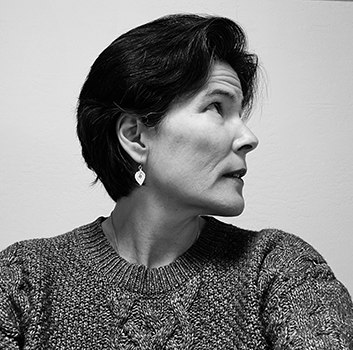
Angela Lam writes across all genres, from romance (The Women of the Crush series) to memoir (Red Eggs and Good Luck) to thrillers (No Amends) and science fiction (Switched). Sometimes, she writes under a pen name to keep things interesting (The Heroic Adventures of Madame X). The rest of the time, she is busy exploring mixed-media art and teaching others what she knows.

Website * Facebook * X * Instagram * Bookbub * Amazon * Goodreads

Would you like a chance to win a $10 Amazon or PayPal Gift Card? Follow the tour HERE for special content and a giveaway!

What inspired you to write this book?

A few things coalesced around the same time: I read The Last White Man by Mohsim Hamid and admired his ability to transcend racism through magical realism. I finally read The Handmaid’s Tale by Margaret Atwood and was haunted by the dystopian world where women lost all rights. I was still recovering from the pandemic and could not write directly about it since no one wanted to publish anything to do with it. And, finally, my own experience within my immediate circle of influence regarding the challenges posed by transgenderism, bisexuality, and ageism surfaced. All of these factors, both read and experienced, inspired Switched.

I like how Publisher’s Weekly Booklife Prize describes the novel:  “Ultimately, the work’s greatest strength lies in its examination of age, gender, and sexuality–and how these characteristics inform identity and relationships with others.” That’s what I was aiming for, and I’m thankful the reviewers at Publisher’s Weekly recognized that accomplishment.

What can we expect from you in the future?

I don’t know. As I said before, I’m still recovering from my concussion and haven’t been writing. But I am leaving all doors open, all things possible, so you’ll have to sign up for my newsletter or visit my social media sites periodically to see what transpires.

Where did you come up with the names in the story?

I needed names that could be both genders, so that’s how I came up with Joe/Jo and Maxine/Max.

How did you come up with name of this book?

Ugh. I hate titles. I wish the publishers would name all of my books, but they don’t. I tried out several titles with beta readers and selected the one with the most positive votes. That’s how I ended up with Switched.

What did you edit out of this book? I edited out an entire point of view. Originally, Switched toggled back and forth between Maxine’s story and Joe’s story. But when I was in developmental edits, my editor said she was confused. The story was too complicated. Did I want to focus on corporate espionage and gender discrimination in the workplace, or did I want a more intimate story about how gender impacts daily life? I chose the latter and scrapped Joe’s chapters. Some readers will sense the ghost of this absence. But the things I don’t show from Joe’s point of view are covered by Maxine’s point of view as the romantic partner who knows Joe better than anyone else. So, there is a shadow of that other story lingering in this novel.


Rising Ember by Sara Wright

As an Amazon Associate, I earn from qualifying purchases. That means, when you purchase a book using an Amazon link on this site, I earn an affiliate commission. All commission earnings go back into funding my books; editing, cover design, etc.

A kingdom divided will burn

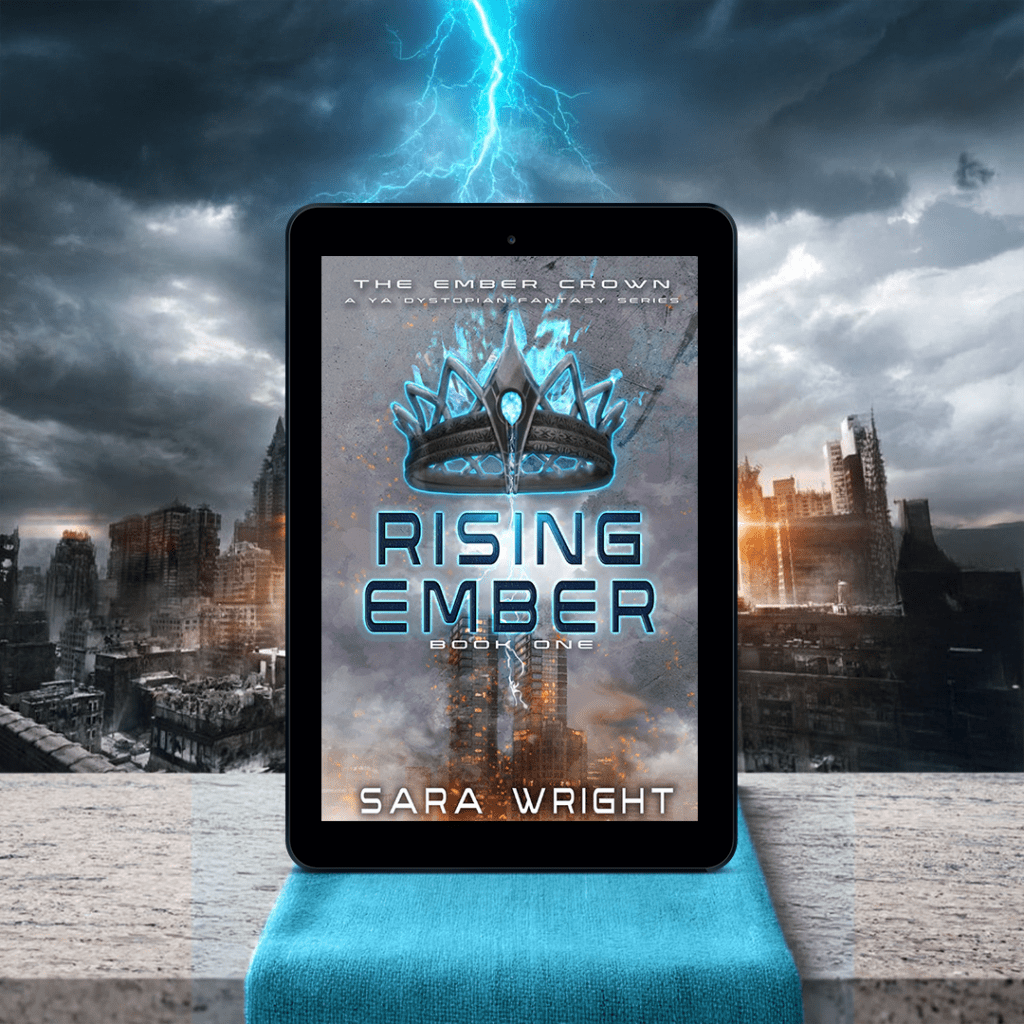
Rising Ember: The Ember Crown Book 1

by Sara Wright

Genre: YA Dystopian Fantasy

Dangerous games. Kill or be killed. Can she survive a king’s ruthless arena?

Clarissa craves an escape. An orphan forced into criminal acts with other kids by their caretaker, she longs to break free and become a healer. But when an archenemy provokes a deadly confrontation, the seventeen-year-old awakens hidden powers in an explosive and fiery defense.

Seized by soldiers and taken to the capital along with her only friend, Clarissa trains alongside other slaves to fight in the royal army. But surrounded by mysterious strangers and running low on trust, the desperate captive fears graduation day will be her last.

Is Clarissa destined to die in chains?

Rising Ember is the thrilling first book in the Forbidden Chronicles YA dystopian fantasy series. If you like strong-willed heroines, nail-biting drama, and clean slow-burn romance, then you’ll love Sara Wright’s action-packed adventure.

Buy Rising Ember to ignite destiny today!

**Get signed & special editions with maps, bookmarks & sprayed edges at Sara’s Store!**

Amazon * Bookbub * Goodreads

Sara Wright is the author of The Progenitor Chronicles and Forbidden Chronicles, a YA dystopian fantasy series packed with rebellion, elemental powers, and clean slow-burn romance.

She currently lives on Earth, her favorite vacation planet, with her husband and their very opinionated fur baby. But most days, she’s off exploring shattered kingdoms, star-spanning civilizations, and the occasional multiverse with her lifelong companions: Imagination and Creativity.

Raised on bedtime stories and fueled by a steady diet of fantasy, sci-fi, and a sweet topping of romance, Sara now writes tales for readers who crave action, heart, and hope. When she’s not writing, you’ll find her cycling, hiking, or singing dramatically to songs she swears are soundtracks to her books.

Website * Facebook * Instagram * TikTok * Bookbub * Amazon * Goodreads

Would you like a chance to win a $10 Amazon or PayPal gift card? Follow the tour HERE for special content and a giveaway!

From a Headache to a Dystopian Universe: The Surprising Origins of Rising Ember

Discover how a single sentence from my husband during a migraine spiraled into a clean dystopian fantasy series full of elemental powers, rebellion, and love.

One day I had a massive headache. The world was on pause while I lay there with my eyes closed until the meds kicked in. My lovely husband held me in his arms and caressed my hair. The problem was I was wide awake and needed to get a million things done. So, I did what any storyteller or bookworm would do—I asked him to tell me a story. And he did.

This is what he came up with:

“There was a world with people, and they have fire eyes. They wield fire. Like they can turn it on and off like a switch.”

That was it, the entire story. It only took that to get me piecing everything together in my head. Soon I had a short story rough draft written in the world (read Altered Rain). To get inside the characters’ heads, I would listen to a particular song (“Lacrymosa” by Evanescence, if you’re curious). This ultimately inspired me to pen a novella, offering a peek into a world overtaken by the primary antagonist (read Ruined Ashes). That one line led to a short story, a novella, and a full six-book series.

At first, I didn’t know if the stories were pure fantasy or pure dystopian. Some scenes that played in my mind leaned very fantasy with horses and medieval style weaponry. But then one day, a scene of the protagonist heading to the upper levels on a lift formed, and I saw the realm more clearly.

This world was set within the ruins of the past. While they have futuristic technology, it doesn’t work everywhere. Sometimes using a horse or an old-world weapon is necessary. Your access to technology is determined by your societal status.

It kind of reminded me of The Shannara Chronicles, a post-apocalyptic world with elves, dwarfs, and other fantasy creatures.  Except, instead of elves and dwarves, humans developed elemental powers. Rising Ember is a blend of the old with the new, which is something I really love to explore in all my books. An urban setting with hovercars and force fields, but also rural communities that feel more old-world fantasy.

While I love to write what I want to read, I knew that wasn’t enough to publish this book. I needed to meet the reader’s expectations, too. At this point, I wasn’t sure what genre I was going to steer the story toward. So, I dived into the top young adult dystopian and fantasy books, both traditional and indie published to find out what readers wanted within these two similar yet distinct genres. It was a bummer reading all those books (just kidding).

You can’t really read through the YA dystopian genre without considering one of the most popular books in our modern era—The Hunger Games. One thing I love most about this franchise is how many layersSuzanne Collins weaves into the narrative. From the simple act of Katniss feeling uncomfortable in her clothes, to the cinnamon roll love interest, Peeta, there are so many interesting arcs and tropes throughout the story.

But I believe the most iconic part of the books is the arena. While I included this aspect in the story, there were other influences that altered how I presented it. A little American Ninja Warrior anyone? Maybe combined with your worst nightmares?

But what about the fantasy aspects I wanted to include? How could I incorporate fire wielders in the middle of a dystopian world?

Well, I found several books that incorporated some type of superpowers—one being Red Queen. The thing I loved about this series is that Mare isn’t entirely ignorant of the world the way Katniss was. Mare became a pawn, but she knew it and immediately fought back. But maybe the aspect I admired most was Cal’s fire and the betrayal twists throughout the narrative. The bond between the two main characters was also electrifying (pun intended).

Then I came across two interesting indie series by the same author—Recruitment and The Crue Chronicles. Storylines occur in the same world, and superpowers come into play. While they’re a little more tech manipulation than in my story, the power struggles between the elite and those emerging into the world ignite the right kind of rebellion that I am trying to balance in my story.

I read Shadow and Bone—a fantasy set in a broken czar styled world with characters who could manipulate powers. And the blend of old-world and new-world technology was fascinating to me. The interplay of darkness and light, along with the chosen one trope, really had me hooked.

The only thing I really wasn’t fond of was the heat levels of the romances in Red Queen. Because my romance writing style is a lot more like The Selection or The Princess Trials (without the 30 something girls competing to win over the guy). I’d rather see the intensity of the main characters holding hands for the first time. Or finally confessing their feelings in the middle of a battle rather than having a fade-to-black scene.

When I came up for air, I realized I wasn’t writing pure fantasy or pure dystopian—I was writing dystopian fantasy. Which is perfect for me because I love to blend sci-fi and fantasy elements.

From these inspirations, I created a futuristic kingdom discriminating against and imprisoning fire wielding humans—descendants of an ancient accident—because they are viewed as “other”. Since it’s a long-standing real-world problem, its inclusion in the story felt organic. The protagonist’s orphan status, a result of past genocide, is consistent with the dystopian setting.

Pure sci-fi element stories aren’t really my thing. You see, I’ve always been drawn to blending sci-fi and fantasy where futuristic tech and elemental powers coexist. One of my readers said that she was a fantasy reader that fancied herself a sci-fi queen. And that’s something I hear from a lot of fantasy readers. They’ll watch sci-fi, but they won’t read it.

Maybe it’s because I grew up on Disney princess movies and Star Trek. Maybe it’s because I was obsessed with Lord of the Rings but also devoured The Handmaid’s Tale. My obsession with combing sci-fi and fantasy with romance subplots has firmly taken root in my stories. Elements from all my favorite stories usually weave their way into my worlds—especially the beautiful dresses for those swoony dance scenes.

I say all of this because the inspiration of a story can be complicatedly woven with a multitude of decisions. I suppose everything from an author’s life makes its way into a book they create. Even though it started with a single sentence from my husband mentioned while having a headache, it was a lifetime of reading, writing, and dreaming that brought Rising Ember, the first book in the Forbidden Chronicles universe, to life.

Want to explore this world of clean, romantic sci-fi fairytales? The spark of this alliance starts right here.

Sara Wright

YA dystopian fantasy

High-stakes—elemental powers—no-spice

Sarawrightbooks.com


The Cost of Magic by L.J. Evias

As an Amazon Associate, I earn from qualifying purchases. That means, when you purchase a book using an Amazon link on this site, I earn an affiliate commission. All commission earnings go back into funding my books; editing, cover design, etc.

What would you risk to prove you belong – Your life? Your freedom? Or the fate of a kingdom?

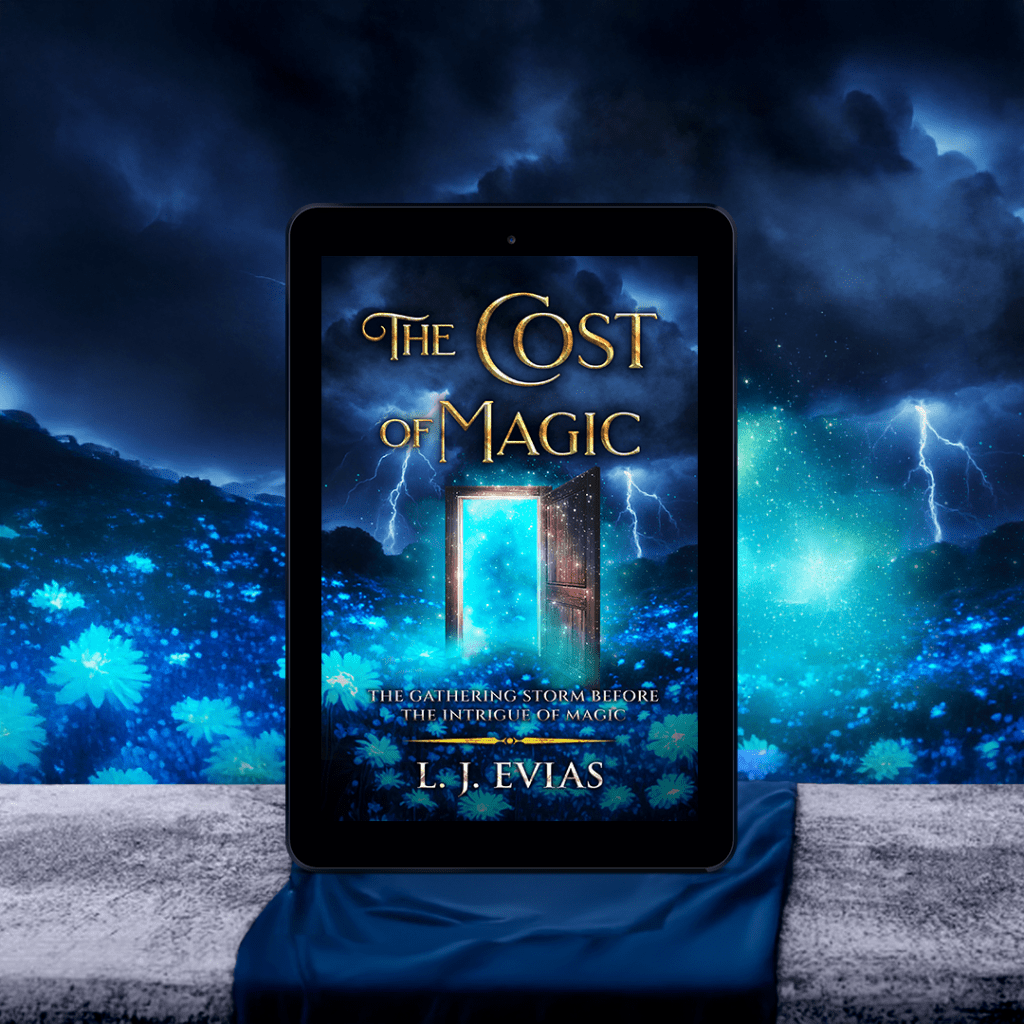
The Cost of Magic

Prequel to The Intrigue of Magic Series

by L.J. Evias

Genre: YA Epic Fantasy, Swords & Sorcery

She’s young, gifted, and desperate to prove she belongs. But some lessons come with a cost.

Torvia has one goal: to earn her place as a royal guard and repay the prince who saved her life. But despite her powerful magic, the prince refuses to send her into danger, and the princess wants her in court.

Everyone has a plan for Torvia’s future. None of them match her own.

So when a charming older boy offers secret lessons and a chance to escape her overprotective guardian, Torvia is tempted. He’s clever. He listens. And the magic he shows her is unlike anything she’s seen before.

But every step she takes draws her further from the path she planned – and one wrong move could cost her the mission, her future, and the prince who’s counting on her.

The Cost of Magic is a dark coming-of-age prequel to The Intrigue of Magic, a young adult epic fantasy series, perfect for readers who crave fierce heroines, tangled loyalties, and the high price of choosing your own path.

Start The Cost of Magic today and discover how one girl’s ambition can change the fate of a kingdom.

** Only .99cents for a limited time! **

Amazon * Bookbub * Goodreads

The Discovery of Magic

The Intrigue of Magic Book 1

A world ruled by magic. A palace full of secrets. A girl who refuses to back down.

Seventeen-year-old Alice Harper had her future mapped out—win an archery scholarship, protect her friends, and stay in control. But when a portal hurls her into a kingdom where magic rules and obedience means survival, she lands in a palace gripped by fear—and under the eye of the most powerful man in the realm.

The Royal Mage doesn’t just control the court—he controls people. With power, with fear, with enchantments no one dares resist. And for reasons Alice can’t explain, he’s taken a disturbing interest in her.

The only person who seems to want to help is the prince. He’s charming, clever—and very possibly lying. Caught between dangerous truths and beautiful deceits, Alice must decide who to trust before her friends are lost forever.

She’s not afraid of a fight. But in a world where magic is control, and trust is the most dangerous choice of all, surviving will take more than arrows—it will take everything she’s got.

The Discovery of Magic is the thrilling first book in The Intrigue of Magic, a YA epic fantasy series perfect for fans of court intrigue, character-driven fantasy, and bold heroines who don’t just survive—they fight for each other.

Buy The Discovery of Magic today to enter a world where freedom is fragile—and every alliance comes at a cost.


What readers are saying:

‘A creative first novel in the Intrigue of Magic series, the contemporary characters are endearing and believable figures with magical threats, delicate alliances, and savvy manipulators at every turn. The world-building is strong, with thematic undercurrents pointing back to contemporary life in a way that inspires a continuing sense of empathy for the characters. Evias’ care with character interaction and modern-day social parallels make it a distinctly compelling start to a new series.’ – Self-Publishing Review, ★★★★

The world-building is great with detailed political structure and magical elements…Evias dishes up the angst that accompanies young love, and…is authentic in depicting the frustrations of youth…Overall, this is a thoughtful and well-executed entry to a new series and I look forward to seeing where we go next’ – Asher Syed, Readers’ Favorite, ★★★★★

…offers a balance of lightheartedness and tension, making it accessible to both younger and older audiences. This first book in the series holds great promise and delivers a charming and enjoyable story.’ – Carol Thompson, Readers’ Favorite, ★★★★

‘L. J. Evias’ thrilling fantasy adventure will keep readers glued to the pages…The Discovery of Magic is a well-written, clean fantasy to be enjoyed by fantasy lovers young and old’ – Delene Vrey, Readers’ Favorite, ★★★★★

‘The Discovery of Magic is a compelling start to what promises to be an exceptional fantasy series for readers who appreciate carefully crafted magical worlds and meaningful character growth. I cannot wait to see what comes next.’ – K.C. Finn, Readers’ Favorite, ★★★★★

‘A suspense-filled, magical adventure with a strong, reckless protagonist to root for. Highly recommended!’ – The Wishing Shelf, ★★★★

Amazon * Bookbub * Goodreads

L. J. Evias writes exclusively in the fantasy genre, infusing stories with a dash of adventure and mystery. In Evias’s worlds, moral absolutes do not exist, giving life to a diverse cast of intriguing characters.

The Intrigue of Magic is Evias’s debut series, featuring accessible world-building, intricate plots, and unforgettable heroes and villains. Released in 2024, The Discovery of Magic is the first book in this series.

When not immersed in the pages of a novel, Evias enjoys real-world adventures both in the UK and abroad. The enchanting settings of The Intrigue of Magic series draw inspiration from personal travels, notably the unique architecture and evocative landscapes of Morocco.

Bonus material and a sample short story are available from the author’s website.

Website * Facebook * X * Instagram * Bookbub * Amazon * Goodreads

Would you like a chance to win a $20 Amazon or PayPal Gift Card? Follow the tour HERE for special content and a giveaway!


Duality by Sunny Hart

As an Amazon Associate, I earn from qualifying purchases. That means, when you purchase a book using an Amazon link on this site, I earn an affiliate commission. All commission earnings go back into funding my books; editing, cover design, etc.

She’s their executive assistant by day, and the city’s vigilante by night.

Duality

The Archers Book 1

by Sunny Hart

Genre: Why Choose RH Romance

Executive assistant by day… vigilante by night…

Evelyn Harper lives a double life. By day, she is the unassuming assistant to the Stone brothers and their best friend, efficiently managing their security firm’s operations. By night, she runs the Archers, a vigilante organization delivering justice for those that the legal system fails.

For years, she’s successfully kept her two lives separate, using the information she’s privy to at the security firm to save more lives with the Archers. But when a threat targets her men, Evelyn’s two worlds collide. Evelyn must reveal her true identity and harness all her skills and resources if she’s going to keep them alive.

But when the four men discover her betrayal, will they let her help them or will they turn her and her organization over to the very corrupt system that Evelyn fights?

Duality is the gripping first book of three in The Archers series, full of action, intrigue, and romance as Evelyn fights to protect her loved ones and uphold her brand of justice. It is a MFMMM slow burn contemporary romance with dark themes but is not a dark romance. If you love strong female characters and a harem that adores their FMC, this is the book for you!

Amazon * Bookbub * Goodreads

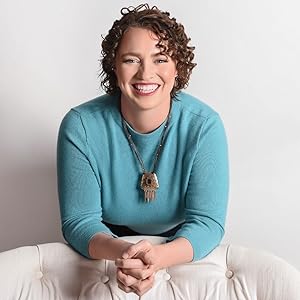
Sunny Hart lives in the rolling hills of the Kentucky Bluegrass. She has spent her entire life expressing herself through writing and short stories until one NaNoWriMo she challenged herself to write a book to share with the world. By Her Sight is the first book Sunny has published but is one of many floating around in her head. When not writing, Sunny is spending time with her dogs and horse and working her ‘day job’ as a business strategy consultant.

Website * Facebook * Instagram * Bookbub * Amazon * Goodreads

Would you like a chance to win a $10 Amazon or Paypal gift card? Follow the tour HERE for special content and a giveaway!

Can you, for those who don’t know you already, tell something about yourself and how you became an author?

I’ve always written as a way to process the world whether that be journaling or writing short stories. One November, I challenged myself to write a full book from beginning to end and that’s how By Her Sight was written. I fell in love with the why-choose genre and the rest is history!

When did you first consider yourself a writer?

Probably not until I had finished writing the first three books in the Unitam Realm series. That feels like a long time but it took a bit for my mindset to shift and be like “I can really write a book!”

Do you have a favorite movie?

I love the Marvel universe but especially the earlier Marvel movies. Captain America is one of my favorites!

What inspired you to write this book?

There’s a lot of injustice in the world and there are many, many people that the justice system fails. Evelyn came to life from the part of me that wants to burn it all down sometimes. Obviously she doesn’t and she creates the Archers after something devastating happens to her but writing the Archers series helps give me hope.

What can we expect from you in the future?

I’ll always be writing! I’m too far deep into the life now and I have too many stories swirling in my brain. I’m excited to finish up the Archers series and maybe dive back into my Unitam Realm series for a prequel trilogy.

How did you come up with the name of this book?

So originally this was going to be a duet and the duet’s title was going to be Duality. But as my alpha and beta readers will tell you, I can’t limit what I write at all so the duet quickly turned into a trilogy but I loved the name Duality too much to let it go so I made it the first book’s title. Duality means “an instance of opposition or contrast between two concepts or two aspects of something” which I think fits Evelyn’s life at the start of the book perfectly!

Who designed your book covers?

The amazing Inessa at Cauldron Book Press!

Do your characters seem to hijack the story or do you feel like you have the reins of the story?

Oh I have no control whatsoever LOL! I am a plotter so I like to start with a plan but usually somewhere along the way it goes off the rails and I’m changing direction. However, there have been times in a series when I unconsciously write something at the beginning that ties in perfectly at the end and it is usually driven by a character’s actions.

What are your top 10 favorite books/authors?

Too many to count! I love everything by Devyn Sinclair, Tessa Hale, J Bree, Grace McGinty, and Nadia Lee. Their books are staples in my library!

Do the characters all come to you at the same time or do some of them come to you as you write?

Some of them come right away. Usually my FMCs are always pretty formed in my head before I start writing. There’s always one guy in the group that fights me. For Duality, that guy was Marcus. He seemed to like fighting anyways so it worked out!

Do you see writing as a career?

I’m hoping to turn it into one! But that’s a long term goal. Right now, I don’t want to put that much pressure on my creativity. Instead, I’m happy writing as the words come to me!

Do you prefer to write in silence or with noise? Why?

I like to write to music or work in a coffee shop! My first book, By Her Sight, was written almost exclusively to the Hamilton soundtrack actually. There’s something about a bit of noise that allows me to shut off part of my brain and dive deep into the story.

Advice they would give new authors?

The first draft is you just telling yourself the story. It’s supposed to be messy and imperfect! Remember, writing is a marathon, not a sprint!


Protopia: A Dystopian Thriller by John Calia that Explores Friendship and Conflict

As an Amazon Associate, I earn from qualifying purchases. That means, when you purchase a book using an Amazon link on this site, I earn an affiliate commission. All commission earnings go back into funding my books; editing, cover design, etc.

Two Friends.

One Shattered World.

And a choice that could change everything.

Protopia

by John Calia

Genre: Dystopian Thriller

#1 Amazon Bestseller!

America’s cultural divide turns deadly.

When lifelong friends Olivia and Alexandra find themselves in opposing camps, the bonds of their friendship are tested like never before.

Olivia seeks solace in a socialist utopia that promises protection and belonging, but at what cost?

Meanwhile, Alexandra chases freedom. But can she survive in a community with few, if any, rules?

As their worlds collide and tensions escalate, secrets and lies threaten to destroy the foundation of their relationship.

Can they bridge the gap between them, or will their differences tear them apart forever?

In this gripping tale of loyalty, adventure, and human connection, the stakes are higher than ever. Protopia is a thought-provoking thrill ride that explores the power of friendship in a world on the brink.

If you devour the complex characters of Emily St. John Mandel or the visionary world-building of Octavia Butler, you’ll be captivated by this latest masterpiece by the author of the Amazon best-seller The Awakening of Artemis.

Amazon * Bookbub * Goodreads

A Brooklyn-born, second-generation American, and the eldest of three boys, writing is his third career and the one about which he is most passionate. Following graduation from the US Naval Academy and active duty in the Navy, he embarked on a career in business. He began writing his blog “Who Will Lead?” in 2010 attracting over 120,000 readers. It inspired him to write his first book, an Amazon five-star rated business fable titled “The Reluctant CEO.” His fascination with artificial intelligence and its impact on society was the inspiration to write a science fiction thriller, The Awakening of Artemis. Currently, he makes his home in Fairport, NY, a village on the Erie Canal.

Website * Facebook * X * Instagram * Bluesky * Bookbub * Amazon * Goodreads

Would you like a chance to win a $20 Amazon gift card? Follow the tour HERE for special content and a giveaway!


Unraveling Murders: The Crooked Medium’s Guide to Murder

As an Amazon Associate, I earn from qualifying purchases. That means, when you purchase a book using an Amazon link on this site, I earn an affiliate commission. All commission earnings go back into funding my books; editing, cover design, etc.

To solve a baffling murder – search both sides of the grave…

The Crooked Medium’s Guide To Murder

by Stephen Cox

Genre: Spooky Paranormal Victorian Murder Mystery

London 1881. Can two crooked women stop a murder?

Extravagant medium Mrs Ashton and her lover, blunt working-class Mrs Bradshaw, run a spiritualist scam. Mrs Ashton secretly reads minds.

Believing that Mrs Ashton is genuine, grieving Lady Violet craves the truth behind her mother’s untimely death. But Lady Violet’s powerful husband Sir Charles hates spiritualists. Has he killed before?

Uncovering this MP’s wicked crimes will put all three women in terrible danger…

To solve a shocking murder, look on both sides of the grave.

“An astonishing feat of twisting plots and perceptions”

“It’s deliciously twisty, with women who won’t be told, a young bride in peril, and the delicate art of a con.”

“A book I’ve been looking for all my life. Queer found family all wrapped up in a supernatural murder mystery. Absolute perfection.”

“a brilliant, gripping story. .. if you’re looking for a great new book to read, I encourage you to check it out.”

“…an actually intriguing mystery.”

“with a new murder thrown in and a couple of pre-existing ones uncovered, we get an astonishing story of redemption with well-plotted but never signposted twists and turns thrown in at every stage.”

“…a murder mystery with a supernatural spin. … the premise and plot were great. The story is very atmospheric with a very nasty aristocrat villain. ..an entertaining read…”

**Only .99cents!**

Amazon * Author’s Site * Bookbub * Goodreads

Stephen Cox is a writer living in London. He’d read every Holmes, Christie, and Sayers before he was 21 and did Holmes fanfic in school. He has also read the Moonstone six times. With a science degree he has always been a fan of history and the imagination.

The Crooked Medium’s Guide to Murder contains the strong characterisation, women protagonists, authentic period setting, and wide roaming imagination of his other works.

He says ‘It’s a rip-roaring twisty story, with relationships under stress and surprising readers at every turn.”

His first two novels, Our Child of the Stars and Our Child of Two Worlds were called “heartfelt, imaginative and gripping”, with wide praise in the national press.

Stephen says ‘I wanted female rogues as my leads – people who lead a crooked life, who need to keep secrets, yet can be kind and generous too. This is a rigorous detective story with a client in trouble and old crimes to be solved. It has everything – a brutal man, a Lady in danger, and the past and present feeding the action. Can these outsiders possibly win? Queer women certainly existed and made lives together in Victorian England, as those with eyes to see can see,’

Website * Facebook * X * Instagram * Bluesky * Amazon * Goodreads

Follow the tour HERE for special content and a $10 giveaway!

Questions I’ve Been Asked
Stephen Cox

Why write this?
My first two books were about a childless couple who adopt a space
alien, set in the States, and to the soundtrack of the late Sixties. So it is
a change.
I needed to write Mrs Ashton and Braddie – these morally complicated
woman, Not just Victorian, late Victorian, as the Empire grow and unrest
with it. Many modern ideas were finally stirring.
I was determined to write about the UK and our relationship with our
past. I wanted to write older and more morally complex characters.
I really wanted to write a ripping murder mystery, with an established
sapphic couple. In these difficult times, I wanted some light and hope.
Also, my agent thought it was the least uncommercial of my ideas.

Why change genre?
The Crooked Medium is like my previous work
-complex female protagonists
-a well realised historical setting
-it’s not quite our world!
-warm, with a touch of humour and centres relationships -friendship,
family and found family
-a cracking story which makes you think
Is it Cozy/Cosy – in the genre sense?
Quick answer – The Crooked Medium’s Guide to Murder isn’t much
stronger than Christie or Sayers.

I’m a bit puzzled by the exact cosy boundaries. I read and certainly
watch cosy crime.
I prefer my mysteries to be more stories of character than just a pure
intellectual puzzle.
If you want murder with absolutely no shock, blood, swearing, or same
sex relationships, go elsewhere.
The book is warm and heartfelt, focusing on three women outsiders as
sleuths, dealing with a difficult relationship with the police. Mrs Ashton
and Braddie have a lively relationship, that they enjoy their marital
relations is clear but the book is ‘closed door’. The violence is not
gratuitous. But I don’t shy away from murder’s mess and the impact of a
death on families and communities. Mrs Ashton might be flaky on
honesty, and not averse to theft, but she is outraged by murder.
The book is also clear-eyed about the vast gulf between the comfortable
and the desperate. Victorian England was not a chocolate box utopia.

Is there swearing?
I’m afraid both aristocrats and guttersnipes use a few vulgarities but archaisms, no
Fs or Cs. An arrogant entitled man uses a misogynist slur about sex workers. We’re
not supposed to like him. I try to avoid racial or ableist terms now seen as offensive
even if it is ‘period accurate’.
Mrs Ashton and Braddie have an extremely rude parrot, called Eleanor, who has to
be shut in the bedroom when visitors come. Taught by a scurrilous sailor, these
include “By John Brown’s manky trews” [dirty or shabby + trousers/pants] “Bertie’s
Strumpets” [disrespecting the Prince of Wales’s numerous girlfriends] and a childish,
scurrilous comment that Jesus went to the toilet. It upsets Mrs Ashton, who is pious,
but she comes to realise that the Jesus she follows and admires walked the earth as
a man who ate, drank, slept, got tired, and showed normal human emotions. And
probably needed to do what other humans do. And if he did, it doesn’t invalidate his
person, his example, or his worth.

Chapter 4. The Ambitions of Miss Maisie Kendrick

Second floor back, 13 Jonah Court, Wretchmarket, Thameswake. Friday

Authors note. We meet Maisie in Chapter 1 but this is the first chapter from her viewpoint.

The family’s grimy rooms in Jonah Court were one room split by ragged curtains. Rats worked their scurrying mischief under the floors. Maisie had heard Pa go before first light, red-eyed and guilty, to look for work. He’d eaten the last food, for a docker cannot work empty to find the rent. Everything would be far worse on the street.

Maisie had work for Mrs Ashton today, a real adventure. A wicked sir puffed up with his money and importance, and a weeping childless lady in danger. Mrs Ashton might need her for weeks. The sexton had told her something odd last night, about people snooping on the two strange birds. Maisie must get the kids to school then investigate.

She got George and Tildy waked, wiped, and decent, and gave George the medicine she hid under her women’s rags, so Pa wouldn’t drink it. Thank goodness for Mrs Colquhoun downstairs – she was a mighty gap-toothed ogre, but she’d loved Ma and had a soft heart, which meant porridge for the three of them and bread to take for lunch. Payment was the stern lecture Maisie knew by heart, on the heathen failings of Mrs Ashton – the warning of the Holy Father against ghost-mongering – and the desirability of good, honest, reliable work.

Mrs Colquhoun had the whole downstairs floor of the building for her needle-girls, and Maisie sewed for her when nothing else paid. Such long dull work, and if her mind fled to far-off lands or solving mysteries, she made mistakes and the work had to be done again.

The jeering rhyme ‘Tinker, heathen, darkie, thief,’ followed everywhere the three Kendricks went. Yet, Mrs Colquhoun’s carrot-headed brood, including two hulking apprentices, were gallant protectors. Friends with fists; no one dared risk more than jeers.

The streets were shiny-washed with rain, sparkling – dark islands of shit in a silver sea. Every day she saw those who lived in holes, or under a piece of stolen canvas. Barefoot in the dirt, your cuts festered. She remembered how she had raged when the kids’ boots were stolen. Mrs Ashton had replaced them, bless her.

When she could, Maisie took the kids to school, trying to keep up their spirits with the hug at the gate. But Maisie had to earn a living… School had books and posh people’s libraries had more books than any one person could read. She was no more allowed in those than she’d ever be invited to Buckingham Palace.

The steamship and the railway meant you could go most anywhere in the world, balloons could soar above mountains, and submarines even went under the sea. Only eighty days to go round the world. She’d rescuedthat book from a hawker…

Yet London was the centre of the world – almost a country – with palaces and flophouses, bright taverns and squalid drinking holes, churches and knocking shops, tall warehouses in sooty brick and squat lean-tos. Wood and iron and mud and stone – a cauldron of sweet and bitter, old and new, rich and poor, steam rising and sewers stinking and factories smoking.

One more hug at the gates, and Maisie was free. She ran through shining streets to the Burning Bird, to see what Sal knew. Maisie ran, skirts flying, boots ringing out on the cobbles, herself again. All were about their business.

Streets crowded with horse-drawn buses and drays, a wounded soldier with his barrel organ, and a rough dock prophet on a crate shouting, angry about the End of The World. Roofs dripped and the sparrows played in the puddles.

Everything about Sal was big. She ran the pub like a sergeant major and she could stop a fight with a whistle. ‘Thought you’d come,’ Sal said, dismissing the drayman. ‘Some odd cove asking after your Mrs Ashton last night. Generous with his coin, beers all round, bit of a flirt. An enquiry agent.’

Someone paid to spy?  Maisie could play that game. Beat him at it.

Building Believable Magic Systems in Urban Fantasy

One of the key elements that defines urban fantasy is the integration of magical elements into the modern world. Whether it’s a hidden society of magical beings, a world where spells and supernatural creatures roam the streets, or the exploration of a character’s newfound magical powers, the magic system in an urban fantasy setting must feel both extraordinary and plausible. Readers need to believe that magic can exist within the framework of their everyday lives without shattering the suspension of disbelief. But how do you create a magical system that feels authentic while staying grounded in the real world?

In this post, I’ll take you through an in-depth guide to building unique and believable magic systems in urban fantasy. We’ll discuss the importance of internal consistency, the balance between magic and real-world rules, and how to keep your readers hooked without losing their trust in the world you’ve created.

1. Establishing Rules for Magic

The first step in crafting a believable magic system is setting clear rules for how magic works in your world. While magic allows for immense creativity and wonder, it also requires structure. Without established rules, magic becomes too arbitrary and unpredictable, making it difficult for readers to connect with the world you’ve built.

Why Rules Matter:

  • Internal Consistency: A magic system must adhere to its own logic. If magic behaves differently without explanation, it risks confusing or frustrating readers. The moment magic becomes a convenient plot device that appears without proper foreshadowing, you lose the trust of your audience.
  • Limits and Costs: Every magic system should have limitations. Power without limitations feels contrived. Magic should come with costs, whether it’s physical tolls on the user, restrictions on its use, or even social consequences. For instance, maybe casting a spell drains a person’s energy, risks the safety of a loved one, or only works at a certain time of day. These limitations make magic feel earned and give characters something to struggle with.

Think about Jim Butcher’s The Dresden Files, where Harry Dresden’s magic is often limited by the amount of energy he can draw from the world, the danger it poses to him personally, and the rules of the White Council. Dresden’s magic is consistent but not unlimited, and he is always mindful of the cost of each spell.

2. Make Magic a Part of the World’s Framework

In urban fantasy, magic doesn’t just exist in isolation—it interacts with the real world. For your magic system to feel believable, it should be integrated into society, politics, culture, and even economy, as though it’s always been a part of the world. That is, unless the magic of your world is held in secret among only those in the know… say an underground world of witches like in my Blood Angel Series, for example.

Creating a Magical Ecosystem:

  • Hidden vs. Known Magic: Is magic something that society is aware of, or is it hidden from the public? In many urban fantasy stories, magic is concealed from the general public, adding a layer of mystery and intrigue. However, even in these worlds, magic should still have an impact on the economy, government, or society. Maybe magical beings run secretive industries, or powerful witches control the black market of enchanted items.
  • Magical Institutions and Regulations: Think about how magic would be regulated, if at all. Are there organizations that oversee magical activities? Is magic illegal for certain people or in certain areas? How does the magical community interact with the mundane world—do they cooperate, conflict, or hide from each other? Exploring these societal dynamics can help ground your magic system in reality and avoid making it seem like an arbitrary addition to the plot.

For example, Laurell K. Hamilton’s Anita Blake: Vampire Hunter series presents a world where vampires, werewolves, and other supernatural creatures are not only known but have legal rights and recognition, with the government regulating these creatures’ activities. The existence of supernatural beings is integral to society’s politics, and the magic in the world reflects that integration.

3. Determine the Source of Magic

One of the most important decisions when creating a magic system is determining where the magic comes from. Magic can be drawn from a variety of sources—nature, gods, emotions, the mind, or even technology. The source of magic will significantly shape how it functions and is understood in your world.

Common Sources of Magic:

  • Elemental Forces: Magic that taps into the natural world, such as fire, water, or earth, is a common source of power. This can create a connection between magic and the environment, adding depth to the system. For instance, a fire mage might have to be near a flame or rely on natural heat sources to use their powers, making the system more tangible and grounded.
  • Bloodlines or Heritage: Magic might be passed down through generations or tied to specific bloodlines. This can create tension within societies, with some families hoarding power, others struggling to access their abilities, or even forbidden forms of magic associated with certain ancestries.
  • Energy or Willpower: Magic could be powered by an individual’s physical, mental, or emotional energy. A magic user might have to tap into their own life force, willpower, or emotions like anger, sadness, or love to fuel their spells. This can create complex inner conflict, as characters may hesitate to use magic for fear of personal loss.
  • Technology and Science: Some urban fantasy systems blend technology and magic, where magic is not a mystical force but a scientific one, often with technological advancements enabling magical phenomena. Think of how techno-magic systems like those in the Shadowrun series blend cybernetics with spellcasting or enchanted machines.

By establishing where your magic originates, you not only create more specific rules for your system but also provide readers with a clearer understanding of its limitations and potential.

4. Incorporate Magic into Character Development

The use of magic in urban fantasy often plays a central role in character development. A character’s relationship with magic can reveal a lot about their personality, values, and struggles. This is where character-driven conflict can shine—especially if magic isn’t simply a tool, but something that challenges or alters the character’s life.

Examples of Magic and Character Development:

  • Moral Dilemmas: A character might have access to immense magical power but must choose whether to use it for good, evil, or for personal gain. This inner conflict can shape their journey. In The Dresden Files, Harry Dresden’s magic comes with deep moral consequences. His choices, especially when using darker forms of magic, define who he is as a person and affect his relationships.
  • Physical or Emotional Limitations: Magic could come with a physical toll, such as the deterioration of the user’s health or mind. Alternatively, magic might amplify a character’s emotional state. This can add depth to characters, making their struggles more relatable and the magic itself a more integral part of the narrative. For instance, a character might be too emotionally unstable to control their magic, creating tension and stakes.
  • Identity and Belonging: If magic is tied to heritage or bloodlines, a character may feel the weight of their ancestry, the pressure of expectation, or even a sense of loss if they cannot access their magical heritage. How they grapple with their magical identity can be central to their character arc.

5. Use Magic to Enhance the Story, Not Dominate It

While magic is an essential component of urban fantasy, it should never overpower the story. The best urban fantasy integrates magic in ways that enhance the plot, drive character development, and add intrigue to the world—without allowing magic to solve all the problems instantly.

Balance Between Magic and the Mundane:

  • The magical and mundane worlds should interact, not just coexist. Often, the challenges in urban fantasy arise from the friction between these two realms. Magic might make life more complicated rather than easier. This keeps the stakes high and forces characters to think creatively and make tough choices.
  • Magic should be a tool, not a crutch. It can help drive the plot forward, but it shouldn’t remove all challenges. There needs to be an element of danger, uncertainty, and complexity even in magical situations. For example, perhaps magic is unreliable in certain circumstances, or the protagonist’s power might not be enough to overcome an adversary without sacrifice.

Crafting a believable magic system in urban fantasy is an exciting challenge, but it requires careful thought and structure. The magic must be consistent, integrated into the world, and tied to real-world consequences to maintain the suspension of disbelief. By establishing rules, creating a system that fits the world, and using magic as a tool for character development, you can create a magical system that feels grounded, logical, and, most importantly, immersive. When done well, magic becomes more than just a fantastical element; it becomes an integral part of the world, deepening both the stakes of the story and the richness of the characters within it.


Understanding and Overcoming Writer’s Block: A Fiction Author’s Perspective

As a fiction author, one of the most frustrating, and at times, debilitating experiences you can face is writer’s block. Whether you’re staring at a blank page, endlessly revising the same sentence, or feeling the crushing weight of doubt, writer’s block can halt your creative flow and make even the most seasoned writers question their abilities. But the good news is, it’s a normal part of the writing process. In this post, I will explore what writer’s block is, why it happens, and most importantly, how to push through it.

1. What is Writer’s Block?

Writer’s block is the inability to write or produce new content, often characterized by a sense of being “stuck.” It can manifest in many ways, from a total absence of ideas to a paralyzing fear of not being able to write well enough. While the term “writer’s block” is often associated with a lack of inspiration, it’s actually more complex. It can stem from internal pressure, perfectionism, burnout, or external stressors that interfere with the creative process.

For me, writer’s block has often been an all-encompassing feeling of frustration—a mix of work-life balance stress and lack of time, coupled with the paralyzing fear that what I’m writing isn’t good enough. And while it can be discouraging, it’s important to remember that it’s a temporary setback, not a permanent condition.

2. Why Does Writer’s Block Happen?

Understanding the root causes of writer’s block can help demystify the experience and take away some of its power. Here are some common reasons writer’s block happens:

1. Perfectionism and Self-Doubt

One of the most common culprits is perfectionism. As writers, we often want every sentence to be brilliant, every plot twist to be surprising, and every character to be perfectly realized. But this pressure can paralyze us, preventing us from moving forward.

2. Fear of Failure

We’ve all had moments where the fear of failure takes over. Will anyone even care about this story? What if my characters aren’t compelling enough? This fear can be crippling and make it difficult to write anything at all.

3. Lack of Inspiration

Sometimes the creative spark simply isn’t there. You’ve exhausted all your ideas, and the well feels dry. Maybe the voices in your head have just stopped talking. This type of block is especially frustrating when you have deadlines or a manuscript to finish, self-imposed or by a publisher. The absence of inspiration can leave you staring at a page, unable to fill it with the words you know are there—but just can’t seem to find.

4. Overwhelm or Burnout

Writing a novel or long-form piece of fiction is an enormous task. The sheer scope of the project can lead to burnout, especially if you’re pushing yourself too hard. The sense of overwhelm that comes with large projects can cause you to shut down entirely.

5. External Stressors

Personal issues, work-related stress, or family matters can all affect your ability to focus and create. If your mind is occupied with external distractions, it can be hard to summon the mental space needed for storytelling. In truth, this is the one that gets me more often than not. I am a creative, but I am also a teacher… I love to help others. Therefore, in many aspects of my life, I say ‘yes’ way too often. I overcommit myself and cause undue stress. That stress becomes overwhelming, and my creativity ends up suffering because of it.
3. How to Overcome Writer’s Block

While there’s no one-size-fits-all solution to overcoming writer’s block, there are strategies that have worked for me and many others. Here are some techniques that may help you break free of the block and get back to writing.

1. Embrace Imperfection

The most important thing to realize is that writing doesn’t have to be perfect on the first draft. In fact, it often isn’t. Perfectionism is a silent killer of creativity. Give yourself permission to write badly. Write the worst possible version of a scene. You can always revise it later. But if you don’t get the words down at all, you’ll never have the chance to improve them.

One of my favorite pieces of advice for dealing with writer’s block is simply to “write through it.” Even if you’re unsure of where the plot is going or how a scene should unfold, writing something—anything—will help break the blockage. Sometimes, just putting words on the page will unlock the next step in the story. I used to have a friend who, whenever she experienced writers’ block, would simply start typing numbers: 1, 2, 3, 4, 5, 6, 7, 8, 9, 10, 11, 12. and so on. She would do that until the next idea came to her. Sometimes she would type into the hundreds, and sometimes beyond, but it helped her to break the writer’s block cycle.

2. Set Small, Manageable Goals

If the task of finishing a novel feels overwhelming, break it down into smaller, more achievable steps. Rather than focusing on the daunting idea of finishing an entire manuscript, set daily or weekly word-count goals. Some days it might only be a few hundred words. But consistent, small goals can build momentum and help you feel a sense of accomplishment.

3. Change Your Environment

Sometimes the problem isn’t with the writing, but with the environment you’re trying to write in. If you’re feeling stuck, try changing your location. Go to a coffee shop, write in a park, or even move to a different room in your house. A new setting can spark creativity and help you see your work in a new light. For me… sometimes I just need to clean or reorganize the workspace I’m already in.

4. Let Your Mind Wander

If you’ve hit a wall, step away from your project for a while. This doesn’t mean giving up on writing, but allowing your subconscious to work on the problem. Go for a walk, take a shower, or read something unrelated to your story. Sometimes, the best ideas come when you least expect them.

5. Use Writing Prompts or Exercises

Another way to combat writer’s block is through creative exercises or writing prompts, like in #WritingPrompts. These can help break up the monotony and get your creative juices flowing again. Even if the prompt doesn’t directly relate to your story, it might inspire new ideas or help you work through a specific scene.

You could try prompts like:

  • Write a scene from the perspective of a side character.
  • Describe your protagonist’s home in detail, including things they would never show to others.
  • Write a letter from your antagonist to the protagonist, explaining why they’re doing what they’re doing.

6. Work on a Different Project

If your current project feels impossible, it might help to switch gears. Start working on a different story or creative endeavor. This doesn’t mean abandoning your main project—just give yourself a mental break. A change of focus can help reset your brain and bring back your creative energy.

7. Talk It Out

Sometimes, verbalizing your thoughts can help untangle a complex plot or character dilemma. Talk to a fellow writer or a trusted friend about what you’re struggling with. Don’t be afraid to admit that you’re blocked—chances are, they’ve been there too. Having a sounding board can give you fresh perspectives and ideas you hadn’t considered.

4. Writer’s Block Isn’t Permanent

It’s crucial to remember that writer’s block doesn’t last forever. It’s a temporary phase that all writers go through. Even the most successful authors face it. When I’m struggling with writer’s block, I remind myself that it’s just part of the creative process. Some days will be harder than others, but that doesn’t mean I’m not still moving forward.

Also, be kind to yourself. The more you pressure yourself to “overcome” writer’s block, the worse it can feel. Give yourself permission to write badly or to take breaks. The most important thing is to keep writing, even if it’s just a little bit at a time.

Writer’s block is an inevitable part of the creative process, but it doesn’t have to be the end of your story. Use it as a signal to change up your routine, experiment with new ideas, and embrace the imperfections that come with writing. Every writer faces this challenge at some point, but the key is persistence. Keep writing, keep experimenting, and above all, be patient with yourself. Your words are waiting—sometimes, all you need is a little time and space to find them again.


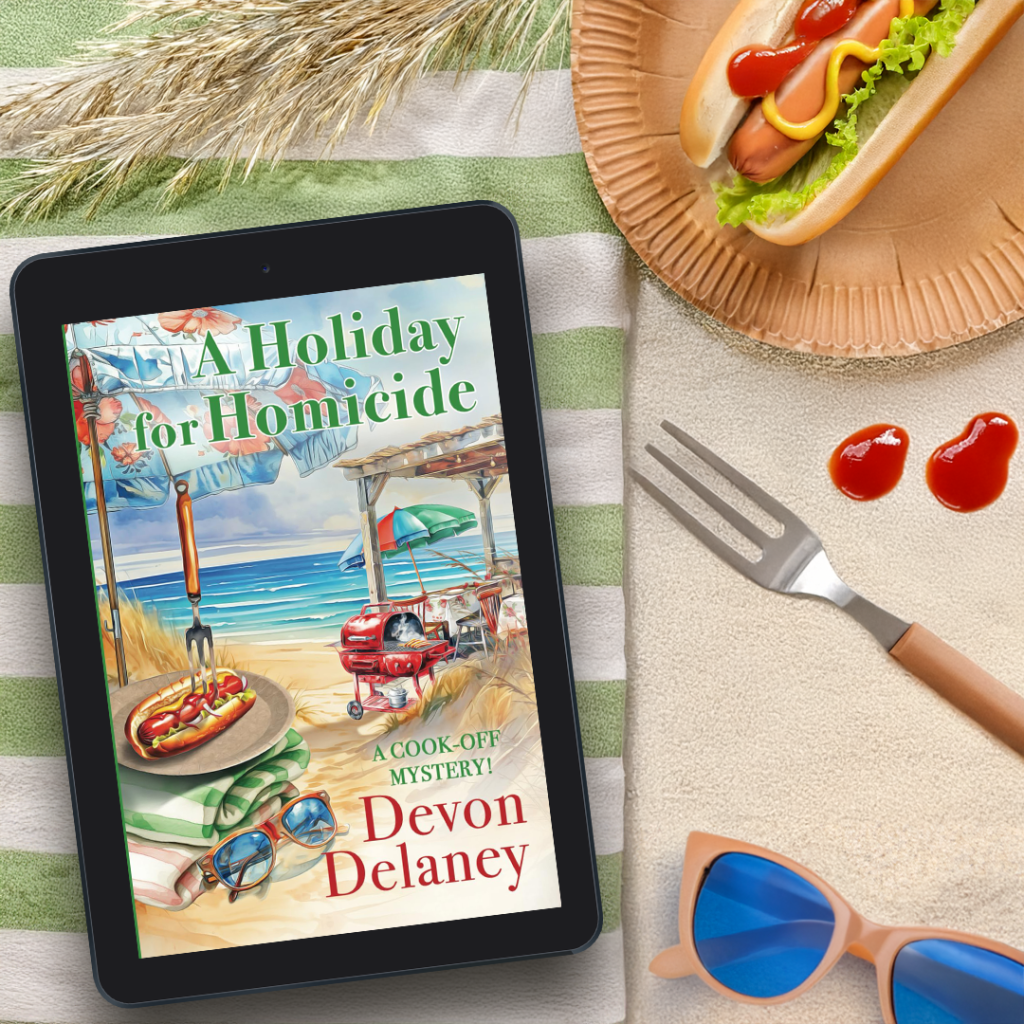
A Holiday for Homicide by Devon Delaney

As an Amazon Associate, I earn from qualifying purchases. That means, when you purchase a book using an Amazon link on this site, I earn an affiliate commission. All commission earnings go back into funding my books; editing, cover design, etc.

A televised cooking competition puts Sherry, a successful cooking competitor, in the spotlight, especially when the final challenge calls for catching a killer.

A Holiday For Homicide

A Cook-Off Mystery #9

by Devon Delaney

Genre: Cozy Murder Mystery

 A televised cooking competition puts Sherry in the spotlight, especially when the final challenge calls for catching a killer . . .

Despite being a seasoned competitor, nothing could have prepared Sherry Oliveri for the thrill of being chosen for a three-day cooking challenge on national television. She’s dying to tell her friends, but she and everyone else involved in the contest has been sworn to secrecy until it airs. Still, that’s not stopping someone from penning cryptic notes about the show for the whole town to read, which has the production crew on edge—right up until one of them is found dead.

Determined to root out the killer, Sherry suspects the truth lies with whoever’s behind the mysterious notes—which have now turned dark with menacing comments on the murder and suggestions of buried secrets. Trying to unravel it all while focusing on her recipes, Sherry’s stopped dead in her tracks when the cook-off host drops a bombshell. With no time to spare, she’ll have to unearth the one missing ingredient that will ensure the killer’s cooked . . .

Includes recipes from Sherry’s kitchen!

Praise for the Cook-Off Mysteries:

“The Cook-Off Mystery series by Devon Delaney is a very tasty treat!” —Cozy Mystery Book Reviews

“This is a very fun and rollicking mystery that stays light-hearted even as the case gets more complicated . . . Cooking, holiday celebrations, and moving family drama all make for the perfect escape.” —Kings River Life

“This book was gripping and hard to put down. It didn’t feel like everything else you see out there, it felt very fresh. I really enjoyed this book!” – Netgalley Reviewer.

Amazon * B&N * Bookbub * Goodreads

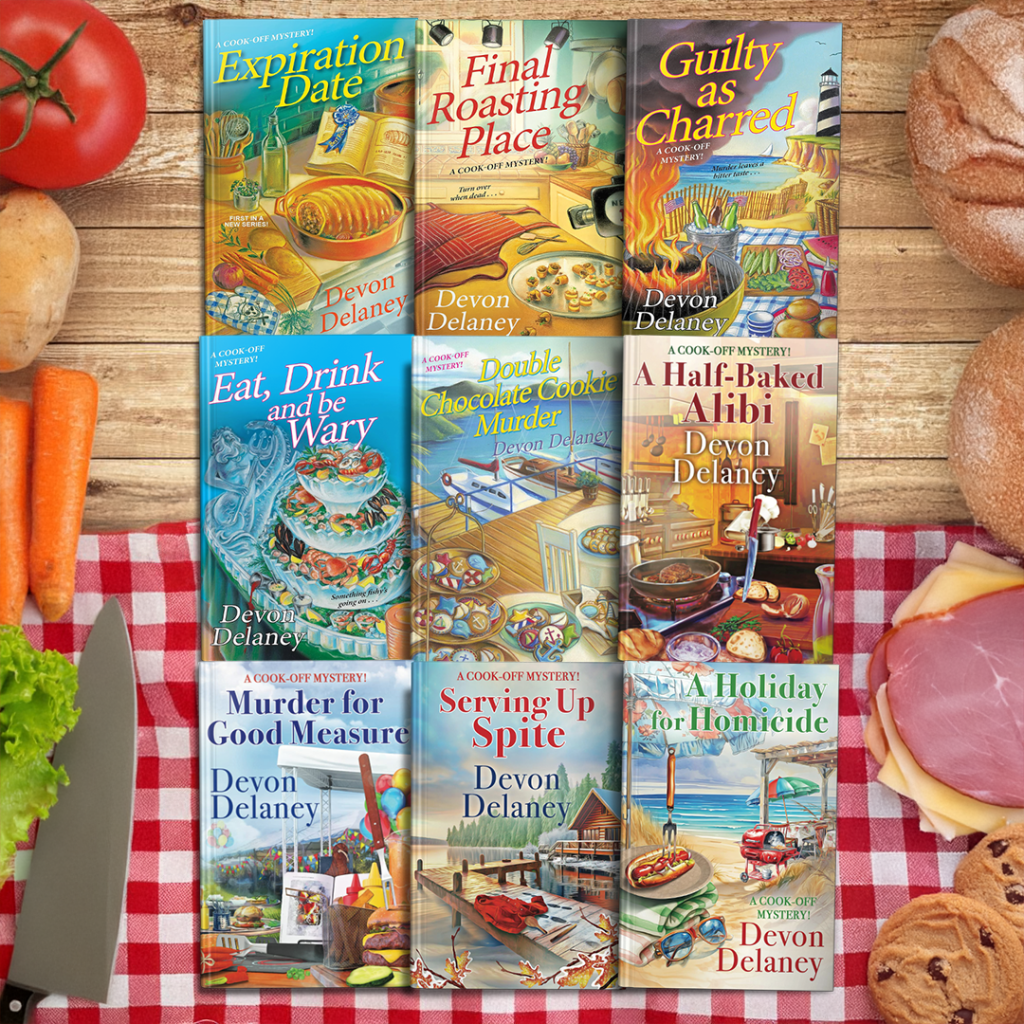
**Don’t miss the rest of the Cook-Off Mysteries! **

Find them on Amazon!

Devon Delaney is life-long resident of the Northeast and currently resides in coastal Connecticut. She is a wife, mother of three, grandmother of two and accomplished cooking contester. She taught computer education and Lego Robotics for over ten years prior to pursuing writing. Along the way Devon has been handsomely rewarded for her recipe innovation over the last twenty-plus years. Combining Devon’s beloved hobby of cooking contesting with her enthusiasm for writing was inevitable.

When Devon is not preparing for her next cook-off, she may be found pursuing her other hobbies, including playing competitive USTA league tennis, gardening, needlepointing, painting, jarring her produce, and hooking rugs. Her standard poodle, Rocket, is her pride and joy and keeps her on the path of sanity.

Website * Facebook * Instagram * Bookbb * Amazon * Goodreads

Would you like a chance to win a $10 Amazon gift card? Follow the tour HERE for special content and a giveaway!

What is your writing process? For ex: do you outline first?

I have yet to develop a consistent writing process. A lot has to do with my life’s happenings at the time of writing. If I’m in a time crunch I outline with as much rigor as I can, but I have yet to adhere to the outline as I reach the halfway point of the book I’m working on. Outlines are very helpful to put one foot in front of the other without a misstep. Mapping out an outline I have every intention of sticking to is the best launching point for me. I plow ahead for at least two hours at a sitting most every day, putting words down to move the plot forward. As I move along in the process I predictably take a left turn from the outline. When I’m confident the outline has served its purpose I go rogue and transition over to notes I’ve taken from manuscript day one. One of my favorite steps in the writing process is re-write time. I begin my first re-write when I’m halfway done the manuscript. I recognize I’ve reached that point by the number of words I’ve written. By the end of my first re-write I have exercised my most powerful word-whacker tool repeatedly, cutting out multiple paragraphs of text. I have a tendency toward wordiness and a tap of the Delete key is my best defense against reader vertigo, a not-so-rare condition brought on by a dizzying  excess of words on the page. I read and reread my words not for grammatical errors, which abound, but for inconsistencies, both in the character’s development and the storyline. I search for confusing passages and unnecessary detail of any variety. Clarity is king and not easy to achieve. After midway re-writes I move ahead to finish the story, before starting the re-write over again from word one. I’m confident at this point I am headed in the right direction. I know how I want the book to end, how I want to tie up loose ends and which characters I want to let remain standing by the last word. I’m pretty sure I re-read my books between twenty to thirty times. I think about the characters and plot day and night until I finally send the manuscript off to my publisher.

Do you see writing as a career?

I would love that.

Fun facts/tidbits/did you know? – type tidbits about the author, the book or the writing process-

Fun facts:

I am the oldest person on my USTA tennis team.

I have tried out for Chopped three times and gotten to the final interview stage each time before not being chosen. I will keep trying.

I began watercolor painting this year.

I won the very first recipe contest I entered.

I got a publishing contract in one month after my agent began the search.

Writing process tidbit: Writing a winning recipe is a lot like writing a good mystery. Begin with a catchy title. Cozy mystery readers love puns in their titles. For a recipe contest you must know your audience. Some research on past winning recipes can offer a clue as to the naming convention the contest leans toward, the contest may lean toward a long descriptive name or , on the flip side, a short direct attention grabber. Draw the reader into the book or recipe from word one. If the ingredient list is too long the home cook turns the page to an easier version of a similar recipe. Along the same vein, if there are too many characters in the plot the story is diluted, and the reader closes the book. The meat of the recipe, which is the recipe preparation, must contain a unique twist that makes both appealing and outstanding. A twist or two within a mystery is mandatory for the book to be successful. The recipe must wrap up with a wonderful outcome that draws the diner in, to the point he or she can’t wait for the first bite. Likewise, the book’s plot must wrap up loose ends and leave the reader satiated and yearning for more from the author.


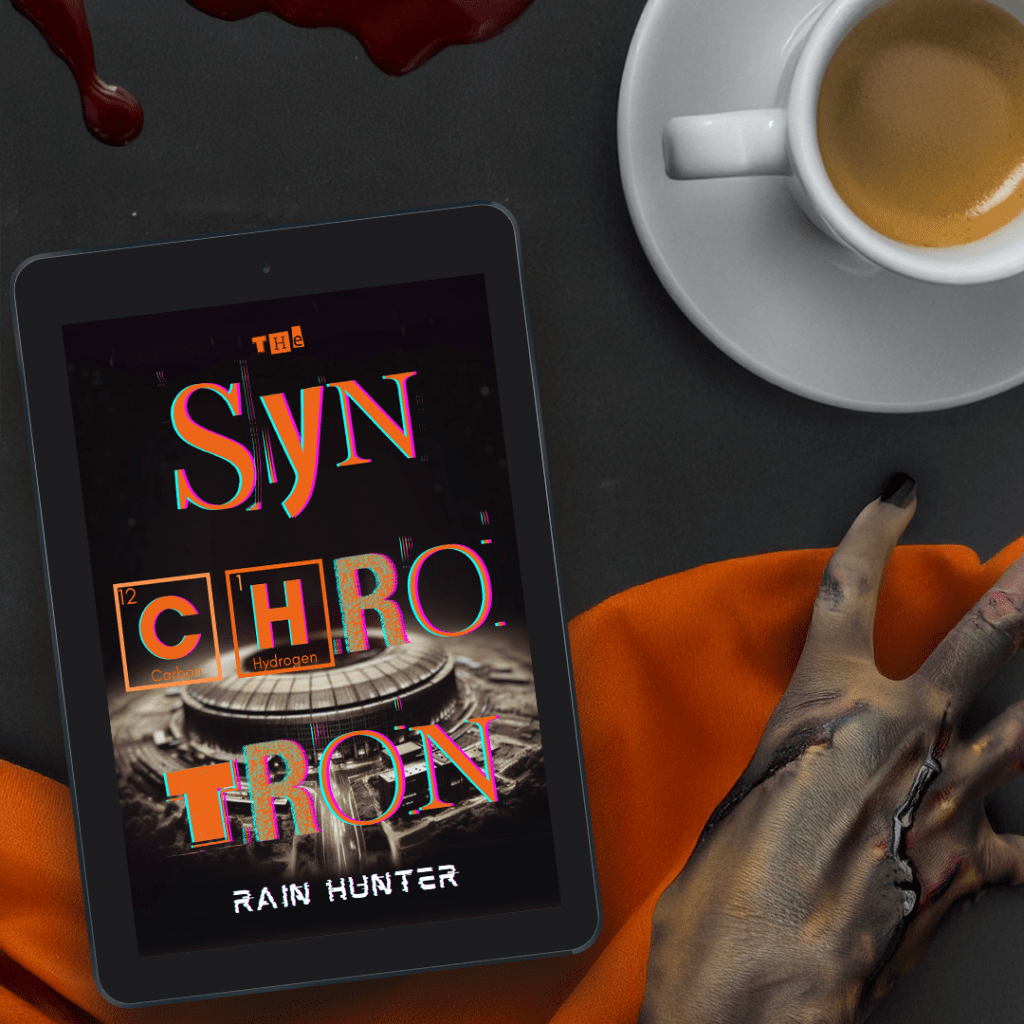
The Synchrotron by Rain Hunter

As an Amazon Associate, I earn from qualifying purchases. That means, when you purchase a book using an Amazon link on this site, I earn an affiliate commission. All commission earnings go back into funding my books; editing, cover design, etc.

The End of the World has Never Been This Incompetent!

The Synchrotron

by Rain Hunter

Genre: Science Fiction Comedy

✔️A deadly virus.
✔️A world overrun by monsters.
✔️ Six scientists on a dangerous mission to cure the world.
We are screwed…

They only wanted a Nobel Prize. Instead, they will have to save the world.


It was going to be the experiment of the year. Preparing to blast x-rays through a piece of palladium at the most dazzling European synchrotron, Anna and five of her fellow scientists expected a few hiccups.

Not a horde of hungry spleen-eating zombies.

The world has succumbed to the virus, leaving only scattered survivors.


When Anna and her friends realise that the infected can be cured back into humans, they pledge to find a cure no matter the cost. Equipped with a lab wrench and questionable lab ethics, Team ID26 are humanity’s last hope.

But what is the price of saving the world?

Running out of time, Anna and her friends will face the impossible choices between life and death, morality and cure. When the future of the world is at stake, what will they have to sacrifice?

**Only .99cents!!**

Amazon * Bookbub * Goodreads

What is similar between science and postapocalyptic survival?

Everything that can, will go wrong.”

Rain Hunter is a writer of post-apocalyptic science fiction. Having spent years as a materials researcher, Rain intricately weaves scientific precision into the stories. “I’ve had a fun lab run over the years and might have picked some degrees on the way,” laughs Rain. “But the most important thing for my books is that the science has to be real. No more can-and-know-it-all characters! If I know how to cook meth from baking soda and cough syrup, I won’t be able to start a rocket engine, full stop. Even in fiction!”

Rain is a huge fan of the zombie genre, both in movies and books. “I’d kill to be a zombie extra in a film. Even if they smash my brains out in the first two seconds. Sign me up anytime.”

Dark humour and irony are the main ingredients in Rain’s novels. “I am sure the world will die laughing. That’s what I would do.”

Rain lives in Birmingham (England), which serves as a main inspiration for the goriest post-apocalyptic scenes. In their spare time, Rain plays a harp in the Royal Philharmonic Orchestra.

Nah, not really. 

Website * Facebook * Instagram * TikTok * Amazon * Goodreads

Would you like a chance to win a $25 Amazon gift card? Follow the tour HERE for special content and a giveaway!

Did you learn anything during the writing of your recent book?

How about we speak about all the things that you learn that are NOT writing? Are you an indie author? You will know all about the daily grind of DEY – do everything yourself. From creating your own website to your own ads. Here are some of the professions I’m mastering so that more people could see my books (I didn’t even say buy):

  • Editor. Here is an example: one of my editors (US-based) offered on her website a separate service for converting British English into American English (all those ises into izes). Reasonable – as a British author I would like to be understood by my American fans. (Hello? Any American fans around?) I specified with her that I was writing in British English (just to make sure). Guess what came back? All my en-dashes brutally converted into a bunch of em dashes. My novel started to look like written by a rabid AI. Well, if she doesn’t know the differences in bloody dashes, how could I trust her as an editor?
  • Cover designer. It’s okay if your novel is a mainstream romantasy (no disrespect, just not my genre) and you can photoshop some stock images into an epically looking fae/princess/warrior. It’s a completely different piece of guts when you need to explain to people what a synchrotron is. I attached photos. Photos didn’t help.

Also, explaining what is post-apocalyptic comedy turned out difficult. Or I’m just shit in explaining.

  • Instagram influencer. Yes, it’s a bloody job. Some people are good at it and are paid for it. Not me, sorry. I have 107 followers. They seem to be reading all types of books but not MINE.
  • Book formatter. Throwing together a printable pdf doesn’t work anymore.
  • Ads. Holy Odin, if there is Hell, it’s surely populated with ads and people creating ads that nobody ever clicks.
  • SEO whisperer. Backlinks, keywords, optimisation. When was the last time you searched for anything on Google? What did you find? Did you read past the AI bot at the top of the page? It’s high time we do AIO (AI optimisation).

Join my mailing list for more self-publishing stories. I’m honest and don’t pretend self-publishing is not shit. It is, until maybe book forty-two. Why do I do it? Because some books are too niche for trad pub and I do hope to be able – one day – to pay for a family dinner with the money I make from my books.