There’s something especially delicious about a dystopian or sci-fi book that makes you think you’ve got it all figured out… only to pull the rug out from under you in the final chapters. You turn the page expecting one thing, and BAM — plot twist. And if you’re anything like me, those are the stories you’ll be thinking about days (or years) later.
So if you’re craving a read that messes with your head in the best way, here’s a list of dystopian and sci-fi books with jaw-dropping twists — including one from yours truly. 📖✨
Twist Factor: ✨ Darrow’s mission isn’t what he thinks it is
This brutal, high-stakes society built on color-coded castes seems straightforward — until Darrow infiltrates the elite Golds. Midway through, the real scope of the rebellion, hidden agendas, and the betrayals of those closest to him turn everything upside down. By the end of book one, you realize the war Darrow thought he was fighting is just a pawn’s move in a much bigger game.
Twist Factor: ✨ Who’s really behind the experiments and why
My Sector C series takes what seems like a survival-against-the-leadership scenario and flips it into a deeper, darker conspiracy. As the characters navigate a world dominated by deadly experiments and dangerous technology, the real enemy isn’t who (or what) they believed. Loyalties shatter, and hidden connections between characters and the program’s origins turn every assumption on its head.
Twist Factor: ✨ The Glade isn’t a prison… it’s a test
The kids trapped in the maze believe they’re escaping a punishment. The reality? They’re unwitting subjects in a twisted survival experiment designed to find humanity’s last hope. And when the walls come down, the world outside is far worse than the maze itself.
Twist Factor: ✨ The AI you fear might be the only thing keeping you alive
Told through hacked files and intercepted messages, this book pulls off multiple twists. What seems like an evil AI slaughtering a spaceship’s crew turns into one of the story’s most complicated, even sympathetic characters. It plays with reader expectations about villains and heroes in a smart, subversive way.
Twist Factor: ✨ The outside world isn’t what they’ve been told
In this bleak, silo-dwelling society, citizens are taught the surface is toxic and deadly. The shocking twist? The truth about what’s outside — and who’s been controlling that narrative — will make you rethink every rule the characters have followed since page one.
Twist Factor: ✨ Who the real villain is, and what immortality has done to humanity
A world without death sounds like utopia, but the elite Scythes tasked with population control carry dark secrets. As apprentices Citra and Rowan dive deeper, they uncover a chilling conspiracy within the Scythedom that rewrites the story’s entire moral landscape.
Humanity’s been devastated by four waves of alien attacks. The fifth? It’s already here, and it’s hiding in plain sight. Trust no one. The moment readers (and characters) realize who the real invaders are is genuinely unsettling.
The best dystopian and sci-fi books leave you breathless — not just from action, but from those shocking moments where everything you believed about the world, characters, or conflict gets flipped. And whether it’s a secret identity, a hidden agenda, or a dark truth about the world outside, those twists are what turn a good story into a great one.
Got a favorite mind-blowing dystopian plot twist? Drop it in the comments — I’m always building my to-read list.
You’ve been thinking about it for months — maybe even years. That story idea that keeps tugging at your imagination. The characters who live in the back of your mind. The plot twist you dream about late at night. But for one reason or another, you keep putting it off.
Sound familiar?
If so, it’s time to stop procrastinating and finally start writing your novel.
Why Do We Procrastinate?
Let’s be honest — procrastination isn’t about laziness. It’s about fear.
Fear of failure. Fear of not being good enough. Fear of starting something you might not finish. It’s easier to plan to write a book than to actually sit down and face a blank page.
But here’s the thing: every writer — from bestselling authors to first-time novelists — feels that fear. What separates those who finish a novel from those who don’t is the decision to write anyway.
The Myth of the “Perfect Time”
If you’re waiting for the stars to align, for a long weekend of uninterrupted silence, or for inspiration to strike like lightning — you’ll be waiting forever.
Life will always be busy. The dishes won’t wash themselves. Emails won’t stop. There’s no perfect moment to start writing.
But there’s always this moment.
And if you can commit to showing up for your story now, even for just ten minutes a day, you’ll be amazed at how quickly those words stack up.
5 Simple Ways to Start Writing Today
Ready to finally get those words out of your head and onto the page? Here are five easy, actionable tips to kickstart your writing habit:
1️⃣ Set a Tiny, Achievable Goal
Forget about writing an entire chapter. Start with 250 words. That’s one page. One scene. One conversation. Small goals build momentum.
2️⃣ Schedule It Like an Appointment
Carve out a specific time each day to write — even if it’s just ten minutes. Put it on your calendar. Treat it like a commitment you can’t break.
3️⃣ Silence Your Inner Critic
Your first draft isn’t supposed to be perfect. It’s supposed to exist. Let yourself write badly. The magic happens in the revision process.
4️⃣ Create a Distraction-Free Zone
Find a quiet space, silence your phone, and let those around you know you’re off-limits for a short while. Even brief, focused sessions make a difference.
5️⃣ Find Your Writing Tribe
Join a local writing group, an online community, or find a friend who loves books as much as you do. Accountability and encouragement matter.
Your Story Matters
Someone, somewhere, is waiting for the story you have to tell. Whether it’s a reader looking for escape, connection, or inspiration, they won’t find it if you never write it.
Stop waiting for the perfect time. Start writing today. Your future self (and your future readers) will thank you.
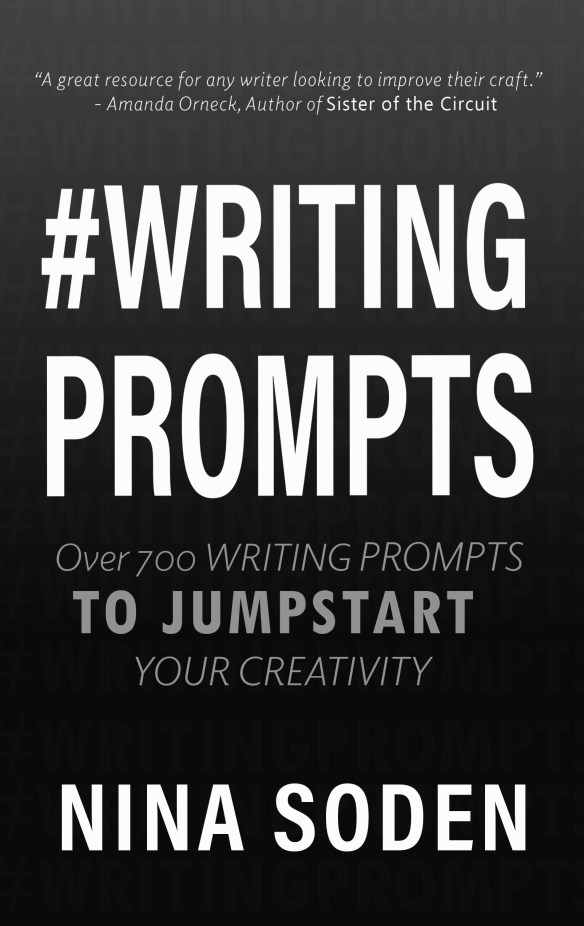
📖 Need a little guidance on outlining or planning your novel? I’ve written two indie author guides to help you along the way.
Check them out below and get started on your writing journey today!
One of the things I love most about urban fantasy is its ability to blend magic, mystery, and modern life into a world that feels both familiar and fantastical. But when you throw in a mind-blowing plot twist? Chef’s kiss. That’s the kind of storytelling that lingers — the kind that makes you flip back pages asking, “Wait, did that just happen?”
Here’s a curated list of urban fantasy books that completely pull the rug out from under you in the best way — each with a twist I did not see coming.
Twist Factor: ✨ The true loyalties of Rachel’s co-workers
What starts as a witch trying to break free from her magical law enforcement job spirals into betrayals and shifting alliances. The twist? One of the people Rachel thought she could trust most ends up playing a much darker game than she realized — and it flips the entire dynamic of the series moving forward.
This series opener introduces us to Mercy Thompson, a mechanic with a coyote-shifter secret. Just when the plot seems to be following the typical “urban shifter” path, a shocking betrayal from within the pack sends everything sideways. It’s subtle at first, but the full weight of it hits hard when revealed.
This Kate Daniels series starter dives deep into a dangerous world of shifting magic and tech. As Kate investigates a brutal murder, she thinks she’s closing in on the killer — only to discover the true villain is someone far closer than she expected. The reveal makes you question everything that came before it.
Twist Factor: ✨ The dead god’s killer… wasn’t who you thought
In this legal thriller-meets-magical mystery, a necromantic lawyer tries to bring a god back to life. But the twist? The god’s death wasn’t accidental — and the culprit is tied to a power structure far more sinister and unexpected than it appears. It’s a slow-burn reveal that pays off big.
Twist Factor: ✨ The ending that redefines the entire series
No spoilers here — but if you’ve been following Harry Dresden through the earlier books, Changes delivers a twist that is both devastating and brilliant. The title is no joke: everything changes. Trust me when I say you won’t be the same after reading it.
Though more of a fae fantasy with urban tones, this one earns its spot for that ending. Jude, the mortal girl in a cutthroat faerie court, plays her cards close to the vest — until she makes a bold, manipulative power move that shocks even the reader. You think you know who’s in control… until you don’t.
🧛 7. Blood Angel by Nina Soden
Twist Factor: ✨ [Redacted… because you have to read it to believe it]
I couldn’t make this list without mentioning my own Blood Angel series. Without giving too much away, let’s just say not everyone is who they seem — and as loyalties are tested, deep secrets rise to the surface that change everything. Readers often tell me they didn’t see that one coming — and that’s the best compliment.
⚡Urban fantasy thrives on layered worlds, morally gray characters, and high-stakes drama — but the best ones leave your jaw on the floor with a twist that makes you rethink everything. If you haven’t read some of these yet, I highly recommend you do (and then message me so we can scream about the reveals together).⚡
Did I miss a favorite urban fantasy with a shocking plot twist? Drop it in the comments — I’m always adding to my TBR!
AUTHOR MEET & GREET | BOOK SIGNING| & AUTHOR DISCUSSIONS Saturday, June 21st from 2:00 – 4:00 PM Blue Apple Books (14 Main Street, Suite B, Madison, AL)
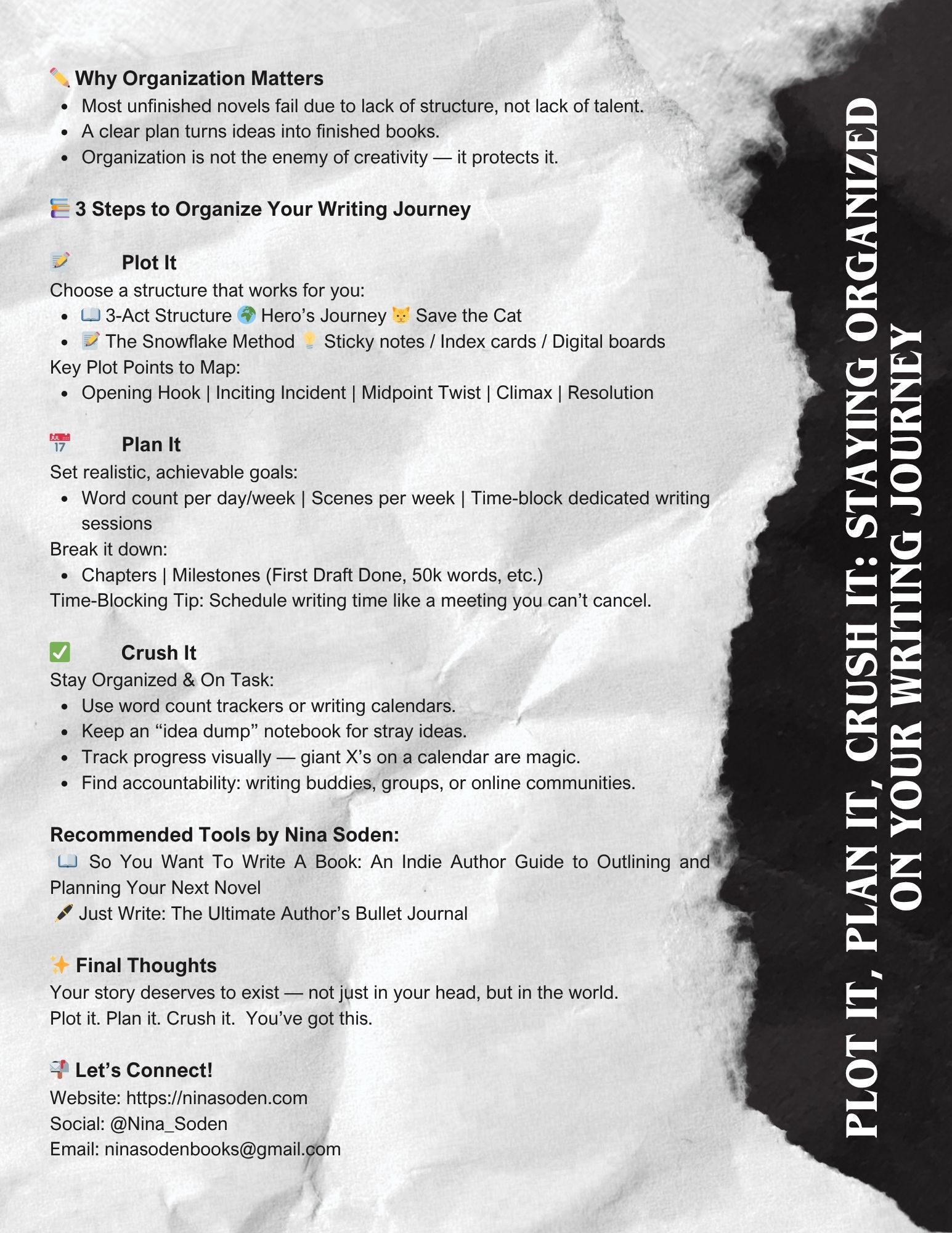
calling all writers… Join me for ‘Plot it, plan it, crush it’ where I talk about how to get organized, stay on track, and finally finish your novel!
As an Amazon Associate, I earn from qualifying purchases. That means, when you purchase a book using an Amazon link on this site, I earn an affiliate commission. All commission earnings go back into funding my books; editing, cover design, etc.
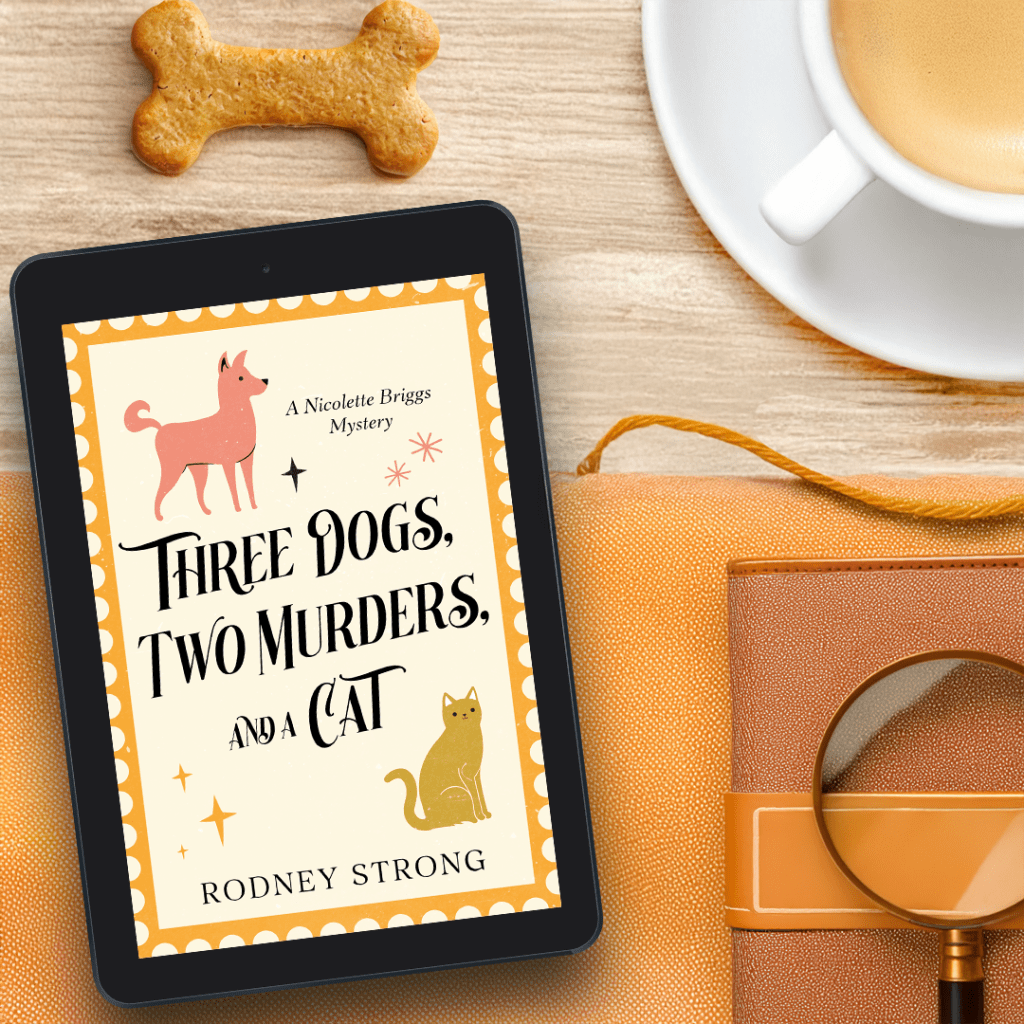
As Wellington’s premier, and possibly only, animal detective, Nicolette mostly investigates missing pets and cases of animal cruelty. So when her latest client asks her to investigate a case of a poisoned cat, it seems right up her alley. Until a body shows up, then another, and suddenly despite her resolve to not get involved, Nicolette is right in the middle two murder investigations. Or is it just one killer?
When someone breaks into her house and one of her dogs is injured, Nicolette’s reluctance turns to determination to not only solve this thing before the police, but show up her stubborn police detective brother in the process.
Along the way she has to navigate a daughter about to turn 15, a dwindling bank account, and a dysfunctional family that seems determined to fix her. Not to mention a killer who’s turned their sights her way.
No wonder she doesn’t do humans.
Three Dogs, Two Murders, and a Cat is the first book in the clean, cozy mystery series. Gilmore Girls meets Nancy Drew, with a touch of dysfunctional families, a touch of humour, and a touch of caring.
Rodney Strong quit a 9-5 job in 2016 to finally pursue his life long dream of becoming a writer (he still has the very first play he wrote at age 6). He lives in Porirua, New Zealand, with his wife, two children, and two cats. When he’s not writing he attempts to stay away from chocolate, runs (sometimes), reads, and enjoys spending time with his young children (who contribute a lot to the running and craving for chocolate).
He always has a couple of projects on the go, but for now is focusing on his series of cozy mysteries.
One of his cats likes to help with the process by sitting on the laptop, while the other likes nesting on his shoulders (which was cute when he was a kitten, but now the cat is 11 years old, is less so).
Would you like a chance to win a $20 Amazon gift card?Follow the tour HERE for special content and a giveaway!
Can you, for those who don’t know you already, tell something about yourself and how you became an author?
I think I was destined to become an author from the moment I learned to write. When I first started school I would write short plays for my classmates to put on, and the ideas kept coming from then onwards.
Over the years life got in the way and I drifted away from the dream, but the ideas were still there. One day when my kids were young I was telling them the could be anything they wanted to be when they grew up, and it struck me that I wasn’t being truthful to myself, because if that was true for them then it should be true for me. So I quit my job and dedicated myself to writing entertaining stories.
Do the characters all come to you at the same time or do some of them come to you as you write?
I’m not a plotter, so I tend to write and see what happens. Although I know who the main characters are going to be, writing this way means there are sometimes surprises when characters pop up from nowhere as the story develops.
What kind of research do you do before you begin writing a book?
As I said above I tend to write as I go rather than plotting, which means limited research before the story begins. Once I know what route the book is taking, that’s when research kicks in, usually around poisons, etc.
Which of your novels can you imagine made into a movie?
Can I cheat and say all of them? Because I’ve written stage plays before, and naturally include a lot of dialogue in my books, I can imagine all of them becoming movies, or TV series. However if I had to pick one in particular, it would be Three Dogs, Two Murders, and a Cat. The main character and her daughter were inspired by the Gilmore Girls television show, and features a lot of snappy, witty dialogue between them, and I think that, coupled with the mystery, would make for a great TV movie.
Can you tell us a little bit about the characters in Three Dogs, Two Murders, and a Cat?
The main character is Nicolette Briggs, and in her own words, she doesn’t do humans. She’s a private investigator specializing in cases involving animals. She also has a very complicated family situation. She’s a solo mother to a teenage daughter. Her step brother is a police detective who is constantly telling her to butt out of investigations, and her mother has been disappointed in her for most of her life. The inspiration for Nicolette came from a friend, but the family dynamics came from watching Gilmore Girls when I was younger.
Nicolette has three rescue dogs at home, Teddy, Nero, and Fig, the titular Three Dogs.
How did you come up with the title of your first novel?
Believe it or not, the title was very tricky. I brain stormed and threw out many different ideas before finally deciding to keep it simple and use three main plot points to title the book.
Do your characters seem to hijack the story or do you feel like you have the reigns of the story?
My characters definitely hijack the story, or at the very least are constantly trying to. Especially Nicolette. Because she’s not a police officer she can get away with more things, but it’s important she doesn’t cross too many lines while trying to act on behalf of animals that are abused, or stolen. I sometimes have to remember she has a teenage daughter at home and while she would never do anything intentionally to put herself in harms way, Nicolette is quite good at getting there unintentionally.
What did you edit out of this book?
Spoilers! No, but seriously, there is a minor mystery in the book that I edited out the ending too. It doesn’t impact the overall story, but is just a teaser for an ongoing mystery that will bubble away under surface in the next book.
Fun Facts/Behind the Scenes/Did You Know?’-type tidbits about the author, the book or the writing process of the book.
I have an office set up at home, but I find I’m more productive in café’s. I mostly write at the one around the corner from where I live, and even though it can get quite noisy sometimes, I can actually get more done. I can sometimes knock off 1,000 words in an hour.
Home has too many distractions, like housework, and cats.
Do you believe in writer’s block?
Absolutely. There are days that I have to struggle and curse and shake my fist at the screen just to get a hundred words out. Luckily I haven’t had too many days in a row like that. I usually try and have a couple of writing projects on the go at a time, so if I’m really struggling on one, I switch to the other to see if that will shake anything loose. Sometimes it works, and other days I just have to accept that no writing is going to be done, and go and cuddle a cat.
Tell us something really interesting that’s happened to you!
I’ve always had a love for animals. When I was nineteen I left New Zealand and travelled to the other side of the world to work in the Regent’s Park Zoo in London, England. It was amazing getting to work with a whole range of animals, in particular three baby chimpanzees who would surprise me by hiding when I walked into the room, and jumping on me. And seeing a baby giraffe only an hour after it was born.
The following year I traveled to Kenya and did a safari, sleeping in tents amongst the animals. That was incredible, although also a little nervewracking, when we camped by a lakeside and they said sometimes hippos would wander through and because they have poor eyesight they would trample tents. I’m almost convinced they were joking.
Let’s be honest — writing a book is hard enough, but getting it into readers’ hands can feel like an entirely different mountain to climb, especially when you don’t have a big marketing budget. The good news? Some of the best book marketing strategies don’t require breaking the bank. Whether you’re launching your debut or trying to breathe new life into your backlist, there are plenty of creative, affordable ways to promote your work.
Here are some free (or nearly free) strategies every indie author should have in their toolkit:
📱 1. Leverage Social Media Authentically
You don’t need to be everywhere, but you do need to be somewhere. Pick one or two platforms where your readers hang out and show up consistently. Whether it’s Facebook, Instagram, TikTok, or Twitter (or X… we’re all still figuring that out), focus on sharing a mix of:
Behind-the-scenes writing moments
Bookish quotes or excerpts
Cover reveals
Reader reviews
Personal tidbits that show your personality
Pro Tip: Use free tools like Canva to create eye-catching graphics, teaser images, and quote cards.
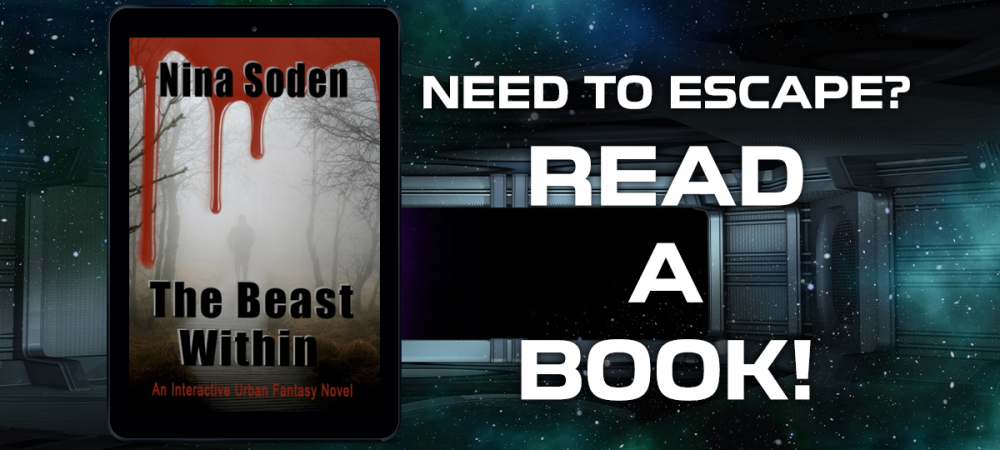
Austin discovered, at the young age of ten, that fairies aren’t exactly what the fairytales made them out to be and that blood tastes a lot like honey. Now, as an adult, he struggles to balance his public life with the one he’s so desperate to keep hidden. After a deadly camping trip and an unexpected connection, Austin tries to change his ways. Will he be able to keep his secret or will his world come undone? In this exciting interactive adventure, the body count is up to you. Are you ready?
Your email list is gold. These are readers who want to hear from you. Start building your list by offering a free short story, novella, or sneak peek of your work in exchange for an email address.
Free tools to get started:
Mailerlite (free for up to 1,000 subscribers)
Substack (if you love a newsletter vibe)
MailChimp (another newsletter platform)
Send updates, exclusive content, and book announcements directly to your readers’ inboxes.
🌟 3. Collaborate with Other Indie Authors
Cross-promotion is one of the smartest (and free) ways to expand your reach. Team up with authors in your genre for:
Joint giveaways
Newsletter swaps
Social media shoutouts
Anthology projects
Not only does it widen your audience, but it also fosters a sense of community in a sometimes-lonely indie world.
📝 4. Guest Post on Book Blogs & Author Websites
Reach new readers by offering to write guest posts or author interviews for book bloggers and indie author sites. Most are happy to feature fellow writers, especially if you pitch a fun or informative topic.
Ideas for guest posts:
“The Inspiration Behind My Book”
“5 Paranormal Books That Inspired My Series”
“What I Wish I Knew Before Self-Publishing”
Bonus: It usually comes with a link back to your book! IF YOU’RE INTERESTED IN GUEST POSTING ON MY BLOG, CLICK HERE!
Celeste epitomizes high school success: top grades, head cheerleader, even dating the star quarterback. Life couldn’t be better with a picture-perfect family and college on the horizon. But as she drifts off to sleep on the eve of her 17th birthday, Celeste never fathoms waking up over 1,000 years in the future.
Transported to a world both unfamiliar and strangely linked to her own, Celeste discovers she’s the heir to a royal lineage and her mother is a long-lost princess. Yet as secrets unravel and familial rifts emerge, the once harmonious facade of her family begins to splinter.
Navigating impossible choices, Celeste’s journey becomes a quest for self-discovery and strength. In the chaos, she discovers the power within her identity, the importance of family, and the treasures of genuine friendships. Embark on Celeste’s journey as she boldly faces the mysteries ahead, shaping her fate with courage and unwavering determination.
You don’t need a fancy setup — just your phone and good lighting. Readers love getting to know the person behind the book. Record short videos about:
What you’re currently working on
Writing tips
Book recommendations
Fun facts about your characters
Post them on Instagram Reels, TikTok, or YouTube Shorts.
📖 6. Join (and Engage in) Reader Communities
Get involved in Goodreads groups, Facebook book clubs, or Discord communities related to your genre. Important: Don’t just drop your links — be a genuine part of the conversation, offer recommendations, and talk about books you love.
When people get to know you, they’ll naturally want to check out your work.
🎁 7. Run Free or Discounted Promotions
Temporarily dropping your eBook price or offering it for free for a limited time can boost downloads and reviews. Pair it with a social media push or email newsletter blast.
Free promo sites to submit your deals to:
Freebooksy
Book Doggy
Fussy Librarian
Book Rebel
(They often have free or low-cost options.)
🎨 8. Design Promo Graphics with Free Tools
Make your marketing materials pop with free graphic design tools. Canva is my go-to for everything from social media posts to book mockups and promotional banners.
Other free tools worth trying:
Book Brush (limited free plan for book-specific graphics)
Pixabay and Unsplash (for royalty-free images)
📌 Final Thoughts
Marketing as an indie author doesn’t have to drain your wallet. It’s about consistency, creativity, and finding authentic ways to connect with your readers. Start small, test what works, and have fun experimenting along the way. The indie author community is one of the most supportive out there — so lean into it and lift each other up.
Got a favorite free or budget-friendly marketing trick? I’d love to hear about it in the comments!
As an Amazon Associate, I earn from qualifying purchases. That means, when you purchase a book using an Amazon link on this site, I earn an affiliate commission. All commission earnings go back into funding my books; editing, cover design, etc.
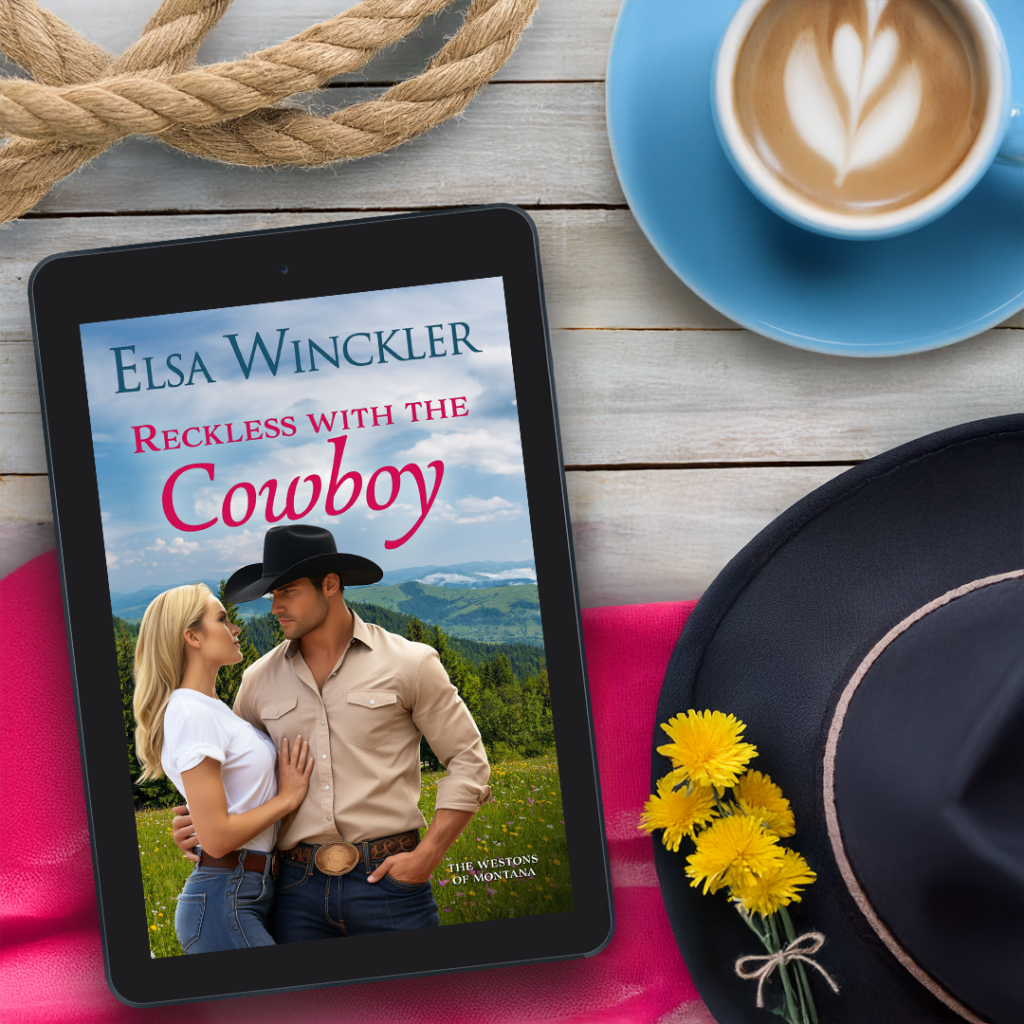
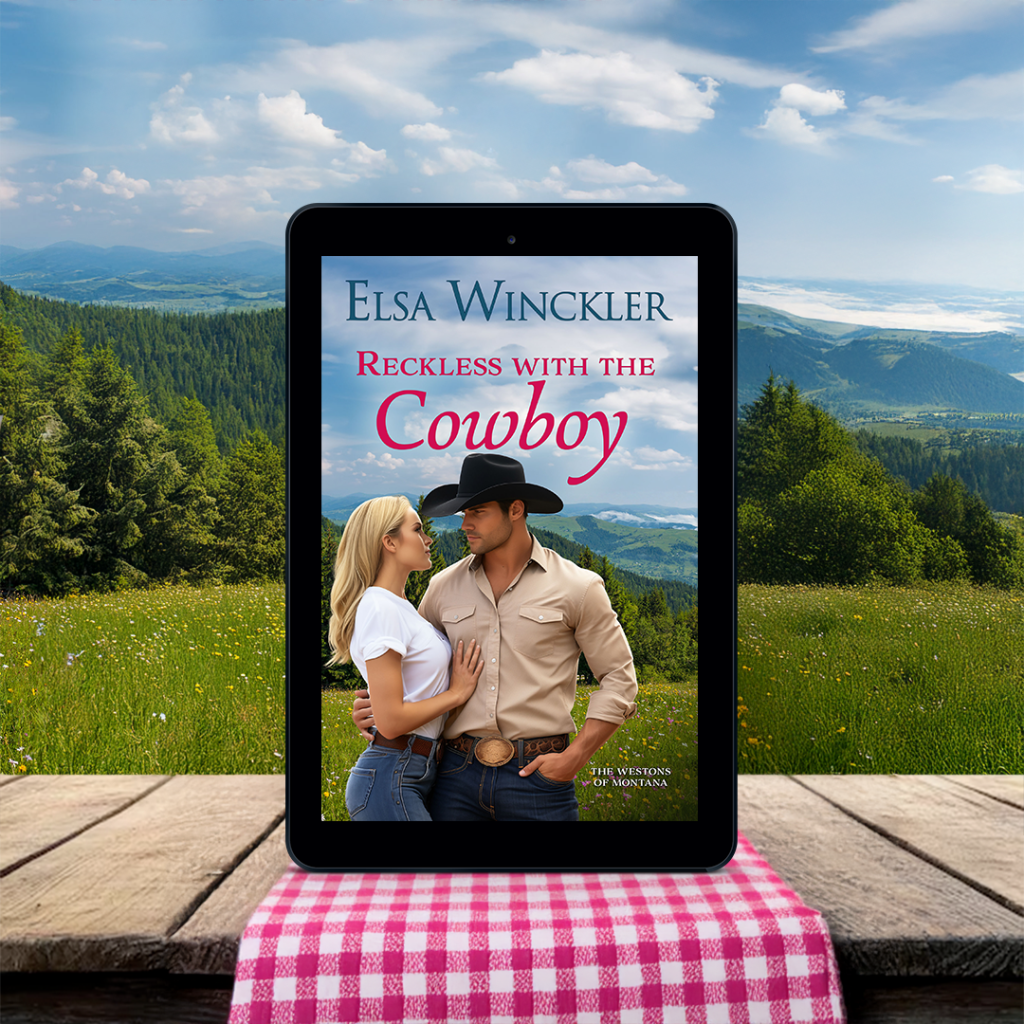
Becket Weston meets his match when he tries his bad boy skills on the wrong woman.
Cowboy Becket Weston likes women, plural, and has a reputation for breaking hearts. His bad-boy behavior masks a deeper need to atone for past mistakes. His side-hustle—using a pseudonym and posting comic drawings of ranch life on social media—lets him explore life, love, and grief without being exposed. He even has a following! But no amount of introspection can explain his fascination with Eleanor Campbell—Main Street, Marietta’s newest shopkeeper. She’s definitely not his type, so why does she keep turning up in his drawings?
Ellie Campbell isn’t one for staying long in any one place, but when she inherits money from her grandmother and decides to open a yarn store in small-town Marietta, it feels like she’s putting down roots. She’s not looking for a relationship after one too many hard knocks, literally, but Becket Weston gets under her skin like no other, igniting passion that’s impossible to ignore.
He’s a bad boy playboy and everyone knows it, but there’s something about him that just doesn’t add up. Does Ellie have the courage to stick around and find a way into his heart?
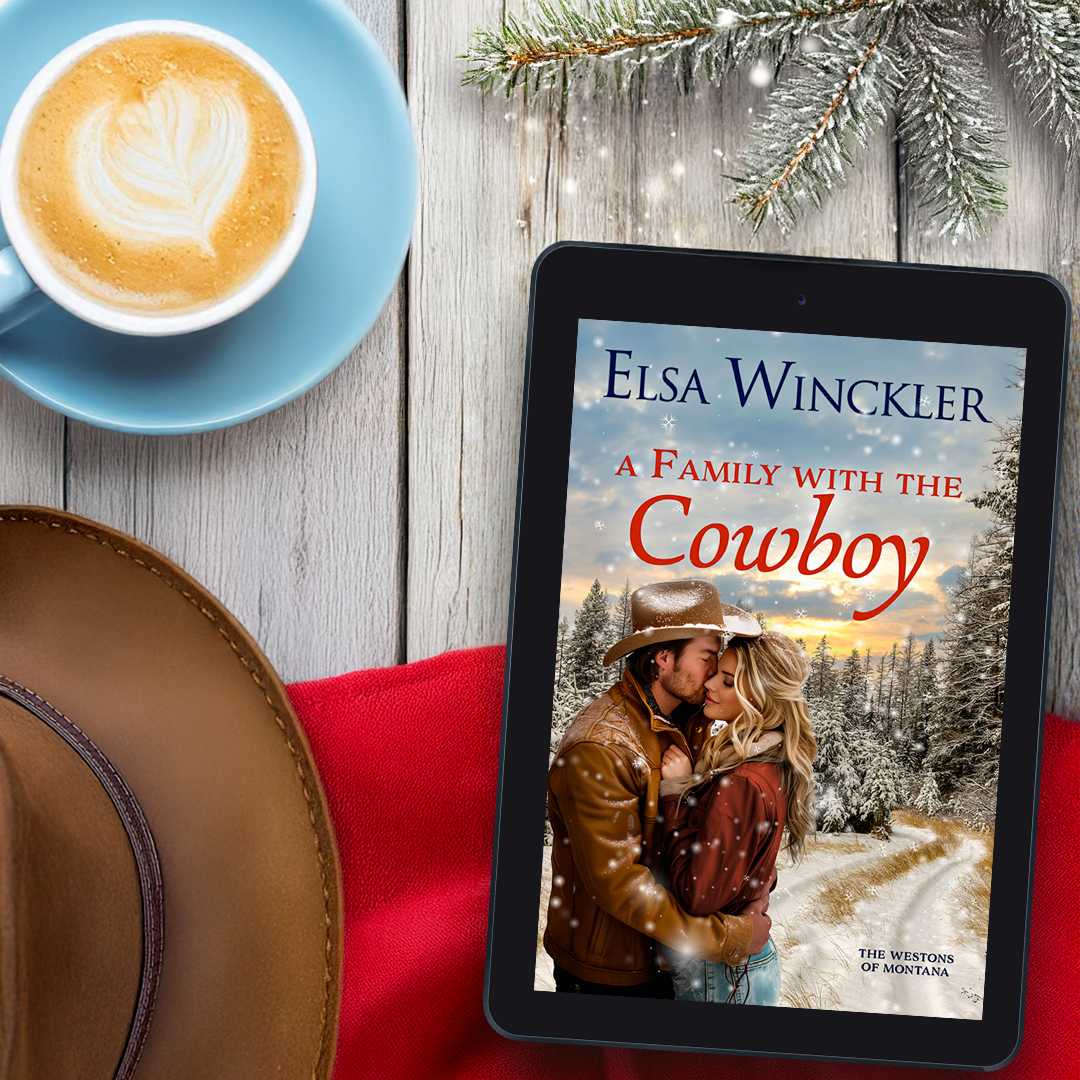
Widowed rancher Hayden Weston knows what it means to be responsible for his siblings, his eight-year-old son, and the running of the huge family cattle ranch. Some even call him a stern and grumpy taskmaster and they’re not exactly wrong. So when Hayden discovers his son reading a storybook instead of doing chores, he calls on Luke’s teacher to talk about priorities.
School teacher Laura Anderson is new to Marietta, Montana, and has never—until now—been reprimanded for encouraging a child to read. It doesn’t help that sweet Luke’s father is the handsome cowboy with the amber eyes that she met in Grey’s Saloon, or that she’s wildly attracted to him.
Sparks keep flying as their paths keep crossing, but Hayden is determined not to give in to his incomprehensible need to have, hold, and protect Laura from any type of harm. He’s the one who’ll hurt her if he lets her stray too close. He’s not ready to admit his feelings or commit to sharing his life with her.
I have been reading love stories for as long as I can remember and when I ‘met’ the classic authors like Jane Austen, Elizabeth Gaskell, Henry James The Brontë sisters, etc. during my Honours studies, I was hooked for life. I married my college boyfriend and soul mate and after 47 years, 3 interesting and wonderful children and 4 beautiful grandchildren, he still makes me weak in the knees. We are fortunate to live in the picturesque little seaside village of Betty’s Bay, South Africa with the ocean a block away and a beautiful mountain right behind us. And although life so far has not always been an easy ride, it has always been an exciting and interesting one! I like the heroines in my stories to be beautiful, feisty, independent and headstrong. And the heroes must be strong but possess a generous amount of sensitivity. They are of course, also gorgeous! My stories typically incorporate the family background of the characters to better understand where they come from and who they are when we meet them in the story.
Would you like a chance to win a$10 Amazon gift card? Follow the tour HERE for special content and a giveaway!
Can you, for those who don’t know you already, tell something about yourself and how you became an author?
I did a teaching diploma after school, stayed at home for ten years while our kids were small before going back to work. While I was working as an administrator in the English Department of a nearby university, I was inspired to study again. I was forty. I got an Honors degree in English and also did a MPhil in Document Analyses and Design, thinking that it was something I could do when I retire. But then I entered a magazine competition looking for romance authors way back in 2008 and was fortunate enough to be the winner. The prize was the publication of my first book – I was hooked. Growing up, my mother was an avid romance reader and there were always stacks of love stories in the house, particularly stacks of Mills & Boons. I literally read thousands of them.
I met Jane Porter from Tule Publishing when she visited ROSA (The Romance Writers Organization of South Africa) in 2016. Afterwards I sent her a manuscript, she liked it and since then I’ve published seven books with Tule – an extraordinary team of women. I count myself extremely fortunate to be able work with them.
I’m married to my college boyfriend who is also my best friend and my soulmate. We have three grown-up kids who have long since left the house and are each doing their bit to make this world a better place. We are so proud of them and are blessed with four grandkids who are just growing up way too fast.
I mostly write in Afrikaans and have around seventy books published by various publishers in South Africa. I have also written two children’s stories.
What is something unique/quirky about you?
I’m an introvert, something I’ve only discovered when I was much older. I like people and I’m blessed with a a circle of close friends, but I need to be alone to re-charge. I can’t do late nights, for instance, by ten my battery is flat!
I’m no chef but I love to cook for the people I love and nothing gives me more pleasure than to have our whole family around a table.
Where were you born/grew up at?
I was born in a small town called Upington in South Africa. As kids we swam in the Orange River and went camping in the Kalahari Desert.
If you knew you’d die tomorrow, how would you spend your last day?
With my husband, our children and grandchildren, of course. Around a table, eating and telling stories.
What kind of world ruler would you be?
I’ll put women in charge of education, hospitals and the police. Start from the ground up, teach children respect before anything else and let kids play. A lot.
What do you do to unwind and relax?
I read, go for long walks, knit or crochet. I’m fortunate enough to have a very special group of women I can call friends. Visiting them always makes my heart sing. We’ve known each other for such a long time. We have a Whatsapp group and during tough times, we rely on each other to help us carry whatever burden we have. During Covid, especially, it was a kind of lifeline. We shared recipes for bread, for food, books we’ve read and sometimes just something silly that has happened. It was a wonderful way to keep our spirits up,
Describe yourself in 5 words or less!
Disciplined, dedicated, passionate, impatient, a sucker for a story or movie with a happy ending.
When did you first consider yourself a writer?
After about twenty books J
Do you have a favorite movie?
Pretty woman
Which of your novels can you imagine made into a movie?
A family with the cowboy! Liam Hemsworth would make a very sexy Hayden Weston and Brie Larson would make a lovely Laura.
As a writer, what would you choose as your mascot/avatar/spirit animal?
A leopard. They are solitary animals and like to walk alone. As hopeless introvert, I can relate.
By a Wife, Mom, Fiction Writer, and Real Estate Agent Who’s Just Trying to Breathe
There are days when I look at my to-do list and feel the tears sting before I even get out of bed. I’m a wife. I’m a mom. I’m a fiction writer. And I’m a real estate agent who hustles 24/7 in a business that rarely sleeps. Somewhere in the mix, I’m also a woman who keeps forgetting to take care of herself. And some days—maybe today—I just want to give up.
Not because I don’t love my family. Not because I’m not grateful for my clients or the opportunity to tell stories. But because the sheer volume of it all feels like a tidal wave crashing over me. Over and over again.
The Weight of Mom Guilt
The mom guilt is real. Over the years I have missed the school assemblies, or I’m answering a client call during dinner. I’m thinking about an upcoming showing while my child just needs to talk. And don’t even get me started on the guilt of screen time when I just need a moment to breathe or send a contract.
And then there’s the emotional math I do constantly—“If I work a little more tonight, maybe I can take Saturday off…” But Saturday comes and someone wants to see a house. Or something falls apart in escrow. Or I just can’t ignore the buzzing of my phone. Again.
The Loss of Me
Somewhere between the showings, the open houses, the packing lunches, the editing/writing deadlines I never meet, I stopped taking care of myself. I skip meals. I run on caffeine and adrenaline. My writing? It waits in the shadows, a dusty notebook or half-open document that aches for attention but never quite gets it. That hurts the most. Because writing is the piece of me that feels like me. And she’s the one I abandon first when life gets busy.
I’ll be honest: sometimes it feels like everything I do is for everyone else. Clients. Kids. My spouse. I show up, smile, problem-solve, negotiate, fix, drive, cook, clean—and then collapse. But rarely do I pause and ask myself: Am I okay?
The Illusion of Control
Real estate doesn’t come with predictability. You can do everything right, and the deal still falls through. A client can change their mind. A buyer can ghost. A seller can panic. And in the meantime, your child spikes a fever, your spouse is working late, and your characters are still sitting in chapter six, waiting for you to bring them to life.
It’s chaos. And it’s hard to admit you’re drowning when your job requires you to be the calm in everyone else’s storm.
When It’s Too Much
So what do I do when it’s all too much? When the plates I’m spinning start crashing to the floor?
Here’s what I’m learning—sometimes painfully slowly:
It’s okay to say no. You don’t have to be everything to everyone all the time. Boundaries aren’t selfish—they’re survival.
Ask for help. Whether it’s your partner, a friend, a colleague, or a therapist—reach out. You don’t earn extra points for suffering in silence.
Find micro-moments for yourself. Maybe it’s a five-minute journal entry. A short walk. A hot coffee sipped in actual peace. It matters. You matter.
Put writing back on the calendar. Even if it’s just 10 minutes a day. Writing isn’t a luxury—it’s your breath, your voice, your therapy. Don’t let it die in the name of “busy.”
Rest is not lazy. You are not a machine. Rest. Sleep. Unplug. You’ll come back stronger, clearer, and more present.
Forgive yourself. For the forgotten lunch. For the client you lost. For the book you haven’t finished. You’re human. You’re trying. That’s enough.
One Breath at a Time
Some days, the only thing I accomplish is keeping everyone alive. Some days, I close a deal, make dinner, and write a paragraph I actually like. But every day, I’m learning to show myself more grace. To stop chasing perfection and instead chase peace.
If you’re in the thick of it too—if you’re a mom, a partner, a worker, a dreamer—just know this: you are not alone. You’re not failing. You’re carrying a lot. And it’s okay to feel like it’s too much.
Just don’t give up. Pause. Rest. Refill. Cry if you need to. Then take the next small step. Not for the world. Not even for your family. But for you.
As an aspiring author, the dream of seeing your name on a published book is both exciting and daunting. But for many, the challenge isn’t coming up with ideas or having the passion to write—it’s finding the time. Between work commitments and family responsibilities, carving out space for writing often feels like an impossible task. The reality is, you don’t have to quit your job or put your family on hold to become a writer. It’s all about creating a balance that allows you to nurture your creative side without neglecting your professional and personal life.
Here are some practical tips on how to find time to write, even when you’re juggling a busy career and a family.
1. Create a Dedicated Writing Space
Whether you have a full office or a small corner in your home, creating a designated space for writing can mentally prepare you to be productive. This space doesn’t need to be elaborate—just a spot where you can set aside distractions and immerse yourself in your writing.
Why it helps: A dedicated writing space helps you mentally switch gears and signals to your brain that it’s time to focus on your writing. It also creates a physical separation between work and writing, which can be particularly helpful when you have multiple responsibilities at home.
Tip: If you’re short on space, try using noise-cancelling headphones or setting up a small, portable desk. Even a corner of your kitchen table can become a creative zone when you treat it as such.
2. Schedule Writing Time Like an Important Meeting
If you’re struggling to find time to write, start scheduling it into your day just like any other important task. This may mean setting aside 15 to 30 minutes in the morning before your family wakes up or during your lunch break at work. The key is to carve out regular blocks of time that are non-negotiable.
Why it helps: When you treat your writing time with the same level of importance as a work meeting or family obligation, you are more likely to honor that time and make it a priority.
Tip: Use a planner or digital calendar to block out writing time. Make it a recurring event in your schedule, so it becomes a regular part of your day, not just something that happens “when you have time.”
3. Set Realistic Goals and Prioritize
Trying to write an entire novel in a month while working full-time and caring for a family is an unrealistic expectation for most people. Instead, set achievable, incremental goals that align with your schedule. Writing 500 words a day may not sound like much, but over time, it adds up.
Why it helps: Realistic goals help reduce feelings of overwhelm. By breaking down your larger writing project into manageable chunks, you create a sense of progress and momentum, which keeps you motivated.
Tip: Focus on small, tangible milestones, such as writing a chapter a week or completing a set number of pages each day. If you’re working on a longer project, consider setting deadlines for key events or scenes within the book to keep you on track.
4. Learn to Write in Small, Bite-Sized Sessions
Not every writing session needs to be a lengthy, focused marathon. In fact, writing in small, concentrated bursts may actually help you be more productive. Whether it’s 10 minutes between meetings or 30 minutes before bed, seize the time you do have.
Why it helps: Writing in shorter sessions may feel more doable, especially on days when your schedule is packed. You might be surprised by how much you can accomplish in a short period, and those small moments can add up over time.
Tip: Keep a notebook or your phone’s notes app handy for those quick bursts of inspiration. Write during your lunch break, while waiting for the kids to finish soccer practice, or even while commuting (if you’re not driving). Every little bit counts!
5. Communicate and Get Support from Family
Having a conversation with your family about your writing goals is crucial for gaining their support. Let them know that writing is something important to you and that you need time to work on your craft. Most families will appreciate your passion and be willing to help you find time for it.
Why it helps: Support from your family can make a world of difference. Whether it’s helping with household chores, watching the kids for a few hours, or simply being understanding when you need to dedicate time to writing, their encouragement can alleviate stress and allow you to focus.
Tip: If you have young children, consider swapping childcare with a partner or friend for a few hours each week to create uninterrupted writing time. For older kids, ask them to respect your writing time in exchange for quality time together later.
6. Embrace Flexibility and Set Boundaries
Life happens, and sometimes even the best-laid plans will fall apart. Kids get sick, work deadlines shift, or family emergencies arise. The key is to remain flexible and adjust your expectations accordingly. However, it’s also important to set clear boundaries when it comes to your writing time.
Why it helps: Setting boundaries allows you to safeguard your writing time. It’s easy to fall into the trap of constantly pushing your writing aside for other people’s needs. But setting boundaries ensures that your writing time is respected, just like any other part of your life.
Tip: Learn to say “no” when necessary. If a friend invites you to an impromptu event during your writing time, it’s okay to decline to prioritize your writing. Also, be prepared to reschedule your writing if things don’t go as planned. Flexibility is essential, but consistency is key.
7. Take Care of Yourself: Avoid Burnout
Writing, like any creative endeavor, requires mental and emotional energy. Trying to do everything without taking care of yourself will lead to burnout. To maintain balance, make sure to schedule time for rest, relaxation, and activities that recharge you.
Why it helps: When you neglect self-care, your creativity and energy will diminish, making it harder to write. By maintaining a healthy work/life balance, you ensure that you have the stamina to juggle both your writing and other responsibilities.
Tip: Prioritize sleep, exercise, and downtime. Taking care of your body and mind will help you stay focused when it’s time to write. Also, don’t be afraid to take breaks when you need them. Writing isn’t a sprint—it’s a marathon.
8. Use Technology to Your Advantage
Leverage technology to help you stay organized and productive. Whether it’s dictating your ideas into a voice recorder while commuting, using writing apps like Scrivener or Google Docs for easy access to your manuscript, or using productivity apps to stay on track, technology can make your writing process more efficient.
Why it helps: Technology can save time and reduce the effort needed to write. It also allows you to work on your project during those in-between moments, making the most of your day.
Tip: Experiment with productivity tools like time trackers or focus apps (e.g., Pomodoro technique) to help you maximize the short bursts of time you have available for writing.
The Importance of Persistence
Balancing work, family, and writing is not easy, but it is possible with the right mindset and strategies. The key is to find a balance that works for you, whether it’s writing early in the morning, during lunch breaks, or late at night. By setting realistic goals, creating a supportive environment, and respecting your boundaries, you can carve out time for your writing ambitions while still being present for your family and work.
Remember, the journey to becoming a published author is a marathon, not a sprint. Every word written is progress, and every moment spent writing is a step closer to your goal.
In urban fantasy, the protagonist often takes center stage, navigating a world full of supernatural dangers, moral dilemmas, and personal struggles. But while the hero’s journey is undeniably essential, the sidekick—the secondary character who stands by their side—also plays a critical role in the narrative. Sidekicks are not just comic relief or tools for exposition; they are multi-dimensional characters in their own right, with their own strengths, weaknesses, and distinct personalities. When crafted well, a compelling sidekick can elevate the plot, deepen the emotional stakes, and help ground the hero in a complex, magical world.
So, how do you create sidekick characters that are more than just “supporting players”? In this article, we’ll explore the key elements that make sidekicks stand out in urban fantasy, and how they can enhance both the hero’s journey and the overall narrative.
1. Make Them More Than Just Comic Relief
It’s easy to fall into the trap of making sidekicks the comedic foil to the serious hero. While humor is an essential tool for lightening the tone of an otherwise dark and gritty urban fantasy, a sidekick should not exist solely to provide punchlines. In fact, making your sidekick a multi-dimensional character—one who brings more to the table than just jokes—will help them feel real, relatable, and essential to the plot.
The Sidekick’s Role in the Story: The sidekick should have their own personal motivations, desires, and struggles that influence the main storyline. They might have an entirely different set of skills, knowledge, or talents than the hero, making them a crucial partner in the hero’s journey. Whether it’s their unique magical ability, street smarts, or deep understanding of supernatural politics, a well-developed sidekick brings valuable perspectives to the table. Their presence should not just reflect the hero’s actions, but also challenge them, creating opportunities for growth and evolution in both characters.
Consider Butch O’Neal from The Dresden Files by Jim Butcher. Butch isn’t just Harry Dresden’s comic relief or sidekick; he’s a fully realized character with his own motivations, fears, and backstory. He is a former police officer turned vampire, and his presence in the story challenges Dresden in meaningful ways, both emotionally and narratively.
2. Give Them Their Own Arc
Just like your protagonist, a sidekick should undergo character development throughout the story. While they may not have the same level of narrative focus as the hero, their growth is essential for adding depth to the plot. A sidekick who is static or unchanging risks feeling flat or underdeveloped.
A Sidekick’s Personal Journey: The sidekick doesn’t have to be on the same journey as the hero, but they should have their own goals and challenges that reflect their arc. Maybe they begin the story unsure of their place in the world, but by the end, they’ve developed new skills or come to terms with their past. Or perhaps they struggle with loyalty, torn between helping the hero and following their own moral code. Their arc should intersect with the hero’s journey, creating tension and moments of mutual growth.
In Patricia Briggs’ Mercy Thompson series, Mercy’s friend, Coyote (aka Adam’s pack), is more than just a helpful ally—his arc involves his struggle with leadership, morality, and love. Over time, his character deepens, contributing to the overall stakes of the plot and showing that sidekicks are often more than just passive participants.
3. Create a Dynamic Relationship with the Hero
The relationship between the hero and their sidekick is one of the most important aspects of the sidekick’s role in urban fantasy. The dynamic should be layered, with tension, loyalty, camaraderie, and mutual respect. A sidekick who exists purely to support the protagonist without any friction or complexity can feel unrealistic. Instead, consider how their relationship with the hero can evolve over the course of the story.
Conflict and Compromise: A well-crafted sidekick often challenges the hero in ways that prompt growth. The sidekick may have different values, methods, or ideas, which forces the hero to reevaluate their decisions or approach. Whether it’s moral dilemmas, differing opinions on how to handle a supernatural threat, or conflicting personal goals, the tension between the hero and sidekick should drive both character development and plot progression.
In Laurell K. Hamilton’s Anita Blake: Vampire Hunter series, Anita’s relationship with her sidekick and friend, Edward, is fraught with tension. Edward is an assassin who operates on a morally gray spectrum, and their relationship is a delicate balance of mutual respect and mistrust. This dynamic keeps the reader engaged and deepens the conflict within the plot.
4. Give Them Unique Skills or Traits
A sidekick should never be a carbon copy of the protagonist; they should bring something different to the table. In urban fantasy, this is especially true. The supernatural world is often complex and layered, with many different creatures, powers, and knowledge systems at play. Sidekicks can provide vital expertise, access to unique skills, or an alternative perspective that complements the hero’s strengths.
The Sidekick’s Purpose in the World: Whether it’s a specific magical ability, an extensive knowledge of occult history, or street smarts in navigating dangerous urban environments, the sidekick should offer something the hero cannot easily replicate. This makes the sidekick indispensable to the hero’s journey. Their talents and abilities should feel natural in the context of the world you’ve built, and their knowledge should help them contribute to solving the story’s conflicts.
For example, in Jim Butcher’s The Dresden Files, Bob the Skull, a disembodied spirit of knowledge, serves as both comic relief and a valuable source of information. His deep well of knowledge is critical to Harry’s success in solving complex supernatural cases. While Bob isn’t physically imposing or particularly heroic, his unique abilities make him a vital member of Dresden’s team.
5. Add Layers to Their Personality
Great sidekick characters often have their own quirks, flaws, and strengths that go beyond their role as a support character. Giving them a rich personality adds realism and depth to the narrative. Sidekicks should be multi-dimensional, with hopes, fears, weaknesses, and virtues of their own. Avoid stereotypes like the “grizzled mentor” or “innocent child” and instead create a sidekick who feels like a fully realized person.
Complex Personalities: A sidekick’s quirks can make them stand out in the story and offer opportunities for emotional depth. Maybe the sidekick is fiercely independent, which sometimes creates friction in their relationship with the hero. Perhaps they struggle with their own insecurities, which may be exacerbated by the danger and supernatural elements surrounding them. These personal complexities not only make the sidekick more engaging but also provide emotional stakes that drive the plot forward.
In Charlaine Harris’s Sookie Stackhouse series, Tara Thornton is Sookie’s best friend and sidekick, but she’s much more than just a support character. Tara has her own emotional turmoil and backstory that influence her actions throughout the series. She has a complex personality, struggling with personal relationships and finding her place in a world full of supernatural creatures. Her emotional growth is just as important as Sookie’s own journey.
6. Make Them Integral to the Plot
A sidekick should never feel like an afterthought. They should have a direct impact on the plot and help drive the story forward. Whether it’s providing essential information, aiding in a confrontation, or making a critical decision that changes the course of the action, the sidekick’s involvement should matter. They are there to help the hero in ways that feel authentic and integral to the narrative, not just to tag along for the ride.
Making Their Role Essential: A sidekick who is essential to the plot doesn’t just help the hero solve the mystery or defeat the antagonist—they add unique perspectives and contribute to the overall resolution of the story. Their choices, actions, and growth should directly impact the hero and the outcome of the adventure. This not only makes the sidekick feel vital to the story but also elevates the entire plot.
For example, in Patricia Briggs’ Mercy Thompson series, Mercy’s sidekick, Stefan, plays a critical role in the supernatural community’s politics and provides valuable insight into the dynamics of werewolves, vampires, and other creatures. He is more than just a secondary character—he is an essential piece in Mercy’s world and contributes significantly to the development of the plot.
Don’t Forget…
In urban fantasy, sidekicks are far more than mere accessories to the hero. They are vital, multi-faceted characters whose presence elevates the story, deepens the conflict, and helps to ground the hero in the fantastical world they inhabit. By giving your sidekick their own arc, skills, and personality, and ensuring they are integral to the plot, you create a character who feels as essential to the story as the protagonist. The best sidekicks are those who grow alongside the hero, challenge their views, and add emotional weight to the narrative. With a well-crafted sidekick, your urban fantasy world becomes richer, more complex, and more engaging, inviting readers to dive deeper into both the supernatural and the very human relationships that drive the plot forward.


















 Nina Soden