Why Urban Fantasy Thrives in the Modern World

Urban fantasy, a genre that blends supernatural elements with modern-day settings, has exploded in popularity in recent years. From the bustling streets of New York City to the quiet corners of small towns, urban fantasy brings fantastical creatures, magic, and myth into our own world. It offers a tantalizing contrast—where ordinary people navigate extraordinary situations, and the supernatural lurks just beneath the surface of everyday life. But why does urban fantasy resonate so deeply with modern readers, and what is it about our contemporary world that makes it such an ideal backdrop for these otherworldly elements?

Let’s explore why urban fantasy thrives in today’s world, how the genre reflects our collective consciousness, and why its blend of magic and modern continues to captivate readers.

1. The Appeal of the Familiar with the Fantastic

One of the primary reasons urban fantasy is so compelling is its ability to take readers out of the ordinary and transport them into a world where magic exists alongside the familiar. In a genre where the supernatural exists right next to the mundane, readers are able to see their own world transformed. Magic doesn’t exist in a distant fantasy realm—it’s something that could be lurking down the street, hidden in plain sight.

Familiar Settings: Urban fantasy often takes place in cities or towns that readers recognize. The locations are not distant, unknown realms, but places readers know and love. Places they may have even visited. This proximity creates a sense of immersion, where the magical and the mundane feel like they could coexist just around the corner. Imagine a tough, world-weary detective solving magical crimes in downtown Chicago, or a young woman discovering her supernatural abilities while navigating a high school in an ordinary suburb—these modern settings make the fantastical elements feel real and plausible.

By using everyday backdrops, urban fantasy allows readers to fantasize about how their lives might intersect with the extraordinary. For example, what if the coffee shop you walk into every morning is run by a witch, or a local library contains portals to other worlds? The idea that magic could be hidden just beneath the surface of the world we know is both intriguing and comforting, offering a sense of wonder while still feeling grounded.

2. The Intersection of Modern Problems and Supernatural Solutions

Urban fantasy thrives because it mirrors modern society’s complex issues while offering a supernatural lens through which to view them. The genre provides a platform for addressing everything from social justice and inequality to personal identity and moral dilemmas—all within the context of a magical world. Supernatural elements in urban fantasy often symbolize real-world problems, allowing for a unique exploration of contemporary themes.

Reflection of Modern Struggles: Characters in urban fantasy are often flawed, complex individuals who wrestle with personal challenges, such as addiction, mental health, self-doubt, or identity. Magic isn’t a cure-all—it complicates their lives in ways that feel both fresh and relatable. For example, a character might struggle with control over their magical abilities, mirroring the internal struggles many people face in the real world. Or perhaps a hidden magical society deals with discrimination or power struggles, echoing themes of social inequality.

In many urban fantasy novels, the protagonist is someone who feels disconnected from the world around them—someone who doesn’t quite fit in, only to discover their connection to a larger, hidden magical community. This journey of self-discovery resonates with readers, as many of us often feel as though there is something more to our lives, waiting just beneath the surface.

Urban fantasy also offers fresh takes on familiar problems. For example, a werewolf struggling with their transformation might symbolize someone struggling with a personal issue, such as anger management or a relationship with their family. A vampire navigating the complexities of immortality could be a metaphor for modern concerns about aging or the search for purpose. By blending the supernatural with contemporary struggles, urban fantasy allows readers to explore complex issues in an engaging, imaginative way.

3. Magic as Metaphor in a Changing World

Another key reason urban fantasy flourishes today is its ability to use magic as a metaphor for larger societal and cultural changes. The modern world is filled with uncertainty and rapid transformation, and urban fantasy reflects this by exploring how the introduction of magical elements could change how people live, think, and relate to each other. Magic can serve as a powerful metaphor for many aspects of the human experience—desire, power, control, and transformation.

Transformation and Empowerment: Urban fantasy often features protagonists who undergo significant personal transformations, both magical and emotional. For example, a character may unlock their latent magical abilities, gaining power and control over their life. This can symbolize personal growth, empowerment, and the ability to overcome obstacles, which speaks directly to readers who are navigating their own life challenges. In a world that’s rapidly changing and sometimes feels beyond our control, the idea that one could find hidden powers or unlock their potential is deeply appealing.

Moreover, urban fantasy offers a unique perspective on power dynamics. Often, the supernatural beings in these stories—vampires, witches, shifters—live in parallel with human society, creating a kind of dual hierarchy. These alternate societies can serve as an allegory for real-world power struggles, showing how marginalized groups fight for recognition and control, or how different groups struggle to maintain power in a world that is constantly changing.

4. The Blurring of Fantasy and Reality in a Digital Age

Today’s readers are accustomed to blending the digital and physical realms. Technology allows us to access vast amounts of information, stay connected with others, and even step into virtual worlds—all within the span of a single day. This digital landscape makes it easier for readers to accept the blending of the supernatural with the everyday in urban fantasy.

The Magic of Technology: Urban fantasy often takes advantage of modern technology, incorporating it seamlessly into the magical world. A spell might be cast via smartphone or a magical app that connects witches with their covens. Magic could even be manipulated through futuristic technology, creating a techno-magic hybrid that blends both realms. This overlap feels natural in an age where technology is changing the way we experience and interact with the world around us.

Moreover, the internet and social media provide an instant platform for urban fantasy stories to flourish. Fans can share ideas, create fan fiction, or build communities around their favorite magical worlds. This digital connection fuels the genre’s growth, making it even more ingrained in the modern world.

Escapism with Real-World Connection: In the chaotic, fast-paced world we live in, urban fantasy offers an escape while still holding a mirror to our reality. While the magical elements provide an imaginative escape, the problems and challenges the characters face are often all too real. Whether it’s dealing with a difficult boss, struggling to balance work and relationships, or facing a moral dilemma, urban fantasy allows readers to engage with these everyday issues through a fantastical lens, making the escapism feel meaningful and relatable.

5. The Enduring Appeal of the Supernatural

Finally, the supernatural continues to captivate us because, in many ways, it offers a connection to something larger than ourselves. Magic, monsters, and myth allow us to explore aspects of the unknown, and to wonder about possibilities beyond the visible world. In urban fantasy, the supernatural is often hidden just beneath the surface, reminding readers that magic could be real if only we knew where to look.

The modern world, with all its complexity, often leaves us longing for something more—a sense of mystery, wonder, and adventure. Urban fantasy fulfills this longing by weaving the supernatural into the everyday, creating a space where magic is not an escape from the world, but an enhancement of it.

Conclusion: Why Urban Fantasy Continues to Captivate Readers

Urban fantasy thrives in the modern world because it taps into our desire for wonder, self-discovery, and connection. It takes the familiar and turns it on its head, allowing us to imagine a world where magic exists just out of view, where the boundaries between the ordinary and extraordinary blur. By blending supernatural elements with real-world struggles, urban fantasy offers both escapism and reflection, presenting a unique lens through which to understand our rapidly changing society.

In a world where magic is rarely tangible, urban fantasy invites readers to believe that, just maybe, there is a little bit of magic hidden in the world around us, waiting to be uncovered. Whether it’s exploring hidden communities, fighting for justice in a world of shadows, or simply enjoying the thrill of discovering magic where you least expect it, urban fantasy remains a genre that resonates with readers of all ages—and shows no sign of fading anytime soon. Which, as an urban fantasy author, I am truly grateful for.


A Critique is Not an Insult: The Power of Constructive Feedback in Writing

Writing is an intimate act. Authors pour their thoughts, emotions, and creativity into every word, each sentence carefully crafted to convey a piece of themselves to the world. When we put our work out there, we risk exposing our vulnerabilities to others, opening ourselves up to both praise and criticism. It’s natural to feel protective over our creations—after all, they are an extension of who we are. But here’s the truth that all writers must come to understand: a critique is not an insult. It is a powerful tool for growth and improvement. Trust me, learning or believing this lesson isn’t always easy.

The Purpose of Critique

At its core, a critique is about evaluating and offering feedback in a way that encourages development. It’s a way for writers to see their work from another perspective, to recognize both strengths and weaknesses they might not have noticed on their own. Critiques—whether given by a trusted friend, editor, or fellow writer—serve to refine the piece and help authors evolve. Constructive feedback isn’t about tearing someone down. It’s about lifting them up and guiding them toward better writing.

Think of it this way: no one is born knowing how to write perfectly. Every author, from the most seasoned to the newest, needs feedback to hone their craft. Even the greatest writers, like Hemingway and Orwell, relied on others to point out areas for improvement. Critique helps us grow, just as a sculptor chisels away at a block of stone to reveal the masterpiece within. It is a necessary step in the process of becoming better at our craft.

Critique Is About the Work, Not the Writer

One of the most important (and maybe hardest) distinctions to make is that a critique is about the work, not the person behind it. It is an evaluation of a specific story, essay, or novel, not a reflection of the author’s worth as an individual. When a critique points out flaws or areas for improvement, it is never meant to undermine the writer’s self-esteem or creative potential.

Unfortunately, the emotional connection between an author and their writing can sometimes blur this line. A negative critique can feel like a personal attack, but that is rarely the intention. Instead, it’s a sign that the work, as it stands, could benefit from revisions—just as any piece of art requires revisions before it can be truly considered finished. Even the best works in history have been revised multiple times before reaching their final form. Criticism, then, is a necessary step in this journey, a part of the art’s evolution.

Constructive Criticism: The Heart of Growth

Constructive criticism is the gold standard for feedback. It focuses on improvement, offering actionable suggestions while acknowledging what works well. The best critiques never simply say “This is bad” or “This doesn’t work.” Instead, they offer insight into why something doesn’t work and, more importantly, how to make it better. A good critique provides clarity on plot holes, character inconsistencies, pacing issues, or weak dialogue. It helps the writer see their work from different angles, offering solutions rather than just identifying problems.

As a writer, it’s essential to remain open to such feedback. Embrace the idea that all feedback—no matter how critical—comes with the potential for growth. Take a step back, detach emotionally, and view the critique objectively. Is there a kernel of truth in what’s being said? Can the suggested changes improve the overall quality of your work? Often, the answer will be yes.

The Personal Connection: Don’t Take It Personally

It’s easy to feel vulnerable when your work is critiqued. It can sting, especially if the feedback points out flaws you’ve worked hard to overlook or aspects of your writing you were especially proud of. But remember, a critique is not a judgment on you as a person. It does not diminish your talent, your creativity, or your ability as a writer. It’s simply a tool to make your writing the best it can be.

A critique can only hurt if you let it. Instead of viewing feedback as a negative judgment, try to see it as an opportunity to learn. Even harsh criticisms often contain valuable lessons. After all, no one becomes a master at something without making mistakes along the way—and writing is no exception.

A Final Thought: Embrace the Challenge

To be a writer is to be forever evolving, learning, and adapting. The work will always get better with each revision, with each thoughtful critique. It’s important to remember that a critique is a gift, not a condemnation. It’s a chance to refine your skills, to deepen your understanding of your craft, and to produce the best version of your work.

So, the next time you receive feedback—whether positive or critical—take a deep breath and embrace it. Understand that it’s not a reflection of you as a person but a reflection of your work in its current form. A critique is not an insult. It’s a steppingstone on the path to becoming the writer you’re destined to be.


The 3 Pillars of Publishing: Self-Publishing, Vanity Publishing, and Traditional Publishing

The publishing world has evolved dramatically in recent years, offering authors an array of options for sharing their work with readers. Whether you’re a first-time author or a seasoned writer, understanding the key differences between self-publishing, vanity publishing, and traditional publishing can help you make an informed decision on how to release your book. Each route has its unique set of advantages and drawbacks, and the best option depends on your goals, resources, and expectations.

Self-Publishing: Empowerment or Overwhelming Responsibility?

What is it? Self-publishing is the process of independently publishing a book without the involvement of a traditional publisher. Authors retain full control over every aspect of the process, from writing and editing to designing and marketing. The book is then published directly through online platforms like Amazon’s Kindle Direct Publishing (KDP), IngramSpark, or other digital and print-on-demand services.

Pros:

  1. Creative Control: The author has complete control over the content, design, and marketing of the book. There’s no need to follow an editor’s or publisher’s vision.
  2. Higher Royalties: Self-published authors typically keep a larger percentage of book sales—sometimes up to 70% of the retail price for eBooks, compared to much lower percentages from traditional publishers.
  3. Speed to Market: The book can be released as soon as it’s ready, with no lengthy approval processes or waiting for a publisher’s schedule.
  4. No Gatekeepers: Writers are not required to get an agent or publisher’s approval to see their work in print.

Cons:

  1. Initial Costs: Authors are responsible for costs such as editing, cover design, formatting, and marketing. These expenses can add up quickly and are not guaranteed to lead to success.
  2. Time-Consuming: Authors must take on many roles outside of writing—business decisions, marketing, promotions, and customer service.
  3. Limited Reach: Without the backing of a major publishing house, gaining exposure can be more challenging. Self-published authors often need to rely heavily on social media, word of mouth, and personal networks to generate interest.
  4. Perceived Stigma: Though the stigma surrounding self-publishing has diminished over the years, some readers and industry professionals still view it as less prestigious than books published through traditional routes.

Vanity Publishing: Paying for Prestige

What is it? Vanity publishing is a hybrid form of publishing where an author pays a publishing company to publish their work. These companies often offer a range of services, such as editing, cover design, marketing, and distribution. However, the key distinction from traditional publishing is that the author typically covers the costs up front.

Pros:

  1. Professional Services: Vanity publishers often provide high-quality editorial and design services, giving the book a more polished appearance and feel than a typical self-published work.
  2. Less Work for the Author: These publishers handle much of the technical and logistical side of publishing, including formatting and printing, freeing the author to focus on their writing.
  3. Aesthetic Appeal: Books published through vanity presses may appear to be more “legitimate” or professionally produced, as they are physically printed and distributed by a third-party company.

Cons:

  1. High Costs: Authors must pay for all services, which can be costly, ranging from hundreds to thousands of dollars. Even if the book sells, the author may not recoup these expenses.
  2. Limited Distribution: While vanity publishers may offer distribution channels, they often don’t have the far-reaching networks of traditional publishers, so getting the book into bookstores or libraries may be a challenge.
  3. No Guarantee of Success: Vanity publishers typically do not market books with the same intensity or effectiveness as traditional publishers, leaving the author to take on much of the promotional work. There’s no guarantee of sales.
  4. Potential for Exploitation: Some vanity presses prey on naïve authors by offering expensive services without any real return. These publishers may not provide meaningful distribution or marketing, and some operate with dubious business practices.

Traditional Publishing: The Gatekeeper Path

What is it? Traditional publishing involves submitting a manuscript to a publishing house, typically through an agent. If accepted, the publisher will take over the publishing process, including editing, design, marketing, and distribution. The author’s involvement is often limited to the creative aspects and promotional efforts post-publication.

Pros:

  1. Professional Expertise: A traditional publisher brings in a team of professionals—editors, designers, marketers, and publicists—to ensure the book is well-crafted and widely distributed.
  2. No Upfront Costs: Authors receive an advance against royalties and don’t have to cover the costs of production, printing, or distribution. The publisher handles these expenses.
  3. Broader Distribution: Traditional publishers have established networks for getting books into bookstores, libraries, and online platforms, resulting in better visibility and access to readers.
  4. Prestige and Recognition: Being accepted by a reputable publisher often carries a sense of prestige, and a publisher’s name on the cover can lend credibility to a book.

Cons:

  1. Long Process: Traditional publishing can be a slow process. It may take months or even years to get a book published, and there’s a lengthy submission process that includes finding an agent and getting approval from a publisher.
  2. Limited Control: Authors have little control over the final product. Editors may make significant changes to the manuscript, and decisions about marketing, cover design, and distribution lie largely with the publisher.
  3. Lower Royalties: While authors receive advances, their royalties (the percentage of sales they earn) are typically much lower than those in self-publishing, often around 10-15% of the book’s retail price.
  4. Highly Competitive: The process of being accepted by a traditional publisher is highly competitive. Many authors struggle to secure an agent or a deal with a publisher, particularly if they are new or unproven in the market.

Which Path is Right for You?

Ultimately, choosing between self-publishing, vanity publishing, and traditional publishing depends on your personal goals, financial resources, and willingness to take on various roles throughout the publishing process.

  • Self-publishing might be right for you if you’re tech-savvy, enjoy having full control, and are prepared to manage all aspects of your book’s release, from writing to marketing.
  • Vanity publishing could be a good option if you want a more hands-off approach but are willing to invest money into the process and don’t mind the costs associated with professional services.
  • Traditional publishing is ideal if you are looking for a professional team to help bring your book to market and are prepared to wait for the submission process and the potential compromises on creative control.

Each publishing option comes with trade-offs, and there’s no one-size-fits-all answer. By understanding the pros and cons of each, you can choose the route that aligns best with your vision for your book and your career as an author. For me personally, I am a self-published author. I hire talented professionals to design my book covers and of course, to edit my manuscripts (several times over), but I am the one in charge of the process every step of the way… to include self-promotion and all marketing.

If you haven’t read my books, I’d love to share them with you. You can find me on Amazon by following THIS LINK!


What It Really Takes to Write a Novel: The Truth Behind the Glamorous—Not So Glamorous—Writing Life

If you’ve ever read a captivating novel and thought, I could do that, you’re not alone. Many aspiring writers dream of having their work published, imagining that writing a novel is an exciting, glamorous endeavor—filled with quiet mornings at coffee shops, elegant book launches, and long days spent immersed in creative bliss. But as someone who juggles writing with a full-time career in real estate, a busy household with a husband and two kids, and endless daily responsibilities, I can tell you the reality of writing a novel is much less glamorous. It’s often chaotic, exhausting, and involves far more sacrifice than most people realize. But for those who are committed to making it happen, it’s also incredibly rewarding.

I want to pull back the curtain on the real writing life, the highs, the lows, and everything in between. As a part-time writer, I’ve learned that writing a novel requires more than just passion; it demands dedication, resilience, and a lot of time management. Here’s what it really takes to write a novel when life keeps you busy.

1. Finding Time in a Packed Schedule

First, let’s talk about time—or, more accurately, the lack of it.

I work as a full-time real estate agent in North Alabama. (I’m an Associate Broker with Keller Williams Realty Madison… If you are looking to purchase a Home Sweet Home in North Alabama, call me). Between client meetings, property showings, endless paperwork, and negotiating deals, my days are long. By the time I wrap up a busy day of work, there’s barely time to make dinner and take care of household chores. And did I mention I’m a mom? Oh, and I have a husband—who, bless him, is supportive but also juggling his own career and responsibilities.

So, where does writing fit in?

It doesn’t. Not easily, at least.

For many writers like me, the time to write is carved out in small pockets throughout the day. I don’t have the luxury of dedicating full days or even hours at a time to my craft. I’ve learned to write in between the cracks of life—during lunch breaks, after everyone else is in bed, or on the weekend when I can sneak in some quiet time in the early morning hours with my coffee. Sometimes, I might write for only 10 minutes at a time, but those minutes add up. Consistency, even in small doses, is key.

2. Motivation vs. Exhaustion: The Daily Battle

When I finally do find a few minutes to write, and trust me it is NOT every day, the struggle doesn’t end with just having the time. There’s the battle against my own exhaustion. After a long, draining day of work, family commitments, and constant running around, it’s easy to tell myself, I’ll write tomorrow. But here’s the thing: tomorrow rarely comes. The key to making progress on a novel isn’t waiting for the right moment—it’s pushing through the tiredness and getting the words down anyway.

Motivation is a tricky beast. Some days, inspiration flows effortlessly, and I can’t wait to get my thoughts down on paper. But other days, the words feel stuck, and the blank page mocks me. On those tough days, it’s all about showing up—forcing myself to write even when I’d rather be in bed, watching Netflix with a cup of hot coffee. Because writing a novel is less about waiting for inspiration and more about commitment.

When you’re balancing a career and a family, the pressure to make time for writing often feels overwhelming. But I’ve learned that motivation often comes after you start. Even if I only write a few sentences, I’ve made progress, and I celebrate even those small wins. So, even when exhaustion makes it tempting to quit, I remind myself that every word written is one step closer to finishing my next novel.

3. The Perfectionism Trap

Another challenge of writing while managing a busy life is the urge to be perfect. It’s easy to think that if I can’t write in perfect conditions (like a quiet office space with no distractions), then I shouldn’t write at all. But over the years, I’ve come to realize that chasing perfection is a surefire way to get stuck.

Some days, I’ll write a chapter that feels like pure gold, and I’ll be so proud of it. But other days, I’ll look at the page and wonder if it even makes sense. That’s part of the process. I’ve learned to embrace imperfection and accept that not every word will be brilliant. In fact, most of it won’t be. But that’s okay.

The first draft is about getting the story out of my head and onto the page. It’s not about crafting the perfect sentence or worrying about every little detail. I’ve learned to let go of perfectionism and trust that I can always revise later. Right now, the goal is just to keep moving forward.

4. Balancing the Creative and the Practical

Writing is an incredibly creative pursuit, but for part-time writers like me, the practical realities often demand just as much attention. Balancing my real estate career, family life, and writing means juggling priorities and figuring out how to make it all work.

Here’s an example: In real estate, every deal requires attention to detail, strategic planning, and a clear timeline. If I neglect any part of the process, it could cost me a sale. The same goes for my writing. If I don’t set goals, create a timeline, and stay organized, it’s easy for my novel to fall by the wayside.

Writing a novel, especially as a part-time writer, requires a certain level of practicality. It’s not just about getting lost in the creative process—it’s about understanding how to fit writing into an already packed schedule. That means setting small, achievable goals, breaking the novel into manageable chunks, and prioritizing my time. A chapter a week, might not sound like much, but over the course of a few months, it adds up. Planning is just as important as creativity when balancing writing with a busy life.

5. The Guilt of Not Writing Enough

If there’s one thing that haunts me, it’s the guilt of not writing enough. I’ll scroll through social media and see full-time writers posting about their word counts, writing retreats, and book deals. It’s easy to feel inadequate when it seems like everyone else has more time or more success. But I’ve come to realize that my journey is different, and that’s okay.

There’s no one-size-fits-all approach to writing. Just because my schedule is packed doesn’t mean I’m less of a writer. In fact, I think it’s made me more determined. Each time I sit down to write, even for a short period, I’m doing something that I love—and that in itself is a success.

Writing a novel while working full-time and managing family life isn’t easy. It’s full of sacrifices, moments of frustration, and a constant push against time. But it’s also one of the most rewarding experiences I’ve had. The feeling of finishing that first draft, even if it took months or years, is worth every second of effort.

6. Celebrating the Small Wins

Writing a novel is a long, sometimes lonely, and often difficult journey. But when you’re a part-time writer, every small victory counts. Whether it’s hitting your word count for the day, finishing a particularly tricky scene, or simply finding the time to write amidst a chaotic schedule, those moments of progress deserve to be celebrated.

There’s no need for grand gestures—just a moment of recognition that, despite all the obstacles life throws at you, you’re still moving forward. And eventually, that novel you’ve been working on—bit by bit—will be finished. And that, to me, is the greatest reward.

So, if you’re out there trying to write while managing a busy life, know that you’re not alone. Keep pushing forward. Your story is worth telling.

Interested in knowing more about me and my books? You can check me out on Amazon HERE!


The Role of the Reader in the Writing Process: How Readers Shape Stories

As an author, it’s easy to become absorbed in the craft of writing. We dive into creating worlds, developing characters, and weaving intricate plots, all while keeping our readers in mind. But what happens once a story is complete, bound between covers, or published in digital format? The truth is, a story isn’t fully realized until it reaches its readers. The reader’s interpretation, emotional connection, and engagement with a narrative shape it in ways that go far beyond what the author alone can achieve.

I want to explore the often-overlooked role of the reader in the writing process and how their involvement can transform a story—often in unexpected ways. From the act of reading itself to fan feedback and the influence of book clubs and online communities, readers don’t just consume stories; they shape them.

1. The Act of Reading: Bringing the Story to Life

When an author writes, we craft words to evoke emotions, create vivid images, and build worlds. At least we hope to. But those words are inert on the page until the reader picks them up and interprets them. The act of reading is where the magic happens. A story is not a static object; it becomes a living, breathing experience as each reader brings their own thoughts, feelings, and perspectives to it. Each story, although the words remain the same, will be read differently by each reader.

Imagination and Interpretation: Every reader interprets a story through the lens of their own experiences. The setting, character relationships, and plot twists might carry different significance depending on their background, worldview, and emotions. A reader from one culture may read a character’s actions differently from someone raised in another, and a story’s themes might resonate differently with readers at various stages of life. This subjective interpretation is what breathes life into the narrative.

Take J.K. Rowling’s Harry Potter series. The core elements of the story—friendship, courage, and the battle between good and evil—are universal, but readers around the world relate to the story and characters in vastly different ways. A reader from a small town might identify with Harry’s sense of isolation, while a reader interested in the intricacies of magic might be captivated by the world-building. No two readers will have the exact same experience with the story, and that’s where the real magic lies.

2. Readers as Mirrors: Reflecting Themes and Characters

As an author, one might build a character’s personality, motivations, and conflicts based on your understanding of human nature. However how a reader interprets those characters and themes can evolve and expand upon what was originally envisioned. Readers often act as mirrors to the story, reflecting aspects of the narrative in new and profound ways.

Personal Connections and Emotional Resonance: Readers connect with characters and themes on a personal level, and this connection can influence how the story is perceived. A character’s struggle with identity might resonate more deeply with readers who’ve experienced similar challenges, or a subplot about loss might strike a powerful chord with someone grieving. In many ways, readers co-create the emotional journey of the story, shaping its significance by investing their personal histories into the narrative.

For example, in Khaled Hosseini’s The Kite Runner, the themes of guilt, redemption, and friendship are explored through the protagonist, Amir. While these themes are universal, different readers will engage with the story based on their own experiences of forgiveness or betrayal. The way readers react to Amir’s internal struggle may differ drastically from one reader to the next, yet their collective emotional responses to the book help deepen the narrative’s impact.

3. The Role of Feedback: Reader Reactions and Constructive Criticism

While much of a reader’s role in shaping a story is tied to individual interpretation, feedback—especially positive/helpful constructive criticism—can help an author refine their craft and even influence future works. Writers often seek feedback from beta readers, early reviewers, or even social media comments to gauge how their story is being received. This input can be incredibly valuable, particularly when it comes to pacing, character development, and plot coherence.

The Evolution of a Story Through Feedback: Early feedback can act as a guide to refine or adjust elements of a story before it reaches a broader audience. Sometimes, readers will point out patterns or themes that the author might not have initially noticed, revealing deeper layers to the story. Authors can use this feedback to address blind spots or areas where the reader’s experience could be enhanced. Though the final narrative remains in the hands of the writer, reader reactions play an undeniable role in the process of revision and growth.

Online communities and book clubs are places where readers can openly discuss stories, ask questions, and provide feedback. For instance, the infamous Twilight saga by Stephenie Meyer stirred intense reactions, both positive and negative, from fans. Some readers adored the series, while others criticized the problematic themes. The diversity of feedback from these readers helped shape the discussion around the books, influencing how the series was perceived by the larger public.

4. Fan Engagement: How Readers Shape the Expanded Universe

In the age of digital engagement, readers have become more active participants in a story’s legacy. Beyond reviews and feedback, many readers contribute to the cultural impact of a narrative through fan art, fan fiction, and online discussions. These fan-generated materials can take a story in new directions and add layers to the original narrative.

The Power of Fan Fiction and Theories: In urban fantasy, for example, readers might imagine alternative scenarios or delve deeper into unexplored subplots. The phenomenon of fan fiction can drastically alter how stories are perceived, expanding upon characters and creating alternate universes. Though this often begins as a personal exploration of the world the author has created, it can later influence official narratives, with authors acknowledging and even incorporating reader-driven ideas into future works.

Star Wars is perhaps one of the most well-known examples of how fan engagement can shape a story. While George Lucas originally created the Star Wars universe, the expansive fanbase helped to define much of the lore and created a wealth of additional stories through fan theories, art, and narratives. The inclusion of beloved fan theories in official material, such as characters or backstory elements that gained popularity through online forums, demonstrates the significant role readers can play in crafting and evolving a story’s legacy.

5. The Commercial Impact: Reader Demand and Trends

Reader preferences and market demand also play a large role in shaping the stories that get told. The popularity of particular tropes, themes, or character archetypes often stems from readers’ desires for certain types of stories. These preferences can guide trends in publishing and influence the kinds of books authors choose to write or publishers are willing to support.

How Reader Demand Affects Publishing: In genres like urban fantasy, readers have driven the rise of paranormal romance, supernatural detectives, and complex, morally gray protagonists. As these elements gained traction, more stories aligned with these tropes began to emerge. Authors and publishers are keenly aware of the commercial forces at play, and understanding what readers want helps them shape stories that will resonate with the audience. However, it’s important to note that while reader demand influences trends, it doesn’t mean that authors are bound to follow them. Some of the most successful stories are those that defy expectations, with authors listening to their own creative instincts while still considering what readers may enjoy.

6. The Symbiotic Relationship Between Author and Reader

Ultimately, the writing process is a collaborative one, even though the author holds the pen. While the author sets the stage with characters, plot, and world-building, it is the reader’s experience—shaped by their personal perspectives, engagement, and interactions—that breathes life into the story. Readers don’t just consume stories; they actively engage with them, influencing the way we view our own work and inspiring the creative evolution of future stories.

Mutual Inspiration and Growth: The relationship between an author and their readers is symbiotic. Writers craft stories, but readers help refine, interpret, and define them. Through feedback, online communities, and personal connections to the text, readers shape a story’s legacy, even long after the author has finished writing. And in turn, the evolving nature of reader engagement can inspire new ideas, directions, and projects for future works.

Conclusion: Embracing the Reader’s Influence

As an author, it’s vital to acknowledge the profound role readers play in the writing process. While we may have the final say in what is written, it is the readers who complete the story. They bring it to life with their emotional responses, interpretations, feedback, and engagement. Readers give a story its lasting power, often shaping it in ways that authors may never have anticipated. So, when writing your next novel, remember: you’re not just writing for your readers—you’re writing with them, and they’re shaping the narrative with every turn of the page.

A SMALL REQUEST

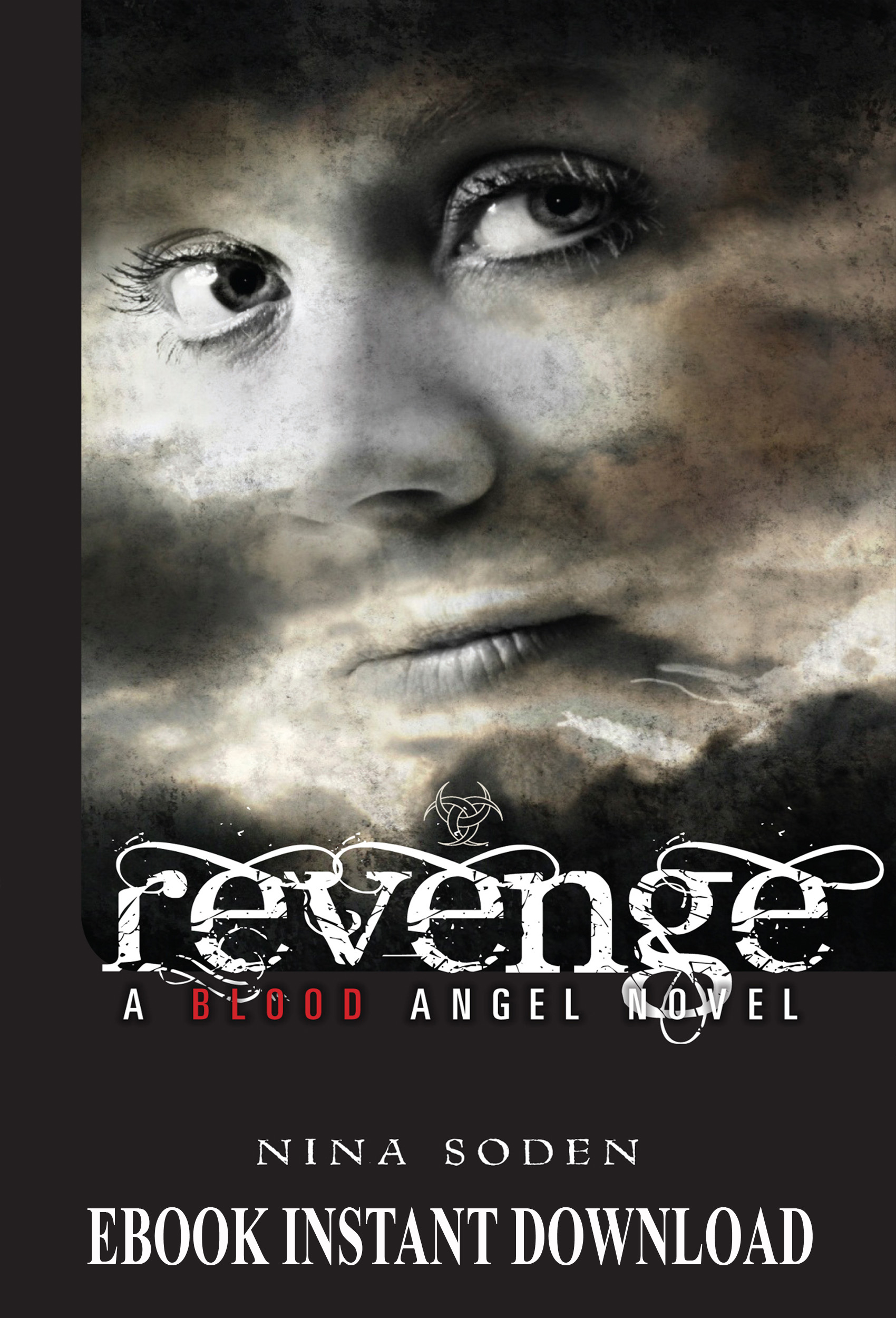
Understanding the importance of my readers in my writing process, I would ask you to please review my books. If you’ve read them and found anything within their pages that affected you in a positive way, please share those experiences with me. Let me know if there are characters you want to know more about… who knows, maybe a new novel will come out of your request. That is, after all, how Pursuit (The Blood Angel Series Book 4) came to be. 🙂

Below is a list of my books linked to where you can find them online.


The Most Valuable Writing Lessons I’ve Learned Along the Way

As an author who has been writing now for 15 years and has navigated both the gritty, magical streets of urban fantasy and the dark, fractured worlds of dystopian fiction, I’ve picked up countless lessons throughout my writing journey. Some have come from hard-won experience, others from moments of doubt, and still others from the quiet, unexpected flashes of inspiration that seem to come out of nowhere, usually in the shower or during long car rides.

Today, I want to share the most valuable writing lessons I’ve learned along the way. These aren’t just about crafting stories—they’re about the mindset, habits, and perseverance that shape an author’s life.

1. Embrace the Chaos of the First Draft

When I first started writing, I used to agonize over every word in my first drafts. I’d waste hours trying to perfect every sentence, hoping to make it sound just right. But here’s the thing I’ve learned: the first draft is supposed to be messy. In fact, it’s better if it is.

Writing that first draft is about getting the story out of your head and onto the page, without worrying too much about perfection. It’s about momentum. Perfection can come later, during the revision process. When I finally gave myself permission to write without overthinking every word, I found that my creativity flowed much more freely. So, don’t stress over the first draft. Just write it.

2. Characters are the Heart of Your Story

In urban fantasy, where the world is often as complex as the plot itself, and in dystopian novels, where entire societies are upended, it’s easy to get caught up in world-building and intricate plots. But the most important part of any story is the characters. Readers don’t just want to know what’s happening—they want to know how it affects the characters, how they react, and how they grow.

I’ve learned that the more real and complex your characters feel, the more invested your readers will be in the world you’ve created. Whether they’re fighting monsters in a magical city or surviving in a post-apocalyptic wasteland, their journey—emotional, moral, and physical—is what makes readers care. So, I always ask myself: What does this moment mean for my characters?

3. Don’t Be Afraid to Break the Rules

Urban fantasy and dystopian fiction are genres that thrive on bending and breaking traditional rules. Magic is real, societies are crumbling, and the unexpected is always lurking around the corner. Over the years, I’ve realized that writing is a playground, and the rules are there to be tested, twisted, and sometimes shattered.

Whether it’s breaking the rules of storytelling, experimenting with unconventional narrative structures, or taking risks with your plot and characters, innovation often lies in the moments of rebellion. Some of my most exciting and rewarding moments as a writer have come from pushing beyond what I thought was possible. So, embrace the freedom to break the rules and experiment. You might just create something uniquely yours.

4. Write the Story That Only You Can Tell

In the world of fiction, it’s easy to feel the pressure to conform—to write what’s trendy or popular, or to imitate successful authors. I’ve definitely been pulled toward that trap before. But the truth is, the best stories come from your unique perspective. What makes your voice distinct is the way you see the world, your influences, and your experiences.

I’ve learned to lean into my own voice and not shy away from telling the stories that feel the most personal or unusual. When I allowed myself to write the kinds of stories I truly wanted to tell—my writing became more authentic, more exciting, and more fulfilling. Your story is yours to tell, and it will resonate most when it comes from an honest, original place.

5. Perfectionism Will Only Hold You Back

It’s easy to fall into the trap of constantly editing, revising, and doubting every word you write, especially when you’re passionate about your project. I can’t tell you how many times I’ve stared at a paragraph, tweaking and reworking it endlessly. But here’s the hard truth: perfect writing doesn’t exist.

At some point, you have to let go of the fear of imperfection and give yourself permission to finish. This doesn’t mean being careless or writing sloppy prose, but it does mean accepting that no piece of writing will ever be flawless. Perfectionism kills progress—it’ll paralyze you and keep you from finishing what you started. I’ve learned to step away from the manuscript, trusting that revisions will smooth out the rough edges.

6. It’s Okay to Not Have All the Answers Right Away

When I first began writing, I thought that a solid plot needed to be completely figured out before I even started. I tried to outline everything in advance, convinced that the best stories had everything planned out. But what I’ve learned over the years is that sometimes, you don’t have to have all the answers right away.

Especially when writing in genres like urban fantasy or dystopian fiction, there’s room for spontaneity. Your characters will surprise you, and your plot will evolve. Instead of trying to force everything into a predetermined mold, I’ve learned to embrace the unknown and trust that the answers will come as I write. Often, it’s in the act of writing itself that the story reveals what it wants to be.

7. Writing is a Marathon, Not a Sprint

Writing is not about getting to the finish line as quickly as possible. It’s about the process—the journey of creation. As someone who’s worked on multiple novels, I’ve learned that it’s important to pace myself. There are days when the words come easily, and there are days when they don’t come at all. That’s okay.

I’ve had to remind myself that writing is a long game. It takes time, persistence, and patience. There’s no rush. I’ve learned to accept that the process of writing—no matter how slow or messy it seems—is just as important as the finished product. Some days, the best thing I can do is simply sit down and write, even if it’s just a few hundred words or even justa journal entry. The more consistent I am, the further I get.

8. Rejection is Part of the Process

If there’s one lesson I wish I could tell every aspiring writer, it’s that rejection is a part of the journey. It stings, yes. It’s painful to have your work turned away or ignored, but I’ve learned that rejection is not a reflection of your talent or worth as a writer.

Every rejection has taught me something—whether it’s a critique on my writing style or a simple reminder that not every story is the right fit for every reader. The key is to not let rejection stop you from writing. I’ve had my fair share, and each time, I’ve picked myself back up, learned from the experience, and moved forward. Rejection is just a detour, not the end of the road.

9. Trust Your Instincts

There are many voices in the writing world—editors, agents, fellow authors, readers—and they all have their opinions. It’s easy to get overwhelmed by the advice and feedback you receive. Over the years, I’ve learned that the most important voice is your own.

Your instincts, your gut feelings, are there for a reason. If something feels off in your story or your character arc doesn’t resonate, listen to that. It’s easy to second-guess yourself, but I’ve found that trusting my own instincts is often what leads me to my best work. Writing is personal, and only you can truly know what’s right for your story.

Final Thoughts

The writing journey is not an easy one—it’s filled with highs and lows, moments of inspiration and doubt. But through it all, the lessons I’ve learned have made me a better, more resilient author. As I continue to write urban fantasy and dystopian novels, I carry these lessons with me, knowing they’ll help me navigate whatever comes next.

To anyone just starting out, or anyone struggling with their own writing journey: remember that writing is a process. You don’t have to get everything perfect right away, and sometimes, the biggest breakthroughs come when you least expect them. Keep writing, keep learning, and keep believing in your story. It’s worth it.


How to Outline a Story: A Guide for Aspiring Authors

Outlining a story might seem daunting at first, especially if you’re new to writing. But it’s one of the most valuable tools in a writer’s toolkit. An outline serves as a roadmap, guiding you from the beginning of your story to its conclusion. Outlining can help you structure your ideas, stay on track, and avoid those dreaded moments of writer’s block, whether you’re writing a novel, short story, or screenplay. Let me walk you through how to outline a story effectively and make the process feel less intimidating.

1. The Purpose of an Outline

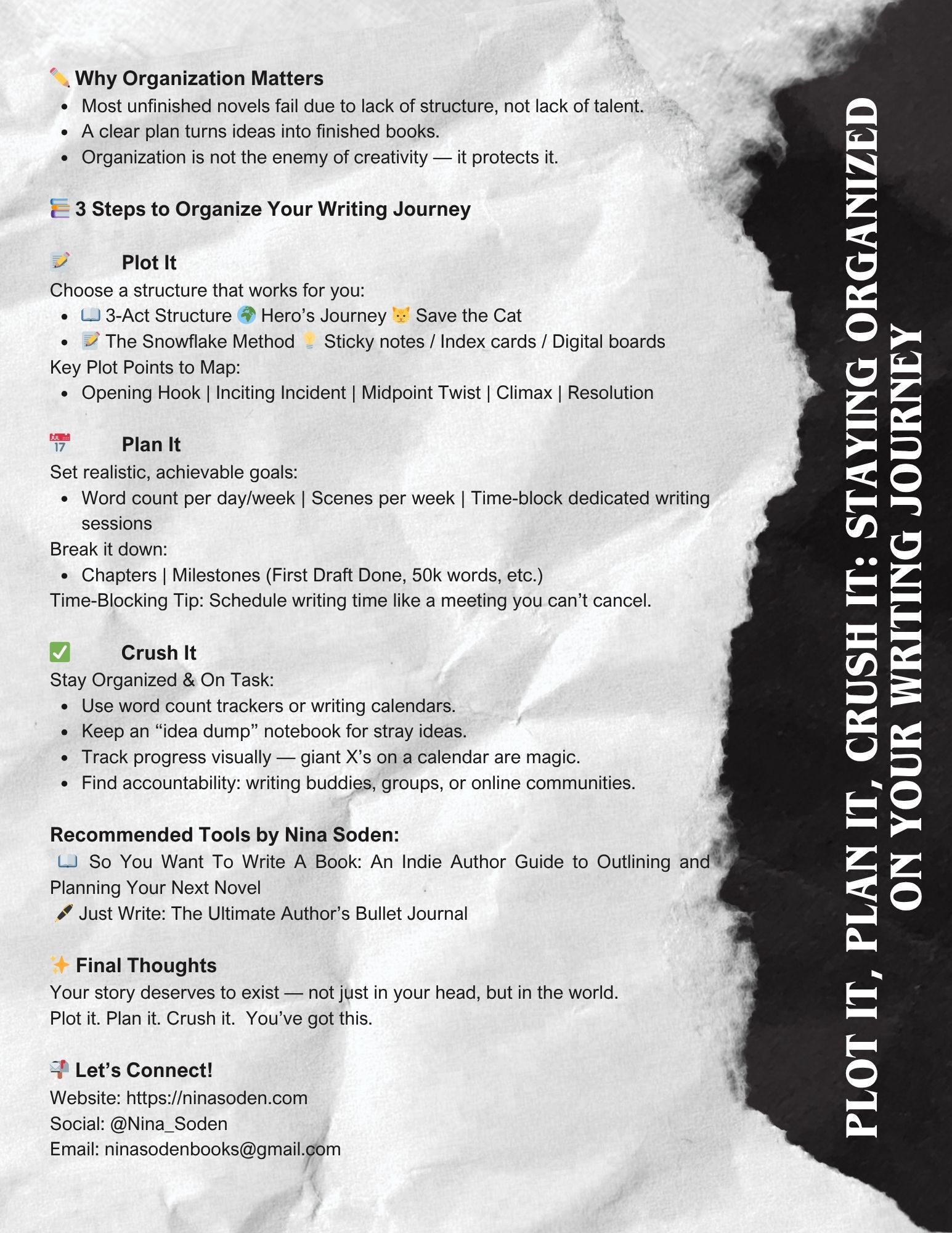
At its core, an outline is a blueprint for your story. It organizes your ideas, helps you identify gaps in the plot, and ensures your story has a clear structure. It’s important to remember that an outline isn’t set in stone. You can—AND SHOULD—adapt it as you write. Think of it as a flexible guide rather than a rigid set of instructions.

The benefits of outlining include:

  • Clarity: You’ll have a clear direction for your story, which helps prevent getting lost in the weeds.
  • Structure: An outline forces you to think about the story’s pacing, character development, and plot points.
  • Motivation: Knowing what comes next keeps you moving forward when you sit down to write.

2. Decide on the Type of Outline

There’s no “one size fits all” approach to outlining. Different writers prefer different methods, and that’s perfectly okay. Here are a few common types of outlines:

  • The Snowflake Method: This method starts with a simple concept and gradually expands it into a detailed outline. First, you write a one-sentence summary of your story, then expand that sentence into a full paragraph, and so on. It’s ideal for writers who prefer to develop their story gradually, refining the details as they go.
  • The Three-Act Structure: A widely-used framework that breaks a story into three acts—Set-Up, Confrontation, and Resolution. This method helps you focus on the major plot points and ensures your story has a strong, well-paced structure. It’s a great option for beginners because of its simplicity.
  • Chapter-by-Chapter Outline: For those who like specifics, this method involves outlining each chapter or scene of your story in detail. This type of outline gives you a clear sense of what needs to happen at each stage of the story.
  • The Hero’s Journey: This method, rooted in Joseph Campbell’s monomyth, is particularly helpful for stories involving a protagonist’s transformation. It involves specific stages like “The Call to Adventure,” “Refusal of the Call,” and “The Return.” It’s a fantastic framework for fantasy, adventure, and other high-stakes genres.
  • Loose Bullet Points: For the more free-spirited writers, some prefer to jot down key plot points and character moments as simple bullet points. This is a more flexible approach and allows room for creativity as the story unfolds.

3. The Building Blocks of a Story Outline

Regardless of the method you choose, there are key elements every story outline should address. Here are the main building blocks you’ll need to consider:

1. The Premise

The premise is the seed of your story. What is your story about? What is the central conflict or question that drives your plot? This is where you should define the “what if” that makes your story compelling. For example:

  • What if magic was real, but only for a select few?
  • What if a dystopian society controlled all information?

Spend some time refining your premise before moving on. It will act as the foundation for everything else.

2. The Main Characters

Your characters are the heart of your story. In your outline, make sure to note the following about your protagonist, antagonist, and key supporting characters:

  • Who are they? Consider their backstory, motivations, desires, and flaws.
  • What do they want? This is the driving force behind their actions. Your protagonist might want justice, love, freedom, or survival.
  • What’s at stake? What happens if they fail? This is essential for creating tension and suspense.

3. The Major Plot Points

In order to outline your plot, break it down into key events. These are the moments that move the story forward and change the direction of the narrative. A few important plot points include:

  • The Inciting Incident: The event that starts the story. This is where your character is thrust into the conflict, whether it’s the discovery of a hidden power or the moment a dystopian society begins to crack.
  • The Rising Action: The buildup of conflict and challenges that lead toward the climax. This is where your character faces obstacles, grows, and learns more about themselves or the world around them.
  • The Climax: The turning point or high point of the story. The protagonist confronts the primary conflict in a dramatic and pivotal way.
  • The Resolution: How the story concludes. Whether the protagonist succeeds or fails, there must be closure and consequences to their actions.

4. The Setting and World-Building

For genres like urban fantasy and dystopian fiction, the setting is crucial. Your outline should include:

  • Where does the story take place? Is it a magical version of New York, or a desolate post-apocalyptic world? Define the environment, rules, and atmosphere.
  • What’s the world’s history? In dystopian stories, especially, understanding the past is vital to understanding the present. Was there a war? An economic collapse? A technological breakthrough gone wrong?
  • What are the stakes within the setting? How do the world’s rules affect the characters and their choices?

5. The Theme

What is the deeper meaning or message of your story? Is it about the fight for freedom, the power of love, or the dangers of unchecked technology? In your outline, think about how you can weave this theme throughout the plot, characters, and setting.

4. Flesh Out Your Outline

Now that you’ve got your main components outlined, it’s time to expand on them. Flesh out the scenes and events that will happen in your story. Here are a few tips to make the outlining process easier:

  • Start with the Big Picture: Begin by outlining the broad strokes—major plot points and character arcs. Where do you want your characters to start, and where do you want them to end? This will help keep your narrative cohesive.
  • Go Scene by Scene: If you prefer more detail, break your outline down into individual scenes or chapters. Write down the purpose of each scene and what needs to happen in it—whether it’s a character development moment, a revelation, or a dramatic plot twist.
  • Think About Pacing: As you lay out each scene, consider how fast the action should move. Are there moments of high tension? Are there quiet, reflective scenes? Mix things up to create variety and keep the reader engaged.
  • Use Visual Aids: Some writers find it helpful to create visual outlines—whether it’s through storyboarding, mind maps, or index cards. These tools can help you see the structure of your story from a new angle.

5. Stay Flexible

The outline isn’t the end-all-be-all. Once you begin writing, you might find that new ideas emerge, characters evolve, or your plot takes a surprising turn. And that’s perfectly okay! Writing is a dynamic process, and oftentimes, the best stories grow from unexpected twists. Don’t be afraid to change your outline as you go along.

6. Final Thoughts

Outlining is a tool, not a rule. It’s there to help you organize your thoughts and bring your story to life with intention. Whether you’re writing a fast-paced thriller, a deep philosophical dystopia, or an epic urban fantasy, outlining gives you the roadmap to reach your destination. The key is to find the approach that works best for you.

Remember, your outline is just a starting point—let your creativity flow, and don’t be afraid to adjust your plan as the story evolves. The more you practice, the easier the outlining process will become. Good luck, and happy writing!

The Northern Witch Series by K.S. Marsden

As an Amazon Associate, I earn from qualifying purchases. That means, when you purchase a book using an Amazon link on this site, I earn an affiliate commission. All commission earnings go back into funding my books; editing, cover design, etc.

The quirky, best-selling Urban Fantasy Series.
When a Witch-in-Training falls for a Demon-Possessed Soul…

The Northern Witch Series
The Complete Box Set
by K.S. Marsden
Genre: YA LGBTQ Urban Fantasy

The quirky, best-selling Urban Fantasy Series.

When Mark decides to follow in his Nanna’s footsteps, and train in witchcraft, he takes on more than he could ever have imagined. Up until now, he has been ignorant of the magical dangers, demons and monsters that his coven defend against.
Everything changes when Damian moves to Tealford. He is everything Mark has ever wanted, but he comes with his own cursed life.

Luckily, Mark has the support of his friends and family… as well as the handsome newcomer.

Containing the full 6-part series:
Winter Trials (Northern Witch #1)
Awaken (Northern Witch #2)
The Breaking (Northern Witch #3)
Summer Sin (Northern Witch #4)
A Dark Fate (Northern Witch #5)
All Things End (Northern Witch #6)

On Sale for Only .99cents for December – Get it Now!!
Amazon * Bookbub * Goodreads

Kelly S. Marsden grew up in Yorkshire, and there were two constants in her life – books and horses.

Graduating with an equine degree from Aberystwyth University, she has spent most of her life since trying to experience everything the horse world has to offer. She is currently settled into a Nutritionist role for a horse feed company in Doncaster, South Yorkshire.
Her first book, The Shadow Rises, was published in January 2013, and she now has several successful series under her belt.

Website * Facebook * X * Instagram * TikTok* Bookbub * Amazon * Goodreads

Would you like a chance to win a $10 Amazon gift card?
Follow the tour HERE for special content and a giveaway!

I am happy to be one of many tour hosts sharing information about

Tune In Tomorrow by Randee Dawn

As an Amazon Associate, I earn from qualifying purchases. That means, when you purchase a book using an Amazon link on this site, I earn an affiliate commission. All commission earnings go back into funding my books; editing, cover design, etc.

Tune in Tomorrow
by Randee Dawn
Genre: Humorous Pop-Culture Fantasy

A funny, thrilling and mysterious adventure into the world of alternate reality television… Perfect for fans of Jasper Fforde and Christopher Moore.

She’s just a small town girl, with big mythic dreams.
Starr Weatherby came to New York to become… well, a star. But after ten years and no luck, she’s offered a big role – on a show no one has ever heard of. And there’s a reason for that. It’s a ‘reality’ show beyond the Veil, human drama, performed for the entertainment of the Fae.
But as Starr shifts from astounded newcomer to rising fan favorite, she learns about the show’s dark underbelly – and mysterious disappearance of her predecessor. She’ll do whatever it takes to keep her dream job – though she might just bring down the show in the process.

Amazon * B&N * Bookbub * Goodreads

Randee Dawn is an author, journalist, and lucky denizen of Brooklyn. Her first novel, the humorous pop-culture fantasy Tune in Tomorrow, published in August 2022 (Solaris/Rebellion).
Randee’s short fiction has appeared in publications and podcasts including 3AM Magazine (“The View of My Brother’s Profile in the Rear-View Mirror,” 2001; “Warm, In Your Coat,” 2004) and Well-Told Tales (“Home for the Holidays,” 2015; “Can’t Keep a Dead Man Down,” 2017).
Dawn’s stories have appeared in anthologies including Where We May Wag (“The Last Dog,” Writing Piazza Press, 2018), Children of a Different Sky (“Can’t Find My Way Home,” Kos Books, 2018), Magic for Beginners (“Queen Zoe and the Spinning Game,” Fantasia Divinity, 2019), Dim Shores Presents (“Rough Beast, Slouching,” 2021), Another World: Stories of Portal Fantasy (“The Way Is Clear,” SummerStorm Press, 2021), and Horror for the Throne: One-Sitting Reads (“Cat Person”).
She has a short collection of dark speculative fiction short stories, “Home for the Holidays” (2014) and co-authored “The Law & Order: SVU Unofficial Companion” (BenBella Books, 2009). She co-edited the speculative fiction anthology of “what if” stories about The Beatles, “Across the Universe: Tales of Alternative Beatles” (Fantastic Books, 2019).
When not making stuff up, Randee publishes entertainment profiles, reviews, and think pieces regularly in outlets including Variety, The Los Angeles Times, Today.com and Emmy Magazine, and writes trivia for BigBrain.
She can be found at RandeeDawn.com and @RandeeDawn (on Twitter).

Website * Facebook * X * Instagram * Bookbub * Amazon * Goodreads

Would you like a chance to win a $20 Amazon gift card? Follow the tour HERE for special content and a giveaway!

Do you have a favorite movie?
Certainly! You don’t even have to drop a hat to get me to watch The Philadelphia Story, a movie from 1940 with some of my favorite actors of all time – Katharine Hepburn, Cary Grant and Jimmy Stewart. Ruth Hussey is also magnificent. It’s funny, it’s screwy, and it has a wonderful back story in that it helped revive Hepburn’s then-flagging career. Plus, it’s just a pleasure to watch these beautiful people on screen. In 1956, Bing Crosby, Frank Sinatra and Grace Kelley – plus Louis Armstrong! – were the stars of a musical remake called High Society, with music by Cole Porter. I’ll always pick Philadelphia first, but Society is one of those rare reimaginings that’s almost as perfect, particularly the performance of “Well! Did You Evah?” in which Crosby notes to Sinatra, “Tune in tomorrow.”

Who is your hero and why?
When I was about 10 or 11, I came across something called “An Eschatological Laundry List,” by the late psychologist and author Sheldon B. Kopp. It’s a series of 43 brief sentences that starts with “This is it!” and includes lines like “All of the significant battles are waged within the self.” One that sticks with me is: “If you have a hero, look again: you have diminished yourself in some way.” I can see heroic behavior and admire it, but I do not have a single hero. We all live in the gray area, including the great people. What is heroic is loving, and admiring, someone despite their gray areas. My mother is a hero. My friend Julia – who gave me the list originally – is a hero. Everyone I love is heroic. And I strive for that, every day.

Which of your novels can you imagine being made into a movie?
All of them! I’ve only had one published so far – Tune in Tomorrow – and frankly, I think it’d make a better series than a movie, but I’ll assume that’s included in the question. I write with a movie playing in my head at all times. I know what every scene looks like, where the characters are standing, and if I squint, what they’re wearing. I only include the details that matter in each scene, but there are many more I don’t include. So for me, every book and short story I write is a kind of script for the movie I want it to become. But let’s face it: the book is always better.

I am happy to be one of many tour hosts sharing information about

Charlie N. Holmberg’s BOOK OF MAGIC

As an Amazon Associate, I earn from qualifying purchases. That means, when you purchase a book using an Amazon link on this site, I earn an affiliate commission. All commission earnings go back into funding my books; editing, cover design, etc.

Charlie N. Holmberg’s Book of Magic
By Charlie N. Holmberg
Genre: Speculative Nonfiction, Writing Self-Help

Unravel the secrets to crafting a masterful magic system from best-selling fantasy author Charlie N. Holmberg.

Whether using magic as flavor or as an essential piece of plot, this book will guide fantasy authors, from new to experienced, through the delicate layers of creating, utilizing, and mastering magic systems.

In this book, we will…
*Discuss the schools, laws, and spectrum of magic
*Learn to build individual pieces of a magic system
*Dig into magic’s influence on worldbuilding
*Examine different types and styles of magic
*Develop and polish original magic systems

With workshops, work pages, and reference materials included, this succinct one-and-done guide to crafting the magical elements of the fantasy genre is a must-have for speculative fiction authors.

“If you haven’t had the fortune of attending one of Charlie’s writing classes (which I have), this is the next best thing. Book of Magic contains so much wit, wisdom, and practical suggestions for helping any beginning author, or veteran, make their magic systems rise up and be noticed. She uses expert examples from other authors you know as well as teaching a masterclass on developing magic systems from scratch based on methods she’s invented. You just may need this book to help find out what kind of magic-based diseases might be festering in your neighbor’s cabbages.” —Jeff Wheeler, Wall Street Journal bestselling author of the Kingfountain series

Amazon * Bookbub * Goodreads

Charlie N. Holmberg is a Wall Street Journal and Amazon Charts bestselling author of fantasy and romance fiction, including the Paper Magician series, the Spellbreaker series, and the Whimbrel House series, and writes contemporary romance under C. N. Holmberg. She is published in over twenty languages and is a Goodreads Choice Award, ALA, and RITA finalist. Born in Salt Lake City, Charlie was raised a Trekkie alongside three sisters who also have boy names. A BYU alumna, she discovered in her thirties that she’s actually a cat person. She lives with her family in Utah. Visit her at http://www.charlienholmberg.com.

Website * Facebook * X * Instagram * Bookbub * Amazon * Goodreads

What inspired you to write this book?

In the brainstorming process, I almost always discover my stories’ magic first. Whether it’s a full-fledged magic system (like in The Paper Magician) or just a spark of magic (like in Followed by Frost), my brain loves the fantasy element of fantasy novels and beelines straight to that. I think I was in a conference or the like and the idea of writing a craft book on magic came to mind—I jotted it down in the bottom corner of my notes. But of course, I didn’t have TIME to write something like that. It was just an idea, but it’s an idea that liked to revisit my brain once in a while.

When I got an idea for what I could include in the book, I would jot it down. I teach a class at conferences about magic systems, but I didn’t think that would be enough for my own craft book—I wanted to have things in there that were new and fresh, so I tried to brainstorm in that direction. My brain would collect ideas here and there; record them in a notebook or on my phone. And then at the beginning of the year, in between other fiction projects, I thought, “Well, why don’t I just outline it?”

I found I enjoyed it. I outlined it and then just brain-dumped my thoughts under every section. I went into the PowerPoint for my magic class and pulled it in. I know workshops really help to cement an idea, so I wanted to include those in the book as well, even designing them so readers can write directly onto the page as they go. Oliver Heber Books had reached out to me for the possibility of publishing previously, so the route was set!

What can we expect from you in the future?

I don’t have any more craft books on the docket right now, but I’m full steam ahead on fantasy fiction! I’ll be completing my Whimbrel House series (book 4, Wizard of Most Wicked Ways, releases March 4th, 2025, and I’ll draft book 5 next year), and I’m releasing a romantasy duology called The Shattered King, with book one coming out next fall. After those series are finished, I’ll be releasing a historical series—the first book is called The Hedge Witch’s Cure for Marriage, and I’m very excited for it!

Did you learn anything during the writing of your recent book?

So in Charlie N. Holmberg’s Book of Magic, I have several appendices for writers to utilize. One of these appendices is a list of commonly used magic in fantasy novels. This list can be used in three ways: 1) choosing one of these magics to ensure an easier learning curve for magic for the reader, 2) avoiding these magics to encourage a more original magic system, or 3) twisting one of the magics to make it your own.

I was thinking about this while playing Final Fantasy XVI with my husband, and I thought, okay, what if I took my own advice? What if I took something off this list and did #3 (twisted it)?

So I chose healing magic. How would I find a way to make it uniquely mine? And I came up with an idea that really stuck with me. That idea had babies with Final Fantasy XVI (the MMC is inspired by Joshua Rosfield), and then playdates with [ahem, my favorite novel] The Bird and the Sword by Amy Harmon and To Poison a King by S.G. Prince. And I drafted that book in fifteen days. It wasn’t even a twinkle in my eye in May and it existed in July.

So . . . check out that appendix, I guess. It’s MAGICAL (pun intended).

Anything specific you want to tell your readers?

I created this book to help other fantasy authors craft fun, believable magic systems, but I think it would be a fun read for those who just enjoy reading fantasy. Sometimes it’s fun to peek behind the curtain. 😉

If your book had a candle, what scent would it be?

Paper and ink to set the reader at ease, a bright lilac to inspire creativity, sharp lemon to mimic magic, and freshly cut grass for theme (that one will make sense after you read it).

Fun Facts/Behind the Scenes/Did You Know?’-type tidbits about the author, the book or the writing process of the book.

Obviously one cannot write an adequate book on magic systems without talking about Brandon Sanderson.

Once upon a time, I hired a good friend of mine as a personal assistant/head editor. Her name is Kristy, and she’s one of the most competent people I know. I wasn’t utilizing her full skillset, so when a bigger, better job offer for her came along, we parted ways amicably.

Said job offer happened to be for Dragonsteel, which is Brandon’s company.

In Charlie N. Holmberg’s Book of Magic, I wanted to address Brandon Sanderson’s laws of magic, but I wanted to make sure I did it in a super legal way. So I contacted Kristy simply because she’s a fountain of knowledge and asked her what I was legally aloud to quote, and she told me. And she said if I wasn’t sure, I could send it into Dragonsteel for review.

“Who would I send it to?”

“Me.”

So that made it pretty darn easy to get review eyeballs on it 😀

Would you like a chance to win a $10 Amazon Gift Card (1 winner) or a signed copy of the book (3 winners)? Follow the tour HERE for special content and a giveaway!

I am happy to be one of many tour hosts sharing information about