As an Amazon Associate, I earn from qualifying purchases. That means, when you purchase a book using an Amazon link on this site, I earn an affiliate commission. All commission earnings go back into funding my books; editing, cover design, etc.
Sometimes, one voice is all it takes to awaken hundreds.
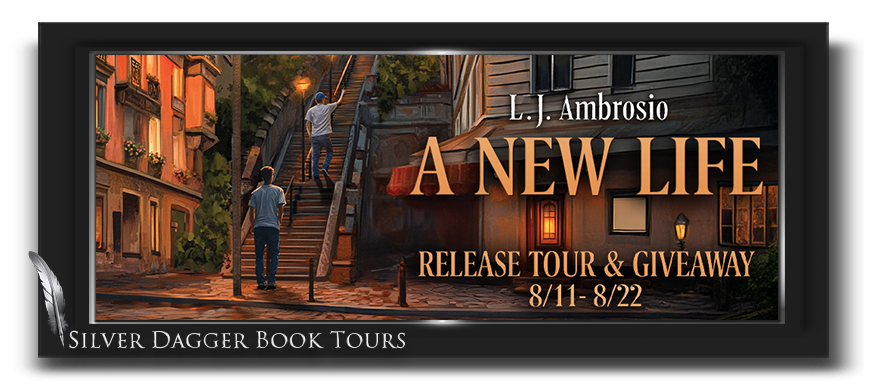
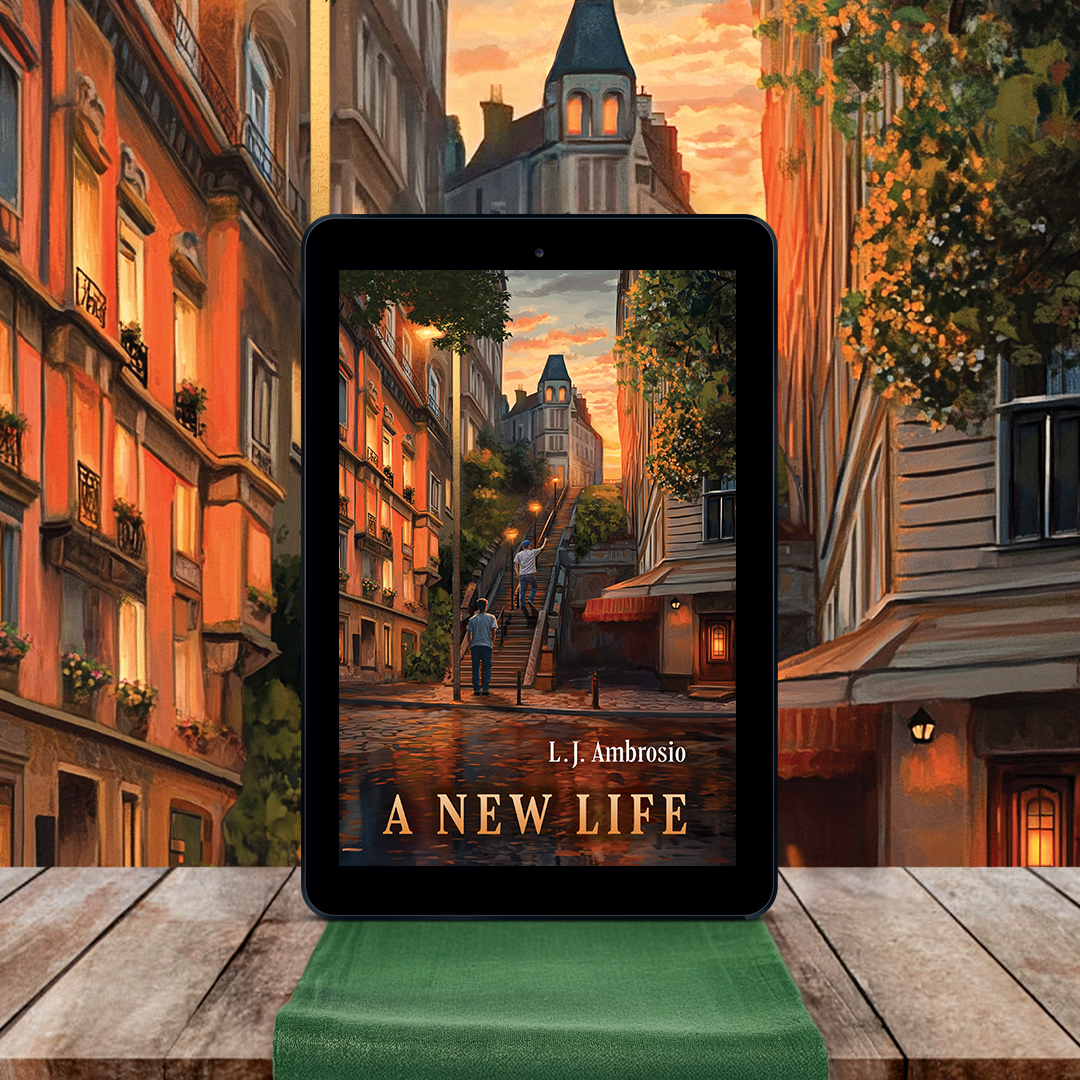
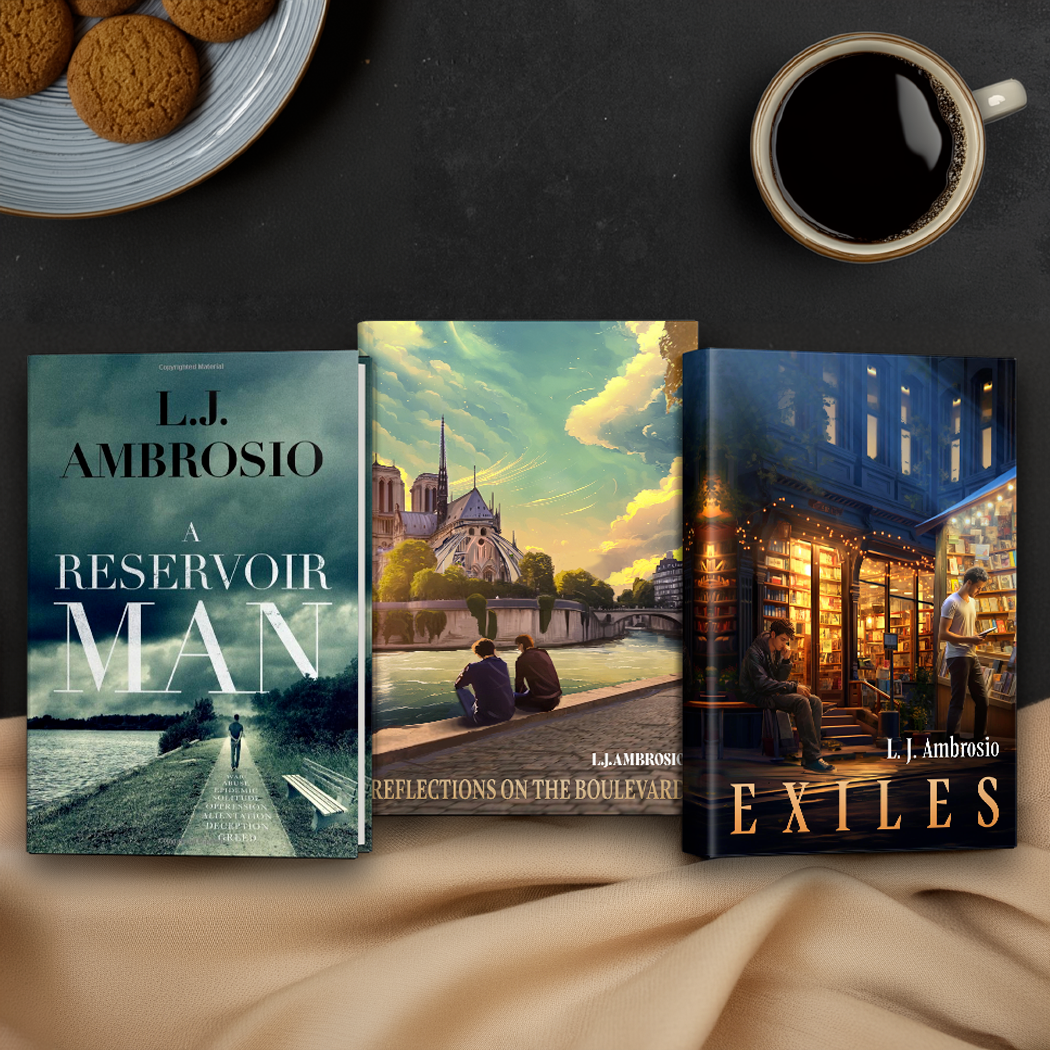
A New Life
Reflections of Michael Book 4
by L.J. Ambrosio
Genre: Contemporary LGBTQ Fiction, Coming of Age
From America to the streets of Paris, A New Life follows two friends as they navigate grief, love, and self-discovery in a city filled with history and hope. A New Life is a story that lingers long after the last page.
What Readers are saying:
“A heartfelt continuation of The Reservoir Man series, taking readers on an emotional journey through friendship, grief, and self-discovery. Set against the evocative backdrop of Paris, this novel follows the touching bond between Ron, a kind and grounded man, and Louie, a young gay man struggling with his sense of self. Ambrosio masterfully portrays the evolving relationship between the two, echoing the mentor-mentee dynamic seen in earlier books. Louie’s vulnerability and innocence shine through, while Ron’s compassion and strength help guide him through confusion and loneliness. Their moments together are filled with laughter, conflict, understanding, and ultimately growth. The emotional depth of this story is its true strength. From joy to sorrow, the book invites readers to feel alongside the characters. The final scene is especially poignant—both heartbreaking and healing.” – Amazon Reviewer
“A New Life continues the journey of familiar characters we’ve come to love, and yes, we still get that charming bookstore setting and Paris, which basically makes this the cozy, wanderlust-y read of the season. Ambrosio knows how to tell a story that pulls you right in and gives you all the feels. Ron and Louie’s friendship gets deeper, there’s a solid dose of personal growth, and just when you think things are on solid ground—bam, a twist. Classic.
If you’re already a fan of the trilogy, definitely keep going with this one. And if you’re new to it all, start from the beginning—you’ll thank me later.” – Amazon Reviewer
Louis J. Ambrosio ran one of the most nurturing bi-coastal talent agencies in Los Angeles and New York. He started his career as a theatrical producer, running two major regional theaters for eight seasons. Ambrosio taught at 7 Universities. Ambrosio also distinguished himself as an award-winning film producer and novelist over the course of his impressive career.
As an Amazon Associate, I earn from qualifying purchases. That means, when you purchase a book using an Amazon link on this site, I earn an affiliate commission. All commission earnings go back into funding my books; editing, cover design, etc.
Heroes and villains from myth, legend, and history converge in this saga set in the vast ancient forests, treacherous bogs, snow-capped mountains, and mysterious lochs of Scotland some four hundred years before the birth of Christ.
Over four hundred years before the birth of Christ, the island of Ériu is a patchwork of feuding kingdoms, vast plains, and frozen bogs. Battle, intrigue, betrayals, and courage are part of life for the Celts who call Ériu home.
At the same time, from their underground halls, the mysterious demi-goddesses of the Aes Sídhe seduce brave warriors, turning men into kings and binding them with fearsome geis.
Conall Mac Gabhann is content with his apprenticeship with the local blacksmith. Content, that is, until he finds his family slaughtered in their home. Two men share responsibility for the massacre: a mad Irish king and a dissolute Roman. Conall will have his vengeance or die in the attempt.
Accompanied by his childhood love—the beautiful but dark-spirited—Mórrígan, and the veteran warrior Fearghal, Conall’s quest takes him northward through unfriendly kingdoms to a confrontation beyond the ancient earthworks of the Black Pig’s Dyke.
Along the way, Conall and Mórrígan will gather an army and come under the influence of the Aes Sídhe. If Conall desires, an apprentice blacksmith will become a king. Who knows what Mórrígan will become?
The Conall Series contains scenes of sex and violence and language appropriate to the period (400 B.C.) it is set in. It is not recommended for those under 14 without parental consent.
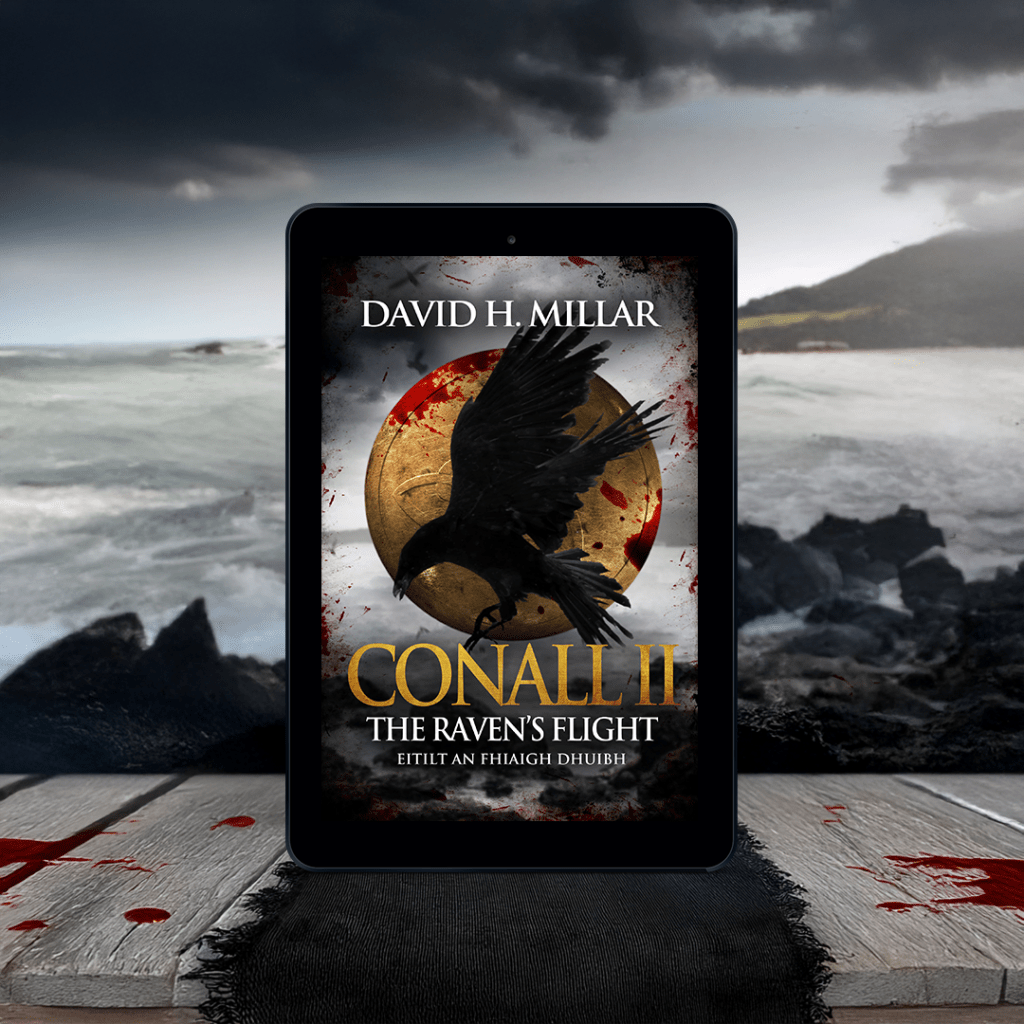
Conall II: The Raven’s Flight continues to chronicle the story of Conall and Mórrígan and the epic journey of the warriors from Ériu (Ireland).
Conall and his brooding queen, Mórrígan, lead over two thousand warriors with their followers across the narrow sea separating Ériu from Albu (Britain). Their quest: the capture of Cassius Fabius Scaeva, the dissolute Roman held responsible for the slaughter of their families.
The Ériu encounter human, natural, and supernatural foes and friends. At the mercy of the Aes Sídhe, a race of demi-goddesses who demand that he fulfil his geis, Conall is named the Hand of the Goddess and given the instrument that will crush the Na Daoine Tùrsach—a tribe of fanatical, blood-lusting priests.
They battle fierce northern tribes: the Forest People’s one-eyed king, Drostan Ruadh, opposes their presence, as do the Na Mèadaidh, led by the sly Finnean Mac Sèitheach. Yet, not all are enemies. The Raven People offer their support, although it too comes at a price.
Heroes and villains from myth, legend, and history converge in this saga set in the vast ancient forests, frozen bogs, snow-capped mountains, and mysterious lochs of Scotland some four hundred years before the birth of Christ.
It is 406 B.C. The Gaels tramp battle through the vast forests of Northern Albu and cross the brooding moors and marshes to reach the grain fields of Southern Albu. The majestic stone brochs, crannags and dùin of the north give way to the great hillforts of the South.
The Sisters is the third book of the series. In this tale, the fearsome women surrounding Conall take centre stage.
A malevolent queen bent on conquering Northern Albu launches an invasion and kidnaps the twin daughters of Conall and Mórrígan. The king’s and queen’s blood oath promises no mercy until the young twins are returned.
A merciless assassin stalks the community, and Tadhg is given the unenviable task of tracking the killer down. His mission worsens when the signs point to one of the women close to Conall, and he becomes the target.
Which partners are loyal to their hand-fasting oaths, and who will betray them? Will honour be redeemed on the battlefield?
Amid the battles, betrayals and intrigue, Mòrag, a tall beauty and fearsome warrior, desires Conall at any cost. A clash with Conall’s queen, also known as The Dark Huntress, is inevitable.
“Butter-gold and cruelly hooked, the beak ripped a ragged gash across the newborn’s throat.”
Blacksmith’s son, Conall Mac Gabhann’s only desire was to follow in his father’s footsteps and enjoy a long life with his childhood love, Mórrígan. The slaughter of their parents dashed those dreams. Fuelled by vengeance, both embark on the dark path of retribution.
From the ancient forest, two great eagles take wing. With amber-gold eyes, Fate and the Goddess watch, ready to guide and meddle in human lives.
Conall, now Clann Ui Flaithimh’s ‘king over kings’, must complete his geis—at any cost. He takes another stride closer to Rome and a reckoning with Marcus Fabius Ambustus. Flat-bottomed biremes carry Conall’s army across the Muir nIocht to crash on the shingle beaches of Northwestern Gaul. New enemies and uneasy alliances flourish. Assassins, treason, and betrayal thrive.
Above all, Conall values loyalty. Thus, treason within the tribe sours his belly. Mercy will have no part in his response.
The fourth novel in the Conall series, Conall IV: A Brace of Eagles, is a rousing epic of Celtic heroes and villains, bloody battles, political intrigue, honour, betrayal, tragedy and forbidden love.
“Witch!” Tullus gasped. “You are not that fortunate, Roman,” came the menacing reply.”
Blood has purchased a fragile peace for Conall and Mórrígan and the close circle of friends they call family. However, allies and enemies alike wonder if the king and queen have lost the thirst for vengeance on those who slaughtered their families. Alarmed, gods, kings, and despots conspire to poke the slumbering fire.
Brennus of the Senones smarts at his defeat at Conall’s hands and covets his lands and wealth. Will a bruised ego and hubris overrule the Gaulish king’s typical pragmatism?
The Gaiscedach want revenge for the defeat and execution of their queen. In the dead of night, like cockroaches, they scuttle over the walls of Lugudunon.
Marcus Fabius Ambustus tolerates no challenge to his plan to be the Dictator of Rome. But has arrogance blinded him to the enemy he has nurtured?
The gates of Rome and retribution draw closer. But Conall needs his enemies as much as his friends. Still, who are enemies and who are friends? It is a time of schisms and rebuilding, of loved ones endangered, and assassins and spies revealed.
Yet, there has always been one constant: only the foolish doubt that Conall and Mórrígan will show mercy to those who threaten their family.
Conall V: Retribution is the final novel in the Conall series.
The Conall Series contains scenes of sex, violence, and language appropriate to the period (400 B.C.) in which it is set. It is not recommended for those under 14 without parental consent.
Born in Belfast, Northern Ireland, internationally published and award-winning author David H. Millar is the founder, owner, and author-in-residence of A Wee Publishing Company—a business formed to promote Celtic authors and literature.
David is the author of the five-volume, ancient Celtic-based Conall series and the spin-offs The Dog Roses, The Dog Roses: Resolution, The Blood Queen and Brianag: A Blood Queen Novel.
David resides in Houston, Texas, with his family and two recent family members, tuxedos Beau and Stiletto.
As an Amazon Associate, I earn from qualifying purchases. That means, when you purchase a book using an Amazon link on this site, I earn an affiliate commission. All commission earnings go back into funding my books; editing, cover design, etc.
In the heart of a small town, love finds its home.
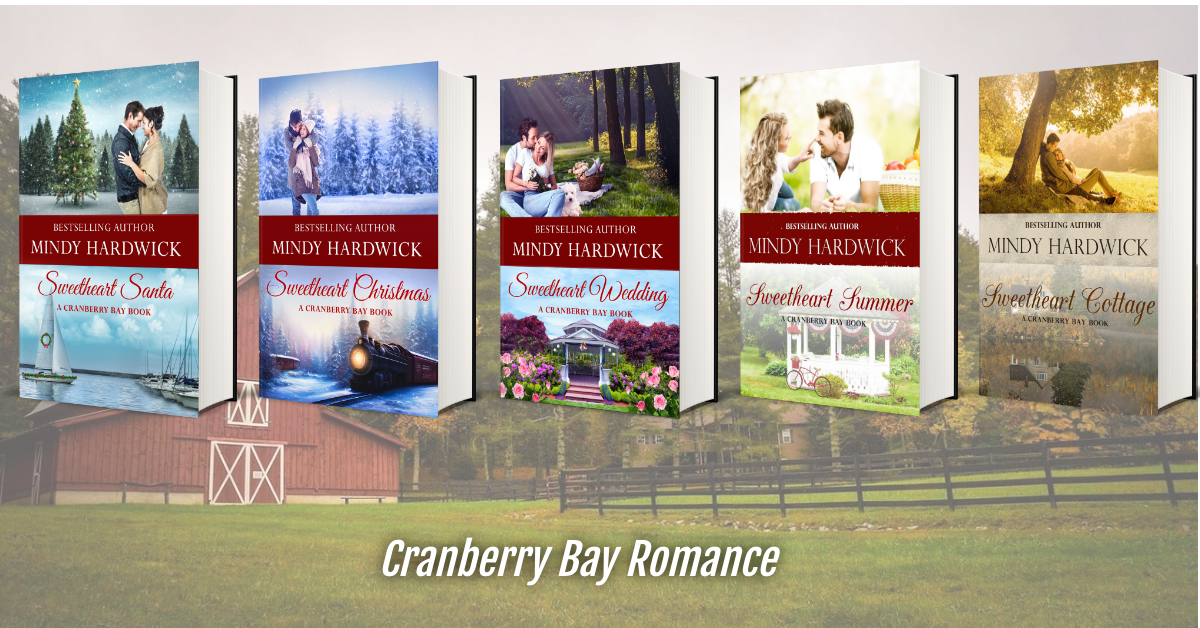
Sweetheart Wedding
Cranberry Bay Book 5
by Mindy Hardwick
Genre: Contemporary Small Town Romance
Determined to start her life over after a failed engagement, Gracie has built her boutique inn into a successful Cranberry Bay business.
Meanwhile, youngest Shuster brother, Adam, loves helping his friends and family while working as a park ranger.
Devastated after a tragic accident, Adam guards his heart and is happy to have Gracie’s friendship. Both swear off love. But when Adam and Gracie are tossed together to help plan a Cranberry Bay wedding, they find their resolve not to fall in love crumbling.
And when Adam loses his Oregon State Parks job and takes a new job in Montana, both will have to decide whether to make the commitment to love each other and leave Cranberry Bay behind for a new life.
Mindy Hardwick holds an MFA in Writing for Children and Young Adults from Vermont College. Her published contemporary small-town heartwarming romance includes her Cranberry Bay Series: Sweetheart Cottage, Sweetheart Summer, Sweetheart Christmas and Sweetheart Santa. She has also published a young adult romance, Weaving Magic and a young adult novella, Erin’s Choice. Mindy’s middle grade books include: The World is a Sniff, Stained Glass Summer, Some Stories Are Not Seen, and Seymour’s Secret. Mindy facilitated a poetry workshop for teens at Denney Juvenile Justice Center and wrote about the experience in her memoir, Kids in Orange: Voices from Juvenile Detention. Mindy can often be found walking on the north Oregon Coast beaches.
Urban fantasy is a genre that has captivated readers for decades, blending the magic and mystery of fantastical realms with the grit and realism of modern-day settings. With its unique mix of supernatural elements and everyday life, urban fantasy has evolved over the years, shifting in themes, character archetypes, and world-building. From the early works of beloved authors like Jim Butcher and Laurell K. Hamilton to the newer voices emerging today, the genre has undergone a significant transformation.
In this article, we’ll explore the evolution of urban fantasy, from its classic roots to contemporary works that continue to shape the genre.
At its core, classic urban fantasy is defined by the juxtaposition of the ordinary and the extraordinary. The protagonist is often a lone wolf, a tough, morally gray character with a special set of skills who faces dark and supernatural forces lurking beneath the surface of everyday life. This version of urban fantasy was steeped in noir influences, where the main character’s inner struggle mirrored the chaos and danger in the world around them.
Jim Butcher’s The Dresden Files, which began in 2000, is one of the definitive examples of early urban fantasy. The series follows Harry Dresden, a private investigator and wizard in modern-day Chicago. Butcher’s blend of hard-boiled detective tropes with magical elements created a blueprint for many urban fantasy works that followed. His world is gritty, often dangerous, and filled with powerful supernatural beings, from fae to vampires. The detective noir influence is evident in Dresden’s constant struggle between good and evil, with every book pushing him deeper into morally ambiguous situations.
Meanwhile, Laurell K. Hamilton’s Anita Blake series, which began in 1993, took the genre in a more erotic and dark direction. Anita Blake, a necromancer and vampire executioner, finds herself caught in a web of supernatural politics, power struggles, and dangerous romantic entanglements. Hamilton’s work often explored themes of power, sexuality, and identity, pushing the boundaries of what urban fantasy could tackle in terms of personal relationships and societal issues. As the series progressed, the focus shifted more toward the complexities of Anita’s supernatural world and her growing powers, with heavy emphasis on eroticism and romantic relationships.
The Shift in Themes and Character Archetypes
As the genre grew in popularity, urban fantasy began to evolve in response to changing reader expectations and cultural shifts. The early emphasis on gritty, morally complex protagonists began to make room for more diverse voices and a broader range of themes.
One significant shift was the increasing focus on female protagonists. While classic urban fantasy had often centered around male characters like Harry Dresden, more recent works have seen a shift toward strong, empowered women at the forefront of the story. Authors began to explore themes of empowerment, self-discovery, and the intersection of personal and supernatural challenges in deeper, more nuanced ways. This shift not only made the genre more inclusive but also allowed for a broader exploration of issues like gender, identity, and family.
In these contemporary works, the protagonist often faces both external supernatural threats and internal personal struggles. Their journeys are no longer just about surviving dangerous magical forces but also about grappling with personal growth, moral dilemmas, and relationships. These themes provide a more holistic and relatable narrative, where magic is just one element of a much larger and more complex human experience.
This focus on personal growth and inner conflict has become a hallmark of contemporary urban fantasy, with protagonists often battling not only external supernatural forces but also their own personal demons. This allows for more diverse and relatable characters, which has resonated with modern readers.
World-Building: From Classic Tropes to Contemporary Complexity
In the earlier days of urban fantasy, world-building often focused on introducing the magical or supernatural elements and the tension between them and the human world. The worlds were often gritty and dark, with a heavy emphasis on danger and mystery. In many cases, the rules governing magic were somewhat vague, allowing for flexibility in storytelling.
However, contemporary urban fantasy has become more complex in its approach to world-building. Authors now often create elaborate systems of magic, politics, and supernatural races, with intricate rules and histories that mirror our own world’s political, cultural, and societal dynamics. The supernatural is no longer just a hidden world; it’s intricately woven into the fabric of society, often influencing everything from politics to economics.
This expansion of world-building has led to stories where the supernatural is no longer just a secret lurking behind the curtain, but an active part of everyday life. Different supernatural races and cultures, often with their own set of rules, ethics, and political systems, interact within the world’s broader society. As a result, urban fantasy worlds now feel as fleshed out and intricate as our own, with supernatural powers having real-world consequences.
The Rise of New Voices and Diverse Narratives
One of the most exciting developments in contemporary urban fantasy is the influx of new voices and diverse perspectives. While earlier works were often centered around Western tropes and characters, modern urban fantasy is increasingly global in scope, with stories drawing on mythology and folklore from a wide range of cultures. Authors from different backgrounds are infusing the genre with fresh perspectives, creating rich, diverse worlds that reflect a broader range of human experiences.
Urban fantasy now explores a wider array of characters, from diverse cultural backgrounds to varying sexual orientations, challenging the genre’s traditional boundaries. These stories go beyond the typical white male or female protagonists and bring new perspectives on power, identity, and the supernatural. By incorporating diverse characters, authors have enriched the genre, allowing it to better reflect the world we live in today.
This expansion of the genre’s boundaries has opened up new possibilities for storytelling, allowing authors to explore themes of identity, belonging, and societal change in ways that resonate with modern readers. Urban fantasy has become a vehicle for cultural exchange, blending the traditional elements of magic and mystery with deeper explorations of societal issues, relationships, and personal struggles.
Conclusion: The Ongoing Evolution of Urban Fantasy
From its gritty, noir-inspired roots to the vibrant, diverse world-building of today, urban fantasy has undergone a profound transformation. While early works like The Dresden Files and Anita Blake established the genre’s foundation, contemporary voices have helped to push the genre in exciting new directions, embracing complex characters, intricate world-building, and diverse narratives.
As urban fantasy continues to evolve, one thing is certain: it will remain a genre that blends the magic of the fantastical with the reality of everyday life, creating worlds that are as engaging as they are magical. Whether you’re drawn to classic tales of supernatural sleuths or the bold, new voices redefining the genre, urban fantasy offers something for every reader. The genre is far from static—it’s alive and ever-changing, just as the world it mirrors.
As an Amazon Associate, I earn from qualifying purchases. That means, when you purchase a book using an Amazon link on this site, I earn an affiliate commission. All commission earnings go back into funding my books; editing, cover design, etc.
The future is grim. Seven human women, trained in survival and negotiation are being permitted to land on Planet Sanos with one goal: secure a future for the humans of Earth… at any cost.
Tales From Planet Sanos
A Multi-Author Science Fiction Romance Omnibus
with stories by
Celia Kyle, Chloe Graves, Elin Wyn, Holly Hanzo,
Lara Roth, Mary Ashe, Robin O’Connor
The future is grim. The Earth’s oceans are poison to humans, and pure water, untainted by the generations of pollution, is scarce and coveted. Our only hope—Earth’s only hope—rests in the landing capsule gradually descending from the generational spaceship, the USS Legacy. Seven human women, trained in survival and negotiation are being permitted to land on Planet Sanos with one goal: secure a future for the humans of Earth… at any cost.
This SPECIAL EDITION print omnibus has a glossy cover, printed edges, digital signatures, and custom artwork throughout. It contains the following Planet Sanos shared world novellas:
Taken by the Alien Merking by Celia Kyle Taken by the Siren King by Chloe Graves Taken by the Storm King by Elin Wyn Taken by the Alien Kraken King by Holly Hanzo Taken by the Leviathan King by Lara Roth Taken by the Merrow King by Mary Ashe Taken by the Alien Triton King by Robin O’Connor
Ex-dance teacher, former accountant and erstwhile collectible doll salesperson, Celia Kyle now writes paranormal and science fiction romances as well as urban fantasy. It goes without saying that there’s always a happily-ever-after for her characters, even if there are a few road bumps along the way. Today she lives in central Florida and writes full-time with the support of her loving husband and two finicky cats.
Enter to win a $50 Amazon gift card or a print copy of the Special Edition – open WW (anywhere that Amazon will ship) – 1 winner each!Follow the tour HERE for special content and a giveaway!
As an Amazon Associate, I earn from qualifying purchases. That means, when you purchase a book using an Amazon link on this site, I earn an affiliate commission. All commission earnings go back into funding my books; editing, cover design, etc.
Meet Tansy Shackleton. She’s just the witch to finish what her ancestors started.
Scare Thee Well
Laurel Haven Witches Book 2
by ReGina Welling
Genre: Paranormal Women’s Fiction
Three hundred years ago, one witch had to live with her mistakes. Today, another might have to die for them.
Tansy Shackleton has spent her entire life carrying the guilt of her family’s legacy. If not for her ancestor’s mistake, good witches might not be trapped in the coastal town of Laurel Haven, Maine. But no matter how hard she tries to make amends, she can’t stop seeing the stain on her soul. Not even at the cost of her marriage.
Connor Shackleton has tried everything he can think of to get his wife to see that she’s not to blame for the unwitting actions of a long-dead witch. At his wit’s end and unable to watch Tansy work herself into the ground for something that wasn’t even her fault, he proposes they take a break for a few days, just to get some perspective.
He should have known Tansy would martyr both their happiness on the alter of guilt, but he didn’t. He wanted her back almost from the minute he walked away, but she’s shut him out of her life as firmly as the door she closed behind him.
The problem is, life and death in Laurel Haven go hand in hand for witches of the blood, and just like Tansy, Connor’s one of them. The only way to move forward is to turn and face the past head-on. Together with her new coven, Tansy will have to put all of Laurel Haven’s ghosts to rest or die trying.
ReGina Welling prefers not to talk about herself in the third person so…
I live in Maine with my husband, a silly flufferpup named Dash, and a crazy cat named Cricket. I write full time and also create mixed media artwork when I get the chance.
When I was three, my mom brought home a new book and when she went to read it to me, I read it to her instead. That was when she realized I’d learned to read. Since then I couldn’t even estimate the number of books I’ve read. It’s a lot!
I love talking to other readers so please visit me in any one of these various places and don’t forget to let me know you stopped by!
One of the key elements that defines urban fantasy is the integration of magical elements into the modern world. Whether it’s a hidden society of magical beings, a world where spells and supernatural creatures roam the streets, or the exploration of a character’s newfound magical powers, the magic system in an urban fantasy setting must feel both extraordinary and plausible. Readers need to believe that magic can exist within the framework of their everyday lives without shattering the suspension of disbelief. But how do you create a magical system that feels authentic while staying grounded in the real world?
In this post, I’ll take you through an in-depth guide to building unique and believable magic systems in urban fantasy. We’ll discuss the importance of internal consistency, the balance between magic and real-world rules, and how to keep your readers hooked without losing their trust in the world you’ve created.
1. Establishing Rules for Magic
The first step in crafting a believable magic system is setting clear rules for how magic works in your world. While magic allows for immense creativity and wonder, it also requires structure. Without established rules, magic becomes too arbitrary and unpredictable, making it difficult for readers to connect with the world you’ve built.
Why Rules Matter:
Internal Consistency: A magic system must adhere to its own logic. If magic behaves differently without explanation, it risks confusing or frustrating readers. The moment magic becomes a convenient plot device that appears without proper foreshadowing, you lose the trust of your audience.
Limits and Costs: Every magic system should have limitations. Power without limitations feels contrived. Magic should come with costs, whether it’s physical tolls on the user, restrictions on its use, or even social consequences. For instance, maybe casting a spell drains a person’s energy, risks the safety of a loved one, or only works at a certain time of day. These limitations make magic feel earned and give characters something to struggle with.
Think about Jim Butcher’s The Dresden Files, where Harry Dresden’s magic is often limited by the amount of energy he can draw from the world, the danger it poses to him personally, and the rules of the White Council. Dresden’s magic is consistent but not unlimited, and he is always mindful of the cost of each spell.
2. Make Magic a Part of the World’s Framework
In urban fantasy, magic doesn’t just exist in isolation—it interacts with the real world. For your magic system to feel believable, it should be integrated into society, politics, culture, and even economy, as though it’s always been a part of the world. That is, unless the magic of your world is held in secret among only those in the know… say an underground world of witches like in my Blood Angel Series, for example.
Creating a Magical Ecosystem:
Hidden vs. Known Magic: Is magic something that society is aware of, or is it hidden from the public? In many urban fantasy stories, magic is concealed from the general public, adding a layer of mystery and intrigue. However, even in these worlds, magic should still have an impact on the economy, government, or society. Maybe magical beings run secretive industries, or powerful witches control the black market of enchanted items.
Magical Institutions and Regulations: Think about how magic would be regulated, if at all. Are there organizations that oversee magical activities? Is magic illegal for certain people or in certain areas? How does the magical community interact with the mundane world—do they cooperate, conflict, or hide from each other? Exploring these societal dynamics can help ground your magic system in reality and avoid making it seem like an arbitrary addition to the plot.
For example, Laurell K. Hamilton’s Anita Blake: Vampire Hunter series presents a world where vampires, werewolves, and other supernatural creatures are not only known but have legal rights and recognition, with the government regulating these creatures’ activities. The existence of supernatural beings is integral to society’s politics, and the magic in the world reflects that integration.
3. Determine the Source of Magic
One of the most important decisions when creating a magic system is determining where the magic comes from. Magic can be drawn from a variety of sources—nature, gods, emotions, the mind, or even technology. The source of magic will significantly shape how it functions and is understood in your world.
Common Sources of Magic:
Elemental Forces: Magic that taps into the natural world, such as fire, water, or earth, is a common source of power. This can create a connection between magic and the environment, adding depth to the system. For instance, a fire mage might have to be near a flame or rely on natural heat sources to use their powers, making the system more tangible and grounded.
Bloodlines or Heritage: Magic might be passed down through generations or tied to specific bloodlines. This can create tension within societies, with some families hoarding power, others struggling to access their abilities, or even forbidden forms of magic associated with certain ancestries.
Energy or Willpower: Magic could be powered by an individual’s physical, mental, or emotional energy. A magic user might have to tap into their own life force, willpower, or emotions like anger, sadness, or love to fuel their spells. This can create complex inner conflict, as characters may hesitate to use magic for fear of personal loss.
Technology and Science: Some urban fantasy systems blend technology and magic, where magic is not a mystical force but a scientific one, often with technological advancements enabling magical phenomena. Think of how techno-magic systems like those in the Shadowrun series blend cybernetics with spellcasting or enchanted machines.
By establishing where your magic originates, you not only create more specific rules for your system but also provide readers with a clearer understanding of its limitations and potential.
4. Incorporate Magic into Character Development
The use of magic in urban fantasy often plays a central role in character development. A character’s relationship with magic can reveal a lot about their personality, values, and struggles. This is where character-driven conflict can shine—especially if magic isn’t simply a tool, but something that challenges or alters the character’s life.
Examples of Magic and Character Development:
Moral Dilemmas: A character might have access to immense magical power but must choose whether to use it for good, evil, or for personal gain. This inner conflict can shape their journey. In The Dresden Files, Harry Dresden’s magic comes with deep moral consequences. His choices, especially when using darker forms of magic, define who he is as a person and affect his relationships.
Physical or Emotional Limitations: Magic could come with a physical toll, such as the deterioration of the user’s health or mind. Alternatively, magic might amplify a character’s emotional state. This can add depth to characters, making their struggles more relatable and the magic itself a more integral part of the narrative. For instance, a character might be too emotionally unstable to control their magic, creating tension and stakes.
Identity and Belonging: If magic is tied to heritage or bloodlines, a character may feel the weight of their ancestry, the pressure of expectation, or even a sense of loss if they cannot access their magical heritage. How they grapple with their magical identity can be central to their character arc.
5. Use Magic to Enhance the Story, Not Dominate It
While magic is an essential component of urban fantasy, it should never overpower the story. The best urban fantasy integrates magic in ways that enhance the plot, drive character development, and add intrigue to the world—without allowing magic to solve all the problems instantly.
Balance Between Magic and the Mundane:
The magical and mundane worlds should interact, not just coexist. Often, the challenges in urban fantasy arise from the friction between these two realms. Magic might make life more complicated rather than easier. This keeps the stakes high and forces characters to think creatively and make tough choices.
Magic should be a tool, not a crutch. It can help drive the plot forward, but it shouldn’t remove all challenges. There needs to be an element of danger, uncertainty, and complexity even in magical situations. For example, perhaps magic is unreliable in certain circumstances, or the protagonist’s power might not be enough to overcome an adversary without sacrifice.
Crafting a believable magic system in urban fantasy is an exciting challenge, but it requires careful thought and structure. The magic must be consistent, integrated into the world, and tied to real-world consequences to maintain the suspension of disbelief. By establishing rules, creating a system that fits the world, and using magic as a tool for character development, you can create a magical system that feels grounded, logical, and, most importantly, immersive. When done well, magic becomes more than just a fantastical element; it becomes an integral part of the world, deepening both the stakes of the story and the richness of the characters within it.
As an Amazon Associate, I earn from qualifying purchases. That means, when you purchase a book using an Amazon link on this site, I earn an affiliate commission. All commission earnings go back into funding my books; editing, cover design, etc.
Have fun adventures with Evie Able’s multicultural children’s fantasy books!
The Bad Little Fairy by Evie Able Genre: Multicultural Children’s Fantasy
Jenny is a bad little fairy. She knows how to play and have fun. She’s far too busy to learn the joy of being considerate. Thankfully, curiosity is the fairy of invention. With numerous full page color illustrations and rhyming text, The Bad Little Fairy will engage pre-readers of all cultures to imagine the magic of kindness.
The Bad Fairy Baker by Evie Able Genre: Multicultural Children’s Fantasy
Jenny wants to bake muffins. Baking isn’t easy, but patience wins the day. Take a kitchen journey with the bad little fairy and bake grain-free muffins with your kids with the recipe at the back!
Hiding Dragons by Evie Able Genre: Multicultural Children’s Fantasy
There is a boy, a curious boy, who just moved to the hood. If you watch close, and books aren’t near, he will be misunderstood. Some friendships begin with discovering hidden treasures. Learn the magic of making new friends in Hiding Dragons.
A Story by Evie Able Genre: Multicultural Children’s Fantasy
Winner of the 2025 Golden Wizard Book Prize Award!
Stories are for everyone. Follow this story through the African rain forest and out to the Sahara as animals of all kinds discover the power one story has. For 6 months and older.
Evie Able is the author of the Bad Little Fairy, Hiding Dragons and Phoenix Ashe books series and winner of the Kroger Award for Excellence in Creative Writing. Able Focuses on interweaving paranormal elements into multicultural children’s and young adult stories, creating unique worlds which re-conceptualize how we learn to be good people. She is a member of the Society of Children’s Book Writers and Illustrators and the Authors Guild.
As a fiction author, one of the most frustrating, and at times, debilitating experiences you can face is writer’s block. Whether you’re staring at a blank page, endlessly revising the same sentence, or feeling the crushing weight of doubt, writer’s block can halt your creative flow and make even the most seasoned writers question their abilities. But the good news is, it’s a normal part of the writing process. In this post, I will explore what writer’s block is, why it happens, and most importantly, how to push through it.

1. What is Writer’s Block?
Writer’s block is the inability to write or produce new content, often characterized by a sense of being “stuck.” It can manifest in many ways, from a total absence of ideas to a paralyzing fear of not being able to write well enough. While the term “writer’s block” is often associated with a lack of inspiration, it’s actually more complex. It can stem from internal pressure, perfectionism, burnout, or external stressors that interfere with the creative process.
For me, writer’s block has often been an all-encompassing feeling of frustration—a mix of work-life balance stress and lack of time, coupled with the paralyzing fear that what I’m writing isn’t good enough. And while it can be discouraging, it’s important to remember that it’s a temporary setback, not a permanent condition.
2. Why Does Writer’s Block Happen?
Understanding the root causes of writer’s block can help demystify the experience and take away some of its power. Here are some common reasons writer’s block happens:
1. Perfectionism and Self-Doubt
One of the most common culprits is perfectionism. As writers, we often want every sentence to be brilliant, every plot twist to be surprising, and every character to be perfectly realized. But this pressure can paralyze us, preventing us from moving forward.
2. Fear of Failure
We’ve all had moments where the fear of failure takes over. Will anyone even care about this story? What if my characters aren’t compelling enough? This fear can be crippling and make it difficult to write anything at all.
3. Lack of Inspiration
Sometimes the creative spark simply isn’t there. You’ve exhausted all your ideas, and the well feels dry. Maybe the voices in your head have just stopped talking. This type of block is especially frustrating when you have deadlines or a manuscript to finish, self-imposed or by a publisher. The absence of inspiration can leave you staring at a page, unable to fill it with the words you know are there—but just can’t seem to find.
4. Overwhelm or Burnout
Writing a novel or long-form piece of fiction is an enormous task. The sheer scope of the project can lead to burnout, especially if you’re pushing yourself too hard. The sense of overwhelm that comes with large projects can cause you to shut down entirely.
5. External Stressors
Personal issues, work-related stress, or family matters can all affect your ability to focus and create. If your mind is occupied with external distractions, it can be hard to summon the mental space needed for storytelling. In truth, this is the one that gets me more often than not. I am a creative, but I am also a teacher… I love to help others. Therefore, in many aspects of my life, I say ‘yes’ way too often. I overcommit myself and cause undue stress. That stress becomes overwhelming, and my creativity ends up suffering because of it.


3. How to Overcome Writer’s Block
While there’s no one-size-fits-all solution to overcoming writer’s block, there are strategies that have worked for me and many others. Here are some techniques that may help you break free of the block and get back to writing.
1. Embrace Imperfection
The most important thing to realize is that writing doesn’t have to be perfect on the first draft. In fact, it often isn’t. Perfectionism is a silent killer of creativity. Give yourself permission to write badly. Write the worst possible version of a scene. You can always revise it later. But if you don’t get the words down at all, you’ll never have the chance to improve them.
One of my favorite pieces of advice for dealing with writer’s block is simply to “write through it.” Even if you’re unsure of where the plot is going or how a scene should unfold, writing something—anything—will help break the blockage. Sometimes, just putting words on the page will unlock the next step in the story. I used to have a friend who, whenever she experienced writers’ block, would simply start typing numbers: 1, 2, 3, 4, 5, 6, 7, 8, 9, 10, 11, 12. and so on. She would do that until the next idea came to her. Sometimes she would type into the hundreds, and sometimes beyond, but it helped her to break the writer’s block cycle.
2. Set Small, Manageable Goals
If the task of finishing a novel feels overwhelming, break it down into smaller, more achievable steps. Rather than focusing on the daunting idea of finishing an entire manuscript, set daily or weekly word-count goals. Some days it might only be a few hundred words. But consistent, small goals can build momentum and help you feel a sense of accomplishment.
3. Change Your Environment
Sometimes the problem isn’t with the writing, but with the environment you’re trying to write in. If you’re feeling stuck, try changing your location. Go to a coffee shop, write in a park, or even move to a different room in your house. A new setting can spark creativity and help you see your work in a new light. For me… sometimes I just need to clean or reorganize the workspace I’m already in.
4. Let Your Mind Wander
If you’ve hit a wall, step away from your project for a while. This doesn’t mean giving up on writing, but allowing your subconscious to work on the problem. Go for a walk, take a shower, or read something unrelated to your story. Sometimes, the best ideas come when you least expect them.
5. Use Writing Prompts or Exercises
Another way to combat writer’s block is through creative exercises or writing prompts, like in #WritingPrompts. These can help break up the monotony and get your creative juices flowing again. Even if the prompt doesn’t directly relate to your story, it might inspire new ideas or help you work through a specific scene.
You could try prompts like:
Write a scene from the perspective of a side character.
Describe your protagonist’s home in detail, including things they would never show to others.
Write a letter from your antagonist to the protagonist, explaining why they’re doing what they’re doing.
6. Work on a Different Project
If your current project feels impossible, it might help to switch gears. Start working on a different story or creative endeavor. This doesn’t mean abandoning your main project—just give yourself a mental break. A change of focus can help reset your brain and bring back your creative energy.
7. Talk It Out
Sometimes, verbalizing your thoughts can help untangle a complex plot or character dilemma. Talk to a fellow writer or a trusted friend about what you’re struggling with. Don’t be afraid to admit that you’re blocked—chances are, they’ve been there too. Having a sounding board can give you fresh perspectives and ideas you hadn’t considered.
4. Writer’s Block Isn’t Permanent
It’s crucial to remember that writer’s block doesn’t last forever. It’s a temporary phase that all writers go through. Even the most successful authors face it. When I’m struggling with writer’s block, I remind myself that it’s just part of the creative process. Some days will be harder than others, but that doesn’t mean I’m not still moving forward.
Also, be kind to yourself. The more you pressure yourself to “overcome” writer’s block, the worse it can feel. Give yourself permission to write badly or to take breaks. The most important thing is to keep writing, even if it’s just a little bit at a time.
Writer’s block is an inevitable part of the creative process, but it doesn’t have to be the end of your story. Use it as a signal to change up your routine, experiment with new ideas, and embrace the imperfections that come with writing. Every writer faces this challenge at some point, but the key is persistence. Keep writing, keep experimenting, and above all, be patient with yourself. Your words are waiting—sometimes, all you need is a little time and space to find them again.
As an Amazon Associate, I earn from qualifying purchases. That means, when you purchase a book using an Amazon link on this site, I earn an affiliate commission. All commission earnings go back into funding my books; editing, cover design, etc.
If you love European settings, wine, romance, female friendships, laughter, heartbreak, redemption, and a bit of spice, these are the books for you!
Austen Keller was living her dream. She landed a career-defining job which moved her and her husband to Paris. Swoon! Shortly thereafter, she was divorced. Thud. This wasn’t the plan. Yet there she was—pushing 40 and starting over.
A decade after she’d last been single, Austen enters the dating scene playing by a new set of rules in a different language, culture, and lingerie standards. She experiences every type of miserable first date imaginable and lives to tell the tales of Pierre the Mansplainer, Simon the Snoozer, Emile the Over-Sharer, Guillaume of the Gym Shorts, and many more. On most dates, she struggles to get past one glass of Bordeaux without wanting to bolt. Even worse, no one chases after her when she runs. It doesn’t take long for her to realize that whoever said French men were romantic deserves a swift kick in the pants.
A rewarding and high-powered career. Check! Fabulous female friendships. Nailed it! True love. Umm?
Austen continues to ask herself: Is “having it all” too much to ask?
A genuine and tragically hilarious novel about an ex-pat woman’s journey of self-discovery through a string of disastrous dates, relationships forged in a deep cultural divide, world travels, and wine. A lot of wine.
A propulsive exploration of romantic and platonic love, commitment, shared history, betrayal and personal reckoning.
To celebrate her fortieth birthday, Ophelia and her husband Gianluca gather an unlikely group of eight friends and lovers – some old, some new, some false, some true – for a long weekend in Ibiza. However, the idyllic villa setting may be the only thing holding together a complicated tangle of friendship, love, and betrayal.
Among the guests is Ophelia’s old university flame, Matt, and his new girlfriend, Austen. While Matt finds himself falling in love, Austen is holding back, carefully protecting her heart.
Ophelia knows she loves her husband, but “love” is a word she never learned to say, a silence rooted in a childhood tragedy. What she doesn’t know is that Gianluca has been whispering it to someone else. And when his mistress crashes the party along with her own boyfriend, she brings a revelation that could unravel everything.
Across Rome, Paris and Ibiza, the party guests navigate the tangled paths that bring people together and push them apart, exploring where love begins, where it falters, and the courage it takes to hold on—or to let go.
Will There Be Love? is the sequel to Whitney Cubbison’s debut novel, Will There Be Wine?, however it can be read as a stand-alone.
Whitney Cubbison is a dual American & French citizen living in Paris since 2009. She grew up in Texas and California and graduated from UCLA with a degree in French. She started her career in Communications working for high-tech PR agencies in San Francisco and eventually joined Microsoft where she worked for sixteen years, thirteen of which from the Paris office. During that time, she held various international roles that encompassed public relations, employee communications, executive speechwriting, and social media.
She earned her French citizenship in early 2022 and left Microsoft that summer to focus on completing her first novel, Will There Be Wine?, which came out in January 2023. The story, while fiction, was deeply inspired by Whitney’s own experiences as an ex-pat divorcée living in Paris and trying to navigate the cultural minefield of dating in a foreign country. A sequel called Will There Be Love? will be out on April 29, 2025.
When she’s not writing, Whitney can be found sitting in Parisian cafés and restaurants with her friends, drinking wine.