5 KEY INGREDIENTS FOR A STRONG STORY

fashion woman girl women

Photo by Negative Space on Pexels.com

5 KEY INGREDIENTS FOR A STRONG STORY:

• A strong opening – Right from the start of your story the setting should set the mood and tone for your readers.

• Balance – You need to have a balance between SHOWING through strong, but not overwhelming, descriptions and TELLING through script-worthy dialogue

• Diverse, well-developed characters – Keep in mind that not everyone is beautiful, people have scars (emotional and physical). Your characters should all be uniquely themselves, with their own back-stories, personalities, etc.

• Conflict and Resolution – Every good story needs conflict, it’s what allows the characters to develop, adapt, and change, throughout the story.

• A satisfying conclusion – This doesn’t mean a Hollywood “happy” ending, it just means that all the plot holes have been filled in and questions have been answered… that is unless you’re leaving your readers with a cliffhanger! I have to admit, I love a good cliffhanger. 

What else do you feel are key ingredients for a strong story? Share your thoughts and comments below! 

Tips from famous authors…

art business close up decor

Photo by Pixabay on Pexels.com

If you do a google search for the best tips for new authors, you’ll be inundated with a ton of advice. Some suggestions will be good… others, not so much. Below are some of my favorite tips from famous authors out there:

  1. Be open to criticism – Be it from your peers, your beta readers, and most importantly your editor. You have to be open to listening to your editor! (Stephen King)
  2. Write for yourself, not the market – Write what you care about. Don’t try to write for the market or just to sell. If you aren’t writing what your passionate about it will never sell. (Neil Gaiman)
  3. Practice makes perfect – Writing is like a sport. If you don’t practice you’ll never get better. Just a little bit every day – a page a day – will make you better. (Rick Riordan)
  4. Ask practical questions – The moment you make a decision about your story, a character choice, a plot choice, etc. you need to ask yourself practical questions about it. How will that work? How will it affect the characters? When you start asking yourself those types of practical questions and finding answers then the unrealistic becomes realistic. It becomes possible. (Salman Rushdie)
  5. Teach yourself that everything is interesting – A common desire for new writers is to edit everything, and although editing is VERY important, you don’t want to edit yourself as you write. Put everything into your story – everything is interesting – everything is important. You can edit out what really doesn’t matter at the end, when you’ve finished your first draft. (Malcolm Gladwell)

Watch the Reedsy video here:


Self-Defense: How Prepared Are You?

Self-defense may seem a bit off topic for me, but as I research and plan for my next novel, self-defense strategies keep coming up. When I think of self-defense I always think of walking down a dark alley and what I would do if someone jumped out at me. The truth is self-defense is so much more than that.

self def.There are three different elements of self-defense:

Defending oneself from harm
Defending one’s property from harm
Defending the well-being of another person from harm

I’ve taken self-defense classes at different times throughout my life – the kind of classes that really kick your butt and makes you realize you have muscles in places you never knew. The thing that always amazes me is that typically the instructors of these courses don’t actually condone “fighting”. They teach you how to defend yourself “physically” but stress that the first and most important thing you want to do if you are ever in a position of physical danger for you or someone else is to GET AWAY!!! Put as much distance between you and the attacker as possible and as quickly as possible.

There have been studies showing that the amount of distance needed, in order to deter an attacker from continuing his/her attack is 15-18 feet. That’s right 15-18 feet. It doesn’t seem like a lot, but pull out your tape measure and take a look – it is a lot longer than you might think.

If you sign up for a self-defense class, you’ll do a lot of cardio and strength training, you’ll learn kicks, punches, even slaps to help protect yourself. These are all great things to learn and remember, and honestly I recommend taking a self-defense class to EVERYONE! You are never to big, to small, to old, or to young to learn to defend yourself. It is also important to remember – for those of you that have had training – reacting in a real life situation isn’t always as easy as reacting to an attack you know is coming in class.

MY REAL LIFE STORY…
During my freshman year in college – I won’t give dates – I had an apartment just off of campus. As in so close it was practically on campus. I was a Theatre Major, and my apartment building was directly across the parking lot from the theater building that I spend most of my nights in. That’s right, I would be there for rehearsals, set builds, etc. etc. etc. until long after the sun went down. My campus had on-site security that you could call up at any time. Someone would then come and walk you to your car if you were parked on campus. It was a safety measure. Well, me being the “tough-independent girl” that I was, I never used their services. I figured I could see my apartment building from the theater building and therefore, I didn’t want to waste the security guards time just to walk me fifty yards.

**Big Mistake**

Yes, I can admit that now. I was young and stupid, and full of pride. One night, as I was making my way home someone grabbed me from behind. Lucky for me – I was also a Military Science ROTC student, which meant I was actively involved in self-defense classes and training on a regular basis. My brain told me to get away, but he had ahold of my arm and wasn’t letting go. I turned and stepped into him – he wasn’t expecting me to get closer to him because most victims just struggle to get away – I grabbed his arms and used them for leverage as I lifted my knee as fast and as hard as I could. I connected directly with his groin and he went down, letting go of his grip on me as he fell. I turned and ran the rest of the way home as fast as I could.

You might be wondering what I learned from that experience. I’d love to say that it reaffirmed my “tough-independent girl” nature, but in reality it showed me the importance of never putting yourself in a potentially dangerous situation no matter how tough you think you are. From that point on I always used the “Buddy System” and I made sure my friends did the same. I didn’t let my pride get in the way of my asking for help or asking to have someone walk with me. I never wanted to be seen as the girl who needed a man to protect her, but I also never wanted to be a victim of my pride. The situation above could have gone so much worse, I was very lucky that my instincts kicked in and I reacted the right way, but had he been ready for me to defend myself things could have been so much worse. I believe my guardian angel was watching over me that day, but I know that I can’t always rely on that.

I will leave you with a few things you can do TODAY to help protect yourself and your family:

– Have a safety plan at home –

Do you have a safety plan for emergencies in your house? If there is a fire do you and our family (including kids) know where to go and how to get there? Do you have a plan for if there is a break-in in the middle of the night, or if you come home and the door is open – Do your kids know what to do? If you answered NO to any of these questions – then you need to sit down, as a family, and put your plan in place.
Having a home safety plan and practicing what to do is important not just for adults but for children too. More often than not people panic in emergencies – if you know and practice your plan you are more likely to make it out of the situations safely.

– Have a safety plan for when you’re out of the house –

First off, if its late – you’re alone or with your kids – and you need something from the store make sure you park close to the building AND under a light. If that isn’t possible GO HOME! There is nothing so important that it can’t wait until tomorrow.

Second, you and your kids need to have a plan (A SAFETY WORD) for when you spot or sense danger. Yes, kids are kids and they will argue and bicker from time to time, however, in a store or parking lot isn’t the time to only focus on them and lose sight of your surroundings. Make sure you have established a ‘safety word’ that your kids know and understand to mean ‘Get close, hold hands, and be prepared to run.’ This is helpful for when your walking to your car and spot someone suspicious lurking close by. Once that safety word is said, everyone should know their role – be it grab hands, run to the car, run directly back to the store, etc. If you have a son that feels like he should be the protector make sure he understands that his role is one of the most important… instead of fighting, tell him to run back to the store and call for help. Whatever their role is – you as a parent need to remain calm and make sure they know what they are doing. Practice these procedures, when there is no danger, that way they feel comfortable in cases where there may be danger.

What other self-defense/safety tips do you and your family use? Have you taken self-defense classes and if so what did you find more valuable about the training? Share your tips and thoughts by commenting below! 

Picking the right editor!

editorAs a self-published author, the idea of finding an editor can be very daunting. Everywhere you look, there are a thousand people, with a wide range of experience, offering editing services that vary in price and level of detail. To say that making a decision on which editor is right for your project is easy would be stating a blatant lie. With so many choice… to many choices… you may be tempted to just hire the first editor you meet, but that could turn out to be the biggest mistake you could make for your manuscript. 

I consider myself lucky, in that I was able to find and connect with an editor early on who I feel really “gets” my writing style and author voice. Does that mean I would never hire a different editor? No, but it means that while things are working… we’ll keep working. Writing is a very personal experience. You spend days… weeks… months… and often years planning and writing your manuscript. It is important to find an editor who not only values your project but also your individual voice and style as an author. 

Considering I only published my first novel, Awaken (book 1 ~ The Blood Angel Series) back in 2012, I still think of myself as fairly new to the publishing game… publishing world. However, in that short time and with 7 novels (and a few author assistance guides) under my belt now, I have come up with a list of things that I believe are important to do/think about when picking the right editor for you. 

#1. Decide what type of editing help you’re looking for

  • Beta-Readers
  • Developmental/Substantive Editor
  • Content Editor
  • Copyeditor
  • Proofreader

Keep in mind that you will more than likely need more than one editor/edit pass on your book. I usually do a series of beta-reader edits and then a minimum of 3 professional rounds of edits. For more detail on the different types of edits, check out Shayla Raquel’s blog post, What Kind of Editor Do You Need?

#2. Determine your budget
It is important, before choosing an editor, to know exactly how much you have available to spend on editing. Be realistic, spend what you can afford right now, not what you think you can cover with book sales. Editing is important. In fact, it is essential to the success of your book. However, it DOES NOT SELL YOUR BOOK ON IT’S OWN!!! The book cover and the story you’ve written are what sells the book… the editing plays a huge part in the readers decision to continue reading, what kind of review (if any) they give your book, and whether or not they buy your next book. 

Once you’ve decided on a budget, don’t deviate. I recommend having an editing price range… What I want to spend and what I’m willing to spend if I find an editor that I just love!

#3: Do your research and make a list
Do your research and create a list of editors to include contact information, experience, offered services, pricing, client reviews/ratings, and what genres the editor works in (if applicable). An editor whose only experience is in technical manuals might not be the right editor for your Sci-Fi novel.

There are a thousand ways to get this information, but I recommend doing a Google search; request recommendations from fellow authors; Search LinkedIn and upwork.com; search online author forums on NaNoWriMo, Goodreads, and any other author chat boards you can find!

Once you have a complete list of editors you should be able to find those that stand out above the rest.

#4: Narrow down your options
Start by deleting editors off the list.

  • Delete anyone that is absolutely out of your price range
  • Delete anyone who doesn’t offer the editing services you need
  • Delete anyone with less than adequate education or experience
  • Delete them if they just seem like they won’t be a good fit
  • Delete them if they don’t have experience in your genre
  • Delete them if their turnaround time wont meet your deadline
  • Delete them if they have negative client reviews/ratings

Don’t feel bad about being picky – you should be picky when picking your editor! What you should have left is a list editors whose price range, turnaround time, service offerings, education and experience, meet your expectations.

#5: Request a sample edit and complete reviews
Now is the time to make sure you select an editor you can work with. This person is someone you have to be able to trust… trust to help you mold and shape your manuscript… your creative baby! You can’t just pick an editor because they offer the services you need at a price you can afford. You want to be confident in your choice and the fact that their assistance is going to help move your story forward, and not backward.

The best way to do that is to review sample edits. Most good editors will offer a free sample edit or consultation on a few pages of your manuscript. If the editor isn’t willing to do this, delete them off your list and move on.

Take advantage of this opportunity for a sample edit, but don’t expect to send a different chapter of your manuscript to twenty different editors and call that a round of edits.  This is your chance to really get a feel for what it would be like to work with a particular editor. Send the same 2-3 page sample to all your prospective editors so you can compare their work – apples to apples. The more samples you get the easier it will be to choose the right editor for you.

Once you have as many sample edits as you can get, compare them! Look to see if the editor did a good job marking errors in punctuation, grammar, syntax, and work usage. (Tip: I like to include some specific errors when I send my sample… It allows me to test the editors and see who catches the errors and who doesn’t.) If the editor made suggestions/comments on sentence structure or dialogue, or how was their tone? Did they seem constructive or condescending? Did the editor keep their text suggestions within the same voice and style that you prefer? 

You are looking for an editor who not only has the technical abilities to edit your manuscript but also the skills to work with one on one with you and respect your creative process and writing style. This isn’t just about one book… on manuscript. If you can find an editor you work well with, an editor who understands your style and is willing and able to work within it, then you can build a wonderful working relationship with them. Like I said before, I’ve been working with the same editor now for 7 novels and I know exactly what I will get from her every time… LOTS OF AWESOME SUGGESTIONS AND CONSTRUCTIVE CRITICISM!  

#6: Hire your editor
Hopefully you were able to find an editor that gave you a great sample edits, with lots of awesome suggestions, who also respected your creative voice that seems like they would be easy to work with. If so, HIRE THEM! Hire them A.S.A.P. before someone else scoops them up and they are no longer available. There are a thousand editors ready to offer you their services, but finding a good one can be hard. When you find that good one… the needle in the haystack you grab them fast!

On the other hand, if you weren’t able to find the perfect editor – try again. Hiring an editor can be expensive, don’t settle for someone you aren’t excited about. Wait until you are sure you’ve found the right editor before putting out the money.

I have one last piece of advice and I say this not to scare you but to prepare you – The editing process sucks! You’ve worked long and hard to write your story… It isn’t easy to get it back from an editor who has had it a couple of weeks, maybe a month, and see it covered in bright red markings. Each edits poking at your soul like a personal insult.

With that said, as hard as it is to see your marked up manuscript, you don’t want an editor who will just tell you everything is great. That isn’t what you pay an editor for and in the end it would be a waste of your money. You want someone who will be completely honest with you, no matter how bad it hurts. 

When I got my first manuscript back from my editor, I cried. I took one look at it, flipped through the pages and cried. I didn’t pick it back up for a month. Then, when I finally took the time to read her edits, consider her suggestions, and really think about my story I knew she was right. In the end, my story is so much better because of the care and time she and I spent working through the issues the original manuscript had. It doesn’t matter how good of a writer you are, in the end your editor will – if they are good – find things that MUST BE CHANGED in order to make your story the best it can be.  

Don’t pick an editor who makes you feel great about yourself, pick the editor that cares more about making your story great than coddling your feelings.  
I think my computer hates me!

I’ll be the first to admit that I’m not very good with technology. I can turn on my computer and use the programs… most of them… ok, some of them, but much more than that and I’m lost.

My kids are the IT department of my house and will probably run their own technology firm some day, if they don’t secretly have one already. I’m not kidding, my kids know more about my computer and phone than I do!

Blue screen of death… “Kids, mommy needs you!”

Phone screen freezes… “Kids, mommy needs you!”

iPad tells me it hasn’t been backed up in 18 weeks… “Kids, mommy needs you!”

When I was their age, we didn’t have a home computer, much less portable tablets. Phones, well there was no such thing as a cell phone back then. Our phones were still tethered to the wall with a coiled cord. If you wanted privacy you pulled the phone as far from the kitchen as you could, stretching the cord till you could almost hear it cry. More often than not you found yourself sitting in a closet, your head on the floor next to the phone as you tried to whisper loud enough that your friends would still hear you. The day I got my own bedroom phone… a bright yellow Pac-man phone… WAS AMAZING!!! It was like my parents had handed me the golden ticket to Willy Wonka’s chocolate factory. 

I never dreamed of carrying a pocket-sized phone around with me. Don’t get me wrong, I love my cell phone. Cell phones are cool. I am constantly connected… phone calls, emails, internet searches, Facebook, Twitter, Instagram, Pinterest, Google+, YouTube, blah blah blah, INSERT NEXT NEW APP HERE!!! WE ARE ALWAYS CONNECTED…

But seriously, cell phones are great for safety. I love that my kids have them and can reach me whenever they need to… but love it more when they want to. With all that said, I’m sure my next statement is of the unpopular brand… I think cell phones have killed childhood. OK… that’s a topic for another post. 

The whole point of my post ‘I think my computer hates me’ was to say this:

I often feel like my computer deliberately deletes my files! There, I’ve said it. My computer deliverately deletes my files! What is that? What did I do to my computer to make it hate me so much? I backup everything… I have thumb-drives (do people still call them thumb-drives or is it flash-drives now?) for all my work and I keep a downloaded backup (multiple in fact) of everything I do. Yet, the other day, after discovering that 5 of my 7 eBooks had somehow mysteriously disappeared from Amazon, I tried to find the files on my computer and THEY WERE GONE!

Shock!

Fear!!

Terror!!!

To say that I was freaking out would be putting it nicely. Luckily I found a way to get the files… but my computer didn’t make it easy… the files weren’t formatted.

NO FORMATTING AT ALL!

Paragraphs and chapters ran into each other like one long run on. How does something like this happen? I tried everything, but in the end I ended up spending hours re-formatting one book… I have four more to do… FOUR MORE! 

I’ll look on the bright side… I haven’t read those books in a while, so at least I get to reconnect with some of my past characters. I have missed them.

Has something like this ever happened to you? If so, tell me your story and what you did to fix it. Misery loves company, right? 


It’s been to long…

OK, I’ll be the first to admit that I am NOT a very dedicated blogger. It’s true, I can’t lie and say that I am. The thing is, when I have spear time… time that isn’t already committed to work, dedicated to my family, or taken up by housework, I AM WRITING! 

The proof is in the pudding… or the publication date. lol

I’ve been writing since 2010. My first novel, Awaken, took just under 2 years start to finish. I had no idea what I was doing or how to do it, but I learned. It got easier with every book that came after.

I published one novel per year from 2012 – 2014. Three books in three years, and the Blood Angel Series was born. I was more than excited. I had a system. I had dedicated beta readers, an awesome cover design artist, and an editor that understood my writing style.

In 2015 I was able to publish the first two books in the SECTOR C Series. This story just poured out of me. I fell in love with the characters, the strange world they lived in, and I was emotionally invested in their journey.

pursuit-front-cover-1-gold

Published October 2016

In 2016, at the request of my readers, I went back to the Blood Angel Series to tell the story of Phoebe… She was an exciting, strong, independent female character who demanded my attention. For almost a year, she took me across the country and showed me the world through her eyes. 

I spent most of 2017 writing the third and final novel in the SECTOR C Series, but I’ll get to that in a minute. 2017 was also the year I decided to use my experiences to help others. After attending numerous author events, where I am inevitably asked the same questions over and over, I decided to put together 3 guides.

  1. The Invisible You – 52 Weeks of Meditations, Activities, and Writing Prompts to help you Discover YouThis is a work-book style guide/journal. I use the meditations, the coloring activities, and the writing prompts on a weekly basis to help keep me centered and focused. Since starting this process, years ago, I have been able to more quickly work through, if not avoid all together, the dreaded WRITERS BLOCK!
  2. So You Want To Write A Book – An Indie Author Guide to Outlining and Planning Your Next Novel I think this one is pretty self-explanatory… This is the book for all beginner authors, and even those that have been around the block a few times that just need a little extra help getting started or staying focused and organized when writing. 
  3. Multi-Level Network Marketing Business Tracker Not only am I a mom with a full-time job and an author… back in 2015 I started my own business as an independent consultant for the #1 skin care brand in North America. I designed this business tracker to help me, and others within the Network Marketing field, keep track of customers, sales, and business partners. No, it isn’t for everyone, but sometimes our projects are passions and other times they are practical. This project happened to be very practical and has proven extremely useful in growing my business. 

the bridge cover

Like I said, I spent most of 2017 writing the 3rd and final novel in the SECTOR C Series, The Bridge. I love where this series takes the reader, but I’ll admit this story didn’t go where I thought it would go. I usually have a clear picture in my mind, when I start a story line, of where it will end. This series was no different, but as the story unfolded I was excited to find that it continued to surprise me. Having just been released yesterday, I am eager and excited to find out what my readers think of where Zelina and the others take us in SECTOR C ~ The Bridge

WHAT IS NEXT?

Honestly, I’m not 100% sure what is next. I have a couple of story ideas I’ve been playing with, but I think I might take a little time off to do some more author events, market the books I’ve already published, and work on my blog a little more. If there are topics you’d like me to discuss, I’d love your feedback. Comment below with blog topic ideas and I’ll get to work! Until then, have a beautiful February!

NaNoWriMo 2016

nanowrimo

Have you joined the craze? Jumped on the bandwagon? Taken the plunge and started writing your novel?

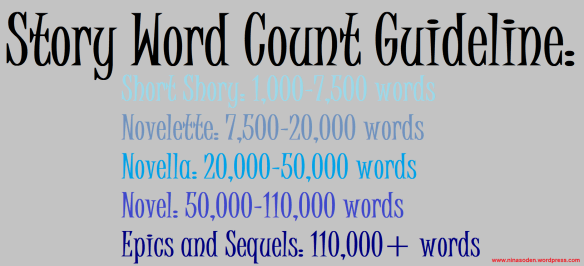
Welcome to NaNoWriMo 2016. November is National Novel Writing Month (NaNoWriMo)! On November 1st, all us crazy authors, want-to-be writers, and those just excited about getting a story out will set off on a 30-day journey to write a 50,000-word novel.

50,000 WORDS!!!!

If that sounds scary to you, trust me it’s scary to all of us. Besides the fact that it feels virtually impossible every time you sit at the computer and stare at a blank screen.

If you give yourself the full 30 days of November to write your novel, you are looking at needing to produce 1,667 words per day! That might not seem so bad, at first. Then you sit down to type and your ideas start to pour out of you. The first day you make an easy 2500, by the end of day two you’re at 4600 and feeling pretty good. By day ten you’ve slowed down, can’t find the time to write, or don’t know where your story is going. Maybe you’ve got 21,000 words at day fifteen and struggling to keep your excitement going.

Well, don’t worry – it happens to all of us.

It is day five and my story has just taken a strange and unexpected turn…

WHAT ARE YOU DOING? I scream at the characters in my head.

But, I’ll take a deep breath, step away from the computer for a break and come back to them with an open mind. I figure they know their story better than I do.

All this just to say good luck. Have fun with NaNoWriMo 2016, and I’d love to hear your experience. Comment below and tell me the title of your novel, if this is your first, second, or fifteenth time participating, and anything else you want to share.

*********************************************************************************

Want to learn more about NaNoWriMo? Check out the official website HERE!

*********************************************************************************


October 2015 in Review

I have been a BAD LITTLE BLOGGER!

October came and went and we are not half way through November and I’m not really sure I’ve touched my blog. The time has just flown by and I have NOT been productive at all!!! At least not in my writing efforts. Granted I did release my latest novel on October 31st, but I have yet to start writing my next book. 😦

I guess it is time to admit my failure… So, without further ado, let us take a look at the raw data for October.

WRITING

  • Blog Posts – 4 (WHAT?!?! That is so sad… and yet, it is the 15th of November and I am posting my first post of the month. I have a feeling November will be even worse.)
  • Fiction Writing – NOTHING!!! I didn’t type a single word in October. However, I do have a reason. I am working with a local elementary school to help the 2nd graders write short stories. I’m going to be publishing a compilation of the 2nd-grade stories in a book sometime in December. So, my 2015 4th quarter is dedicated to the 100+ students and their wonderful imaginations. Their stories don’t always make sense, they don’t have clear plot lines, and they often have very random structure, but they are amazing too. I feel truly inspired by their creativity and their desire to write. Although I am editing the stories, just a little, I will not be changing their voice, their structure, or their plot lines. I want the kids to look back, years from now, and see how their minds worked at the age of 7 and 8. I plan to make the soft-cover book available on Amazon, so that each of them can take pride in their story and be proud of themselves for what they accomplished. No, its not a book for everyone, but it would make a wonderful gift for a young child who has aspirations of one day becoming an author. ‘Adventures at School ~ Stories by Kids for Kids’ Look for it on Amazon.com later this year!

BOOKS

  • Reading:
    • Harry Potter and the Sorcerer’s Stone (Harry Potter #1)
  • Finished:
    • QBQ! The Question Behind the Question: Practicing Personal Accountability at Work and in Life by John G. Miller

GOODREADS & AMAZON 

FANS / FOLLOWERS

THINGS TO LOOK FORWARD TO:

  • SECTOR C ~ The Hunted – Book 2 of the SECTOR C Series NOW AVAILABLE HERE!
  • YA FICTION NEWSLETTER – The 3rd installment of my quarterly newsletter all about young adult fiction will be out early January. I hope you will sign up and join the mailing list (I WILL NOT SPAM) to check it out. I will also be doing Newsletter Subscriber Giveaways occasionally so, sign up by clicking HERE .

I’ve linked to all of my social media sites throughout this post, so please help my numbers grow in August!! Friend, Like, Subscribe, and as always, please share my posts with your friends. Lastly, thank you to anyone who follows me and especially to those of you who have read through this entire post. I know it was long, but I think we all need a little accountability in our life. Putting everything out there, is how I hope to keep myself motivated to do all this marketing stuff everyone keeps telling me I need to do.

Where I Write

writing-quote-picoult

Do you use Grammarly? Here are my thoughts!

I was recently asked to give Grammarly a try.

“What’s Grammarly?” I asked.

THE ANSWER AMAZED ME!

Their website www.grammarly.com says that Grammarly is “the world’s most accurate grammar checker.” I decided that I should be the judge of that myself. The program allows you to either download or cut and paste your text into their online platform. Once the text is in the program, it scans for over 250 points of grammar. Now, I’m not going to list them all but some of the things it looks for are:

Contextual Spelling
Grammar
Punctuation
Sentence Structure
Style
Plagiarism

My Test Drive:

In order to test out “the world’s most accurate grammar checker” I decided to cut and paste, into their online platform, the latest chapter of the novel I’m writing:

The Hunted

(COMING SOON)

Just a little plug for me 🙂

WOW – OMG – SO COOL!!!

The program proceeded to mark grammar issues, words that were miss used, spelling errors, and even overused words – things that Microsoft Word doesn’t find. Things that I am sure my editor will love for me to have fixed before sending her my manuscript. Already, after only five minutes with the program, I was sold.

But wait, there’s more!

There is a FREE version!!!

Nope, that’s not all…

If you upgrade to the premium version, you can also download Grammarly to your computer and activate it in Microsoft Word. That means you don’t have to upload your manuscript to the internet or cut and paste it into the online platform. This made me feel so much safer. So, I gave it a shot.

download

Once the download was complete, I opened up my current work in progress. The 176-page document (34,632 words) only took a matter of minutes to be processed. When it was done, Grammarly had marked all of the “errors”. From the use of passive voice, squinting modifiers,  incorrect use of commas, and so much more. No, I don’t like my “errors” to be thrown in my face, but trust me I am glad that there is a tool that will allow me to catch them now – before I send the completed document to the editor. PLUS – I can now use Grammarly as I type instead of going back and trying to catch the errors after the first draft is already completed.

Grammarly

Here’s a little more information

Grammarly’s free version checks for the most frequently made writing mistakes.

  • 100 points of grammar
  • Contextual spellchecker
  • Punctuation checks
  • Works anywhere on the web. (Use the editor at Grammarly.com or use the free Chrome add-on)

Grammarly Premium eliminates both basic and advanced errors.

unnamed

  • 250+ points of grammar
  • Sentence structure
  • Style checks
  • Vocabulary enhancement
  • Plagiarism detection
  • Document type checker (business, academic, etc.)
  • Windows Microsoft Office add-in

My recommendation…

If you are a writer – GET Grammarly NOW!

Still not convinced? Check out the screenshots below to see more things you can do with Grammarly!

Use Grammarly to help edit your emails to ensure the quality of writing.
Choose your document type.
Choose what types of errors you want Grammarly to find.

What are your thoughts? If you’ve used Grammarly or another program like it, please share your thoughts by commenting below.