Writing is an intimate act. Authors pour their thoughts, emotions, and creativity into every word, each sentence carefully crafted to convey a piece of themselves to the world. When we put our work out there, we risk exposing our vulnerabilities to others, opening ourselves up to both praise and criticism. It’s natural to feel protective over our creations—after all, they are an extension of who we are. But here’s the truth that all writers must come to understand: a critique is not an insult. It is a powerful tool for growth and improvement. Trust me, learning or believing this lesson isn’t always easy.
The Purpose of Critique
At its core, a critique is about evaluating and offering feedback in a way that encourages development. It’s a way for writers to see their work from another perspective, to recognize both strengths and weaknesses they might not have noticed on their own. Critiques—whether given by a trusted friend, editor, or fellow writer—serve to refine the piece and help authors evolve. Constructive feedback isn’t about tearing someone down. It’s about lifting them up and guiding them toward better writing.
Think of it this way: no one is born knowing how to write perfectly. Every author, from the most seasoned to the newest, needs feedback to hone their craft. Even the greatest writers, like Hemingway and Orwell, relied on others to point out areas for improvement. Critique helps us grow, just as a sculptor chisels away at a block of stone to reveal the masterpiece within. It is a necessary step in the process of becoming better at our craft.
Critique Is About the Work, Not the Writer
One of the most important (and maybe hardest) distinctions to make is that a critique is about the work, not the person behind it. It is an evaluation of a specific story, essay, or novel, not a reflection of the author’s worth as an individual. When a critique points out flaws or areas for improvement, it is never meant to undermine the writer’s self-esteem or creative potential.
Unfortunately, the emotional connection between an author and their writing can sometimes blur this line. A negative critique can feel like a personal attack, but that is rarely the intention. Instead, it’s a sign that the work, as it stands, could benefit from revisions—just as any piece of art requires revisions before it can be truly considered finished. Even the best works in history have been revised multiple times before reaching their final form. Criticism, then, is a necessary step in this journey, a part of the art’s evolution.
Constructive Criticism: The Heart of Growth
Constructive criticism is the gold standard for feedback. It focuses on improvement, offering actionable suggestions while acknowledging what works well. The best critiques never simply say “This is bad” or “This doesn’t work.” Instead, they offer insight into why something doesn’t work and, more importantly, how to make it better. A good critique provides clarity on plot holes, character inconsistencies, pacing issues, or weak dialogue. It helps the writer see their work from different angles, offering solutions rather than just identifying problems.
As a writer, it’s essential to remain open to such feedback. Embrace the idea that all feedback—no matter how critical—comes with the potential for growth. Take a step back, detach emotionally, and view the critique objectively. Is there a kernel of truth in what’s being said? Can the suggested changes improve the overall quality of your work? Often, the answer will be yes.
The Personal Connection: Don’t Take It Personally
It’s easy to feel vulnerable when your work is critiqued. It can sting, especially if the feedback points out flaws you’ve worked hard to overlook or aspects of your writing you were especially proud of. But remember, a critique is not a judgment on you as a person. It does not diminish your talent, your creativity, or your ability as a writer. It’s simply a tool to make your writing the best it can be.
A critique can only hurt if you let it. Instead of viewing feedback as a negative judgment, try to see it as an opportunity to learn. Even harsh criticisms often contain valuable lessons. After all, no one becomes a master at something without making mistakes along the way—and writing is no exception.
A Final Thought: Embrace the Challenge
To be a writer is to be forever evolving, learning, and adapting. The work will always get better with each revision, with each thoughtful critique. It’s important to remember that a critique is a gift, not a condemnation. It’s a chance to refine your skills, to deepen your understanding of your craft, and to produce the best version of your work.
So, the next time you receive feedback—whether positive or critical—take a deep breath and embrace it. Understand that it’s not a reflection of you as a person but a reflection of your work in its current form. A critique is not an insult. It’s a steppingstone on the path to becoming the writer you’re destined to be.
The publishing world has evolved dramatically in recent years, offering authors an array of options for sharing their work with readers. Whether you’re a first-time author or a seasoned writer, understanding the key differences between self-publishing, vanity publishing, and traditional publishing can help you make an informed decision on how to release your book. Each route has its unique set of advantages and drawbacks, and the best option depends on your goals, resources, and expectations.
Self-Publishing: Empowerment or Overwhelming Responsibility?
What is it? Self-publishing is the process of independently publishing a book without the involvement of a traditional publisher. Authors retain full control over every aspect of the process, from writing and editing to designing and marketing. The book is then published directly through online platforms like Amazon’s Kindle Direct Publishing (KDP), IngramSpark, or other digital and print-on-demand services.
Pros:
Creative Control: The author has complete control over the content, design, and marketing of the book. There’s no need to follow an editor’s or publisher’s vision.
Higher Royalties: Self-published authors typically keep a larger percentage of book sales—sometimes up to 70% of the retail price for eBooks, compared to much lower percentages from traditional publishers.
Speed to Market: The book can be released as soon as it’s ready, with no lengthy approval processes or waiting for a publisher’s schedule.
No Gatekeepers: Writers are not required to get an agent or publisher’s approval to see their work in print.
Cons:
Initial Costs: Authors are responsible for costs such as editing, cover design, formatting, and marketing. These expenses can add up quickly and are not guaranteed to lead to success.
Time-Consuming: Authors must take on many roles outside of writing—business decisions, marketing, promotions, and customer service.
Limited Reach: Without the backing of a major publishing house, gaining exposure can be more challenging. Self-published authors often need to rely heavily on social media, word of mouth, and personal networks to generate interest.
Perceived Stigma: Though the stigma surrounding self-publishing has diminished over the years, some readers and industry professionals still view it as less prestigious than books published through traditional routes.
Vanity Publishing: Paying for Prestige
What is it? Vanity publishing is a hybrid form of publishing where an author pays a publishing company to publish their work. These companies often offer a range of services, such as editing, cover design, marketing, and distribution. However, the key distinction from traditional publishing is that the author typically covers the costs up front.
Pros:
Professional Services: Vanity publishers often provide high-quality editorial and design services, giving the book a more polished appearance and feel than a typical self-published work.
Less Work for the Author: These publishers handle much of the technical and logistical side of publishing, including formatting and printing, freeing the author to focus on their writing.
Aesthetic Appeal: Books published through vanity presses may appear to be more “legitimate” or professionally produced, as they are physically printed and distributed by a third-party company.
Cons:
High Costs: Authors must pay for all services, which can be costly, ranging from hundreds to thousands of dollars. Even if the book sells, the author may not recoup these expenses.
Limited Distribution: While vanity publishers may offer distribution channels, they often don’t have the far-reaching networks of traditional publishers, so getting the book into bookstores or libraries may be a challenge.
No Guarantee of Success: Vanity publishers typically do not market books with the same intensity or effectiveness as traditional publishers, leaving the author to take on much of the promotional work. There’s no guarantee of sales.
Potential for Exploitation: Some vanity presses prey on naïve authors by offering expensive services without any real return. These publishers may not provide meaningful distribution or marketing, and some operate with dubious business practices.
Traditional Publishing: The Gatekeeper Path
What is it? Traditional publishing involves submitting a manuscript to a publishing house, typically through an agent. If accepted, the publisher will take over the publishing process, including editing, design, marketing, and distribution. The author’s involvement is often limited to the creative aspects and promotional efforts post-publication.
Pros:
Professional Expertise: A traditional publisher brings in a team of professionals—editors, designers, marketers, and publicists—to ensure the book is well-crafted and widely distributed.
No Upfront Costs: Authors receive an advance against royalties and don’t have to cover the costs of production, printing, or distribution. The publisher handles these expenses.
Broader Distribution: Traditional publishers have established networks for getting books into bookstores, libraries, and online platforms, resulting in better visibility and access to readers.
Prestige and Recognition: Being accepted by a reputable publisher often carries a sense of prestige, and a publisher’s name on the cover can lend credibility to a book.
Cons:
Long Process: Traditional publishing can be a slow process. It may take months or even years to get a book published, and there’s a lengthy submission process that includes finding an agent and getting approval from a publisher.
Limited Control: Authors have little control over the final product. Editors may make significant changes to the manuscript, and decisions about marketing, cover design, and distribution lie largely with the publisher.
Lower Royalties: While authors receive advances, their royalties (the percentage of sales they earn) are typically much lower than those in self-publishing, often around 10-15% of the book’s retail price.
Highly Competitive: The process of being accepted by a traditional publisher is highly competitive. Many authors struggle to secure an agent or a deal with a publisher, particularly if they are new or unproven in the market.
Which Path is Right for You?
Ultimately, choosing between self-publishing, vanity publishing, and traditional publishing depends on your personal goals, financial resources, and willingness to take on various roles throughout the publishing process.
Self-publishing might be right for you if you’re tech-savvy, enjoy having full control, and are prepared to manage all aspects of your book’s release, from writing to marketing.
Vanity publishing could be a good option if you want a more hands-off approach but are willing to invest money into the process and don’t mind the costs associated with professional services.
Traditional publishing is ideal if you are looking for a professional team to help bring your book to market and are prepared to wait for the submission process and the potential compromises on creative control.
Each publishing option comes with trade-offs, and there’s no one-size-fits-all answer. By understanding the pros and cons of each, you can choose the route that aligns best with your vision for your book and your career as an author. For me personally, I am a self-published author. I hire talented professionals to design my book covers and of course, to edit my manuscripts (several times over), but I am the one in charge of the process every step of the way… to include self-promotion and all marketing.
If you haven’t read my books, I’d love to share them with you. You can find me on Amazon by following THIS LINK!
If you’ve ever read a captivating novel and thought, I could do that, you’re not alone. Many aspiring writers dream of having their work published, imagining that writing a novel is an exciting, glamorous endeavor—filled with quiet mornings at coffee shops, elegant book launches, and long days spent immersed in creative bliss. But as someone who juggles writing with a full-time career in real estate, a busy household with a husband and two kids, and endless daily responsibilities, I can tell you the reality of writing a novel is much less glamorous. It’s often chaotic, exhausting, and involves far more sacrifice than most people realize. But for those who are committed to making it happen, it’s also incredibly rewarding.
I want to pull back the curtain on the real writing life, the highs, the lows, and everything in between. As a part-time writer, I’ve learned that writing a novel requires more than just passion; it demands dedication, resilience, and a lot of time management. Here’s what it really takes to write a novel when life keeps you busy.
1. Finding Time in a Packed Schedule
First, let’s talk about time—or, more accurately, the lack of it.
I work as a full-time real estate agent in North Alabama. (I’m an Associate Broker with Keller Williams Realty Madison… If you are looking to purchase a Home Sweet Home in North Alabama, call me). Between client meetings, property showings, endless paperwork, and negotiating deals, my days are long. By the time I wrap up a busy day of work, there’s barely time to make dinner and take care of household chores. And did I mention I’m a mom? Oh, and I have a husband—who, bless him, is supportive but also juggling his own career and responsibilities.
So, where does writing fit in?
It doesn’t. Not easily, at least.
For many writers like me, the time to write is carved out in small pockets throughout the day. I don’t have the luxury of dedicating full days or even hours at a time to my craft. I’ve learned to write in between the cracks of life—during lunch breaks, after everyone else is in bed, or on the weekend when I can sneak in some quiet time in the early morning hours with my coffee. Sometimes, I might write for only 10 minutes at a time, but those minutes add up. Consistency, even in small doses, is key.
2. Motivation vs. Exhaustion: The Daily Battle
When I finally do find a few minutes to write, and trust me it is NOT every day, the struggle doesn’t end with just having the time. There’s the battle against my own exhaustion. After a long, draining day of work, family commitments, and constant running around, it’s easy to tell myself, I’ll write tomorrow. But here’s the thing: tomorrow rarely comes. The key to making progress on a novel isn’t waiting for the right moment—it’s pushing through the tiredness and getting the words down anyway.
Motivation is a tricky beast. Some days, inspiration flows effortlessly, and I can’t wait to get my thoughts down on paper. But other days, the words feel stuck, and the blank page mocks me. On those tough days, it’s all about showing up—forcing myself to write even when I’d rather be in bed, watching Netflix with a cup of hot coffee. Because writing a novel is less about waiting for inspiration and more about commitment.
When you’re balancing a career and a family, the pressure to make time for writing often feels overwhelming. But I’ve learned that motivation often comes after you start. Even if I only write a few sentences, I’ve made progress, and I celebrate even those small wins. So, even when exhaustion makes it tempting to quit, I remind myself that every word written is one step closer to finishing my next novel.
3. The Perfectionism Trap
Another challenge of writing while managing a busy life is the urge to be perfect. It’s easy to think that if I can’t write in perfect conditions (like a quiet office space with no distractions), then I shouldn’t write at all. But over the years, I’ve come to realize that chasing perfection is a surefire way to get stuck.
Some days, I’ll write a chapter that feels like pure gold, and I’ll be so proud of it. But other days, I’ll look at the page and wonder if it even makes sense. That’s part of the process. I’ve learned to embrace imperfection and accept that not every word will be brilliant. In fact, most of it won’t be. But that’s okay.
The first draft is about getting the story out of my head and onto the page. It’s not about crafting the perfect sentence or worrying about every little detail. I’ve learned to let go of perfectionism and trust that I can always revise later. Right now, the goal is just to keep moving forward.
4. Balancing the Creative and the Practical
Writing is an incredibly creative pursuit, but for part-time writers like me, the practical realities often demand just as much attention. Balancing my real estate career, family life, and writing means juggling priorities and figuring out how to make it all work.
Here’s an example: In real estate, every deal requires attention to detail, strategic planning, and a clear timeline. If I neglect any part of the process, it could cost me a sale. The same goes for my writing. If I don’t set goals, create a timeline, and stay organized, it’s easy for my novel to fall by the wayside.
Writing a novel, especially as a part-time writer, requires a certain level of practicality. It’s not just about getting lost in the creative process—it’s about understanding how to fit writing into an already packed schedule. That means setting small, achievable goals, breaking the novel into manageable chunks, and prioritizing my time. A chapter a week, might not sound like much, but over the course of a few months, it adds up. Planning is just as important as creativity when balancing writing with a busy life.
5. The Guilt of Not Writing Enough
If there’s one thing that haunts me, it’s the guilt of not writing enough. I’ll scroll through social media and see full-time writers posting about their word counts, writing retreats, and book deals. It’s easy to feel inadequate when it seems like everyone else has more time or more success. But I’ve come to realize that my journey is different, and that’s okay.
There’s no one-size-fits-all approach to writing. Just because my schedule is packed doesn’t mean I’m less of a writer. In fact, I think it’s made me more determined. Each time I sit down to write, even for a short period, I’m doing something that I love—and that in itself is a success.
Writing a novel while working full-time and managing family life isn’t easy. It’s full of sacrifices, moments of frustration, and a constant push against time. But it’s also one of the most rewarding experiences I’ve had. The feeling of finishing that first draft, even if it took months or years, is worth every second of effort.
6. Celebrating the Small Wins
Writing a novel is a long, sometimes lonely, and often difficult journey. But when you’re a part-time writer, every small victory counts. Whether it’s hitting your word count for the day, finishing a particularly tricky scene, or simply finding the time to write amidst a chaotic schedule, those moments of progress deserve to be celebrated.
There’s no need for grand gestures—just a moment of recognition that, despite all the obstacles life throws at you, you’re still moving forward. And eventually, that novel you’ve been working on—bit by bit—will be finished. And that, to me, is the greatest reward.
So, if you’re out there trying to write while managing a busy life, know that you’re not alone. Keep pushing forward. Your story is worth telling.
Interested in knowing more about me and my books? You can check me out on Amazon HERE!
As an author, it’s easy to become absorbed in the craft of writing. We dive into creating worlds, developing characters, and weaving intricate plots, all while keeping our readers in mind. But what happens once a story is complete, bound between covers, or published in digital format? The truth is, a story isn’t fully realized until it reaches its readers. The reader’s interpretation, emotional connection, and engagement with a narrative shape it in ways that go far beyond what the author alone can achieve.
I want to explore the often-overlooked role of the reader in the writing process and how their involvement can transform a story—often in unexpected ways. From the act of reading itself to fan feedback and the influence of book clubs and online communities, readers don’t just consume stories; they shape them.
1. The Act of Reading: Bringing the Story to Life
When an author writes, we craft words to evoke emotions, create vivid images, and build worlds. At least we hope to. But those words are inert on the page until the reader picks them up and interprets them. The act of reading is where the magic happens. A story is not a static object; it becomes a living, breathing experience as each reader brings their own thoughts, feelings, and perspectives to it. Each story, although the words remain the same, will be read differently by each reader.
Imagination and Interpretation: Every reader interprets a story through the lens of their own experiences. The setting, character relationships, and plot twists might carry different significance depending on their background, worldview, and emotions. A reader from one culture may read a character’s actions differently from someone raised in another, and a story’s themes might resonate differently with readers at various stages of life. This subjective interpretation is what breathes life into the narrative.
Take J.K. Rowling’s Harry Potter series. The core elements of the story—friendship, courage, and the battle between good and evil—are universal, but readers around the world relate to the story and characters in vastly different ways. A reader from a small town might identify with Harry’s sense of isolation, while a reader interested in the intricacies of magic might be captivated by the world-building. No two readers will have the exact same experience with the story, and that’s where the real magic lies.
2. Readers as Mirrors: Reflecting Themes and Characters
As an author, one might build a character’s personality, motivations, and conflicts based on your understanding of human nature. However how a reader interprets those characters and themes can evolve and expand upon what was originally envisioned. Readers often act as mirrors to the story, reflecting aspects of the narrative in new and profound ways.
Personal Connections and Emotional Resonance: Readers connect with characters and themes on a personal level, and this connection can influence how the story is perceived. A character’s struggle with identity might resonate more deeply with readers who’ve experienced similar challenges, or a subplot about loss might strike a powerful chord with someone grieving. In many ways, readers co-create the emotional journey of the story, shaping its significance by investing their personal histories into the narrative.
For example, in Khaled Hosseini’s The Kite Runner, the themes of guilt, redemption, and friendship are explored through the protagonist, Amir. While these themes are universal, different readers will engage with the story based on their own experiences of forgiveness or betrayal. The way readers react to Amir’s internal struggle may differ drastically from one reader to the next, yet their collective emotional responses to the book help deepen the narrative’s impact.
3. The Role of Feedback: Reader Reactions and Constructive Criticism
While much of a reader’s role in shaping a story is tied to individual interpretation, feedback—especially positive/helpful constructive criticism—can help an author refine their craft and even influence future works. Writers often seek feedback from beta readers, early reviewers, or even social media comments to gauge how their story is being received. This input can be incredibly valuable, particularly when it comes to pacing, character development, and plot coherence.
The Evolution of a Story Through Feedback: Early feedback can act as a guide to refine or adjust elements of a story before it reaches a broader audience. Sometimes, readers will point out patterns or themes that the author might not have initially noticed, revealing deeper layers to the story. Authors can use this feedback to address blind spots or areas where the reader’s experience could be enhanced. Though the final narrative remains in the hands of the writer, reader reactions play an undeniable role in the process of revision and growth.
Online communities and book clubs are places where readers can openly discuss stories, ask questions, and provide feedback. For instance, the infamous Twilight saga by Stephenie Meyer stirred intense reactions, both positive and negative, from fans. Some readers adored the series, while others criticized the problematic themes. The diversity of feedback from these readers helped shape the discussion around the books, influencing how the series was perceived by the larger public.
4. Fan Engagement: How Readers Shape the Expanded Universe
In the age of digital engagement, readers have become more active participants in a story’s legacy. Beyond reviews and feedback, many readers contribute to the cultural impact of a narrative through fan art, fan fiction, and online discussions. These fan-generated materials can take a story in new directions and add layers to the original narrative.
The Power of Fan Fiction and Theories: In urban fantasy, for example, readers might imagine alternative scenarios or delve deeper into unexplored subplots. The phenomenon of fan fiction can drastically alter how stories are perceived, expanding upon characters and creating alternate universes. Though this often begins as a personal exploration of the world the author has created, it can later influence official narratives, with authors acknowledging and even incorporating reader-driven ideas into future works.
Star Wars is perhaps one of the most well-known examples of how fan engagement can shape a story. While George Lucas originally created the Star Wars universe, the expansive fanbase helped to define much of the lore and created a wealth of additional stories through fan theories, art, and narratives. The inclusion of beloved fan theories in official material, such as characters or backstory elements that gained popularity through online forums, demonstrates the significant role readers can play in crafting and evolving a story’s legacy.
5. The Commercial Impact: Reader Demand and Trends
Reader preferences and market demand also play a large role in shaping the stories that get told. The popularity of particular tropes, themes, or character archetypes often stems from readers’ desires for certain types of stories. These preferences can guide trends in publishing and influence the kinds of books authors choose to write or publishers are willing to support.
How Reader Demand Affects Publishing: In genres like urban fantasy, readers have driven the rise of paranormal romance, supernatural detectives, and complex, morally gray protagonists. As these elements gained traction, more stories aligned with these tropes began to emerge. Authors and publishers are keenly aware of the commercial forces at play, and understanding what readers want helps them shape stories that will resonate with the audience. However, it’s important to note that while reader demand influences trends, it doesn’t mean that authors are bound to follow them. Some of the most successful stories are those that defy expectations, with authors listening to their own creative instincts while still considering what readers may enjoy.
6. The Symbiotic Relationship Between Author and Reader
Ultimately, the writing process is a collaborative one, even though the author holds the pen. While the author sets the stage with characters, plot, and world-building, it is the reader’s experience—shaped by their personal perspectives, engagement, and interactions—that breathes life into the story. Readers don’t just consume stories; they actively engage with them, influencing the way we view our own work and inspiring the creative evolution of future stories.
Mutual Inspiration and Growth: The relationship between an author and their readers is symbiotic. Writers craft stories, but readers help refine, interpret, and define them. Through feedback, online communities, and personal connections to the text, readers shape a story’s legacy, even long after the author has finished writing. And in turn, the evolving nature of reader engagement can inspire new ideas, directions, and projects for future works.
Conclusion: Embracing the Reader’s Influence
As an author, it’s vital to acknowledge the profound role readers play in the writing process. While we may have the final say in what is written, it is the readers who complete the story. They bring it to life with their emotional responses, interpretations, feedback, and engagement. Readers give a story its lasting power, often shaping it in ways that authors may never have anticipated. So, when writing your next novel, remember: you’re not just writing for your readers—you’re writing with them, and they’re shaping the narrative with every turn of the page.
A SMALL REQUEST
Understanding the importance of my readers in my writing process, I would ask you to please review my books. If you’ve read them and found anything within their pages that affected you in a positive way, please share those experiences with me. Let me know if there are characters you want to know more about… who knows, maybe a new novel will come out of your request. That is, after all, how Pursuit (The Blood Angel Series Book 4) came to be. 🙂
Below is a list of my books linked to where you can find them online.
As an Amazon Associate, I earn from qualifying purchases. That means, when you purchase a book using an Amazon link on this site, I earn an affiliate commission. All commission earnings go back into funding my books; editing, cover design, etc.
Dare to dream. Dare to believe. Dare to embrace your legacy. Orphan Pascal and his friends Paloma and Pierrot dive into the mystery of children disappearing in the enchanting land of The Vale.
Dare to dream. Dare to believe. Dare to embrace your legacy. In the enchanting land of The Vale, the grand city of Pivot stands as a beacon of innovation where scientific progress clashes with the now-dwindling beliefs in magic that the place once held. Just outside of Pivot, 17-year-old Pascal has spent his life at The Skystead Home for Orphaned Children. Life outside the orphanage seems ceaselessly interesting, and shielded from the rest of the world, he wants nothing more than to explore. Already puzzled by unanswered questions about his past, Pascal’s concern deepens as he learns about a grim mystery of local children’s disappearances. In pursuit of finding his place in life, Pascal is joined by Paloma—a street-savvy girl and former gang leader with a tragic past—and Pierrot—a silent, enigmatic companion. Together, the unlikely trio begins to sneak out of the orphanage to experience the one place that still embraces magic: the welcoming carnival. As secrets begin to unravel, the truth unveils hidden powers within each of these three young adventurers. Their friendships are challenged as they overcome demons, both inside and outside themselves. Yet, each step brings them closer to the truth: a sinister plot that threatens the very fabric of their world. Before they know it, the fate of the missing children has become inextricably intertwined with their own. The Harlequin’s Legacy is a gripping tale of adventure, friendship, and self-discovery. Pascal, Paloma, and Pierrot trust in their inner courage and resilience to reach their true potential despite trials and tribulations. This story encourages everyone to dare to dream, to believe in themselves, and embrace the legacy that awaits them. Adventure, magic, and self-discovery await! Are you ready to join Pascal and his friends as they uncover hidden secrets and embrace a timeless legacy? Witness the journey firsthand—grab your copy of The Harlequin’s Legacy today and become part of the story!
Meet Andrés Rosas Hott, an emerging voice in literature and the author of The Harlequin’s Legacy. With a master’s in Graphic Design and Illustration from Konstfack University and a background as a commercial director, Andrés blends creativity and storytelling in captivating ways. His debut novel, inspired by his favorite character, The Harlequin, combines fantasy with themes of courage, identity, and personal growth. Based in Stockholm, Sweden, Andrés balances his creative pursuits with family life, finding inspiration in both the imagination and his loved ones. The Harlequin’s Legacy is just the beginning of an exciting journey into fantasy and self-discovery.
Would you like a chance to win a $30 Amazon gift card? Follow the tour HERE for special content and a giveaway!
What are some of your pet peeves? I’m definitely a cat person. I love all types of cats—how cute and fierce they can be, how independent they are, and how everything is always on their terms. That said, I’m an animal lover in general, except when it comes to ticks!
Where were you born/grew up at? I was born in Osorno, Chile, but I’ve spent most of my life in the stunning city of Stockholm, Sweden. While I’ve always carried a piece of Chile with me, Stockholm has shaped much of who I am today, with its charming streets, vibrant culture, and long, beautiful summers. The mix of my roots in South America and the experiences I’ve had in Sweden gives me a unique perspective on life.
Who is your hero and why? I firmly believe in the saying, “Never meet your heroes,” because no one is perfect, and heroes are often just people with flaws like the rest of us. That being said, I admire people who spread love, kindness, and joy. Robin Williams is a great example. His ability to bring laughter while also showing deep compassion and vulnerability makes him someone I truly look up to.
How did you come up with the concept and characters for the book? The inspiration for my book began with my fascination with The Harlequin, a character from Commedia dell’arte whose vibrant costume, iconic mask, and bicorne hat embody a timeless archetype of cleverness, agility, and courage. His mix of mystery, playfulness, and heroism sparked my imagination and laid the foundation for the world I’ve created. I was especially intrigued by the Harlequin’s darker roots, such as the chilling depiction of “Hellequin”—a devil’s emissary chasing damned souls to Hell. This duality of whimsy and shadow
inspired me to craft a mythology where light and darkness coexist, entwined with themes of self-discovery, courage, and belonging. Set in a world where magic and progress collide, this adventure is about friendship and uncovering hidden truths. At its core, it celebrates daring to dream, believing in yourself, and embracing the legacy that awaits—even when its shape is unclear. I hope readers will be inspired by its characters, their courage, and the enduring magic of a journey that balances humor and heart with mystery and depth.
Who designed your book covers? Ary Fajriyanto also created all the illustrations in the book.
Are your characters based off real people or did they all come entirely from your imagination? Yes, the main characters, like Pascal and Pierrot, are inspired by my two sons, Pascal and Marcél. As for Paloma, she’s based on the many strong girls and women I’ve had the privilege of meeting throughout my life.
I am happy to be one of many tour hosts sharing information about
As an author who has been writing now for 15 years and has navigated both the gritty, magical streets of urban fantasy and the dark, fractured worlds of dystopian fiction, I’ve picked up countless lessons throughout my writing journey. Some have come from hard-won experience, others from moments of doubt, and still others from the quiet, unexpected flashes of inspiration that seem to come out of nowhere, usually in the shower or during long car rides.
Today, I want to share the most valuable writing lessons I’ve learned along the way. These aren’t just about crafting stories—they’re about the mindset, habits, and perseverance that shape an author’s life.
1. Embrace the Chaos of the First Draft
When I first started writing, I used to agonize over every word in my first drafts. I’d waste hours trying to perfect every sentence, hoping to make it sound just right. But here’s the thing I’ve learned: the first draft is supposed to be messy. In fact, it’s better if it is.
Writing that first draft is about getting the story out of your head and onto the page, without worrying too much about perfection. It’s about momentum. Perfection can come later, during the revision process. When I finally gave myself permission to write without overthinking every word, I found that my creativity flowed much more freely. So, don’t stress over the first draft. Just write it.
2. Characters are the Heart of Your Story
In urban fantasy, where the world is often as complex as the plot itself, and in dystopian novels, where entire societies are upended, it’s easy to get caught up in world-building and intricate plots. But the most important part of any story is the characters. Readers don’t just want to know what’s happening—they want to know how it affects the characters, how they react, and how they grow.
I’ve learned that the more real and complex your characters feel, the more invested your readers will be in the world you’ve created. Whether they’re fighting monsters in a magical city or surviving in a post-apocalyptic wasteland, their journey—emotional, moral, and physical—is what makes readers care. So, I always ask myself: What does this moment mean for my characters?
3. Don’t Be Afraid to Break the Rules
Urban fantasy and dystopian fiction are genres that thrive on bending and breaking traditional rules. Magic is real, societies are crumbling, and the unexpected is always lurking around the corner. Over the years, I’ve realized that writing is a playground, and the rules are there to be tested, twisted, and sometimes shattered.
Whether it’s breaking the rules of storytelling, experimenting with unconventional narrative structures, or taking risks with your plot and characters, innovation often lies in the moments of rebellion. Some of my most exciting and rewarding moments as a writer have come from pushing beyond what I thought was possible. So, embrace the freedom to break the rules and experiment. You might just create something uniquely yours.
4. Write the Story That Only You Can Tell
In the world of fiction, it’s easy to feel the pressure to conform—to write what’s trendy or popular, or to imitate successful authors. I’ve definitely been pulled toward that trap before. But the truth is, the best stories come from your unique perspective. What makes your voice distinct is the way you see the world, your influences, and your experiences.
I’ve learned to lean into my own voice and not shy away from telling the stories that feel the most personal or unusual. When I allowed myself to write the kinds of stories I truly wanted to tell—my writing became more authentic, more exciting, and more fulfilling. Your story is yours to tell, and it will resonate most when it comes from an honest, original place.
5. Perfectionism Will Only Hold You Back
It’s easy to fall into the trap of constantly editing, revising, and doubting every word you write, especially when you’re passionate about your project. I can’t tell you how many times I’ve stared at a paragraph, tweaking and reworking it endlessly. But here’s the hard truth: perfect writing doesn’t exist.
At some point, you have to let go of the fear of imperfection and give yourself permission to finish. This doesn’t mean being careless or writing sloppy prose, but it does mean accepting that no piece of writing will ever be flawless. Perfectionism kills progress—it’ll paralyze you and keep you from finishing what you started. I’ve learned to step away from the manuscript, trusting that revisions will smooth out the rough edges.
6. It’s Okay to Not Have All the Answers Right Away
When I first began writing, I thought that a solid plot needed to be completely figured out before I even started. I tried to outline everything in advance, convinced that the best stories had everything planned out. But what I’ve learned over the years is that sometimes, you don’t have to have all the answers right away.
Especially when writing in genres like urban fantasy or dystopian fiction, there’s room for spontaneity. Your characters will surprise you, and your plot will evolve. Instead of trying to force everything into a predetermined mold, I’ve learned to embrace the unknown and trust that the answers will come as I write. Often, it’s in the act of writing itself that the story reveals what it wants to be.
7. Writing is a Marathon, Not a Sprint
Writing is not about getting to the finish line as quickly as possible. It’s about the process—the journey of creation. As someone who’s worked on multiple novels, I’ve learned that it’s important to pace myself. There are days when the words come easily, and there are days when they don’t come at all. That’s okay.
I’ve had to remind myself that writing is a long game. It takes time, persistence, and patience. There’s no rush. I’ve learned to accept that the process of writing—no matter how slow or messy it seems—is just as important as the finished product. Some days, the best thing I can do is simply sit down and write, even if it’s just a few hundred words or even justa journal entry. The more consistent I am, the further I get.
8. Rejection is Part of the Process
If there’s one lesson I wish I could tell every aspiring writer, it’s that rejection is a part of the journey. It stings, yes. It’s painful to have your work turned away or ignored, but I’ve learned that rejection is not a reflection of your talent or worth as a writer.
Every rejection has taught me something—whether it’s a critique on my writing style or a simple reminder that not every story is the right fit for every reader. The key is to not let rejection stop you from writing. I’ve had my fair share, and each time, I’ve picked myself back up, learned from the experience, and moved forward. Rejection is just a detour, not the end of the road.
9. Trust Your Instincts
There are many voices in the writing world—editors, agents, fellow authors, readers—and they all have their opinions. It’s easy to get overwhelmed by the advice and feedback you receive. Over the years, I’ve learned that the most important voice is your own.
Your instincts, your gut feelings, are there for a reason. If something feels off in your story or your character arc doesn’t resonate, listen to that. It’s easy to second-guess yourself, but I’ve found that trusting my own instincts is often what leads me to my best work. Writing is personal, and only you can truly know what’s right for your story.
Final Thoughts
The writing journey is not an easy one—it’s filled with highs and lows, moments of inspiration and doubt. But through it all, the lessons I’ve learned have made me a better, more resilient author. As I continue to write urban fantasy and dystopian novels, I carry these lessons with me, knowing they’ll help me navigate whatever comes next.
To anyone just starting out, or anyone struggling with their own writing journey: remember that writing is a process. You don’t have to get everything perfect right away, and sometimes, the biggest breakthroughs come when you least expect them. Keep writing, keep learning, and keep believing in your story. It’s worth it.
As an Amazon Associate, I earn from qualifying purchases. That means, when you purchase a book using an Amazon link on this site, I earn an affiliate commission. All commission earnings go back into funding my books; editing, cover design, etc.
Douglas Smith is a five-time award-winning author described by Library Journal as “one of Canada’s most original writers of speculative fiction.”
His latest work is the multi-award-winning YA urban fantasy trilogy, The Dream Rider Saga. Other books include the urban fantasy novel, The Wolf at the End of the World; the collections, Chimerascope and Impossibilia; and the writer’s guide Playing the Short Game. His short fiction has appeared in the top markets in the field, including The Magazine of Fantasy & Science Fiction, Amazing Stories, InterZone, Weird Tales, and many others.
He is a 4-time winner of Canada’s Aurora Award as well as the juried IAP Award. He’s been a finalist for the Astounding Award, CBC’s Bookies Award, Canada’s juried Sunburst Award, the juried Alberta Magazine Award for Fiction, and France’s juried Prix Masterton and Prix Bob Morane.
When Did You Start Writing? / When did you realize you wanted to be a writer? I did a lot of writing in high school, but got away from it for many years. I’d always planned to get serious about fiction “someday.” Then, in 1995, I finally decided to try. I started writing what would become my first professionally published story, “Spirit Dance,” but I really wasn’t making much progress. I’d spent, I think, all of July rewriting the same opening scene. Then, while on vacation, I came across a book called The Artist’s Way by Julia Cameron. It’s essentially a twelve-step program for recovering your creativity as an adult, the creativity we’re all born with and which is then beaten out of us by society as we’re told to grow up and get a real job. It’s a wonderful book and one I recommend to anyone who wants to be creative (or more creative), whether that be writing, art, music, acting, or whatever. But the real impetus for me to get serious about writing came when I returned from that vacation. and read that one of my all-time favourite writers, Roger Zelazny, had passed away from cancer at the far too young age of 56. That was it. Right then, I decided not to wait for “someday” or retirement or anything to start writing. There’s no guarantee any of us will live long enough to have a “someday.” I started producing stories regularly and sending them out to professional markets. I submitted my first story in January 1996—and got my first rejection that same month. But I kept submitting and received my first acceptance letter for “Spirit Dance” on Dec 31 that year, which was a great way to end a year and start a new one.
How did you discover the joys of speculative fiction? I had two “discovery” periods. When I was eight, a friend introduced me to Robert A. Heinlein’s young-adult SF novels — essentially rocket and ray-gun books. I devoured all of those, but then stopped reading the genre. Then in Grade 11, I had to do a paper in English comparing the works of multiple authors. Amazingly, the teacher included a group consisting of Heinlein, Isaac Asimov, Arthur C. Clarke, and Ray Bradbury, which, of course, was the group I picked. That assignment got me back into reading SF and fantasy.
What writing has inspired you? / Major Influences? / Favourite Authors? I’d have to say my favourite author and influence on my own writing has been the late Roger Zelazny. His Lord of Light is one of the greatest speculative fiction novels ever written. His stories are often based on mythology, and I’ve always loved myths—Greek, Norse, Egyptian, Native American—so that was one attraction to his work. His prose style is lean but poetic, his stories poignant and mythic and filled with unique characters you want to spend time with. Plus, his work shows the most fantastic range of imagination of any writer I’ve ever encountered. I don’t think I write like him, but I’m sure he’s had an influence. Ray Bradbury’s short fiction was another early influence. He wrote about the fantastical hiding in our everyday lives, whether the hidden mystery is wondrous or frightening. I love his lyrical prose style, the simple humanity of his characters, and his insight into what it means to be human, no matter what our age. I reread “Something Wicked This Way Comes” recently. When I’d read it as a teenager, I remember loving the book and the kid characters, but not really “getting” the father. Reading it now, as an adult and father, I realize that Bradbury really understood both generations and the changes, choices, and regrets that come with age, and that is where the power of the book resides. I came to Hemingway late and after he was out of fashion, but his lean prose style amazed me, the way he could say so much by saying so little, and often communicating as much by what he left out, by what his characters didn’t discuss, as what he put on the page. Other favourite authors include Charles de Lint, Shirley Jackson, Emily St. John Mandel, Amor Towles, Thomas Perry, Thomas King, Ian Hamilton, Neil Gaiman, and Tim Powers. That’s a short list (but a good one). Some favourite books, including a lot on non-speculative fiction, include Station Eleven, The Queen’s Gambit, A Gentleman in Moscow, Memory & Dream, Ready Player One, Weaveworld, We Have Always Lived in the Castle, Tomorrow and Tomorrow and Tomorrow, Ian Hamilton’s Ava Lee series, and of course, the spec fic classics like Dune, Stranger in a Strange Land, and LOTR. I’ve also written several short stories inspired in some way by the songs of Bruce Springsteen. He’s an astounding storyteller. In a few lines, he tells stories of everyday people struggling with whatever life has thrown at them, but with an attitude of defiance and hope despite the odds against them. And Buffy. Major Buffy fan. It remains one of the most creative shows ever to hit TV and is a writing workshop on character development and arcs and dialog.
Why start with short fiction? I started with short fiction because in spec fic, it’s been traditional to break in writing short stories. But I also think it makes sense to start with the short form before trying to tackle a novel, and I always urge young writers to do the same. Short stories let you learn the craft of fiction much faster than writing a novel. Twenty 5,000-word short stories let you experiment far more with different styles, points of view, genres, story structures, etc. than you could in a single 100,000-word novel. Plus, you’ll be able to find out earlier if your writing is at a publishable level by submitting those stories to short fiction markets. And short fiction will teach you skills you need whether you write short stories or novels—handling point of view, story structure, use of scenes, characterization, plot, pacing, dialog, setting, world building, information flow, voice—not to mention basic sentence structure, paragraphing, punctuation, grammar. I moved to novels once all my “short” stories started becoming very long stories.
What I read as a child I was reading by the time I was four, thanks to my parents reading to me every night at bedtime. It hooked me on books for a lifetime. Reading was a way to have wonderful adventures as a kid and make my world so much bigger than my house and neighborhood and school. My early favourites were animal stories, which probably led me to my love for writing shapeshifter tales. I loved A.E. Milne’s “Winnie the Pooh” books (apparently my favourite bedtime stories as a young child) and Walter Brook’s “Freddie the Pig” series (the first books I remember knowing how to find in a library). Later it was everything by Jack London. About grade 5 or 6, Robert A. Heinlein juveniles got me hooked on SF, which led to fantasy. John Creasey and Dorothy Sayers introduced me to mystery and crime fiction somewhere in there as well. I believe that parents can teach kids to love reading by reading them a bedtime story EVERY night, from the day you bring them home. Make it a fun time, something they look forward to and associate with a wonderful experience. And make books a natural thing to have around. Our kids knew we’d say “no” to games, toys, or candy when out shopping—but they could always buy a new book. And for any wannabe writers, you can’t be a writer if you’re not a voracious reader. Period.
Will Dreycott is a superhero. In his dreams…and in yours.
The Hollow Boys The Dream Rider Saga Book 1 by Douglas Smith Genre: YA Urban Fantasy
WINNER OF THE 2023 AURORA AWARD FOR BEST YA NOVEL WINNER OF THE 2023 JURIED IAP AWARD FOR BEST YA NOVEL
“Thrilling YA fantasy” —BookLife (Editor’s Pick) “A must-read story for YA fantasy fans.” —Blueink Review (Starred review) “Inventive, engaging, and boundless fun.” —The Ottawa Review of Books
Vanishing street kids. An ancient evil. The end of the world. Our only hope? A hero who can’t leave home.
At seventeen, Will Dreycott is a superhero…in his dreams. And in yours.
Eight years ago, Will’s parents, shady dealers in ancient artifacts, disappeared on a jungle expedition. Will, the sole survivor, returned home with no memory of what happened, bringing a gift…and a curse.
The gift? Will can walk in our dreams. At night in Dream, Will hunts for criminals—and his parents. During the day, his Dream Rider comic, about a superhero no one knows is real, has made Will rich.
The curse? Severe agoraphobia. Will can’t go outside. So he makes his home a skyscraper with everything he needs in life—everything but the freedom to walk the streets of his city.
Case, an orphan Will’s age, survives on those streets with her younger brother, Fader. Survives because she too has a gift. She hears voices warning her of danger. And Fader? Well, he fades.
When street kids start vanishing, the Dream Rider joins the hunt. Will’s search becomes personal when Case breaks into his tower to escape her own abduction. Fader isn’t so lucky.
As Will and Case search for Fader and the missing kids, an unlikely romance grows between the boy with everything and the girl with nothing except the freedom Will longs for.
But as they push deeper into the mystery, they confront an ancient power feeding on these forgotten kids to restore itself. And once restored, no one in the world will be safe.
To defeat this creature, Will must do the impossible.
Go outside.
Indiana Jones meets Teen Titans in The Dream Rider Saga, a fast-paced urban fantasy trilogy from “one of Canada’s most original writers of speculative fiction” (Library Journal).
Praise for The Hollow Boys: “This arresting series kickoff grips from the start as it introduces its inventive milieu, its flawed but fantastically powered hero, its playful worldbuilding, and a host of tantalizing mysteries. … [A] vigorously imaginative scenario. … Takeaway: Thrilling YA fantasy” —BookLife (Editor’s Pick)
“An assured, confident novel … A must-read story for YA fantasy fans.” —Blueink Review (Starred review)
“Inventive, engaging, and boundless fun.” —The Ottawa Review of Books “A fun supernatural tale with well-developed characters and a touch of romance.” —Kirkus Reviews Praise for Douglas Smith:
“The man is Sturgeon good. Zelazny good. I don’t give those up easy.” —Spider Robinson, Hugo and Nebula Awards winner
“A great storyteller with a gifted and individual voice.” —Charles de Lint, World Fantasy Award winner
“His stories are a treasure trove of riches that will touch your heart while making you think.” —Robert J. Sawyer, Hugo and Nebula Awards winner
Sequel to the AURORA AWARD WINNER and the Juried IAP AWARD WINNER, The Hollow Boys
“Give me the Crystal Key!”
Will Dreycott is the Dream Rider, the agoraphobic teenage superhero who can walk in our dreams but never in the streets of his city. Case is his girlfriend, a survivor of those streets who hears voices that warn her of danger. Fader is her brother, who is very good at disappearing. Together, they defeated a body swapper and a witch to save the world (The Hollow Boys).
Now, Case battles guilt over living sheltered in Will’s tower home while her street friends still struggle. Blaming his affliction for Case’s sadness, Will searches for a way to live a normal life with the girl he loves—a way to go outside.
But his efforts draw the attention of dark forces. Sinister figures hunt Will in Dream. Intruders scour the vast warehouse of antiquities “acquired” by Will’s missing parents. And a masked swordswoman attacks Will, demanding “the Crystal Key” before disappearing into thin air.
Are they all searching for the same thing? Something from Will’s parents’ shady past? For the swordswoman leaves behind a flowery scent, Will’s only memory from the lost expedition eight years ago that gave him powers in Dream but cost him his parents and his freedom.
A trail of dark secrets leads Will, Case, and Fader to a mysterious world. Trapped between warring cults willing to kill for the Crystal Key, the three friends must master strange new powers that grow stronger and wilder the closer they draw to the truth.
This time it’s not just the fate of the world at stake…but the multiverse.
~ ~ ~
Indiana Jones meets Teen Titans in The Dream Rider Saga, a fast-paced urban fantasy trilogy from “one of Canada’s most original writers of speculative fiction” (Library Journal).
Praise for The Crystal Key: “The richly inventive Dream Rider adventure continues in this second appealing entry…with an exciting plot… always enlivened by the Smith hallmarks of crack dialogue, fun sleuthing and puzzle-solving, a strong throughline of emotion, a swift pace…and a principled refusal to settle for the familiar. Takeaway: This thrilling superpowered urban fantasy series continues to grip.” (New readers should start with book one.) —BookLife (Editor’s Pick) “The engrossing second installment of Douglas Smith’s Dream Rider Saga trilogy. … Smith continues to demonstrate an ability to expertly weave multiple complex fantasy elements into a cohesive whole. … This fast-paced story delivers in a big way—and Smith has all his ducks lined up for an explosive conclusion [to the series] that readers won’t want to miss.” —Blueink Review (★ Starred review) Praise for Douglas Smith:
“The man is Sturgeon good. Zelazny good. I don’t give those up easy.” —Spider Robinson, Hugo and Nebula Awards winner
“A great storyteller with a gifted and individual voice.” —Charles de Lint, World Fantasy Award winner
“His stories are a treasure trove of riches that will touch your heart while making you think.” —Robert J. Sawyer, Hugo and Nebula Awards winner
“Stories you can’t forget, even years later.” —Julie Czerneda, multi-award-winning author and editor
The Thrilling Conclusion to the Multi-Award-Winning Trilogy
Will is the Dream Rider, the superhero who walks in our dreams but never in the streets of his own city. Case is his girlfriend, a survivor of those streets who hears voices warning her of danger. Fader, her brother, is very good at disappearing.
In The Hollow Boys, they defeated a body swapper and a witch to save the world. In The Crystal Key, they battled warring cults to protect an ancient artifact tied to Will’s affliction.
The Chakana. The Crystal Key. But the key to what? To finding answers, they hope, to the questions that rule their lives.
What caused their strange powers? And Will’s crippling agoraphobia? Can he be cured? Why did their parents travel to the jungles of Peru eight years ago? Are they still alive?
Behind every question is the Chakana. What is the mysterious relic? Why will people kill to possess it? What hold does it have on Will?
As creatures from Inca myths haunt the three friends, another attack on the Chakana threatens Will’s life. To save him and solve the mystery of the lost expedition, only one choice remains.
Return to Peru. With the Chakana.
There, they find friends and foes, both old and new. And behind it all, an unseen enemy moving them like pieces on a chessboard.
To win this deadly game, Will, Case, and Fader must master new powers to defeat the most dangerous adversary they’ve ever faced—a god.
At stake this time? Every life, every world, every universe. Everything.
Indiana Jones meets Teen Titans in The Dream Rider Saga, a fast-paced urban fantasy trilogy from “one of Canada’s most original writers of speculative fiction” (Library Journal).
Outlining a story might seem daunting at first, especially if you’re new to writing. But it’s one of the most valuable tools in a writer’s toolkit. An outline serves as a roadmap, guiding you from the beginning of your story to its conclusion. Outlining can help you structure your ideas, stay on track, and avoid those dreaded moments of writer’s block, whether you’re writing a novel, short story, or screenplay. Let me walk you through how to outline a story effectively and make the process feel less intimidating.
1. The Purpose of an Outline
At its core, an outline is a blueprint for your story. It organizes your ideas, helps you identify gaps in the plot, and ensures your story has a clear structure. It’s important to remember that an outline isn’t set in stone. You can—AND SHOULD—adapt it as you write. Think of it as a flexible guide rather than a rigid set of instructions.
The benefits of outlining include:
Clarity: You’ll have a clear direction for your story, which helps prevent getting lost in the weeds.
Structure: An outline forces you to think about the story’s pacing, character development, and plot points.
Motivation: Knowing what comes next keeps you moving forward when you sit down to write.
2. Decide on the Type of Outline
There’s no “one size fits all” approach to outlining. Different writers prefer different methods, and that’s perfectly okay. Here are a few common types of outlines:
The Snowflake Method: This method starts with a simple concept and gradually expands it into a detailed outline. First, you write a one-sentence summary of your story, then expand that sentence into a full paragraph, and so on. It’s ideal for writers who prefer to develop their story gradually, refining the details as they go.
The Three-Act Structure: A widely-used framework that breaks a story into three acts—Set-Up, Confrontation, and Resolution. This method helps you focus on the major plot points and ensures your story has a strong, well-paced structure. It’s a great option for beginners because of its simplicity.
Chapter-by-Chapter Outline: For those who like specifics, this method involves outlining each chapter or scene of your story in detail. This type of outline gives you a clear sense of what needs to happen at each stage of the story.
The Hero’s Journey: This method, rooted in Joseph Campbell’s monomyth, is particularly helpful for stories involving a protagonist’s transformation. It involves specific stages like “The Call to Adventure,” “Refusal of the Call,” and “The Return.” It’s a fantastic framework for fantasy, adventure, and other high-stakes genres.
Loose Bullet Points: For the more free-spirited writers, some prefer to jot down key plot points and character moments as simple bullet points. This is a more flexible approach and allows room for creativity as the story unfolds.
3. The Building Blocks of a Story Outline
Regardless of the method you choose, there are key elements every story outline should address. Here are the main building blocks you’ll need to consider:
1. The Premise
The premise is the seed of your story. What is your story about? What is the central conflict or question that drives your plot? This is where you should define the “what if” that makes your story compelling. For example:
What if magic was real, but only for a select few?
What if a dystopian society controlled all information?
Spend some time refining your premise before moving on. It will act as the foundation for everything else.
2. The Main Characters
Your characters are the heart of your story. In your outline, make sure to note the following about your protagonist, antagonist, and key supporting characters:
Who are they? Consider their backstory, motivations, desires, and flaws.
What do they want? This is the driving force behind their actions. Your protagonist might want justice, love, freedom, or survival.
What’s at stake? What happens if they fail? This is essential for creating tension and suspense.
3. The Major Plot Points
In order to outline your plot, break it down into key events. These are the moments that move the story forward and change the direction of the narrative. A few important plot points include:
The Inciting Incident: The event that starts the story. This is where your character is thrust into the conflict, whether it’s the discovery of a hidden power or the moment a dystopian society begins to crack.
The Rising Action: The buildup of conflict and challenges that lead toward the climax. This is where your character faces obstacles, grows, and learns more about themselves or the world around them.
The Climax: The turning point or high point of the story. The protagonist confronts the primary conflict in a dramatic and pivotal way.
The Resolution: How the story concludes. Whether the protagonist succeeds or fails, there must be closure and consequences to their actions.
4. The Setting and World-Building
For genres like urban fantasy and dystopian fiction, the setting is crucial. Your outline should include:
Where does the story take place? Is it a magical version of New York, or a desolate post-apocalyptic world? Define the environment, rules, and atmosphere.
What’s the world’s history? In dystopian stories, especially, understanding the past is vital to understanding the present. Was there a war? An economic collapse? A technological breakthrough gone wrong?
What are the stakes within the setting? How do the world’s rules affect the characters and their choices?
5. The Theme
What is the deeper meaning or message of your story? Is it about the fight for freedom, the power of love, or the dangers of unchecked technology? In your outline, think about how you can weave this theme throughout the plot, characters, and setting.
4. Flesh Out Your Outline
Now that you’ve got your main components outlined, it’s time to expand on them. Flesh out the scenes and events that will happen in your story. Here are a few tips to make the outlining process easier:
Start with the Big Picture: Begin by outlining the broad strokes—major plot points and character arcs. Where do you want your characters to start, and where do you want them to end? This will help keep your narrative cohesive.
Go Scene by Scene: If you prefer more detail, break your outline down into individual scenes or chapters. Write down the purpose of each scene and what needs to happen in it—whether it’s a character development moment, a revelation, or a dramatic plot twist.
Think About Pacing: As you lay out each scene, consider how fast the action should move. Are there moments of high tension? Are there quiet, reflective scenes? Mix things up to create variety and keep the reader engaged.
Use Visual Aids: Some writers find it helpful to create visual outlines—whether it’s through storyboarding, mind maps, or index cards. These tools can help you see the structure of your story from a new angle.
5. Stay Flexible
The outline isn’t the end-all-be-all. Once you begin writing, you might find that new ideas emerge, characters evolve, or your plot takes a surprising turn. And that’s perfectly okay! Writing is a dynamic process, and oftentimes, the best stories grow from unexpected twists. Don’t be afraid to change your outline as you go along.
6. Final Thoughts
Outlining is a tool, not a rule. It’s there to help you organize your thoughts and bring your story to life with intention. Whether you’re writing a fast-paced thriller, a deep philosophical dystopia, or an epic urban fantasy, outlining gives you the roadmap to reach your destination. The key is to find the approach that works best for you.
Remember, your outline is just a starting point—let your creativity flow, and don’t be afraid to adjust your plan as the story evolves. The more you practice, the easier the outlining process will become. Good luck, and happy writing!
As an Amazon Associate, I earn from qualifying purchases. That means, when you purchase a book using an Amazon link on this site, I earn an affiliate commission. All commission earnings go back into funding my books; editing, cover design, etc.
Candy Crone is a Christmas Short Story standalone in the bestselling Hawthorne University Witch Series.
Candy Crone The Hawthorne University Witch Series Book 8 By A.L. Hawke Genre: Paranormal Holiday Fantasy
Candy Crone is a Christmas Short Story standalone following Shadow Cast in the Hawthorne University Witch Series.
While I’m enjoying a spicy caramel apple surprise at our local ice cream parlor, an old lady in rags rambles nonsense about candy canes to children waiting for Santa. That distracts me from prepping my young friend Cat for her college interview at Hawthorne University.
Christmas turns into creepy Halloween when all the local children, including Cat, disappear in the woods. Bryce and I search our forest but become spellbound. All this voracious casting heralds the arrival of a new witch in town. The Candy Crone.
As the Hawthorne Witch, I hold great power, but with my unborn baby kicking, the witch exploits my sins and vices through gluttony. Am I nothing more than my appetites and power as the Hawthorne Witch? Or can I accomplish something greater? If I can’t sort my stuff out, Cat, my unborn baby, Chandra, and all these innocent kids living in Hawthorne are toast.
Cadence Hawthorne returns in this Christmas novella taking place after Shadow Cast, book 6, in The Hawthorne University Witch Series. Candy Crone is a complete self-contained novella not ending in cliffhangers. Some spoilers cannot be avoided, but the story is a STANDALONE book that can be enjoyed without reading the preceding novels.
A.L. Hawke is the author of the bestselling Hawthorne University Witch series. The author lives in Southern California torching the midnight candle over lovers against a backdrop of machines, nymphs, magic, spice and mayhem. A.L. Hawke writes fantasy and romance spanning four thousand years, from pre-civilization to contemporary and beyond.
Would you like a chance to win a $20 Amazon gift card? Follow the tour HERE for special content and a giveaway!
AUTHOR INTERVIEW
Do you write one book at a time or do you have several going at a time? If I’m really into a particular project, it becomes all encompassing. I prefer one book at a time but it doesn’t always work out that way. And lately, I also work on converting books to audio at the same time.
What made you want to become an author and do you feel it was the right decision? I always had ideas in my head about writing. I think I always wanted to be a storyteller my whole life.
Advice you would give new authors? Take a look at other books in your interested genre. Learn from other writers by looking at what’s been written before. And do it for the fun of writing, not for the dollar. At an average cost of $3.99 per ebook, just doing the math, this isn’t a job making writers rich. You really have to love it for the craft.
Describe your writing style. I think my books are very dialog-heavy. It’s funny because I’ve heard the opposite. Some say they were impressed with my descriptive writing, but I really feel like most of the time I’m using description as a scaffold for conversation. I’m letting the characters run the show. So, reality comes in the form of dialog. It’s what breathes life into my characters.
What makes a good story? Something engrossing.
What are you currently reading? I’m reading It Ends with Us. Heard of it? I’m giving that book a whirl.
What is your writing process? For instance do you do an outline first? Do you do the chapters first? No outlines. My characters shape what happens.
Do you try more to be original or to deliver to readers what they want? That’s a good question. It’s a mix. If I feel like something is successful, like my witch series has been, then I want to spend my time working with my success. That’s why I’ve written so many books in the series. But I write some books outside of my typical genre. And I like to take chances. It’s part of being an “artist” not a marketer. Because indie writers tend to be on different sides of that spectrum.
How long on average does it take you to write a book? I can write about four pages an hour. I’m very prolific and can bust out a novel in a couple of weeks. The editing process can take longer, but, in many ways editing is more gratifying. There’s no blank pages staring at you. Or you’re not looking at page count and thinking “man, I’ve only got another hundred pages to go.”
Do you believe in writer’s block? Absolutely. I suffer from it all the time. But, for me, it’s not a blank page. I can write pages upon pages, but it’s a sense that I’m struggling to get work out. If the story comes easy, it’s so much more of a pleasure and I know it’s going to be good.
I am happy to be one of many tour hosts sharing information about
As an Amazon Associate, I earn from qualifying purchases. That means, when you purchase a book using an Amazon link on this site, I earn an affiliate commission. All commission earnings go back into funding my books; editing, cover design, etc.
On Threshold time travel is about to become possible. The huge space habitat, already 500 years in our future is about to go forward to a safer time and place. Aliens from the All-Time hold the keys. Wanna go?
Threshold The Threshold Series Book 1 by Janet & Chris Morris Genre: Science Fiction Thriller Adventure
Set a millennium from now on Threshold Terminal—virtually a Grand Hotel in space— a young test pilot, Joe South, is thrust five hundred years into his future and finds himself in the thick of interstellar smuggling, intrigue, and the rough underworld of an alien environment. It is a time of danger and ever-shifting powers . . . and the destinies of a lost test pilot, an underworld scavenger, and two young lovers become irrevocably intertwined . .
November’s Featured Title of the month with Perseid Press! On Sale for Only $2.99! Amazon * Bookbub * Goodreads
Bestselling author Janet Morris began writing in 1976 and has since published more than 30 novels, many co-authored with her husband Chris Morris or others. Most of her fiction work has been in the fantasy and science fiction genres, although she has also written historical and other novels. Morris has written, contributed to, or edited several book-length works of non-fiction, as well as papers and articles on nonlethal weapons, developmental military technology and other defense and national security topics.
Christopher Crosby Morris (born 1946) is an American author of fiction and non-fiction, as well as a lyricist, musical composer, and singer-songwriter. He is married to author Janet Morris. He is a defense policy and strategy analyst and a principal in M2 Technologies, Inc. He writes primarily as Chris Morris, but occasionally uses pseudonyms.
Would you like a chance to win your choice of a Print of eBook of Threshold or a $20 Amazon gift card (1 winner each) Follow the tour HERE for special content and a giveaway!
What is something unique/quirky about you? Together we breed Morgan horses. We consult with Morgan breeders to help them choose crosses to their stock to achieve a desired result. We are also musicians; Janet plays bass guitar, Chris sings and plays guitar. We have an album on MCA records. Look for Christopher Crosby Morris on Soundcloud or N1M.com
Can you, for those who don’t know you already, tell something about yourself and how you became an author? Janet wrote her first novel, High Couch of Silistra in 1975; a friend sent it to an agent who chose to represent her; she had already written the second book in the Silistra Quartet and her agent told her not to disclose that until they finalized the contract for the first one. When the publisher learned of the others, Bantam Books bought the succeeding three. When the fourth book was published, the series already had four million copies in print. Suddenly Janet was a novelist specializing in environmental, gender, historical and political subjects. In the process, Chris started as her editor and ultimately a co-writer. Since then, she and Chris have co-authored many books.
Who is your hero and why? Heraclitus of Ephesus, a pre-socratic philosopher, whose Cosmic Fragments foreshadow our knowledge of reality and how to perceive it. Among his precepts is the statement that change alone is unchanging. We’ve worked Heraclitus’ fragments in here and there throughout our books.
Which of your novels can you imagine being made into a movie? All of them. We write cinematically, our books are vivid adventures we undertake without knowing the destination. I, the Sun, The Sacred Band, and Outpassage are particularly suited to film. The Threshold Series is a feast of opportunities for today’s special effects creators.
What inspired you, to write Threshold? Threshold explores what will happen if we meet beings who are interdimensional, not limited by time and space as we know it. Of course, there’s massive suspicion and mistrust when humans meet aliens capable of grasping a much wider time spectrum and able to predict what is about to occur as a result of current circumstance. How can ordinary people trust this super-human race and how can they not once given the benefit of their perspective?
Convince us why you feel Threshold is a must read. Today our space telescopes are showing us pictures of events that happened millions of light years ago, showing us actual images of the plastic nature of time and space. It is a short conceptual jump from those images to imagining beings like us, but capable of accessing a wider present and acting in concert with events provably happening over vast time arcs. As humans, we may feel that a lifetime is but a moment in an eternal reality and guess what it could be like to be free of the clock-time that rules our earthly progress. In Threshold, we get to play on the greatest chess board available to our fledgling perception of our own possible futures. We’ve gone to lengths to make this book available in e-book, trade paper, hardback, and soon in audiobooks.
Who designed your book covers? Most of our covers, including Threshold, are realized by Roy Mauritsen, a gifted graphic artist.
Advice to writers? As for advice to writers, here is all we know: write the story you want to read. Start at the beginning, go to the end, and stop. Seriously. From start to finish you must inhabit the construct in a manner that makes the reader choose to continue; if we as writers can’t feel what it’s like being there, our readers can’t either. Close your eyes, look at your feet where they are standing on the story’s ground; tell us what you see. Tell us what you hear. Ask at the end of each paragraph ‘what happens next?’. If you lose touch with it wait until you’re back inside it. Tell the story that comes to you, and from you, to us.
I am happy to be one of many tour hosts sharing information about








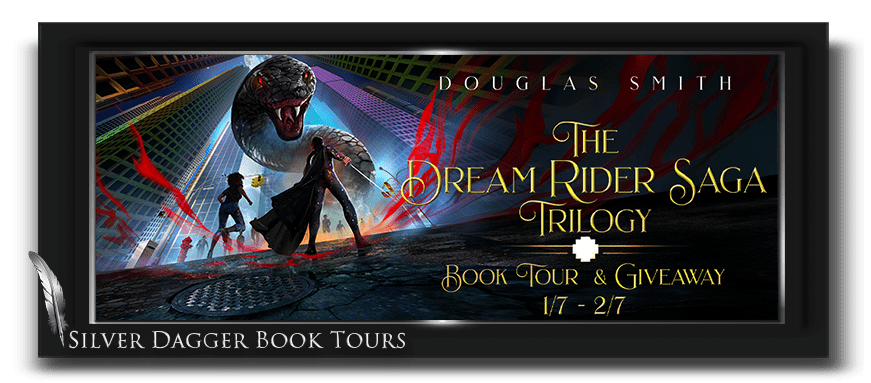





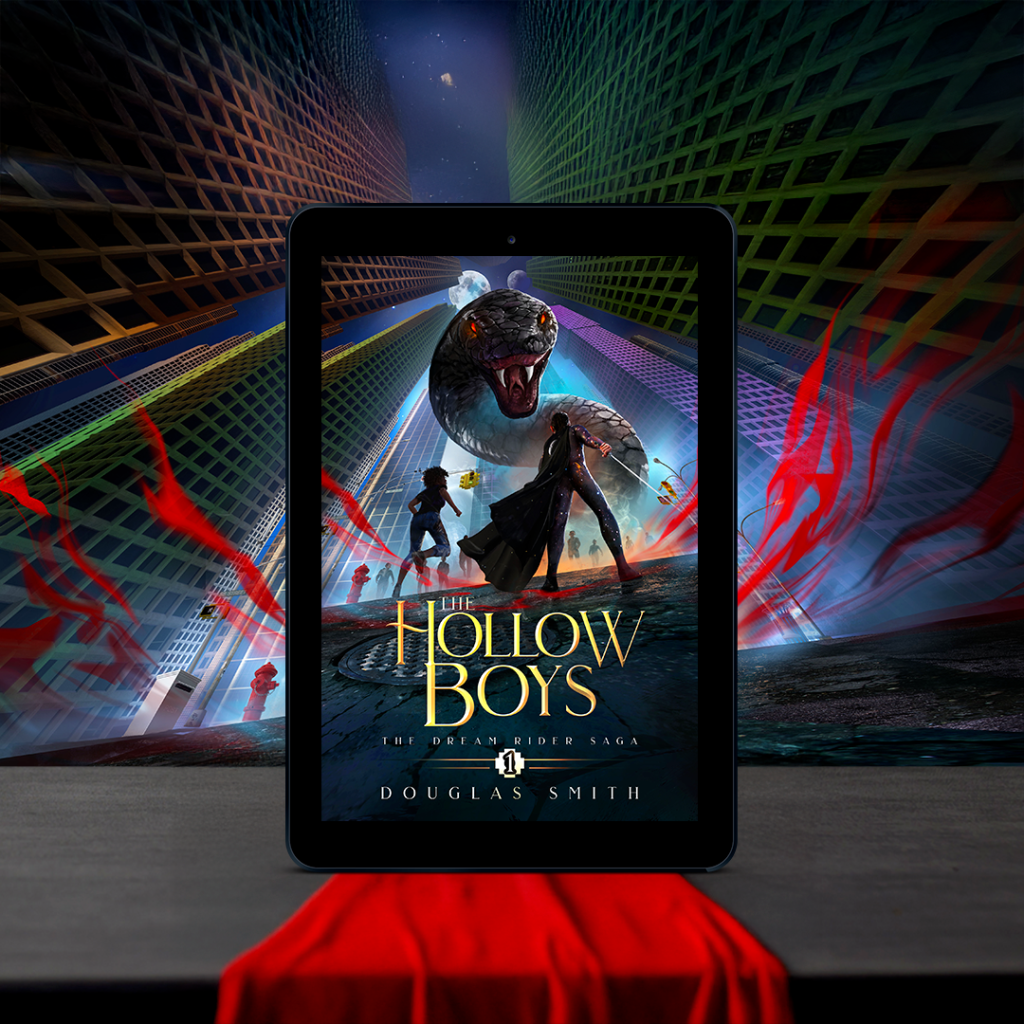
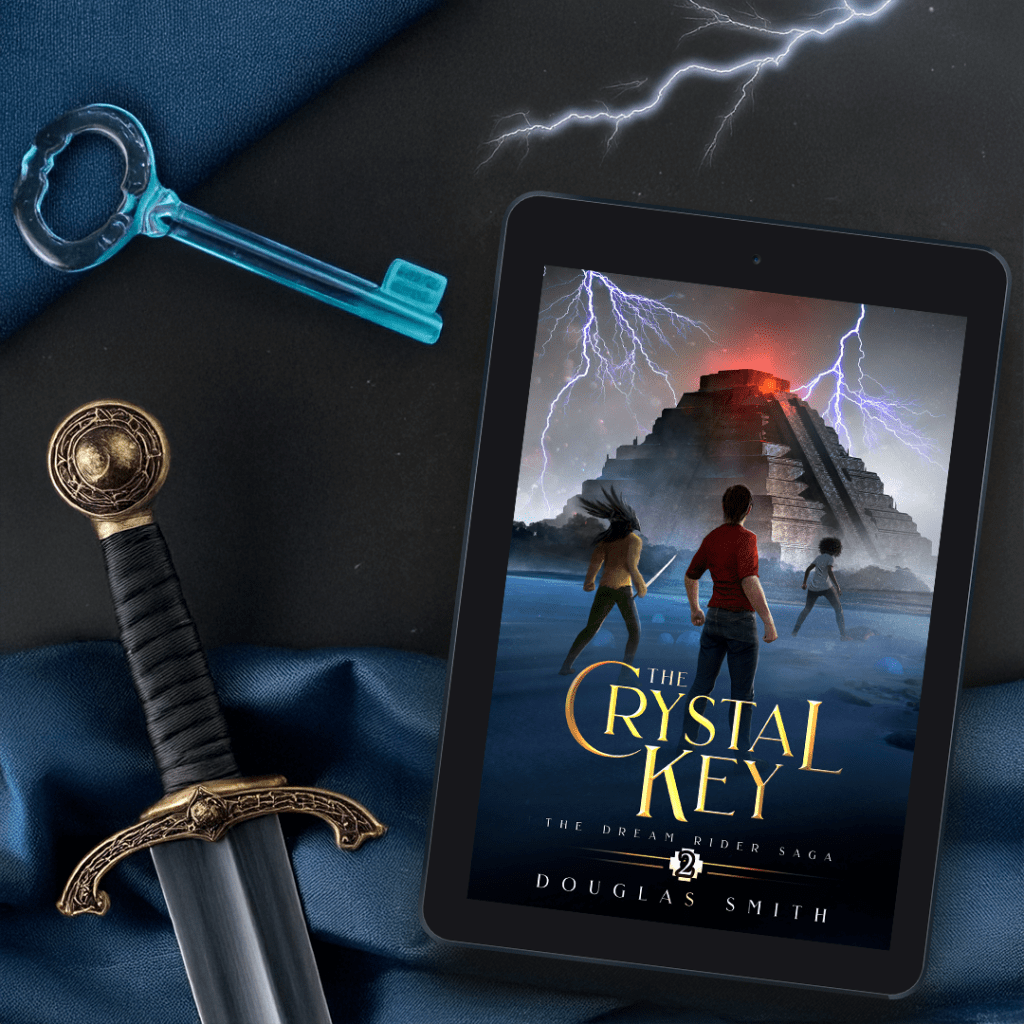





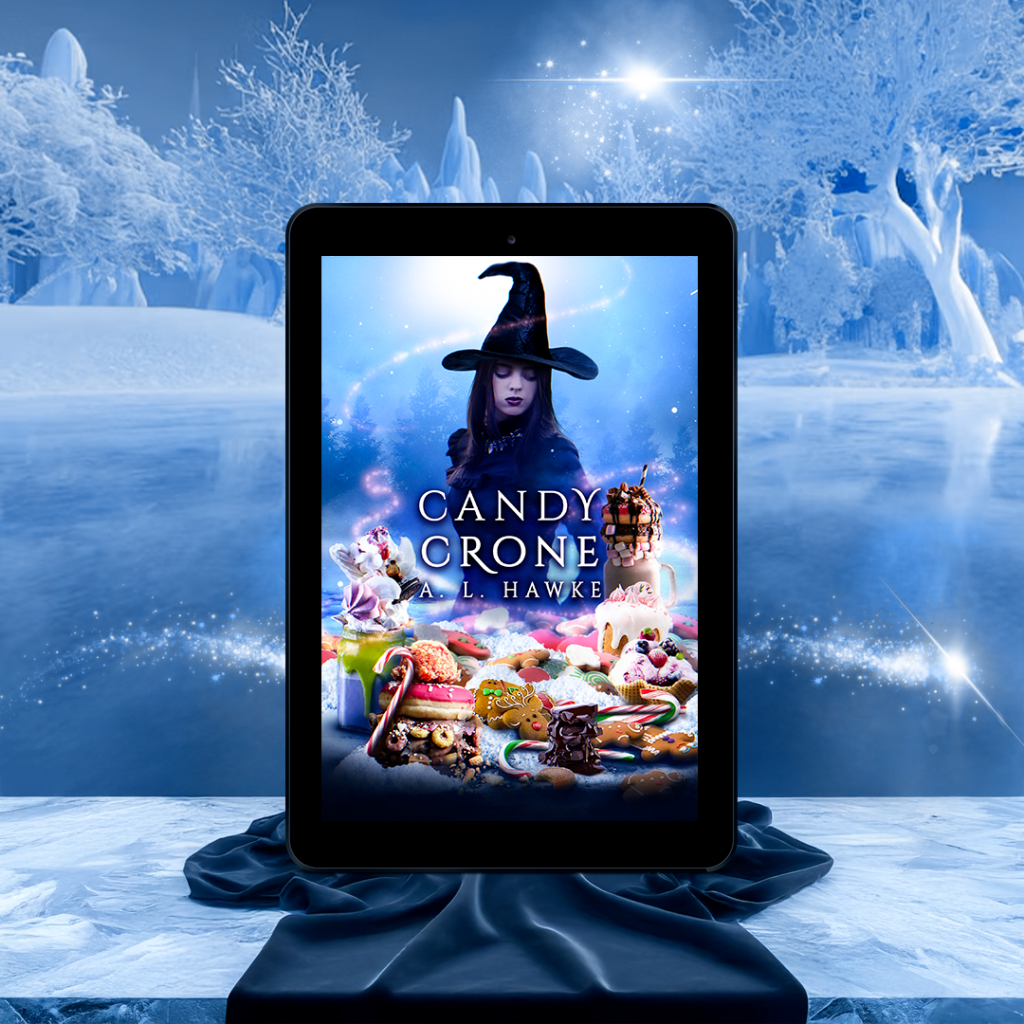





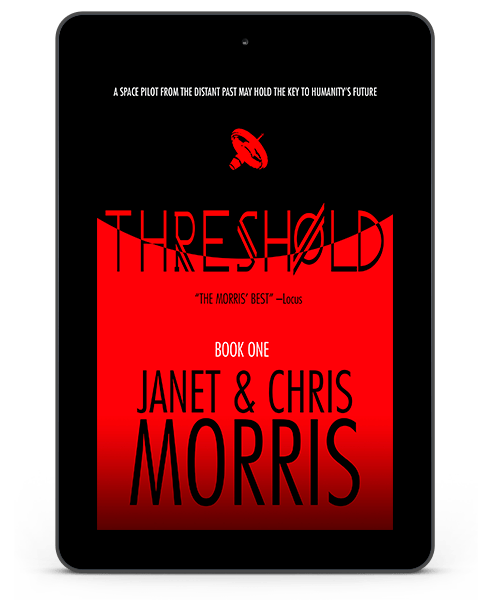

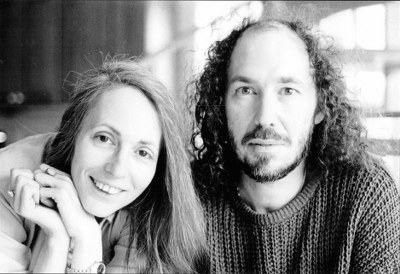


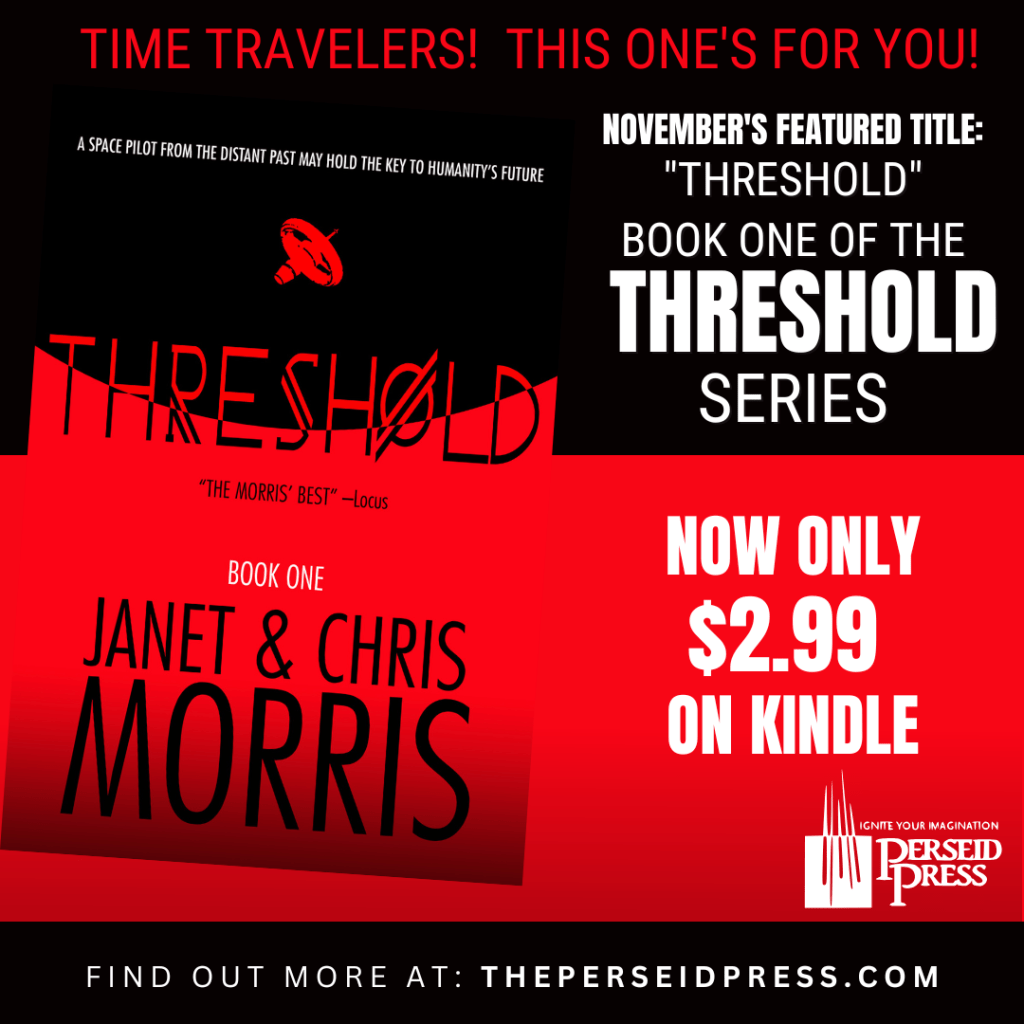
 Nina Soden