Today’s
#MindfulnessMonday Tip: Remember to take time
to enjoy life and those around you. So often we find ourselves working tooth
and nail so that SOMEDAY we might enjoy our retirement. Make sure you’re taking
time to enjoy life today… not just hoping to do it SOMEDAY in the future.
Check out today’s #MindfulnessMonday video where I talk about stress; what it is, signs of stress, what to do when you start feeling stressed, and how to protect yourself from stress! You can check out the video by clicking HERE!
This is a partner activity. It can be done with a spouse,
a friend, even your children. All you have to do is have a conversation that
doesn’t have anything to do with work, school, stress, or anything else that
has been bogging you down. For five to ten minutes, I want you to talk about
only the things you notice around you. This is best done while taking a walk,
sitting in a park, or even over coffee at an outdoor café.
If you’re having trouble starting the conversation or you
find yourselves getting sucked into typical meaningless small-talk, try playing
a game of eye-spy to get your started. You might just find the conversation
takes on a life of its own, allowing you some time away from the daily
stressors that tend to fill our minds throughout the day.
Don’t be afraid to let this conversation continue as long
as is comfortable.
Mindfulness Journaling Prompt:
After completing the Observation Communication Exercise, take a few minutes to write down as many observations you made throughout the conversation. How many drew your attention back to work/school/stress related topics and how many were completely unrelated to any stressors in your daily life.
Keep this list and try this exercise when you are further along in your mindfulness practices and see if you do better.
Check out
my #MindfulnessMonday YouTube Series and don’t forget to click subscribe so you
never miss an episode!
A Mindfulness-Based Stress Reduction Workbook (A New Harbinger Self-Help Workbook)
Stress and pain are nearly unavoidable in our daily lives; they are part of the human condition. This stress can often leave us feeling irritable, tense, overwhelmed, and burned-out. The key to maintaining balance is responding to stress not with frustration and self-criticism, but with mindful, nonjudgmental awareness of our bodies and minds. Impossible? Actually, it’s easier than it seems.
Hypnoser Weighted Blanket 2.0 for Kids, Adults, Men, Women, Heavy Blanket Providing Calm and Comforting Sleep, Sleep Faster (48″x72″ 12 Lbs, Dark Grey, Fit Twin Full Size Bed)
I’m certified in Holistic Stress Management and Mind/Body Fitness. I’ve been practicing Mindfulness for 10+ years and am passionate about helping others in their pursuit of a more mindful existence.
Today’s #MindfulnessMonday Tip: Remember that mindfulness takes time. Like learning to ride a bike as a young child, mindfulness is a practice that often times leads us to stumble when we’re first learning but gets easier and easier with practice.
Check out today’s #MindfulnessMonday video and hear the truth about 4 mindfulness myths that just aren’t true! You can check out the video by clicking HERE!
I want you to write the word
‘mindful’ on a blank piece of paper and look at it. Really focus on the word
and how it makes you feel. What does it mean? What do you feel about the word
mindful? What other words can you find in its letters? Write the word multiple
times to see if it changes how you feel about it. Write it in different ways,
fonts, and colors. What does mindfulness represent for you?
After spending a few minutes with just that single word, I want you to write down what it means, to you, to be mindful.
Mindfulness journaling can be very private. However, I would love to invite you to comment below and share what being mindful means to you.
* * * * *
Check out
my #MindfulnessMonday YouTube Series and don’t forget to click subscribe so you
never miss an episode!
EPISODE 22
~ Mindfulness Myths!
* * * * *
I’m certified in Holistic Stress Management and Mind/Body Fitness. I’ve been practicing Mindfulness for 10+ years and am passionate about helping others in their pursuit of a more mindful existence.
These are some of my favorite Mindfulness Resources:
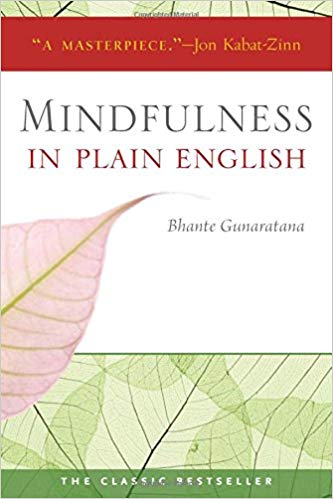
Mindfulness in Plain English was first published in 1994, is one of the bestselling — and mostinfluential — books in the field of mindfulness. It’s easy to see why.
Author Bhante Gunaratana, a renowned meditation master, takes us step by step through the myths, realities, and benefits of meditation and the practice of mindfulness. The book showcases Bhante’s trademark clarity and wit as he explores the tool of meditation, what it does, and how to make it work.
This book is:
A best-selling introduction to mindfulness
Full of practical advice on developing a meditation practice
Written in approachable, clear language
Containing chapters on loving-kindness and concentration
From finding your breath to feeling grounded, these practice-based exercises make integrating mindfulness into your routine easy. With over 75 essential meditations―that take between 5-20 minutes from start to finish―Practicing Mindfulness is an approachable way to apply mindfulness in your day-to-day life.
Reduce stress, improve mental health, and stay present no matter what the day holds when you practice mindfulness, with:
Mindfulness 101 that provides clear explanations of what mindfulness is, along with why and how it helps in your day-to-day life
75 mindfulness exercises that are organized by difficulty to help develop your practice
Practical advice for overcoming obstacles to your mindfulness practice like how to deal with distracting noises or fight off sleepiness
Today and every day, mindfulness takes practice. Practicing Mindfulness offers effective, modern meditations and exercises to start practicing everyday mindfulness, today.
Today’s #MindfulnessMonday
Tip: Don’t take mindfulness to seriously… It
isn’t a competition of who can be more mindful. It is
about being present in the moment and enjoying life as it comes.
Check out today’s #MindfulnessMonday video to discover a secret about mindfulness. You can check out the video by clicking HERE!
Reading
is a huge part of our daily lives. So much so that we often take it for granted.
from text messages to emails to social media posts we are constantly staring at
our phones, tables, computers and other devises. Find some time during the day when
you can put down your electronic devises and focus on reading something
in print… a book, a magazine, a newspaper (yes, they still print those). Allow
yourself 5-10 minutes each day, when you can let go of all your other
responsibilities to just get lost in the written word. You just might find that
10 minutes turns into 20 and 20 turns in to 30. I will warn you, there are some
side effects to quiet reading which include…
Getting lost in a book and becoming attached
to the characters you meet,
Choose a poem you like and read through it very slowly. If you don’t have a favorite poem, do a google search for popular poetry or ask your Google Home, iPhone Siri, Alexa, or other smart device to tell you a poem about nature.
What do you like most about it? What images does
it conjure up for you? What do you think about the words the poet chose to use?
Mindfulness journaling can be very private. However, if you are willing to share your experiences with me and my readers, I would love to invite you to comment below and let me know what poem you selected and how it made you feel.
* * * * *
Check out
my #MindfulnessMonday YouTube Series and don’t forget to click subscribe so you
never miss an episode!
I’m certified in Holistic Stress Management and Mind/Body Fitness. I’ve been practicing Mindfulness for 10+ years and am passionate about helping others in their pursuit of a more mindful existence.
Today’s #MindfulnessMonday Tip: Eat cake! Withholding dessert and other treats can lead to overeating and/or emotional eating.
Check out today’s #MindfulnessMonday video and find out why you should EAT CAKE! You can check out the video by clicking HERE!
Today’s Mindfulness Exercise Mindful Eating!
Mindful Eating is not a diet, it is eating with awareness. It uses a form of meditation called mindfulness, which helps you acknowledge and manage your emotions and physical sensations. Using this approach will help you reach a state of full awareness to your experiences, cravings, and physical cues when you’re eating.
Practice using all of your senses when eating and choose foods that are both satisfying and nourishing.
Practicing Mindful Eating Involves:
Acknowledging that there is no right or wrong way to eat.
Accepting that there are different degrees of awareness surrounding your experience with food.
Accepting that everyone’s eating experiences are unique and personal to them.
Giving your full attention to eating in the moment in order to avoid over eating and emotional eating.
Recognizing how and why you make choices involving food.
Developing healthy habits in the selection of your food to improve your overall health and well-being.
Promoting a healthy balance.
For today’s exercise, select a healthy snack (fruit, raw vegetables, cheese and crackers, etc.) and spend a few minutes of total focus and concentration while eating. What does the food look like, smell like, feel like, taste like? How does it make you feel as you eat it? How do you feel about your food selection? Why did you choose that snack?
Mindfulness Journaling Prompt:
After you’ve completed the Mindful Eating exercise, take a couple of minutes of quiet time to write out your answers to the questions above. Then, make a list of healthy snack selections to use as substitutes the next time you’re feeling stressed, emotional, or just looking for a midnight snack.
Remember, there is no wrong way to eat but making healthy food choices can make a huge difference in your overall health both mentally and physically. That doesn’t mean you can’t enjoy a slice of cake, a cupcake, a bowl of pudding, or whatever your sweet-tooth desires. Just be mindful of your choices and make sure you reach for the healthy snacks more than the less than desirable choices. When we restrict ourselves to the point of denying things like cake and ice cream completely, we tend to binge eat those things due to stress, depression, and other emotional eating triggers.
Mindfulness journaling can be very private. However, if you are willing to share your thoughts with me and my readers, I would love to invite you to comment below and let me know what healthy snack choices you plan to make in the future.
* * * * *
Check out my #MindfulnessMonday YouTube Series and don’t forget to click subscribe so you never miss an episode!
An Invitation to the Practice of Mindfulness
We may long for wholeness, suggests Jon Kabat-Zinn, but the truth is that it is already here and already ours. The practice of mindfulness holds the possibility of not just a fleeting sense of contentment, but a true embracing of a deeper unity that envelops and permeates our lives. With Mindfulness for Beginners you are invited to learn how to transform your relationship to the way you think, feel, love, work, and play―and thereby awaken to and embody more completely who you really are.
Here, the teacher, scientist, and clinician who first demonstrated the benefits of mindfulness within mainstream Western medicine offers a book that you can use in three unique ways: as a collection of reflections and practices to be opened and explored at random; as an illuminating and engaging start-to-finish read; or as an unfolding “lesson-a-day” primer on mindfulness practice.
Beginning and long-time meditators alike will discover in these pages a valuable distillation of the key attitudes and essential practices that Jon Kabat-Zinn has found most useful with his students, including:
• Why heartfulness is synonymous with true mindfulness
• The value of coming back to our bodies and to our senses over and over again
• How our thoughts “self-liberate” when touched by awareness
• Moving beyond our “story” into direct experience
• Stabilizing our attention and presence amidst daily activities
• Three fundamental mental factors that cause suffering
• How mindfulness heals, even after the fact
•Reclaiming our wholeness, and more
The prescription for living a more mindful life seems simple enough: return your awareness again and again to whatever is going on. But if you’ve tried it, you know that here is where all the questions and challenges really begin. Mindfulness for Beginners provides welcome answers, insights, and instruction to help us make that shift, moment by moment, into a more spacious, clear, reliable, and loving connection with ourselves and the world.
Includes a complete CD with five guided mindfulness meditations by Jon Kabat-Zinn, selected from the audio program that inspired this book.
Amazon #1 Best Seller! Kick-start and sustain a fun mindfulness practice with kids and teens.
“This book makes it easy and is a must have for every parent and teacher!”
– Denise Besic, Mother and Teacher
Give kids lasting life skills to de-stress and calm down, navigate difficult emotions, control impulses, focus on what matters, and nurture empathy, kindness, and joy.
In Ultimate Mindfulness Activity Book you will find:
150+ playful mindfulness activities
Tools for calm, focus, joy, kindness, and emotional intelligence and regulation
A 21-step guide to kick-start and sustain your practice together
Inspirational examples of how mindfulness makes positive change
Easy to understand explanations on how to explain mindfulness to kids and youth
A FREE audio course for grown-ups and more
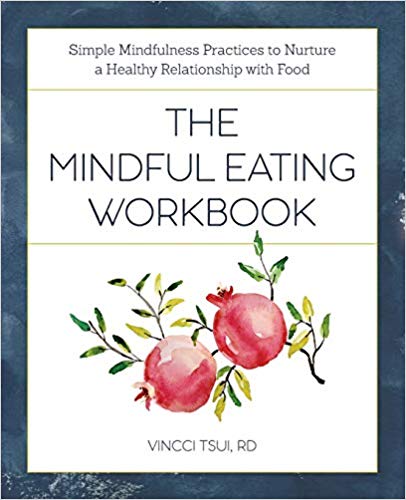
Establish a practice of mindful eating with actionable strategies and exercises from The Mindful Eating Workbook.
Eating mindlessly is easy―eating mindfully takes practice. The Mindful Eating Workbook offers actionable, mindfulness-based strategies and exercises to adopt a mindful eating practice and nurture a healthy relationship with food.
Vincci Tsui, a “non-diet” dietitian and certified Intuitive Eating counselor, offers step-by-step guidance to core concepts and philosophies of mindful eating. Applying theory to practice, this mindful eating workbook uses a combined approach of reflective exercises and strategies to reconnect you with your body and your needs.
The Mindful Eating Workbook includes:
Mindful eating 101 explores the lifelong benefits of eating mindfully, and outlines how you can bring this practice into your life.
Real strategies to practice mindfulness while cooking and eating, and using mindfulness to recognize your body’s signals.
Reflective exercises that include assessments, journal entries, and observation logs to keep track of your journey and progress.
Savoring flavors, intuitively nourishing your body, and appreciating food’s true purpose to provide energy―mindful eating isn’t a diet, it is a way of life. Start practicing mindful eating with The Mindful Eating Workbook.









 Nina Soden