There’s something about the holiday season that feels like a book you return to year after year.
The familiar opening lines. The comforting setting. The quiet moments that linger long after the last page.
As the year comes to a close, I wanted to pause and say thank you—and Happy Holidays—to every author I’ve had the honor of featuring here, and to every reader who has spent even a few minutes of their time wandering through my posts (or even better, through the pages of my novels).
If you’re reading this, you’re part of a community that believes in stories. You’re part of MY community.
And that matters. It matters to me.
Books Are the Gifts That Never Stop Giving
Books have always been a special kind of gift. They don’t sparkle under the tree, but they glow in other ways:
They offer escape when the world feels heavy. They provide comfort when words are hard to find. They challenge us, soften us, and sometimes even change us.
This time of year, stories feel especially powerful. We read by twinkling lights. We recommend favorite novels to friends. We tuck books into stockings, hoping the right story finds the right person at the right time.
Stories remind us that even in dark chapters, hope still exists.
And that’s a very special kind of magic.
To the Authors Who Shared Their Stories Here
To every author who trusted me with their work, their process, their vulnerability, and their voice—thank you.
Writing is brave. Sharing that writing is even braver.
Behind every book is a person who wrestled with doubt, chased inspiration at odd hours, and kept going even when the path felt uncertain. Trust me, I know! Featuring your stories on this site has been one of the greatest joys of my year, and I’m endlessly grateful for the chance to spotlight your creativity.
Your words matter. Your stories matter. And I can’t wait to see where the next chapter takes you.
To the Readers Who Keep Showing Up
And to the readers—those who comment, share, recommend, and quietly return—thank you for being here.
Readers are the heartbeat of storytelling. Without you, stories are just words on a page. With you, they become worlds, emotions, and memories.
Whether you found this site through a favorite genre, an author interview, or a single late-night scroll, I’m grateful you stayed.
May your holidays be filled with stories that make you feel understood, inspired, and a little less alone.
Turning the Page on a New Year
As we step into a brand-new year, I hope it brings:
More time to read
More courage to write
More stories that surprise us
And more moments of quiet joy with a good book in hand
The best stories are never really finished—they simply invite us to keep reading.
So here’s to fresh chapters, new ideas, and the magic that only stories can create.
Urban fantasy readers are a special breed of book lover… and I should know, because I am one! You know the type — the ones who thrive on stories where magic hides in plain sight, supernatural creatures blend into city crowds, and danger lurks just past the neon glow of a streetlamp.
If that sounds familiar… well, you might just be one of us.
Here are 15 unmistakable signs you’re definitely an urban fantasy reader:
1. You secretly assume every big city has a hidden supernatural underworld.
Sure, tourists see restaurants, office buildings, and buses… But you? You’re wondering which alleyway the shifters use or which skyscraper hides the vampire court.
2. You love a good mix of magic + mayhem.
Throwing spells in a dark alley? Chasing demons between speeding cars? A battle scene in a parking garage? Perfection.
3. You think magical abilities should come with emotional baggage.
Teleportation? Cool. The crushing guilt from accidentally teleporting someone’s coffee into a wall? Even better.
4. You prefer your heroes flawed, fierce, and just a little morally gray.
Sure, save the world… But maybe also threaten a demon for information or bend the rules of magic if necessary. We get it.
5. You’ve definitely fallen for at least one brooding supernatural love interest.
Angel? Demon? Vampire? Shapeshifter? You have a type — and it’s “dangerous but has a redemption arc.”
6. You believe every tattoo in an urban fantasy book means something important.
Runes. Wards. Ancient symbols. You don’t even need context. If a character has ink, you’re already suspicious.
7. You love when a city becomes its own character.
From gritty alleyways to rooftop hideouts, you’re here for stories where the setting breathes just as much as the characters.
8. Your favorite trope? The hidden magic society.
And you’ll happily devour every book where the “normal world” has no idea what’s happening right under their noses.
9. You’ve said “just one more chapter” at 2 a.m. and meant it.
Urban fantasy is addictive. Cliffhangers? Even worse. Sleep? Optional.
10. You love a strong female lead who doesn’t back down.
Bonus points if she’s sarcastic, stubborn, and has a tendency to run directly toward danger.
11. You get overly excited by supernatural group dynamics.
The loyal best friend. The unstable magic-user. The mysterious mentor. The team that shouldn’t work… but does. Give you a found-family cast and you’re all in.
12. You enjoy when villains believe they’re the hero.
Urban fantasy thrives on moral complexity — and you’re here for every deliciously complicated antagonist.
13. You judge books by their supernatural creatures.
“Oh, this one has vampires AND fae? Say less.” Your TBR pile: instantly grows by seven.
14. You believe magic belongs in the modern world.
Skyscrapers and sorcery? Parking lots and prophetic visions? Cell phones and spell books? Absolutely. Bring it on.
*15. You’ve imagined yourself living in an urban fantasy world.
Would you be the hunter? The witch? The elemental? The reluctant chosen one? You’ve definitely decided — probably more than once. COMMENT BELOW AND LET ME KNOW!
If you nodded along to most of these… congratulations — you’re officially an urban fantasy reader. And honestly? It’s one of the best fandoms to be part of.
The worlds are exciting, the characters unforgettable, and the blend of magic + modern life is endlessly addictive.
So go ahead — pour yourself another cup of coffee, grab your next read, and dive back into the shadows where all the magic lives.
Want to read my books? Even better, click HERE or on the image below to see all of my Urban Fantasy novels and pick up your favorite(s) today!
This morning, as the aroma of Thanksgiving fills kitchens across the country and families begin to gather, I’m taking a quiet moment to reflect on all that I’m thankful for.
Gratitude, for me, isn’t just about the grand gestures or milestone moments — it’s about the small, beautiful details that make up a life. The laughter around the dinner table. The quiet cup of coffee before the day begins. The people who fill my heart and the stories that fill my soul.
I’m thankful for my family — the love that grounds me, the laughter that brightens each day, and the unwavering support that makes every dream feel possible. Being a wife and a mom are my greatest accomplishments, and the love we share is my most cherished story. I’m also deeply grateful for the close bond I have with my parents and my sister and her family; their constant love and presence (even from a distance) bring joy to my life that I never take for granted. And having my in-laws nearby — with their open doors, warm hearts, and welcoming home — reminds me every day how lucky I am to belong to such a loving family circle.
I’m thankful for art— for the lifelong gift of creativity. From drawing and painting as a child to finding my voice in theatre, film, and writing, art has always been the way I connect to the world. It’s my reminder that imagination, expression, and storytelling are powerful forces — they heal, they inspire, and they connect us in ways words alone sometimes can’t.
And I’m thankful for you — my readers, friends, and supporters. Each message, each shared moment, each connection reminds me why I write. You’ve helped turn my passion into purpose, and for that, I am endlessly grateful.
I’m also deeply thankful for my real estate career— a path that’s given me the chance to serve, guide, and connect with so many incredible people. My clients, colleagues, and referral partners have trusted me with one of the most important chapters of their lives — finding a home or letting one go — and that trust means everything. Each relationship, each story, and each closing reminds me that real estate isn’t just about houses; it’s about people, families, and the places where their next chapter begins.
So today, as we gather around our tables — whether surrounded by family, friends, or even just the quiet hum of gratitude — I hope we all take a moment to pause and truly see the blessings in front of us.
May your Thanksgiving be filled with love, laughter, and the kind of joy that lingers long after the plates are cleared.
November 26th marks a big milestone for me — my 50th birthday. I’ll admit, that number has been sitting with me in a strange way. There’s something about it that feels both heavy and profound. But instead of focusing on the number, I want to celebrate the journey that brought me here — and the art, family, and community that have shaped me along the way.
I’ve always been an artist. As a kid, I filled sketchbooks with drawings and painted anything I could get my hands on. Creativity was my language — the way I understood and expressed the world around me. In college, I discovered the magic of theatre and film, and that love carried me all the way to California after graduation. I chased stories on stage and on camera, learning what it meant to bring characters to life.
When my husband and I moved to Alabama in 2004, the curtain didn’t fall — it simply shifted. I found a vibrant theatre community here, both on and off the stage. And when film opportunities weren’t as accessible, writing became my new creative outlet. It started as a whisper — a need to tell stories — and grew into a lifelong passion.
Since publishing my first novel in 2012, I’ve written worlds born from imagination, heart, and a deep love for storytelling. Each book has been a reflection of my creativity — as an artist, as a dreamer, as a human being trying to make sense of the world. But none of it would have been possible without my family. Their love, patience, and unwavering support have carried me through every chapter. Being a wife and a mom are my greatest accomplishments — everything else, every creative endeavor, is built on that foundation of love.
And then, of course, there’s you — my readers. Your encouragement, your messages, your shared excitement about my books… my stories mean more to me than you could ever know. You’ve helped turn my art into something living, something shared.
So, to celebrate this milestone birthday and to give back a little of the joy you’ve given me, I’m hosting a Birthday Giveaway! 🎁
✨ Enter to win a signed copy of one of my books (U.S. entries only)! ✨
Here’s how to enter:
Leave a comment below — tell me your favorite birthday memory, your favorite book of mine, or simply say hello.
Fill out the short entry form (linked below) so I can contact the winner.
The giveaway will be open through November 30th, and I’ll announce the winner the first week of December.
As I step into this new decade, I’m choosing gratitude — for art, for stories, for family, and for the readers who make it all worthwhile. Thank you for being part of my creative journey. Here’s to the next chapter — one filled with courage, curiosity, and a whole lot of love. 💜
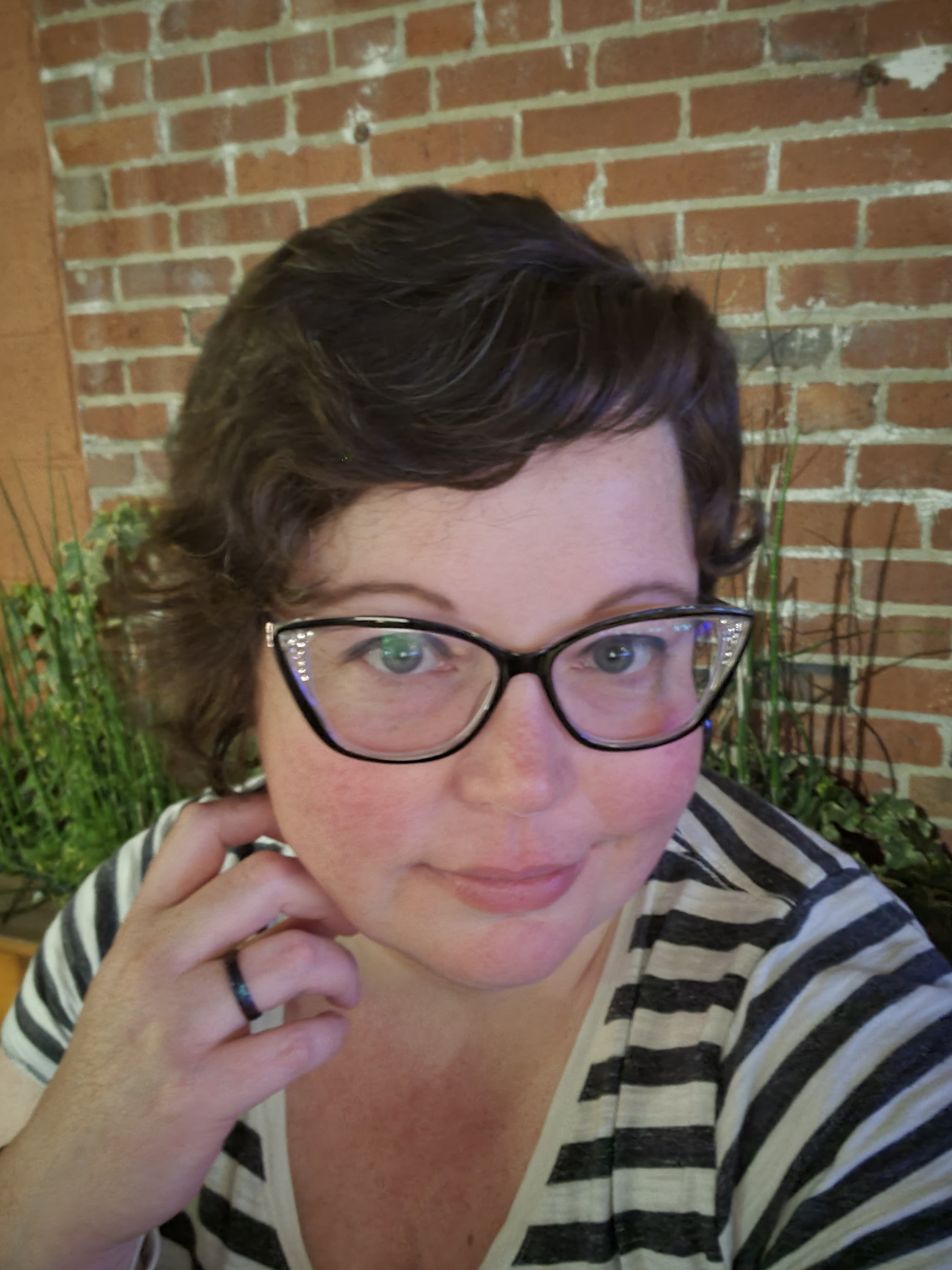
With gratitude, Nina Soden Author | Dreamer | Storyteller
Christmas, 1940. As Christmas carols and the tinkling of bells waft through the air, The Rook, the world’s most infamous master criminal, has been apprehended and is standing trial for murder! His real name has been revealed – Judas Ackery – and his conviction by year’s end seems a certainty. While this would appear to be a cause for public celebration to the public at large, there are those who remain concerned that perhaps this, too, is all some nefarious scheme on the part of The Rook.
Evil Cheez Productions presents their most popular character in one of their most well received productions – THE TRIAL OF THE ROOK. What better way to usher in the holidays than a murder mystery set at Christmas time. Thrilling, chilling, poignant, and loads of fun for those who crave a little something unusual during the holidays.
PERFORMANCE DATES/TIMES
Shenanigans Comedy Theatre (2650 Leeman Ferry Rd SW suite a, Huntsville, AL 35801)
Tickets ONLY: $15 (www.huntsvillelaughs.com)
Friday, November 28th @7:30 PM
Saturday, November 29th @ 2:30 PM
Saturday, November29th @ 7:30 PM
The Jackson House(119 College St., Moulton, AL 35650)
Tickets ONLY $15 (Call 256-616-8189 or Venmo JACKSONHOUSE-FOUNDATION)
Friday, December 12th @ 7:30 PM
Saturday, December 13th @ 2:30 PM
Saturday, December 13th @ 7:30 PM
MEET THE CAST
Step into the shadows and meet the extraordinary performers bringing two of literature’s most enduring Gothic tales to life. Our staged readings of Frankenstein and Dracula celebrate the timeless power of these dark classics while showcasing the incredible talent of our local theatre community. Here, you’ll get to know the cast members who will give voice, heart, and humanity to the monsters, heroes, and haunted souls at the center of Mary Shelley’s and Bram Stoker’s masterpieces all through the theatre adaptations of Wayne Miller, Evil Cheez Productions’ founder.
Ryan Rorick (Judas Ackery)
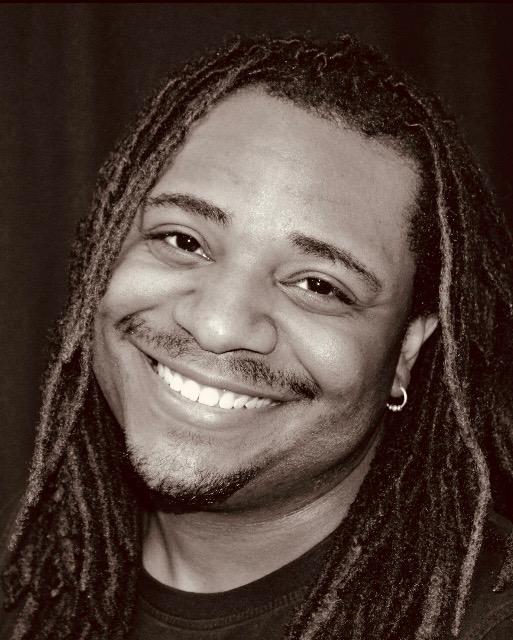
Ryan Rorick holds a BFA in Acting from the University of Montevallo and has worked professionally as an actor, director, and teaching artist. With over 120 credits to his name over the last 16 years, some select roles include Next to Normal (Dan), The Weir (Brendan), Rent (Mark Cohen), Henry V (King Henry), Chicago (Amos Hart), Romeo and Juliet (Romeo), and Miss Bennet: Christmas at Pemberley (Arthur de Bourgh). By day he works as a high school theatre director, with directing credits including The Lion, the Witch, and the Wardrobe, Clue, Chicago, Ernest and the Pale Moon, and, coming this spring, the north Alabama premiere of Frozen: The Broadway Musical.
Joy Whitt (Katheryn Ivy)
This is Joy’s 65th show with Evil Cheez in the last 5 years. These are her favorite people to work with! When she’s not doing plays, she walks around town with her dogs as much as possible. She loves black coffee. She wishes it was still the 90s.
Juan E. Bedolla (Frank Preston)
Juan is an animation director and producer. He is new to Cheez and to theater in general, but makes up for his lack of experience with eager enthusiasm and unearned confidence.
Byron Turner (Bernie Kowalski)
Byron is an Alabama native and has been involved in local theater on and off for 20 years. He has been a part of multiple productions for Theatre Huntsville, including Clybourne Park, Ultimate Christmas Show (abridged), The Eight: Reindeer Monologues, Radio Golf, God of Carnage, Sex, Drugs, Rock & Roll, and The Musical Comedy Murders of 1940. He was also an assistant director of TH’s production of Stick-Fly and directed TH’s production of Mountaintop.
Jonathan Bain (Judge Bartholomew Lyle)
Jonathan is a leasing agent by day and an actor by night. Jonathan has been acting in community theater for 14 years and some of his favorite roles have been Ty from Sordid Lives and The Ghost of Christmas Yet to Come in A Christmas Carol and Jonathan Harker in Dracula!
Wayne Miller (Willy Ackery)
WJR Miller (“Wayne” to his friends and family; what his enemies call him wouldn’t be fit for inclusion here) is the owner/founder of EVIL CHEEZ PRODUCTIONS, an independent theatrical company, and has written, directed, produced (and occasionally performed in) over two-dozen stage plays, running the gamut from Horror and True Crime (his specialties) to musicals, children’s plays, comedies, and even the historical biography of a murderous shark. Follow him at his WEBSITE “Sinister Urges”, FACEBOOK, or AMAZON.
Michelle Huguley (Hazel Ackery)
Michelle started performing as soon as she was able to crawl, captivating and delighting audiences of various stuffed creatures. More recently, she’s appeared in Evil Cheez Productions’ Joey Harte Returns and The Return of The Rook. You may also remember her in such roles as Lizzie Borden in Bloodless, Mary Bailey in It’s a Wonderful Life, and Magenta in The Rocky Horror Show. She sends loving regards to her three cats, who are less patient than her stuffed audiences of childhood, and her adoring husband Kevin, who forced her to put this part in.
Anna Clay Adams (Edmina Stokes)
Anna Clay Adams is very excited and grateful to be participating in this production with Evil Cheez! She lives and works in Tuscaloosa, but can never pass up the amazing opportunity to work with Evil Cheez and all the talented folks in North AL, so the commute is always worth it. She extends a special thanks to Wayne and Tanja for welcoming her into this family and allowing her the opportunity to create with them!
Tanja Lewis Miller (Norma Hoffman)
Tanja Lewis Miller, aka Queen Cheez, is overjoyed to reprise the role of Norma Hoffman in “The Trial of The Rook,” as it is one of her favorite of her hubby’s plays. She sends all the love to her Shmoo and her Cheez family. And a special thanks to all of you, the Cheez supporters, for without you, Cheez wouldn’t be Cheez!
Jeremy Jerome Woods (Jimmy Douglas)
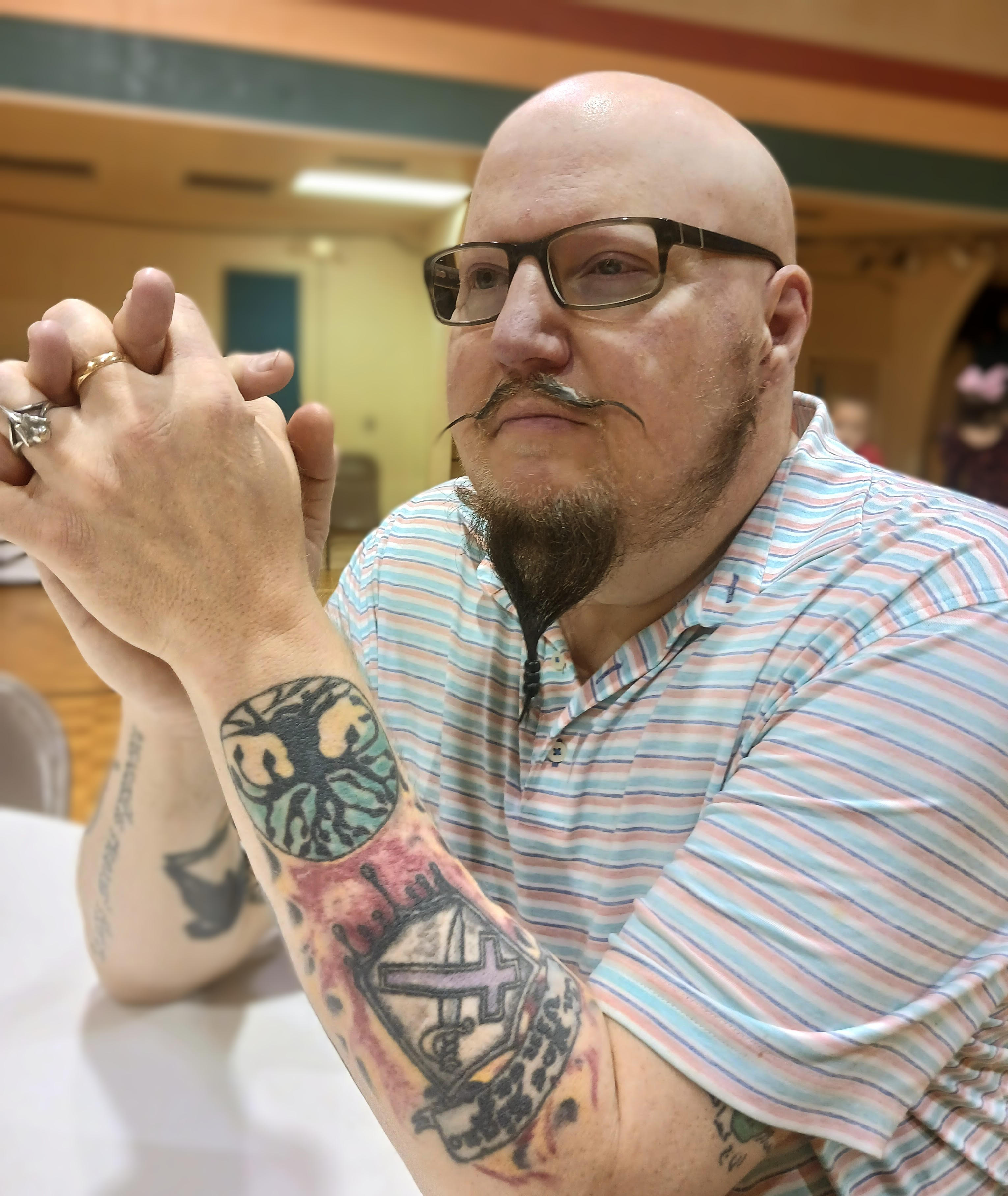
Screenshot
Jeremy Woods is excited to return to the Rook-verse with The Trial of The Rook. In addition to portraying Jimmy, he is also serving as a Director. “What can I say… I love theater and I love Evil Cheez”. He thanks his Husband and Son for the love, jokes, and support. He also thanks his Mom and Dad for making him. Lastly, many hugs to Wayne and Tanja for trusting him with this amazing show.
Enjoy the show!
Ariel Terrell (Livonia Douglas)
Born in Arizona, Ariel’s love for acting began with reciting “Crooklyn” lines in the mirror. Fast forward to 18 and she’s graduating from Mississippi School of the Arts. After gaining a BA from Mississippi State, Ariel found her way to Huntsville. Like any other grown-up theatre kid, she has found her way back to the stage over the years in several local roles. But Livonia Douglas is an honor of a role that will live with her forever.
Andrew Foxx (Red Nelson/Rupert Horne/Bailiff)
Andrew Foxx (Red/Rupert) has been involved in North Alabama theatre both on-stage and backstage for years. He has most recently been involved with Evil Cheez Productions and Bank Street Players.
MEET THE CREW
While the actors bring the characters to life on stage, it’s the crew behind the scenes who make the magic possible. From lights and sound to staging and direction, every detail is carefully crafted to immerse the audience in the world created by the playwright. Their creativity, dedication, and teamwork ensure that each moment flows seamlessly, allowing the stories to shine. We are proud to recognize the talented individuals working tirelessly behind the scenes—because without them, the show could not go on.
Director: Jeremy Jerome Woods
Writer & Assistant Director: Wayne Miller
Stage Manager – Angela Brown
Poster & Props: LeeAnn Treece
Programs: Nina Soden
LETTER FROM THE DIRECTOR
Thank you so much for coming out. I am so proud of these actors, this crew and this show. As someone who has grown up in this band of misfits….. it warms my heart to have the trust and respect of this team ( and of course Tanja and Wayne). So much so, that I am afforded the opportunity to direct another Wayne Miller original. This is one of my favorite of The Rook’s Mysteries. Thank you for spending your evening with us. Please enjoy the show… ~Jeremy Jerome Woods
ABOUT THE AUTHOR ~ WJR Miller
WJR MILLER is the owner and creative director of Evil Cheez Productions and is the Grand High Poobah of Cheezism (hence his “high priest” vestments), the movement he founded (it isn’t organized enough to be called a religion, besides which it isn’t religious) dedicated to providing audiences with the finest in entertainment options on the page and for the stage. On the big screen, too, if Spielberg ever returns any of his phone calls. WJR has been writing stories literally since before he learned his alphabet—he drew pictures. After languishing in the nether-regions of the publishing industry for years, working as an acquisitions editor for a literary agency, he chose, as an experiment, to combine his passion for writing with his hobby of Theatre, and in the process, by accident and providence, discovered his life’s purpose: to be a showman.
Miller is a devotee of Ed Wood, the “worst director of all time!” who inspires Miller due to his unflappable dedication to his muse and unrestrainable creative drive. During performances of one of his shows—he has written, directed, and produced (and occasionally acted in) over two dozen stage plays—Miller sports pink attire as a tribute to Ed Wood, who did the same. (The cheese wedge hat he wears is self-explanatory.)
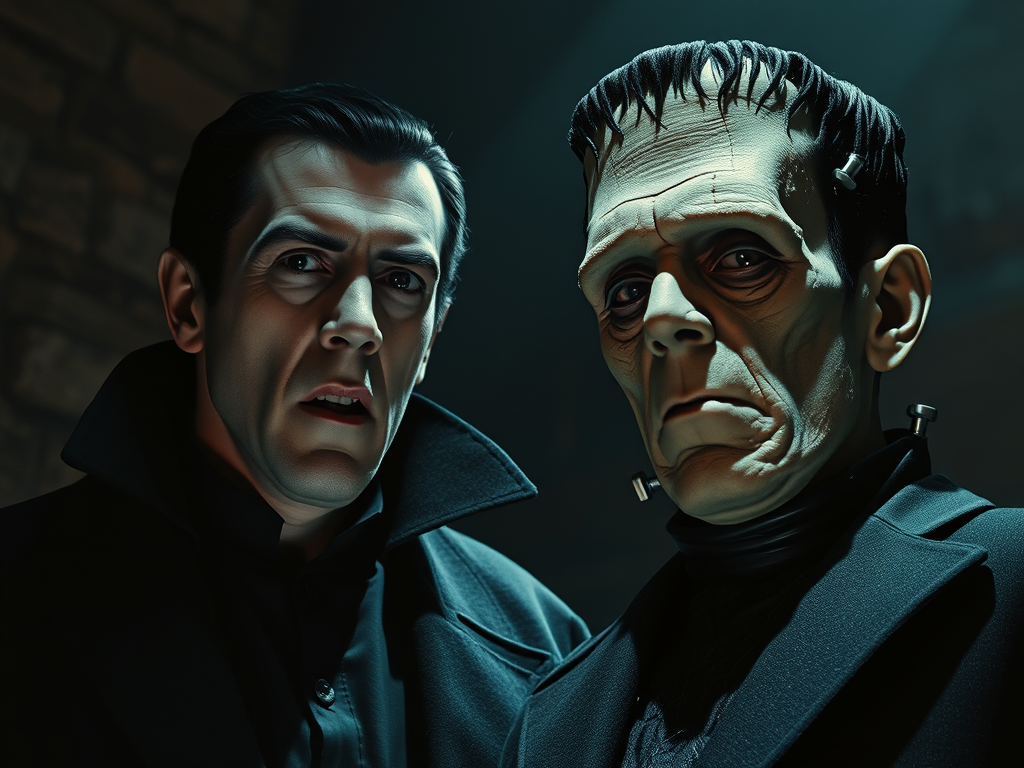
DRACULA: LORD OF THE VAMPIRES and FRANKENSTEIN: THE UNTOLD STORY are both adaptations from Evil Cheez Productions, starring some of your ECP favorites, and both are rated PG, so they’re safe for the kiddies! (Like, maybe don’t bring your toddler, but otherwise you should be good to go!)
The twin titans of terror, the two most famous (or is that “infamous”) names in horror history! Two performances, staged as old-fashioned radio plays…but which one will you see? We don’t know, and we won’t know until showtime! For the special matinee showing, the audience gets to vote on which of the two plays they’d rather see!
Dracula: The Lord of the Vampires
Everybody and their kid sister knows the story of Dracula…but you’ve never seen it like this! The Brides have expanded characters! Renfield is a woman! And they get rid of Jonathan Harker, the most useless character in all of literature! (Okay, it was actually the playwright who did that, but it’s worth the price of admission just to see Harker “bite” it!) Oh, and the vampire Count meets the man who revealed his identity to the world—Bram Stoker!
Performed as an old-fashioned radio play, but with the audience in the room, DRACULA: LORD OF THE VAMPIRES is the perfect spooky treat! Rated PG, so it won’t give the kiddies nightmares.
(Can you tell the writer doesn’t like Jonathan Harker?)
Frankenstein: The Untold Story
It’s the classic story you know and love, but with an Evil Cheez twist! Victor Frankenstein sought to create life, and instead created a Monster! But was the scientist’s hubris to blame…or his lack of empathy for the being he’d fashioned?
Performed as an old-fashioned radio play─but with the audience sitting in the recording studio!─FRANKENSTEIN: THE UNTOLD STORY reveals why it is the Monster ends up sharing the name of the mad scientist, and depicts the real-life scenario that resulted in 18-year-old Mary Shelley writing one of the greatest horror stories in human history.
Rated PG. Perfect spooky fun for the entire family.
PERFORMANCE DATES/TIMES
Shenanigans Comedy Theatre (2650 Leeman Ferry Rd SW suite a, Huntsville, AL 35801)
Saturday, September 27th @ 2:30 PM – Mystery Matinee (Which will you choose, Dracula or Frankenstein?)
Saturday, September 27th @ 7:30 PM – Dracula
Carnegie Visual Arts Center (207 Church St NE, Decatur, AL 35601)
Tickets ONLY $10 (Purchase tickets at the door or call ECP at 256-303-2972)
Friday, October 10th @ 7:30pm – Frankenstein
Saturday, October 11th @ 2:30pm Mystery Matinee (Which will you choose, Dracula or Frankenstein?)
Saturday, October 11th @ 7:30 – Dracula
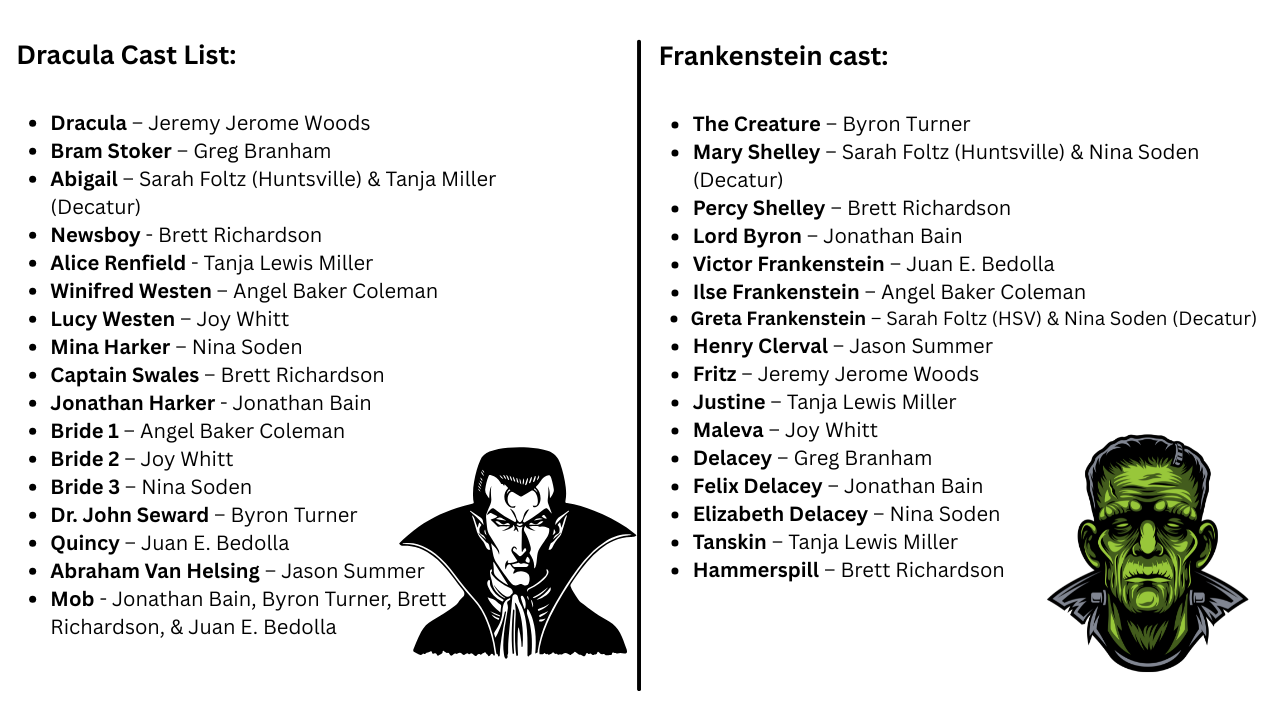
MEET THE CAST
Step into the shadows and meet the extraordinary performers bringing two of literature’s most enduring Gothic tales to life. Our staged readings of Frankenstein and Dracula celebrate the timeless power of these dark classics while showcasing the incredible talent of our local theatre community. Here, you’ll get to know the cast members who will give voice, heart, and humanity to the monsters, heroes, and haunted souls at the center of Mary Shelley’s and Bram Stoker’s masterpieces all through the theatre adaptations of Wayne Miller, Evil Cheez Productions’ founder.
Angel Baker Coleman
Angel is thrilled to be accepted on the stage alongside the incredibly talented actors that make up Evil Cheez. Her acting credits include Marjorie Baverstock in Musical Comedy Murders of 1940 and Elsa in The Sound of Music. Angel wishes you to call her dad, as she’s now in a cult.
Brett Richardson
Brett Richardson is an actor, writer, and political activist originally from the Shoals area who loves living in Huntsville (but not fighting the traffic) and working with Evil Cheez.
Byron Turner
Byron is an Alabama native and has been involved in local theater on and off for 20 years. He has been a part of multiple productions for Theatre Huntsville, including Clybourne Park, Ultimate Christmas Show (abridged), The Eight: Reindeer Monologues, Radio Golf, God of Carnage, Sex, Drugs, Rock & Roll, and The Musical Comedy Murders of 1940. He was also an assistant director of TH’s production of Stick-Fly and directed TH’s production of Mountaintop.
Greg Branham
Greg Branham is an elementary school music teacher. He has been a part of Evil Cheez for 10 years.
Greg is a man of few words…
Jason Summer
Jason discovered his love for community theater in 2010 and, other than a year here or there, has been acting ever since. Throughout the last 15 years, he has been fortunate to establish long-term friendships with his fellow actors, directors, and techs. He is absolutely looking forward to working with many of them again during this run of Dracula and Frankenstein. Jason hopes you enjoy these productions and hopes the camaraderie and connections between those involved are apparent as the stories are brought to life.
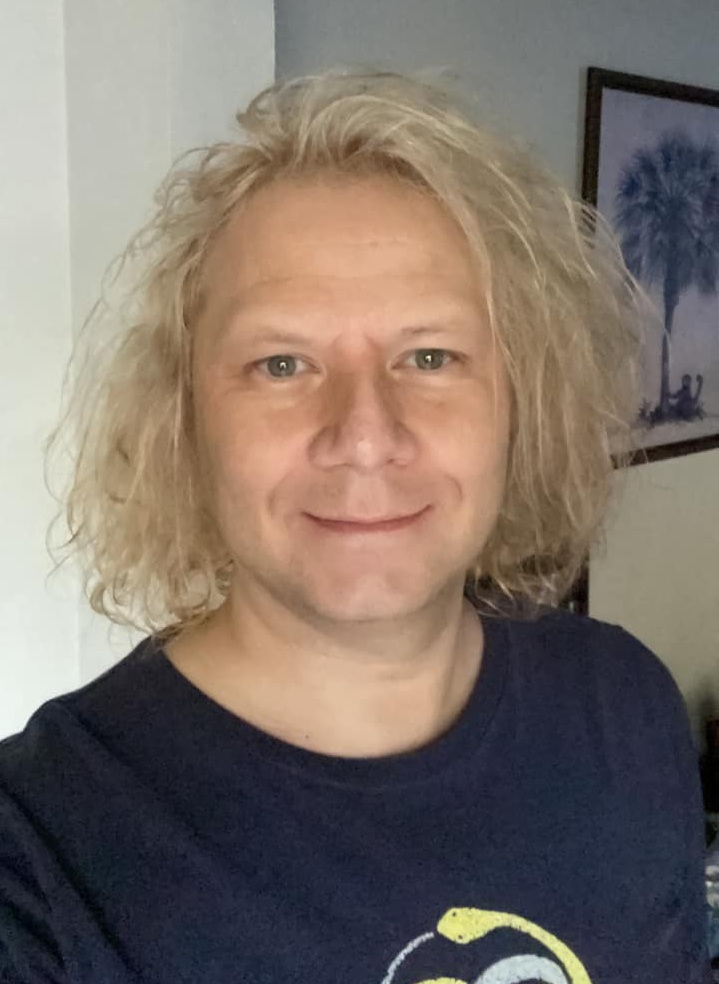
Jeremy Jerome Woods
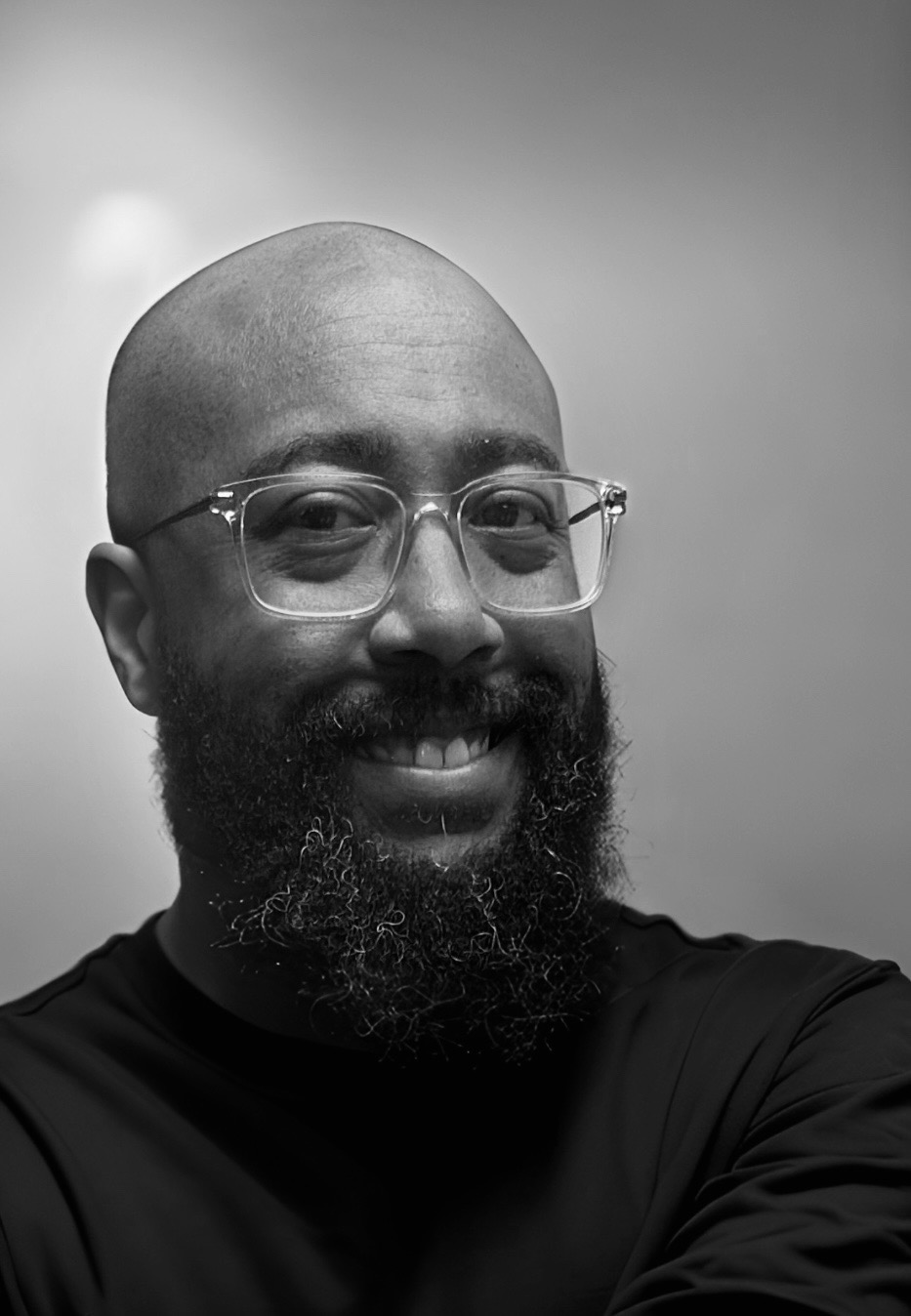
Screenshot
Jeremy Woods is thrilled to be part of this production. While playing fun characters as Dracula and Fritz (in Dracula and Frankenstein, respectively) he is also serving as a Co-Director. “What can I say… I love theatre and I love Evil Cheez”. He thanks his Husband and Son for the love, jokes, and support. He also thanks his Mom and Dad for making him.
Enjoy the show!
Jonathan Bain
Jonathan is a leasing agent by day and an actor by night. Jonathan has been acting in community theater for 14 years, and some of his favorite roles have been Ty from Sordid Lives and The Ghost of Christmas Yet to Come in A Christmas Carol. Dracula was his very first stage performance, and he is THRILLED to bring Jonathan Harker back to life (for now. )
Joy Whitt
Joy is an actress, writer, and barbecue cook. She loves doing shows with Evil Cheez, Theatre Huntsville, Bank Street Players… and anyone else who will have her in their show! Staged readings are just about as much fun as a full production, and she is so happy to be contributing to some Halloween feels with Frankenstein and Dracula!
Juan E. Bedolla
Juan is an animation director and producer. He is new to Cheez and to theater in general, but makes up for his lack of experience with eager enthusiasm and unearned confidence.
Nina Soden
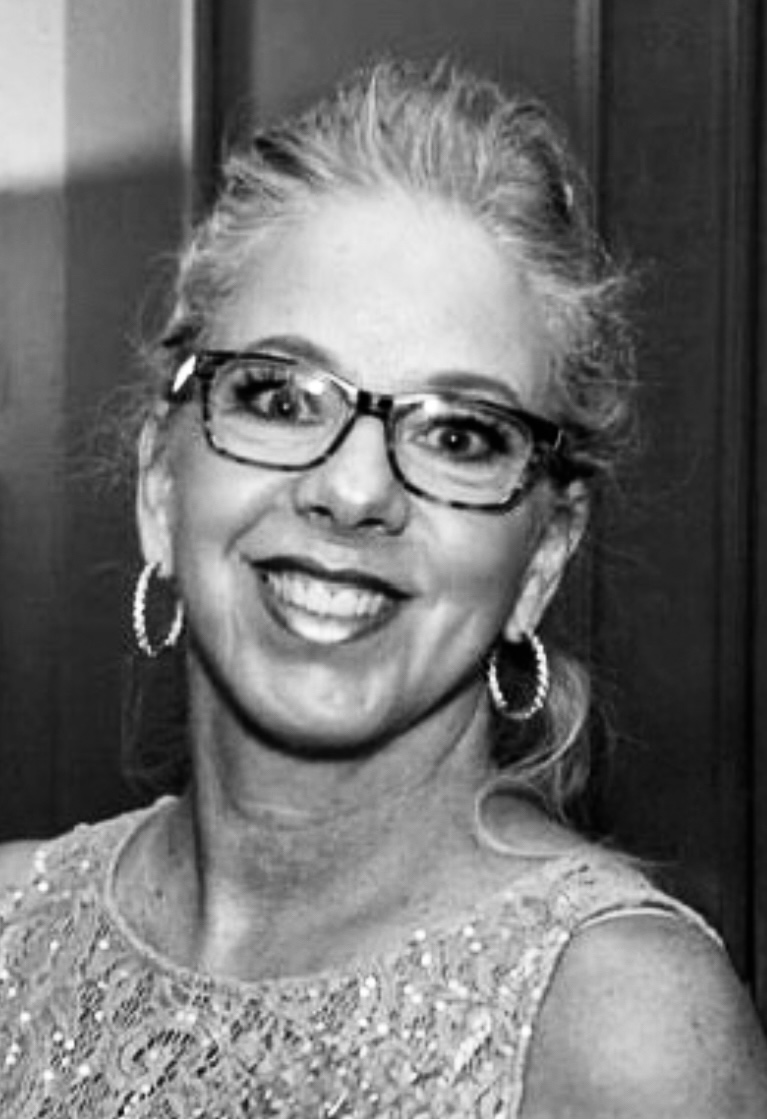
Nina Soden is no stranger to the stage—or to keeping life dramatic in all the best ways. She’s appeared in and/or directed productions ranging from Dracula to Arsenic and Old Lace (because nothing says “fun night out” like fangs or poisoned elderberry wine). When she’s not wrangling actors, she’s wrangling her children… her husband… her clients and homes across North Alabama as a Realtor®—and yes, if you buy a home through her thanks to theatre, she’ll donate part of her commission right back to the local theatre company of your choice. Nina also hosts The Home Stretch, a weekly podcast, where real estate meets real talk (and the occasional caffeine-fueled monologue). Whether she’s behind the mic, on stage, hanging out with her family, or handing over house keys, Nina somehow manages to keep the drama where it belongs—on the stage—mostly.
Sarah Foltz
Sarah Foltz is excited to perform with Evil Cheez! Sarah is a recent UAH grad and is excited to be getting involved with theater in Huntsville. Sarah previously performed at Masquerade Theater in Union City, TN. Sarah also enjoys performing improv.
Tanja Lewis Miller
Tanja Lewis Miller, aka Queen Cheez, is super excited to bring back two of ECP’s favorites to usher in the spooky season and to revisit her some of her favorite characters, especially Alice Renfield. She sends all the love to her hubby and her Cheez family. And a special thanks to all of you, the Cheez supporters, for without you, Cheez wouldn’t be Cheez!
MEET THE CREW
While the actors bring the characters to life on stage, it’s the crew behind the scenes who make the magic possible. From lights and sound to staging and direction, every detail is carefully crafted to immerse the audience in the world of Frankenstein and Dracula. Their creativity, dedication, and teamwork ensure that each moment flows seamlessly, allowing the stories to shine. We are proud to recognize the talented individuals working tirelessly behind the scenes—because without them, the show could not go on.
Directors: Wayne Miller & Jeremy Jerome Woods
See Jeremy’s bio in the cast section above.
WJR Miller (“Wayne” to his friends and family; what his enemies call him wouldn’t be fit for inclusion here) is the owner/founder of EVIL CHEEZ PRODUCTIONS, an independent theatrical company, and has written, directed, produced (and occasionally performed in) over two-dozen stage plays, running the gamut from Horror and True Crime (his specialties) to musicals, children’s plays, comedies, and even the historical biography of a murderous shark. Follow him at his WEBSITE “Sinister Urges”, FACEBOOK, or AMAZON.
Sound and Light Tech: Andrew Foxx
Sound Effects: Various cast members
LETTERS FROM THE DIRECTORS
As a child, the stories of Dracula and Frankenstein always intrigued me. The Idea that a writer could unlock doors in his mind and find these characters living and thriving was always amazing and felt just a bit out of reach. As a teenager, I was lucky enough to meet a writer/director who could do just that. This same published visionary wrote the show you are about to see. He took these already established characters and forged a new path. One that can ensure their survival for yet another generation. May they continue to enrich and haunt our dreams. Enjoy the show. ~Jeremy Jerome Woods
It sometimes surprises folks to learn that my adaptations of Dracula and Frankenstein are my two least favorite scripts that I’ve written, given how much I adore those characters and those books (and the thousands of movies that have been made about them). But it’s precisely because I hold the source material in such high esteem that I feel this way. These two works, you understand, are only adaptations. In my mind they are not 100% mine, and in my mind they can never measure up to the novels written by Bram Stoker and Mary Shelley, respectively (nor those thousands of movies made about them). Still, in order for the stories to be brought to the stage, adaptations must happen, and several have. Some of them I hold in the same high regard, or close to it, as the original works. Others…not so much. I saw writing these scripts, then, as a way to craft the adaptations I personally always wanted to see on the stage. If Stoker and Shelley can’t write their own play versions (granted, I haven’t asked them; anybody got a Ouija board handy?) then the next best thing, I figured, would be to do it myself. I tried to create something the pair of them would approve of…or at least not hate too much.
I stand upon the shoulders of giants. Fortunately, their creations, their stories, lose little of their grandiosity when envisioned and interpreted by lesser talents. (And hey, concerning some of those other adaptations I mentioned, t’weren’t that hard to o’erleap the bars they set, if you catch my meaning.) I hope you enjoy these tales, then. They aren’t as good as the originals─no adaptation could be─but I daresay they’ll manage.
Least favorites? Yeah. But I’m still pretty dang proud of ‘em. ~WJR Miller
One of the most magical things about writing is knowing that words travel farther than I ever could on my own. A story written in the quiet of my office in North Alabama can end up being read in a coffee shop in Oregon, a library in New York, or maybe even on a balcony somewhere in Paris. That thought makes me smile every single time.
And it also makes me curious.
Today, I want to turn the spotlight around and ask you a question: 👉 Where in the world are you reading from?
Whether you’re in the United States or across the globe, I’d love to see how far this little community of readers and writers stretches. Drop your city and state (or country if you’re outside the U.S.) in the comments below.It’s a simple way for us to connect, and I think it’ll be fun to see the map of our community unfold together.
Why I’m Asking
Part of being a writer — and honestly, part of being human — is being fascinated by stories. And to me, places carry stories just as much as people do. Your hometown, your current city, the little café or park where you like to read — these are all threads of the bigger story we’re building here as a community.
It also helps me shape the kind of content I share. If many of you are local, maybe I’ll start highlighting more North Alabama literary events or indie bookstore happenings. If a lot of you are scattered far and wide, I might focus more on universal themes — the writing process, character creation, and the joy (and chaos) of storytelling.
A Little About Me
If you’re new here, welcome! My name is Nina Soden, and I wear a couple of hats:
✍️ Author— I write urban fantasy and dystopian fiction, and I share behind-the-scenes peeks into my writing journey here on the blog.
🏡 Realtor— When I’m not building fictional worlds, I’m helping families buy and sell homes in North Alabama. (It’s another kind of storytelling, really — every home holds a history, and every move begins a new chapter.)
🎭 Theatre Enthusiast — The stage has always been a second home for me. Whether I’m performing in a local production or lending my voice to a reading, theatre keeps my creativity alive in a way that fuels everything else I do. If you haven’t seen my weekly Theatre newsletter… check out the September 9, 2025 issue HERE and make sure to let me know if you want to subscribe!
❤️ Family Gal — At the heart of it all, I’m a wife, a mom, and someone who believes that family is the foundation of every life worth living. My family keeps me grounded, inspires me, drives me to keep going, and cheers me on through every new adventure.
I love that my life blends all these worlds together. My readers get a peek into my real estate life, my clients discover my books, and sometimes my theatre friends end up in both! It’s all connected by one simple truth: I love people, and I love stories.
Your Turn!
So now it’s time for you to chime in.
Where are you reading from?
Do you prefer curling up with a book in your favorite chair, or are you a café reader?
And just for fun — what’s the last book you finished?
Drop your answers in the comments below. I’ll be reading every single one, and who knows — I might even feature a few responses in a future post.
Thanks for being here, for reading, and for sharing this journey with me. I can’t wait to see where in the world you’re reading from!
✨ If you’re enjoying the blog, don’t forget to subscribe so you don’t miss future posts. And if you ever find yourself curious about North Alabama real estate — whether you’re moving here, away from here, or just like to browse beautiful homes — let me know. I’d be happy to share that side of my world with you, too. ✨
One of the key elements that defines urban fantasy is the integration of magical elements into the modern world. Whether it’s a hidden society of magical beings, a world where spells and supernatural creatures roam the streets, or the exploration of a character’s newfound magical powers, the magic system in an urban fantasy setting must feel both extraordinary and plausible. Readers need to believe that magic can exist within the framework of their everyday lives without shattering the suspension of disbelief. But how do you create a magical system that feels authentic while staying grounded in the real world?
In this post, I’ll take you through an in-depth guide to building unique and believable magic systems in urban fantasy. We’ll discuss the importance of internal consistency, the balance between magic and real-world rules, and how to keep your readers hooked without losing their trust in the world you’ve created.
1. Establishing Rules for Magic
The first step in crafting a believable magic system is setting clear rules for how magic works in your world. While magic allows for immense creativity and wonder, it also requires structure. Without established rules, magic becomes too arbitrary and unpredictable, making it difficult for readers to connect with the world you’ve built.
Why Rules Matter:
Internal Consistency: A magic system must adhere to its own logic. If magic behaves differently without explanation, it risks confusing or frustrating readers. The moment magic becomes a convenient plot device that appears without proper foreshadowing, you lose the trust of your audience.
Limits and Costs: Every magic system should have limitations. Power without limitations feels contrived. Magic should come with costs, whether it’s physical tolls on the user, restrictions on its use, or even social consequences. For instance, maybe casting a spell drains a person’s energy, risks the safety of a loved one, or only works at a certain time of day. These limitations make magic feel earned and give characters something to struggle with.
Think about Jim Butcher’s The Dresden Files, where Harry Dresden’s magic is often limited by the amount of energy he can draw from the world, the danger it poses to him personally, and the rules of the White Council. Dresden’s magic is consistent but not unlimited, and he is always mindful of the cost of each spell.
2. Make Magic a Part of the World’s Framework
In urban fantasy, magic doesn’t just exist in isolation—it interacts with the real world. For your magic system to feel believable, it should be integrated into society, politics, culture, and even economy, as though it’s always been a part of the world. That is, unless the magic of your world is held in secret among only those in the know… say an underground world of witches like in my Blood Angel Series, for example.
Creating a Magical Ecosystem:
Hidden vs. Known Magic: Is magic something that society is aware of, or is it hidden from the public? In many urban fantasy stories, magic is concealed from the general public, adding a layer of mystery and intrigue. However, even in these worlds, magic should still have an impact on the economy, government, or society. Maybe magical beings run secretive industries, or powerful witches control the black market of enchanted items.
Magical Institutions and Regulations: Think about how magic would be regulated, if at all. Are there organizations that oversee magical activities? Is magic illegal for certain people or in certain areas? How does the magical community interact with the mundane world—do they cooperate, conflict, or hide from each other? Exploring these societal dynamics can help ground your magic system in reality and avoid making it seem like an arbitrary addition to the plot.
For example, Laurell K. Hamilton’s Anita Blake: Vampire Hunter series presents a world where vampires, werewolves, and other supernatural creatures are not only known but have legal rights and recognition, with the government regulating these creatures’ activities. The existence of supernatural beings is integral to society’s politics, and the magic in the world reflects that integration.
3. Determine the Source of Magic
One of the most important decisions when creating a magic system is determining where the magic comes from. Magic can be drawn from a variety of sources—nature, gods, emotions, the mind, or even technology. The source of magic will significantly shape how it functions and is understood in your world.
Common Sources of Magic:
Elemental Forces: Magic that taps into the natural world, such as fire, water, or earth, is a common source of power. This can create a connection between magic and the environment, adding depth to the system. For instance, a fire mage might have to be near a flame or rely on natural heat sources to use their powers, making the system more tangible and grounded.
Bloodlines or Heritage: Magic might be passed down through generations or tied to specific bloodlines. This can create tension within societies, with some families hoarding power, others struggling to access their abilities, or even forbidden forms of magic associated with certain ancestries.
Energy or Willpower: Magic could be powered by an individual’s physical, mental, or emotional energy. A magic user might have to tap into their own life force, willpower, or emotions like anger, sadness, or love to fuel their spells. This can create complex inner conflict, as characters may hesitate to use magic for fear of personal loss.
Technology and Science: Some urban fantasy systems blend technology and magic, where magic is not a mystical force but a scientific one, often with technological advancements enabling magical phenomena. Think of how techno-magic systems like those in the Shadowrun series blend cybernetics with spellcasting or enchanted machines.
By establishing where your magic originates, you not only create more specific rules for your system but also provide readers with a clearer understanding of its limitations and potential.
4. Incorporate Magic into Character Development
The use of magic in urban fantasy often plays a central role in character development. A character’s relationship with magic can reveal a lot about their personality, values, and struggles. This is where character-driven conflict can shine—especially if magic isn’t simply a tool, but something that challenges or alters the character’s life.
Examples of Magic and Character Development:
Moral Dilemmas: A character might have access to immense magical power but must choose whether to use it for good, evil, or for personal gain. This inner conflict can shape their journey. In The Dresden Files, Harry Dresden’s magic comes with deep moral consequences. His choices, especially when using darker forms of magic, define who he is as a person and affect his relationships.
Physical or Emotional Limitations: Magic could come with a physical toll, such as the deterioration of the user’s health or mind. Alternatively, magic might amplify a character’s emotional state. This can add depth to characters, making their struggles more relatable and the magic itself a more integral part of the narrative. For instance, a character might be too emotionally unstable to control their magic, creating tension and stakes.
Identity and Belonging: If magic is tied to heritage or bloodlines, a character may feel the weight of their ancestry, the pressure of expectation, or even a sense of loss if they cannot access their magical heritage. How they grapple with their magical identity can be central to their character arc.
5. Use Magic to Enhance the Story, Not Dominate It
While magic is an essential component of urban fantasy, it should never overpower the story. The best urban fantasy integrates magic in ways that enhance the plot, drive character development, and add intrigue to the world—without allowing magic to solve all the problems instantly.
Balance Between Magic and the Mundane:
The magical and mundane worlds should interact, not just coexist. Often, the challenges in urban fantasy arise from the friction between these two realms. Magic might make life more complicated rather than easier. This keeps the stakes high and forces characters to think creatively and make tough choices.
Magic should be a tool, not a crutch. It can help drive the plot forward, but it shouldn’t remove all challenges. There needs to be an element of danger, uncertainty, and complexity even in magical situations. For example, perhaps magic is unreliable in certain circumstances, or the protagonist’s power might not be enough to overcome an adversary without sacrifice.
Crafting a believable magic system in urban fantasy is an exciting challenge, but it requires careful thought and structure. The magic must be consistent, integrated into the world, and tied to real-world consequences to maintain the suspension of disbelief. By establishing rules, creating a system that fits the world, and using magic as a tool for character development, you can create a magical system that feels grounded, logical, and, most importantly, immersive. When done well, magic becomes more than just a fantastical element; it becomes an integral part of the world, deepening both the stakes of the story and the richness of the characters within it.
As a fiction author, one of the most frustrating, and at times, debilitating experiences you can face is writer’s block. Whether you’re staring at a blank page, endlessly revising the same sentence, or feeling the crushing weight of doubt, writer’s block can halt your creative flow and make even the most seasoned writers question their abilities. But the good news is, it’s a normal part of the writing process. In this post, I will explore what writer’s block is, why it happens, and most importantly, how to push through it.
1. What is Writer’s Block?
Writer’s block is the inability to write or produce new content, often characterized by a sense of being “stuck.” It can manifest in many ways, from a total absence of ideas to a paralyzing fear of not being able to write well enough. While the term “writer’s block” is often associated with a lack of inspiration, it’s actually more complex. It can stem from internal pressure, perfectionism, burnout, or external stressors that interfere with the creative process.
For me, writer’s block has often been an all-encompassing feeling of frustration—a mix of work-life balance stress and lack of time, coupled with the paralyzing fear that what I’m writing isn’t good enough. And while it can be discouraging, it’s important to remember that it’s a temporary setback, not a permanent condition.
2. Why Does Writer’s Block Happen?
Understanding the root causes of writer’s block can help demystify the experience and take away some of its power. Here are some common reasons writer’s block happens:
1. Perfectionism and Self-Doubt
One of the most common culprits is perfectionism. As writers, we often want every sentence to be brilliant, every plot twist to be surprising, and every character to be perfectly realized. But this pressure can paralyze us, preventing us from moving forward.
2. Fear of Failure
We’ve all had moments where the fear of failure takes over. Will anyone even care about this story? What if my characters aren’t compelling enough? This fear can be crippling and make it difficult to write anything at all.
3. Lack of Inspiration
Sometimes the creative spark simply isn’t there. You’ve exhausted all your ideas, and the well feels dry. Maybe the voices in your head have just stopped talking. This type of block is especially frustrating when you have deadlines or a manuscript to finish, self-imposed or by a publisher. The absence of inspiration can leave you staring at a page, unable to fill it with the words you know are there—but just can’t seem to find.
4. Overwhelm or Burnout
Writing a novel or long-form piece of fiction is an enormous task. The sheer scope of the project can lead to burnout, especially if you’re pushing yourself too hard. The sense of overwhelm that comes with large projects can cause you to shut down entirely.
5. External Stressors
Personal issues, work-related stress, or family matters can all affect your ability to focus and create. If your mind is occupied with external distractions, it can be hard to summon the mental space needed for storytelling. In truth, this is the one that gets me more often than not. I am a creative, but I am also a teacher… I love to help others. Therefore, in many aspects of my life, I say ‘yes’ way too often. I overcommit myself and cause undue stress. That stress becomes overwhelming, and my creativity ends up suffering because of it.
3. How to Overcome Writer’s Block
While there’s no one-size-fits-all solution to overcoming writer’s block, there are strategies that have worked for me and many others. Here are some techniques that may help you break free of the block and get back to writing.
1. Embrace Imperfection
The most important thing to realize is that writing doesn’t have to be perfect on the first draft. In fact, it often isn’t. Perfectionism is a silent killer of creativity. Give yourself permission to write badly. Write the worst possible version of a scene. You can always revise it later. But if you don’t get the words down at all, you’ll never have the chance to improve them.
One of my favorite pieces of advice for dealing with writer’s block is simply to “write through it.” Even if you’re unsure of where the plot is going or how a scene should unfold, writing something—anything—will help break the blockage. Sometimes, just putting words on the page will unlock the next step in the story. I used to have a friend who, whenever she experienced writers’ block, would simply start typing numbers: 1, 2, 3, 4, 5, 6, 7, 8, 9, 10, 11, 12. and so on. She would do that until the next idea came to her. Sometimes she would type into the hundreds, and sometimes beyond, but it helped her to break the writer’s block cycle.
2. Set Small, Manageable Goals
If the task of finishing a novel feels overwhelming, break it down into smaller, more achievable steps. Rather than focusing on the daunting idea of finishing an entire manuscript, set daily or weekly word-count goals. Some days it might only be a few hundred words. But consistent, small goals can build momentum and help you feel a sense of accomplishment.
3. Change Your Environment
Sometimes the problem isn’t with the writing, but with the environment you’re trying to write in. If you’re feeling stuck, try changing your location. Go to a coffee shop, write in a park, or even move to a different room in your house. A new setting can spark creativity and help you see your work in a new light. For me… sometimes I just need to clean or reorganize the workspace I’m already in.
4. Let Your Mind Wander
If you’ve hit a wall, step away from your project for a while. This doesn’t mean giving up on writing, but allowing your subconscious to work on the problem. Go for a walk, take a shower, or read something unrelated to your story. Sometimes, the best ideas come when you least expect them.
5. Use Writing Prompts or Exercises
Another way to combat writer’s block is through creative exercises or writing prompts, like in #WritingPrompts. These can help break up the monotony and get your creative juices flowing again. Even if the prompt doesn’t directly relate to your story, it might inspire new ideas or help you work through a specific scene.
You could try prompts like:
Write a scene from the perspective of a side character.
Describe your protagonist’s home in detail, including things they would never show to others.
Write a letter from your antagonist to the protagonist, explaining why they’re doing what they’re doing.
6. Work on a Different Project
If your current project feels impossible, it might help to switch gears. Start working on a different story or creative endeavor. This doesn’t mean abandoning your main project—just give yourself a mental break. A change of focus can help reset your brain and bring back your creative energy.
7. Talk It Out
Sometimes, verbalizing your thoughts can help untangle a complex plot or character dilemma. Talk to a fellow writer or a trusted friend about what you’re struggling with. Don’t be afraid to admit that you’re blocked—chances are, they’ve been there too. Having a sounding board can give you fresh perspectives and ideas you hadn’t considered.
4. Writer’s Block Isn’t Permanent
It’s crucial to remember that writer’s block doesn’t last forever. It’s a temporary phase that all writers go through. Even the most successful authors face it. When I’m struggling with writer’s block, I remind myself that it’s just part of the creative process. Some days will be harder than others, but that doesn’t mean I’m not still moving forward.
Also, be kind to yourself. The more you pressure yourself to “overcome” writer’s block, the worse it can feel. Give yourself permission to write badly or to take breaks. The most important thing is to keep writing, even if it’s just a little bit at a time.
Writer’s block is an inevitable part of the creative process, but it doesn’t have to be the end of your story. Use it as a signal to change up your routine, experiment with new ideas, and embrace the imperfections that come with writing. Every writer faces this challenge at some point, but the key is persistence. Keep writing, keep experimenting, and above all, be patient with yourself. Your words are waiting—sometimes, all you need is a little time and space to find them again.
There’s something especially delicious about a dystopian or sci-fi book that makes you think you’ve got it all figured out… only to pull the rug out from under you in the final chapters. You turn the page expecting one thing, and BAM — plot twist. And if you’re anything like me, those are the stories you’ll be thinking about days (or years) later.
So if you’re craving a read that messes with your head in the best way, here’s a list of dystopian and sci-fi books with jaw-dropping twists — including one from yours truly. 📖✨
Twist Factor: ✨ Darrow’s mission isn’t what he thinks it is
This brutal, high-stakes society built on color-coded castes seems straightforward — until Darrow infiltrates the elite Golds. Midway through, the real scope of the rebellion, hidden agendas, and the betrayals of those closest to him turn everything upside down. By the end of book one, you realize the war Darrow thought he was fighting is just a pawn’s move in a much bigger game.
Twist Factor: ✨ Who’s really behind the experiments and why
My Sector C series takes what seems like a survival-against-the-leadership scenario and flips it into a deeper, darker conspiracy. As the characters navigate a world dominated by deadly experiments and dangerous technology, the real enemy isn’t who (or what) they believed. Loyalties shatter, and hidden connections between characters and the program’s origins turn every assumption on its head.
Twist Factor: ✨ The Glade isn’t a prison… it’s a test
The kids trapped in the maze believe they’re escaping a punishment. The reality? They’re unwitting subjects in a twisted survival experiment designed to find humanity’s last hope. And when the walls come down, the world outside is far worse than the maze itself.
Twist Factor: ✨ The AI you fear might be the only thing keeping you alive
Told through hacked files and intercepted messages, this book pulls off multiple twists. What seems like an evil AI slaughtering a spaceship’s crew turns into one of the story’s most complicated, even sympathetic characters. It plays with reader expectations about villains and heroes in a smart, subversive way.
Twist Factor: ✨ The outside world isn’t what they’ve been told
In this bleak, silo-dwelling society, citizens are taught the surface is toxic and deadly. The shocking twist? The truth about what’s outside — and who’s been controlling that narrative — will make you rethink every rule the characters have followed since page one.
Twist Factor: ✨ Who the real villain is, and what immortality has done to humanity
A world without death sounds like utopia, but the elite Scythes tasked with population control carry dark secrets. As apprentices Citra and Rowan dive deeper, they uncover a chilling conspiracy within the Scythedom that rewrites the story’s entire moral landscape.
Humanity’s been devastated by four waves of alien attacks. The fifth? It’s already here, and it’s hiding in plain sight. Trust no one. The moment readers (and characters) realize who the real invaders are is genuinely unsettling.
The best dystopian and sci-fi books leave you breathless — not just from action, but from those shocking moments where everything you believed about the world, characters, or conflict gets flipped. And whether it’s a secret identity, a hidden agenda, or a dark truth about the world outside, those twists are what turn a good story into a great one.
Got a favorite mind-blowing dystopian plot twist? Drop it in the comments — I’m always building my to-read list.
















 Nina Soden